For those who are researching the eagles of the Hortobagy because you want serious, repeatable eagle photography in Europe, winter is the season that matters. In late January, Hungary’s Hortobagy region becomes a dependable place to photograph White-tailed Eagles at workable distances, with behaviour that stays in front of the lens for long enough to refine technique rather than rely on luck.
This article is written to mirror how we run the NaturesLens trip – winter only, & entirely hide-based. There are no vehicle sessions & no driving around hoping for fly-bys. Instead, days are built around fixed hides that are positioned for consistent eagle activity, clean backgrounds, & long working windows. The aim is simple: leave with a set of images that show flight, interaction, & character, not just distant silhouettes.
For those wanting the tour details, you can view the trip page here – Eagles of the Hortobagy photography holiday.
Why winter is the season for the eagles of the Hortobagy?
The Hortobagy is a landscape of open plains, wetlands, & fishpond systems. In winter, the balance shifts in the photographer’s favour. Food becomes concentrated, daylight is softer, & raptors commit to predictable movements between perches, feeding areas, & open ground. The result is a higher frequency of workable passes & longer periods of watchable behaviour.
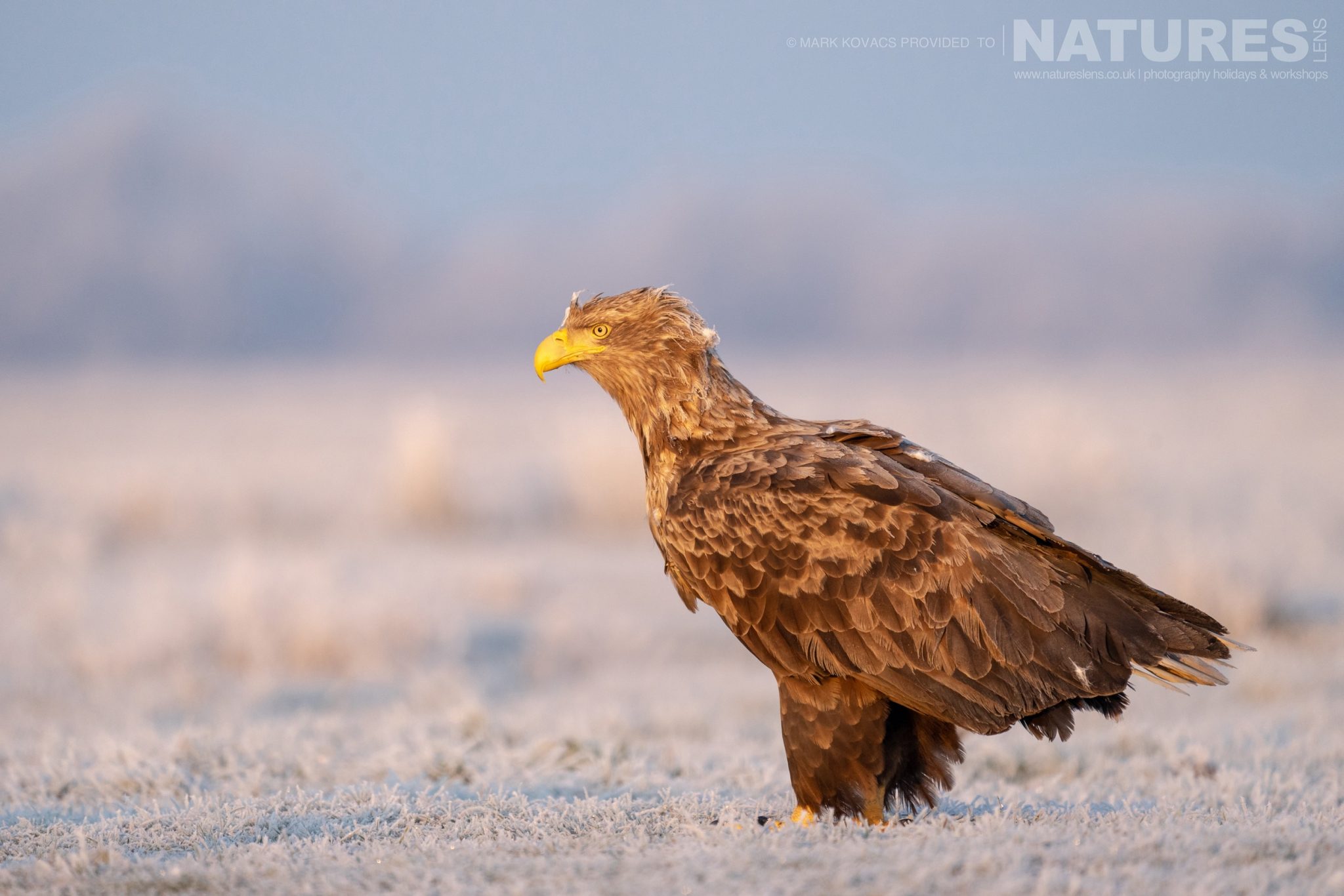
Winter also changes what your images can look like. The palette is cleaner – pale grasses, frost-dark water, & low sun that shapes wings & feathers. It is an environment where you can deliberately build sets: banking flight, head-on approaches, low landings, & interaction frames that have context without clutter.
Most importantly, this is when White-tailed Eagles are the main event. The trip is designed around the reality that they are the species you commonly photograph here – repeatedly, at hides built for them.

What Is The primary subject – White-tailed Eagles?
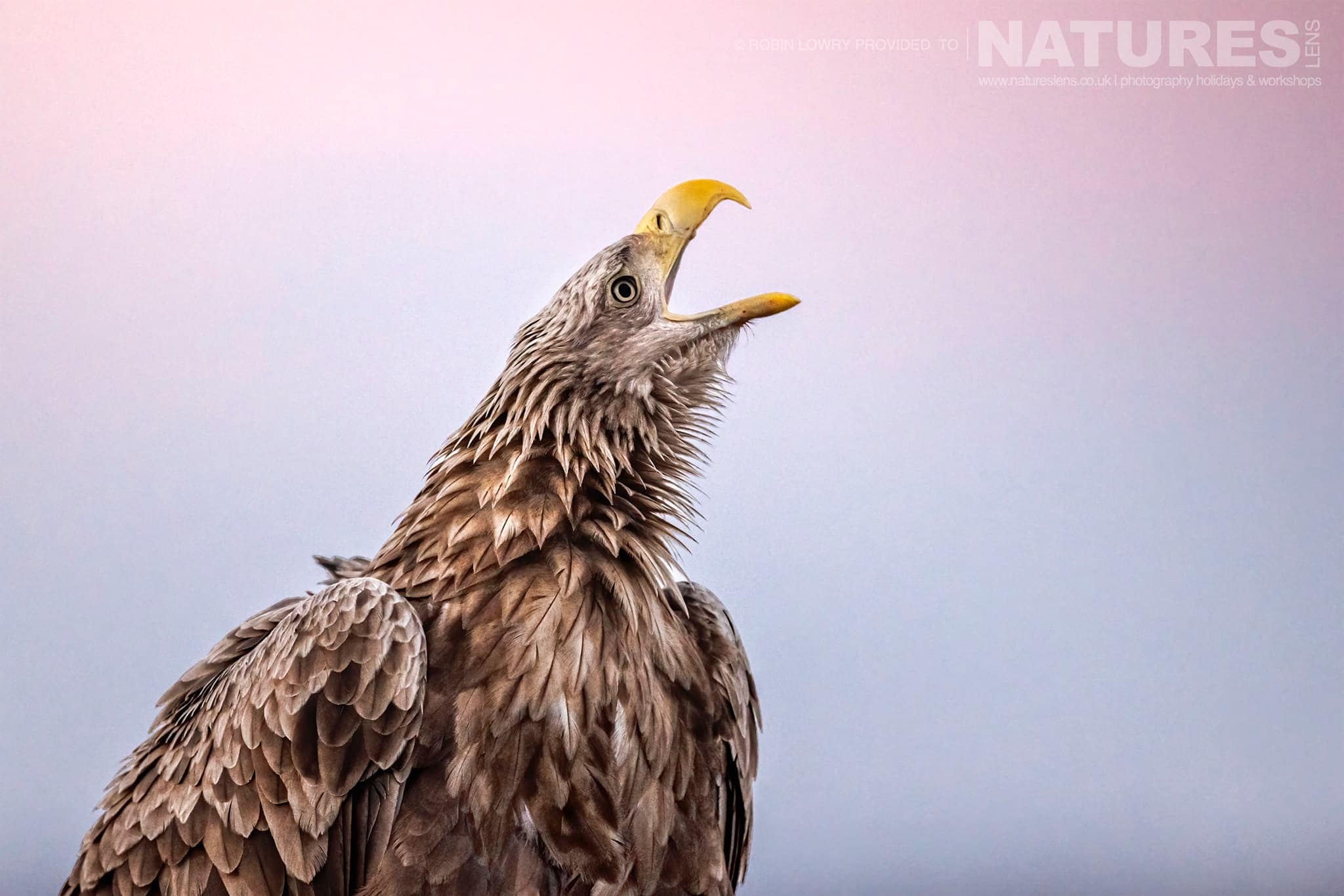
For photographers, the White-tailed Eagle is a gift & a challenge in equal measure. It is Europe’s largest eagle, with a presence that fills the frame even when it is not close. It can look effortless in the air, then suddenly shift into something fierce & physical when landing, squabbling, or mantling.
In the Hortobagy in winter, White-tailed Eagles offer a strong mix of photographic opportunities:
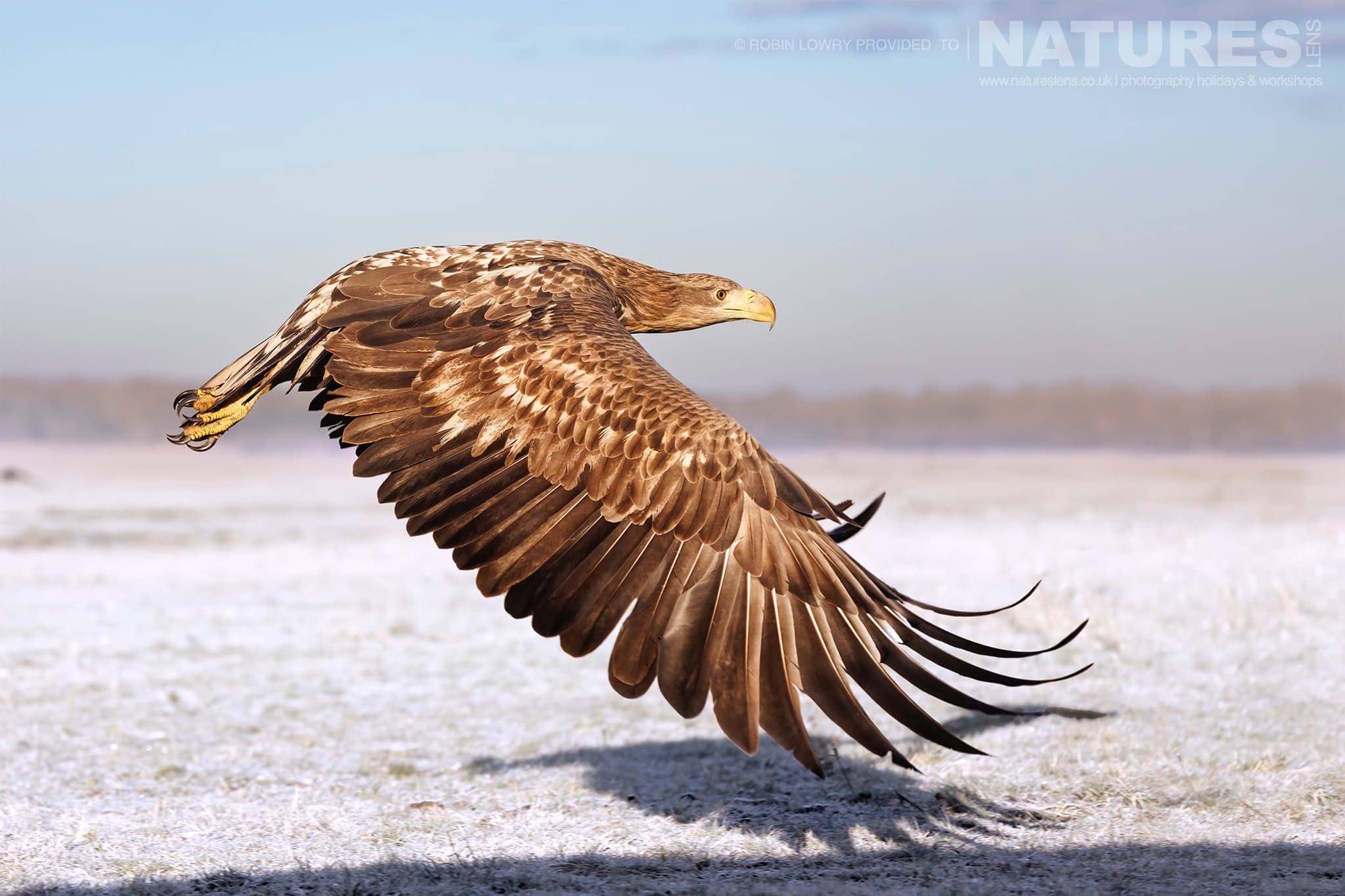
- Flight – predictable circuits, low passes, banking turns, & approaches that allow you to practise tracking & timing rather than react.
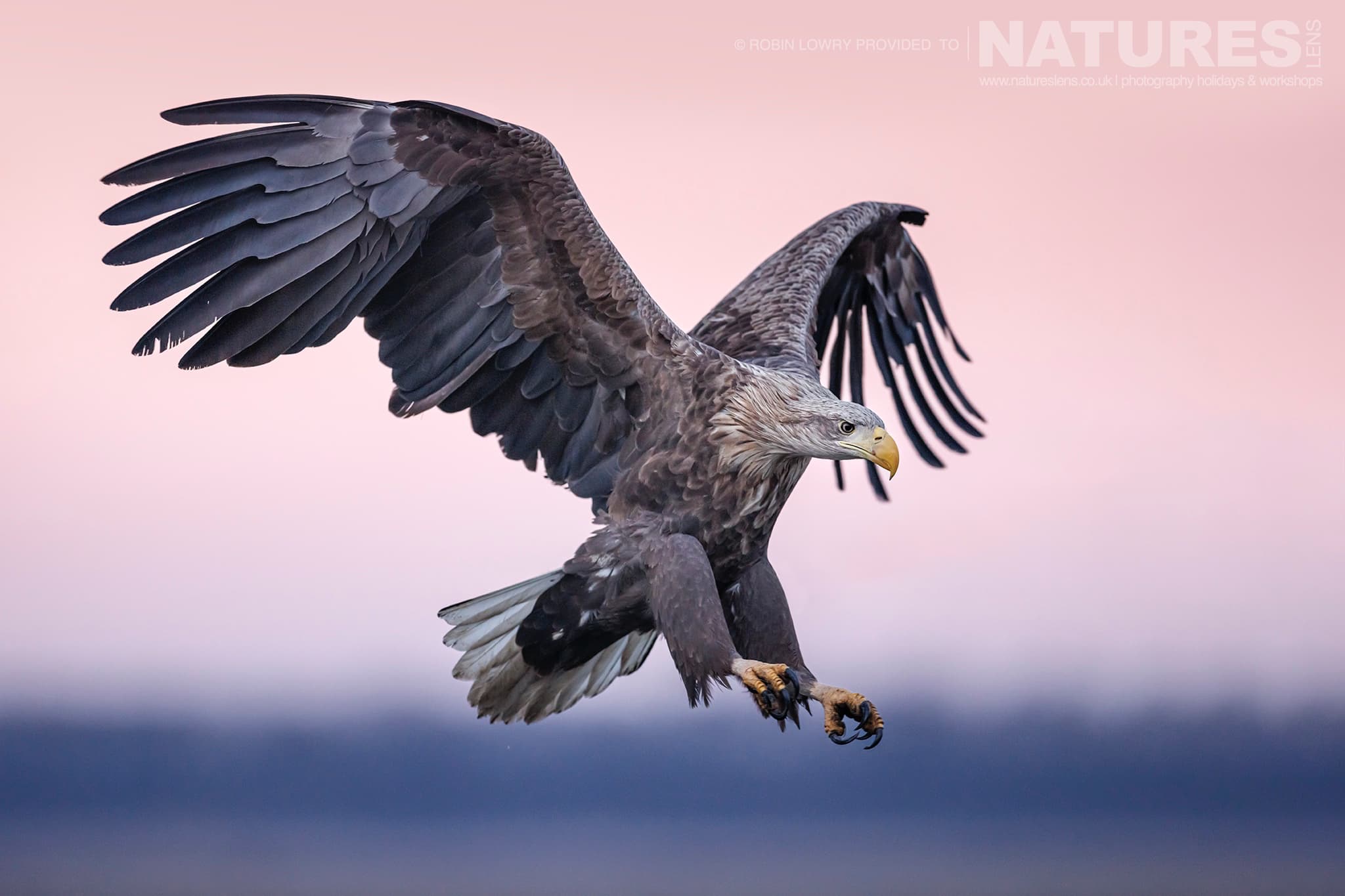
- Landings – feet forward, wings braced, head fixed. These moments often define a portfolio because they show intent & power.
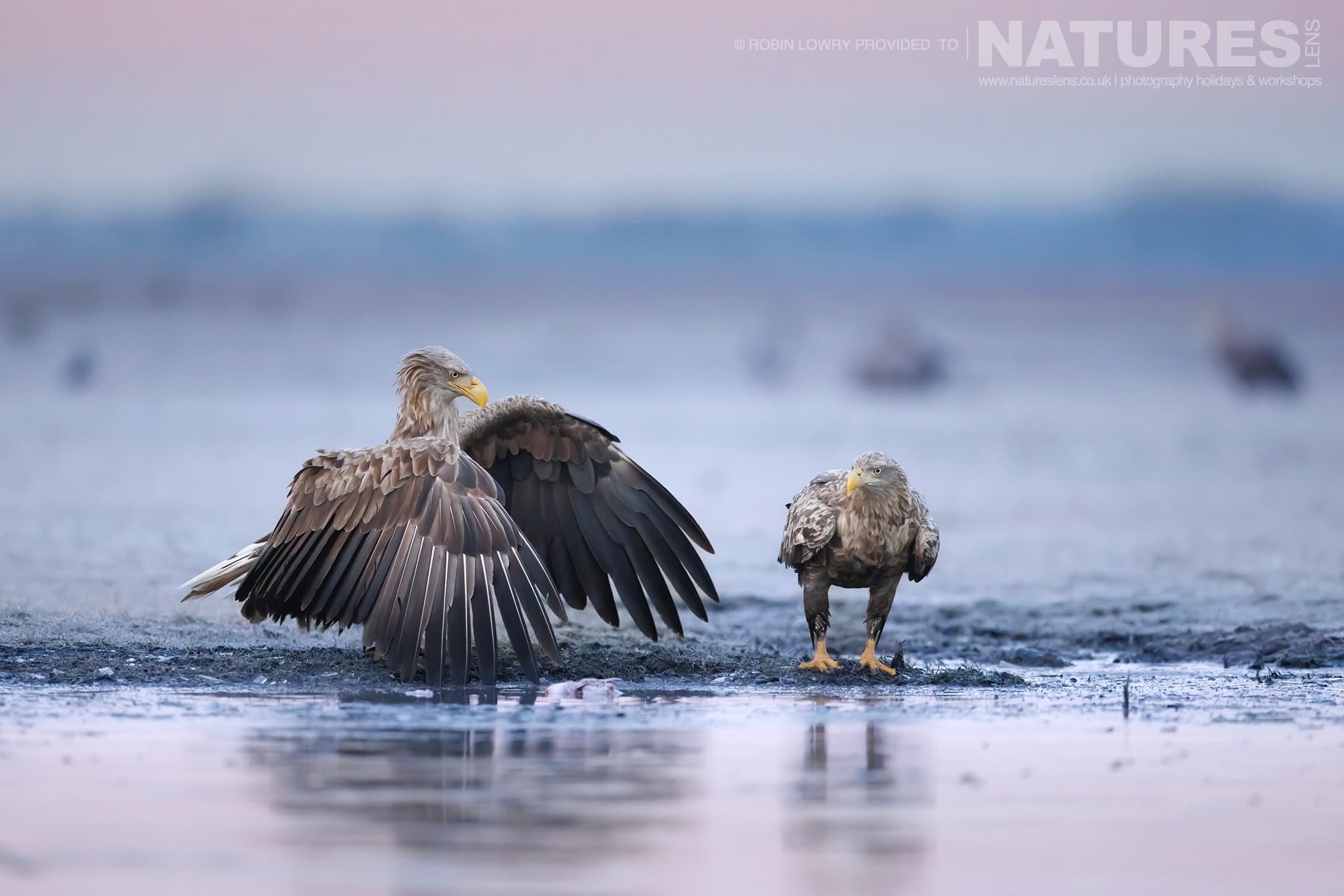
- Interaction – dominance behaviour, calling, displacement, & occasional conflict. These are the frames that look alive.
- Character – posture, gaze, & feather detail when birds settle & hold a position long enough for careful portrait work.
Because our approach is hide-based, you are not trying to solve everything at once. You can keep background clean, manage distance, & work on sequences – especially flight-to-perch & perch-to-flight transitions that are easy to miss when you are constantly moving.
Hide-based eagle photography – what changes when you stop moving
A hide changes the entire rhythm of eagle photography. Instead of chasing sightings, you let activity come to you. That has three big advantages.
1 – Time for consistency
Long sessions allow you to test settings, adjust your technique, & keep improving as behaviour repeats. If your first approach sequence is messy, you usually get another. If your landing frames clip wings, you correct & try again.
2 – Control of angle & background
Fixed hides are selected & refined for clean sightlines. When the background is predictable, your images become about shape, posture, light direction, & timing rather than fighting distractions.
3 – A calm working environment
All-day sessions mean less rushing & fewer compromises. You can build a photography plan for the day – flight first, then interaction, then portraits – & stick to it as conditions evolve.
On the NaturesLens trip, the hides are a core part of why the eagles of the Hortobagy become photographable in a repeatable way, not just occasionally visible.
What you can photograph alongside the eagles?
Although the White-tailed Eagles are the focus, winter in the Hortobagy can also produce strong supporting subjects that add variety to your set & help fill quieter periods between eagle flurries. Depending on conditions, you may have opportunities for species such as:
- Common Buzzard
- Rough-legged Buzzard
- Eastern Imperial Eagle (less consistent, but possible)
- Common Crane
- Red Fox
These species matter because they keep cameras busy & give you alternative behaviours to photograph, but they never replace the main purpose of the trip. The itinerary is designed to keep you in position for White-tailed Eagles first.
Photographic outcomes to aim for
If you want to come away with a strong, coherent set from the eagles of the Hortobagy, it helps to define what “success” looks like before you arrive. In winter hide sessions, the most productive approach is to work through a sequence of goals rather than chase a single hero frame.
Flight sets
- Banking turns with full wing shape
- Head-on approaches with stable focus & clean separation
- Low passes that show scale against the winter ground
Galleries from our Hungarian Eagles of the Hortobagy Photography Holidays
These galleries showcase imagery closely connected to the locations & experiences featured during our Hungarian Eagles of the Hortobagy Photography Holidays.
Related Hungarian Eagles of the Hortobagy Photography Holidays
If you're interested in Hungarian Eagle photography, the following list of our upcoming photography holidays may be of interest.