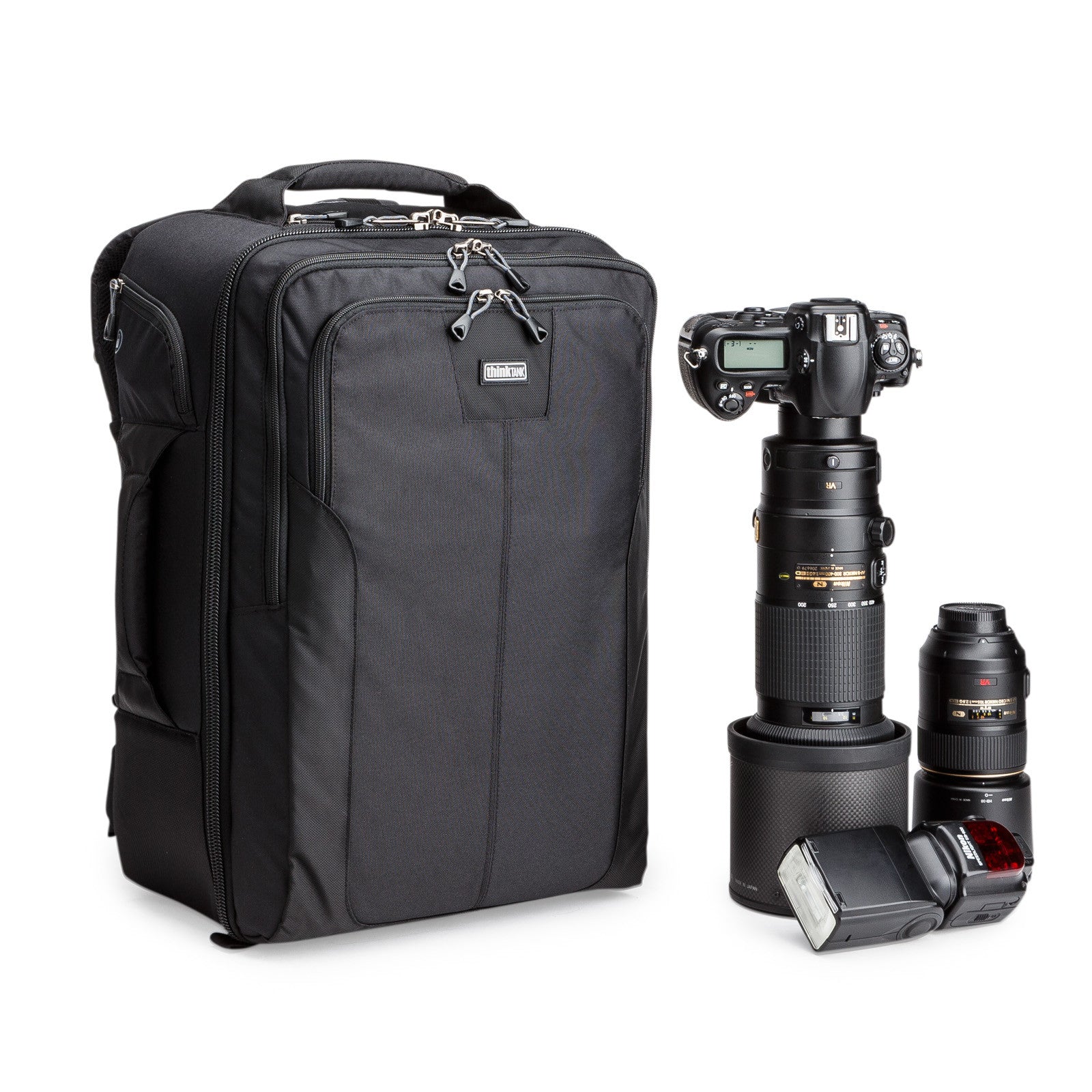
I have been using a Think Tank Airport Accelerator for around 12 years. I am now on my second one, but that statement probably needs some explanation because it would be easy to assume the first one eventually failed.
It didn’t. It simply reached the point where it looked as though it had been thoroughly abused – largely because it had.
That first Airport Accelerator travelled with me through Africa, India, Alaska, Costa Rica, Ecuador, Brazil, Florida, all over Europe & plenty of other places besides. It was repeatedly loaded with heavy wildlife photography equipment, pushed into aircraft overhead lockers, put into safari vehicles, placed on dusty ground & generally treated as working luggage rather than something to be admired.
Eventually it looked sufficiently battered that I decided it deserved retirement.
What happened next probably says more about my opinion of the Airport Accelerator than anything else in this review.
I tried alternatives. I looked at & used different camera backpacks from MindShift & Think Tank itself, searching for something that might improve upon a design I had already been using for years.
None of them felt quite right. So I bought another Airport Accelerator. If my current one eventually reaches the same state as the first, I would buy a third without even thinking about it.
That is why I tend to call the Think Tank Airport Accelerator my Old Faithful.
What do I carry in the Think Tank Airport Accelerator?
My current wildlife photography equipment gives the Airport Accelerator a fairly serious test.
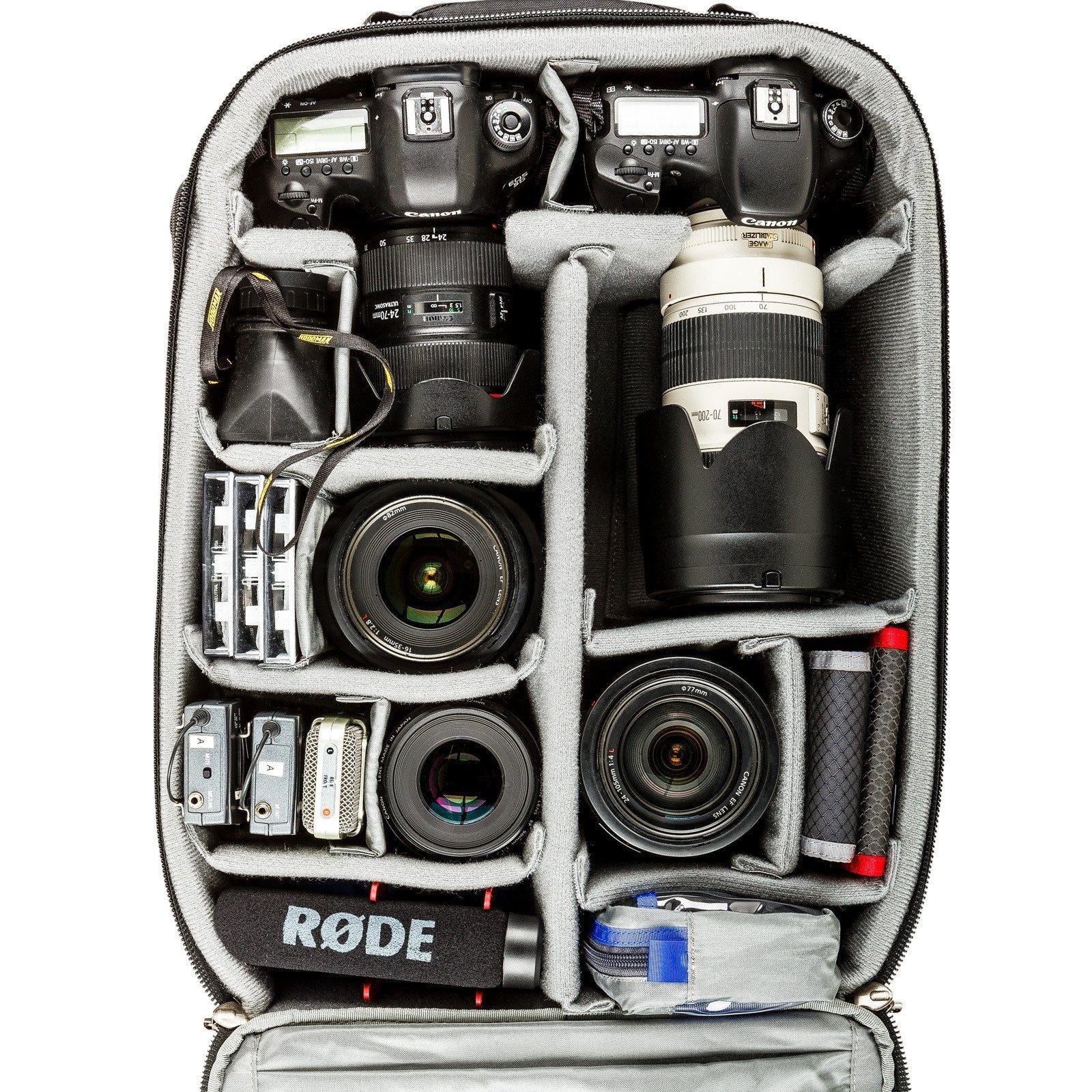
A typical load can include:
- a Sony FE 400mm F2.8 GM OSS
- two Sony α1 II bodies
- additional lenses
- a Sony 1.4× teleconverter
- batteries & other accessories
- whatever other useful bits I can squeeze into the remaining spaces
- a 14-inch laptop in the front compartment
The 400mm f/2.8 is packed with the camera body detached, the lens hood reversed & the tripod foot still attached.
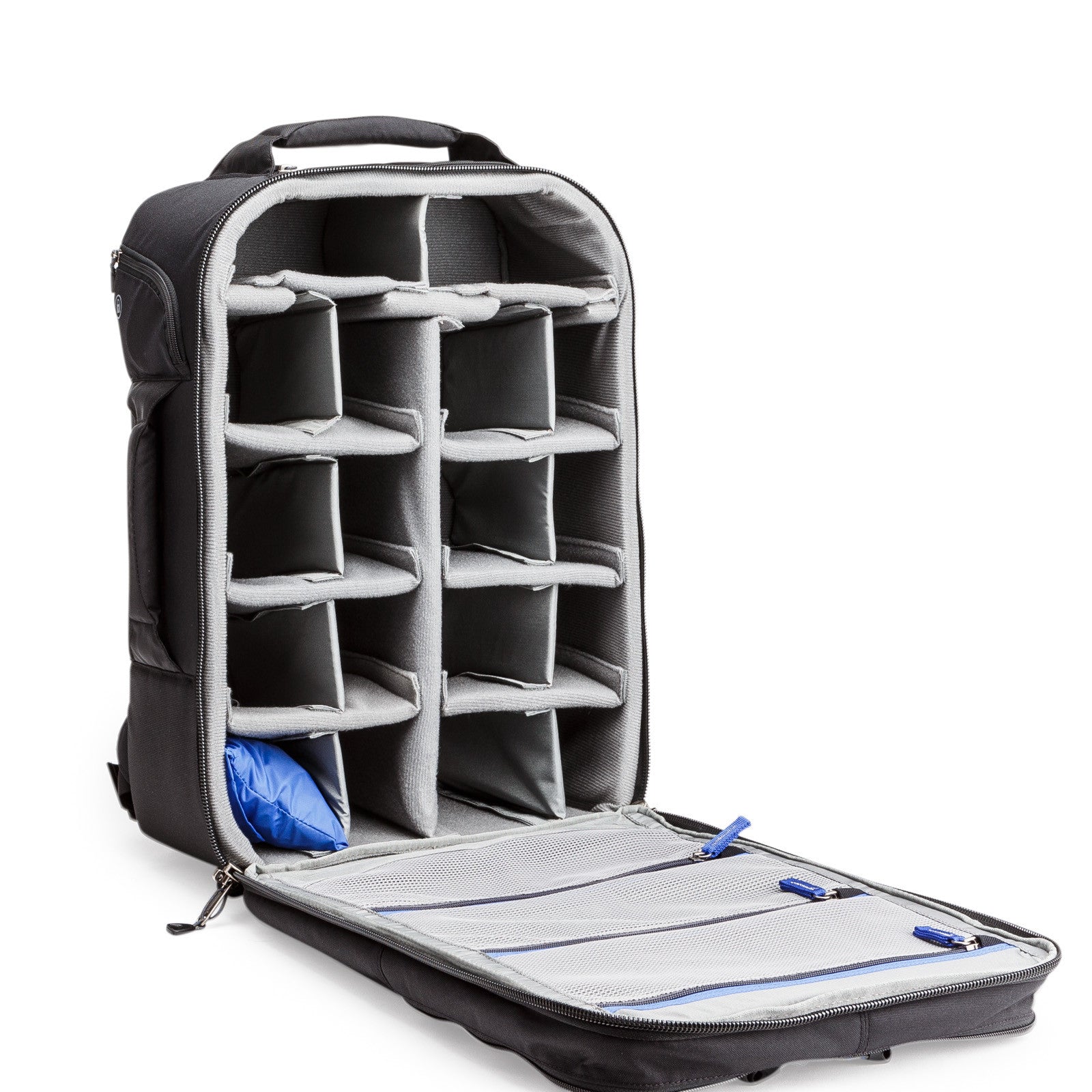
It is a tight fit. But it is an entirely workable tight fit rather than one of those arrangements where you spend ten minutes playing photographic Tetris every time you need to close the bag.
Even once the 400mm, two bodies, extra lenses & accessories are inside, the Airport Accelerator still feels properly organised.
That is one of the things Think Tank has always got right with this bag. The interior is essentially box-shaped, which might not look particularly exotic in a product photograph but makes extremely efficient use of the available volume. It also means the bag packs nicely alongside other luggage in a vehicle.
The internal dividers are easy to configure, remain securely positioned once set & have proved exceptionally durable over time.
This is a camera bag designed by people who appear to understand what happens after you actually put cameras into it.
The Airport Accelerator remains the most comfortable camera backpack I own
The most significant difference between the Airport Accelerator & my Peak Design Travel Backpack 45L is comfort.
The Peak Design is a good backpack. Its shoulder straps remain comfortable even when I load it heavily, its back panel is reasonable & the whole thing is beautifully made.
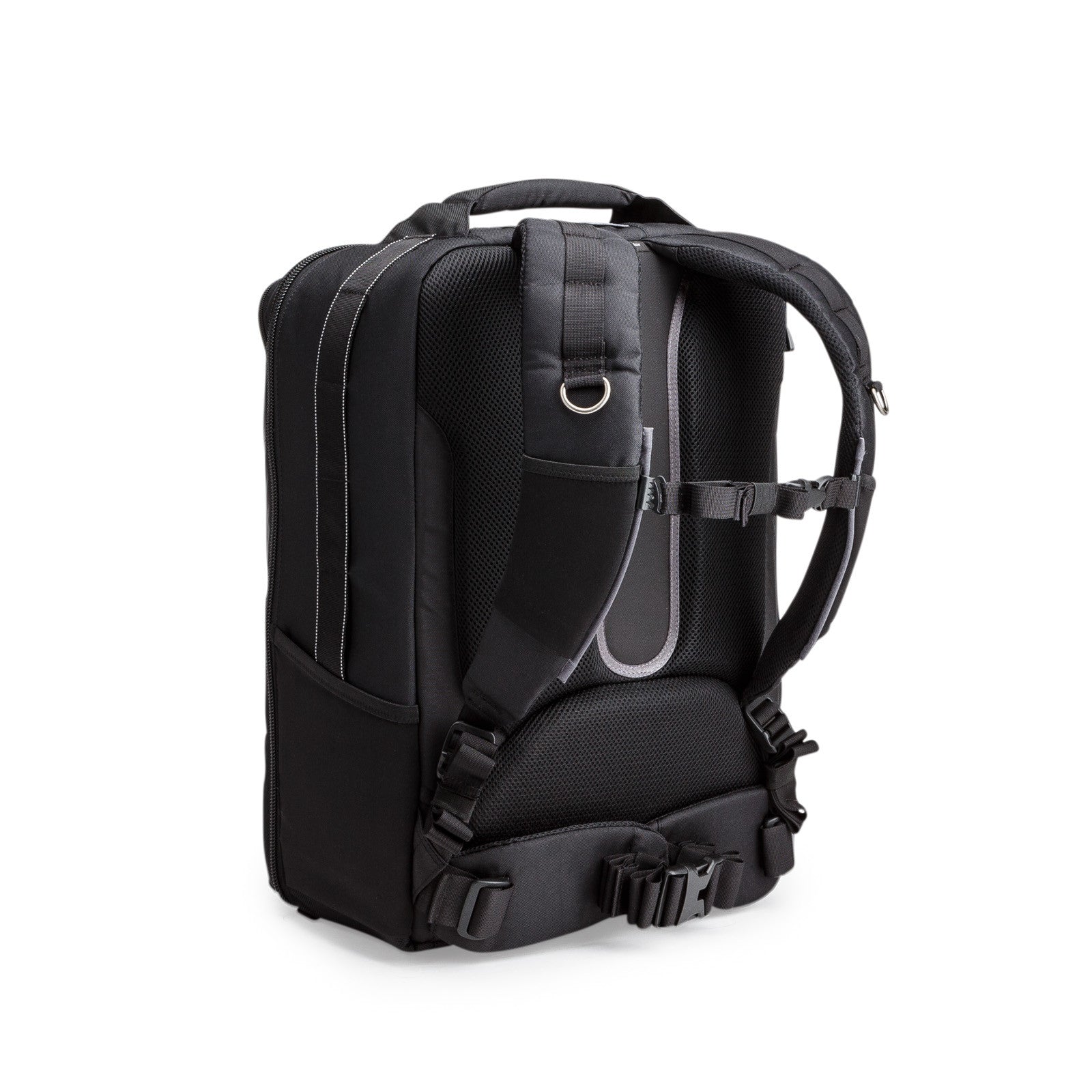
But the Think Tank is better. With a 400mm f/2.8, two bodies, lenses, accessories & laptop inside, the Airport Accelerator is genuinely comfortable to carry for extended periods.
That comes from the combination of the shoulder straps, back padding, harness shape & weight distribution rather than one miraculous piece of design.
Everything works together. I mostly carry the weight through the shoulder straps rather than depending heavily on the waist belt, & yet the bag remains comfortable.
That is significant because the amount of camera equipment I can put into it is anything but light.
When I compared the Peak Design 45L with the Airport Accelerator, I said one of the Peak Design’s greatest weaknesses was its ability to encourage me to put too much into it. Eventually the sheer weight becomes something I only want to carry through an airport rather than for any prolonged period.
With the Airport Accelerator, the same sort of substantial load simply sits better on my back.
Is the protection better than the Peak Design 45L?
Around the outside edges of the bag, yes.
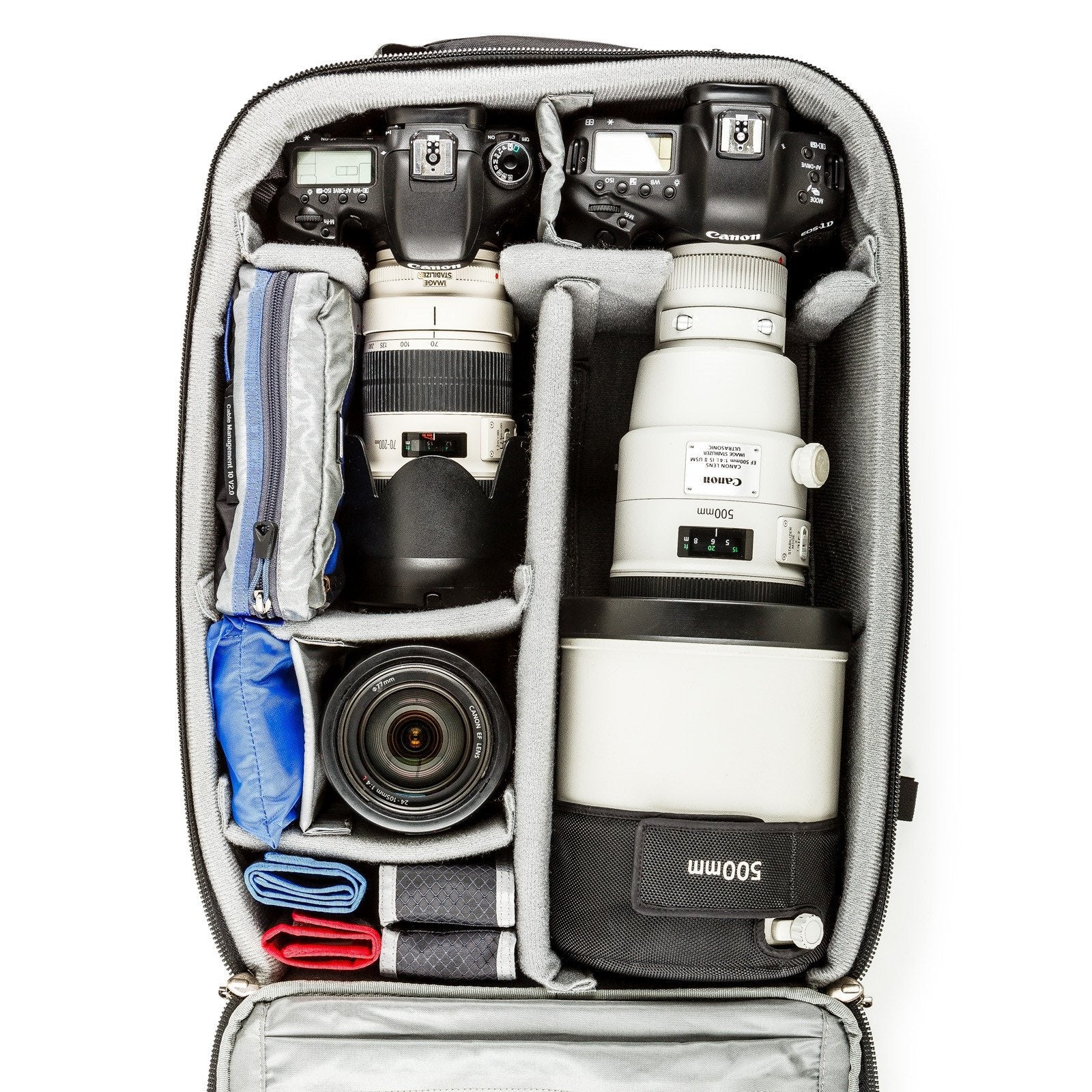
Internally, I would say the padding is broadly comparable with a well-configured Peak Design Camera Cube.
The Airport Accelerator, however, has more reassuring protection around its outer structure. Combined with that box-like shape, the camera equipment feels extremely well contained.
It holds the kit better than the Peak Design 45L, too.
That does not mean I regard the Peak Design as unsafe – far from it – but if I am choosing purely between the two as dedicated camera backpacks, the Think Tank wins on fit, padding & comfort.
Where Peak Design wins is versatility & weather resistance.
Remove the Camera Cube from the Peak Design 45L, add packing cubes & it becomes an excellent general travel backpack. I have used mine for a five-day clothes-only trip to Madrid.
The Airport Accelerator is unapologetically a camera backpack.
That is absolutely fine with me.
The laptop compartment is properly thought through
Camera bags often advertise laptop storage that becomes far less impressive once the main compartment is actually full of camera equipment.
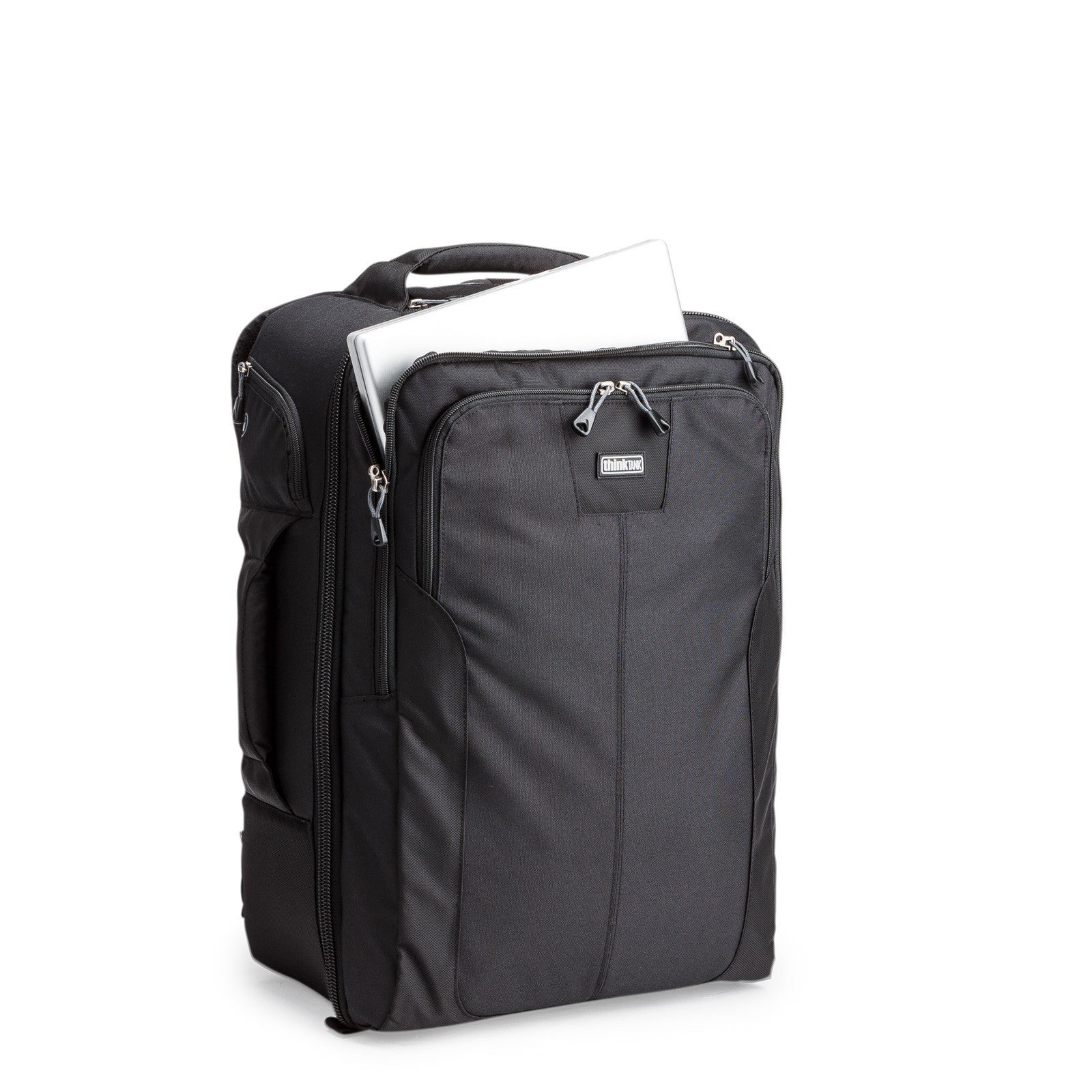
The Airport Accelerator handles this well. I carry a 14-inch laptop, & the front compartment remains useful even when the main bag is heavily populated by the 400mm & the rest of my camera equipment.
It feels like an integrated part of the design rather than a laptop sleeve someone remembered to add at the end.
Think Tank’s current Airport Accelerator 41L is actually specified to accommodate laptops up to a 16-inch MacBook Pro, reinforcing that computer storage remains a deliberate part of the design.
What is the Think Tank Airport Accelerator like as cabin baggage?
In more than a decade of travelling with two Airport Accelerators, I have never been challenged by an airline over the bag.
That is real-world experience rather than a guarantee that every version of the Airport Accelerator will satisfy every airline’s rules forever.
Airline restrictions also change, & anyone carrying expensive photographic equipment should check the allowance for their particular flight rather than rely on what happened to somebody else.
The current Airport Accelerator 41L is listed by Think Tank at 49.5 × 34 × 20 – 26cm externally, depending on how much the front section is filled, & Think Tank itself describes it as meeting most international & US airline carry-on requirements.
For comparison, British Airways currently permits a main cabin bag measuring up to 56 × 45 × 25cm. The current Airport Accelerator therefore falls comfortably inside BA’s height & width limits, although an overfilled front section could potentially push its quoted maximum depth beyond BA’s 25cm allowance. BA also requires passengers to be able to lift their cabin bag into the overhead locker themselves.
That last point matters more to wildlife photographers than it might to somebody travelling with clothes.
Put a 400mm f/2.8, two α1 II bodies, extra lenses, accessories & a laptop into any backpack & it becomes heavy.
Even so, I find the Airport Accelerator noticeably easier to put into an overhead locker than my Peak Design Roller Pro when both are carrying comparable photographic equipment. Having the load already on your body puts you in a much better position to manoeuvre it upwards than lifting a heavy roller from floor level.
The Airport Accelerator’s grab handles are very good too, which makes repositioning it in aircraft cabins or vehicles straightforward.
It is remarkably stable
Put the bag down & it has another seemingly mundane but extremely useful characteristic: it stays standing.
The base is broad & stable, even with a substantial camera load inside.
Again, this sounds trivial until you have used a bag that constantly wants to topple over.
The boxy form is one of those design decisions that continues paying dividends everywhere: good internal capacity, easy vehicle packing & a stable platform when you put it down.
Weather resistance is its biggest weakness
There are very few areas where I think the Peak Design Travel Backpack 45L clearly beats the Airport Accelerator as a camera backpack.
Weather resistance is one of them. The Think Tank does have weather-resistant materials & the current version uses a DWR coating, abrasion-resistant YKK zips & includes a seam-sealed rain cover.
But in real-world use, I reach for the Think Tank’s rain cover sooner than I would with the Peak Design.
Deploying that cover works, but it is also a bit of a nuisance when the weather changes suddenly.
More significantly, if the Airport Accelerator itself gets properly wet, it can take ages to dry.
For someone whose photography can involve rainforests, snow & generally unpredictable wildlife conditions, that is a genuine weakness rather than a theoretical criticism.
If Think Tank asked me how to turn the Airport Accelerator from my 9.5/10 bag into a 10/10 bag, better inherent weather resistance would be one of my two requests.
There is another field-use problem: where the back panel ends up
The second irritation is created by the way you access the main camera compartment.
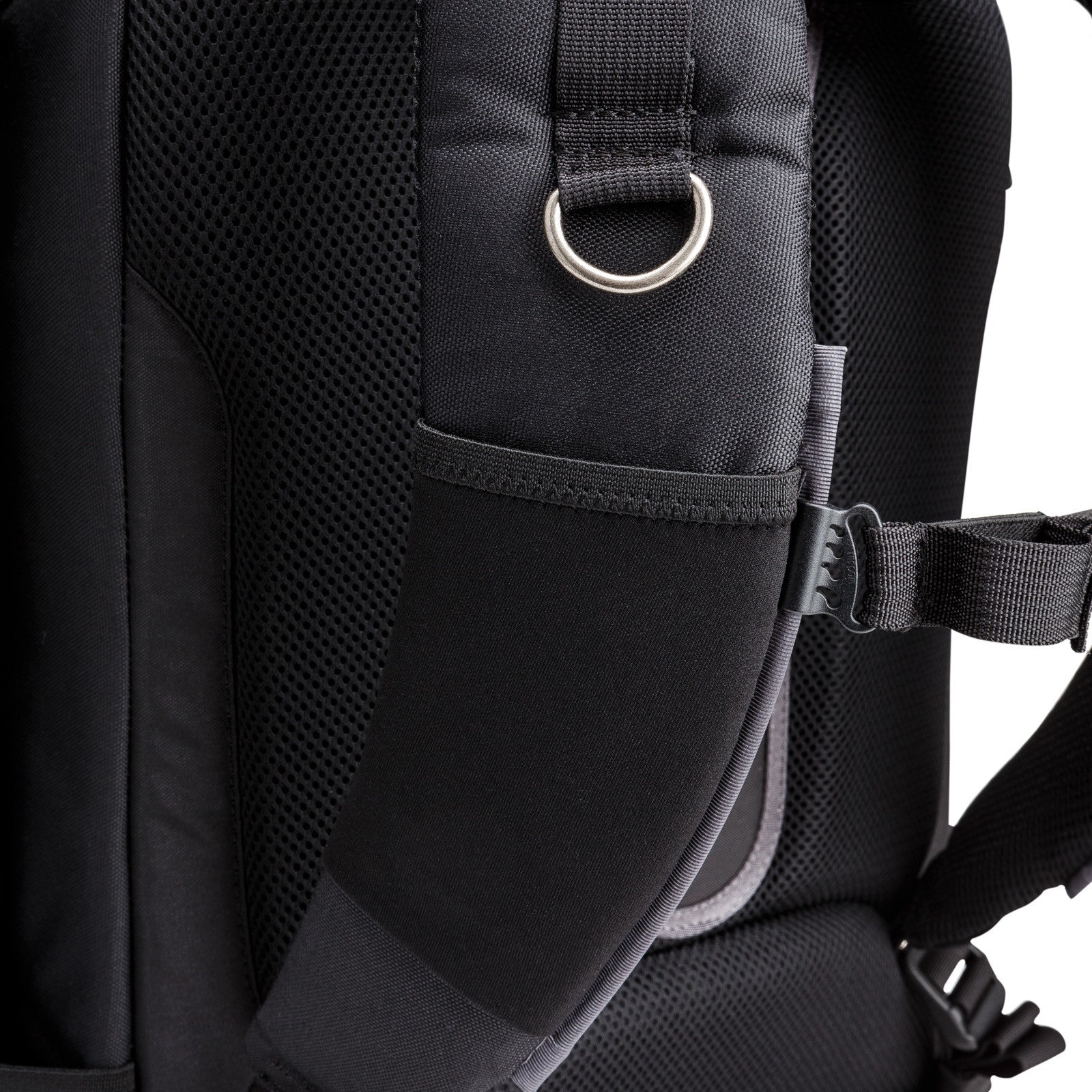
To open the Airport Accelerator, its back panel ends up against the ground.
That means whatever is on the ground can end up on the surface you subsequently put against your clothes.
Mud, dust & dirt have genuinely transferred onto my clothing this way.
Sometimes I deliberately look for somewhere cleaner before opening the bag.
Sometimes wildlife photography does not offer that luxury & you simply accept that the thing is going to get dirty.
It is worth mentioning because it is precisely the sort of issue that tends not to appear when somebody reviews a camera bag after using it around the house for a week.
Spend years putting one down on roadsides, forest floors, hides & safari locations & you notice it.
The tripod attachment is the other thing I would redesign
The Airport Accelerator provides tripod attachment facilities.
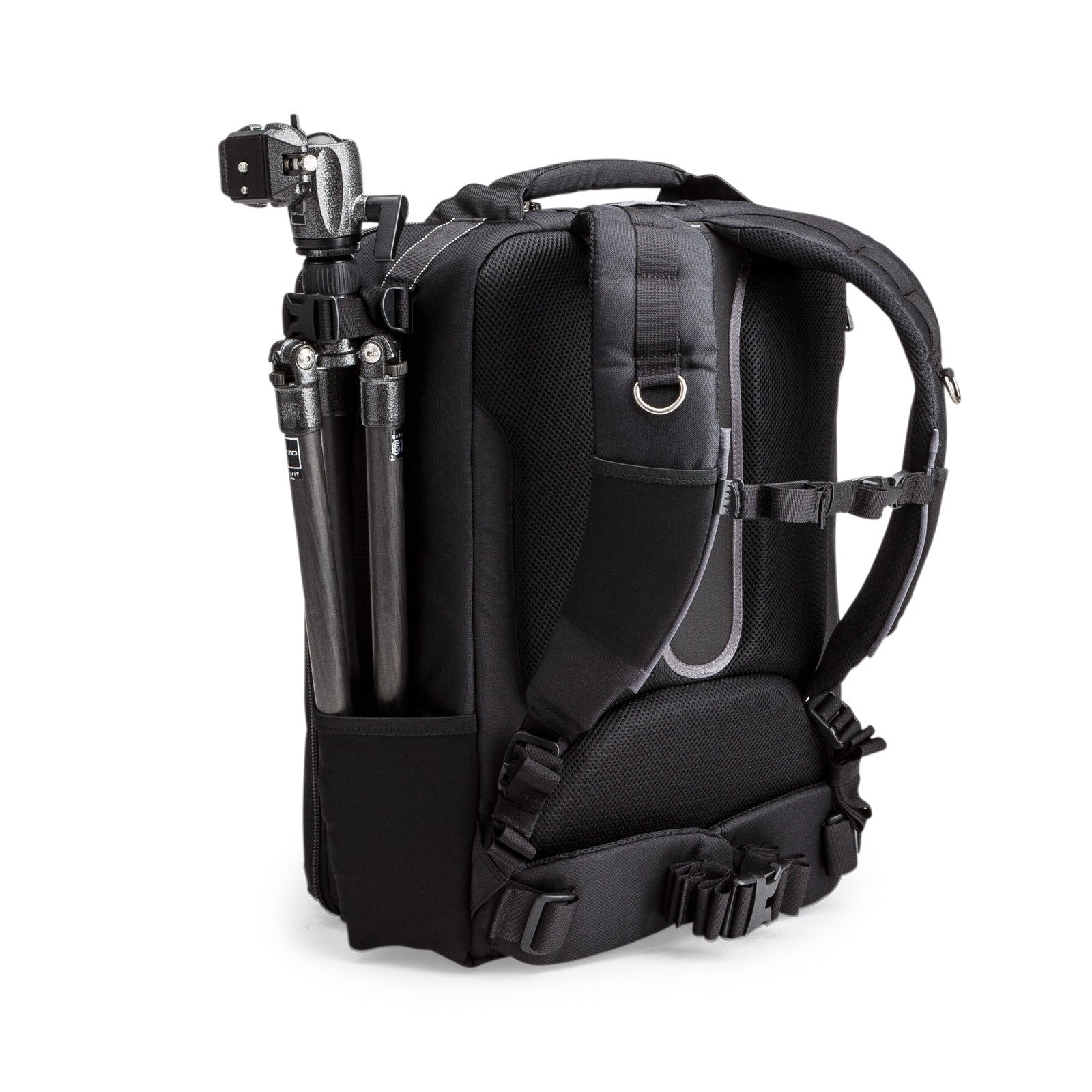
I have never used them. They are simply not positioned where I want a tripod to be.
If I were redesigning the bag, I would remove the existing arrangement & install straps underneath the backpack so that a tripod could be carried horizontally across the bottom.
That would suit the way I travel far better.
Give me those bottom straps plus substantially improved built-in weather resistance while leaving everything else essentially unchanged, & I would buy the revised bag immediately.
Twelve years of durability
If I have to identify the single greatest strength of the Think Tank Airport Accelerator, however, it is not comfort.
It is durability. My first example endured years of international travel & was eventually retired because it looked worn & abused rather than because some critical part of the bag had failed.
The replacement feels every bit as well made.
There has been no sense that the newer bag has been cheapened or that Think Tank’s manufacturing standards have declined.
The zips have also remained dependable. Every few months I treat them with a little graphite or silicone, but this is preventative maintenance rather than something I started doing to correct a problem.
The internal dividers continue to grip properly.
The straps continue to work. The structure continues to hold its shape.
The bag simply keeps doing its job.
That is ultimately why I bought another one.
Think Tank customer service deserves a mention
In twelve years, I have only needed Think Tank’s assistance once.
Ironically, that had nothing whatsoever to do with a product failure.
An internal divider went missing thanks to Indian airport security.
I contacted Think Tank about getting another.
They sent a replacement from the USA very quickly – & did not charge me for it.
They certainly did not have to do that. Their bag had not failed, nor had they lost the divider.
That kind of customer service stays with you, particularly when combined with a product that has otherwise required no support.
I also like that it doesn’t scream ‘camera bag’
The Airport Accelerator has an understated, functional appearance that I still love.
I would actually prefer Think Tank not to modernise it by turning it into something conspicuously fashionable.
When I am walking through an airport, hotel or city with a Sony 400mm f/2.8, two α1 II bodies & several other lenses inside a backpack, I do not particularly want the backpack announcing what it contains.
The Airport Accelerator doesn’t. The design still looks current to me after all these years, but it remains discreet.
That is exactly how I want it.
Can a smaller photographer use the Airport Accelerator?
Despite its substantial size, I would not regard this as a backpack reserved for large photographers.
It is adjustable. More importantly, I have seen it demonstrated repeatedly in real life.
A lot of NaturesLens clients of all different shapes & sizes use Airport Accelerators, & Pui Hang uses one despite being significantly smaller than me.
That matters more to me than looking at a mannequin wearing one on a manufacturer’s website.
It is undoubtedly a large camera backpack, but the harness has enough adjustment to work across a surprisingly broad range of people.
Airport Accelerator versus Peak Design Roller Pro
Having now used both extensively, I don’t think this needs to become a competition.
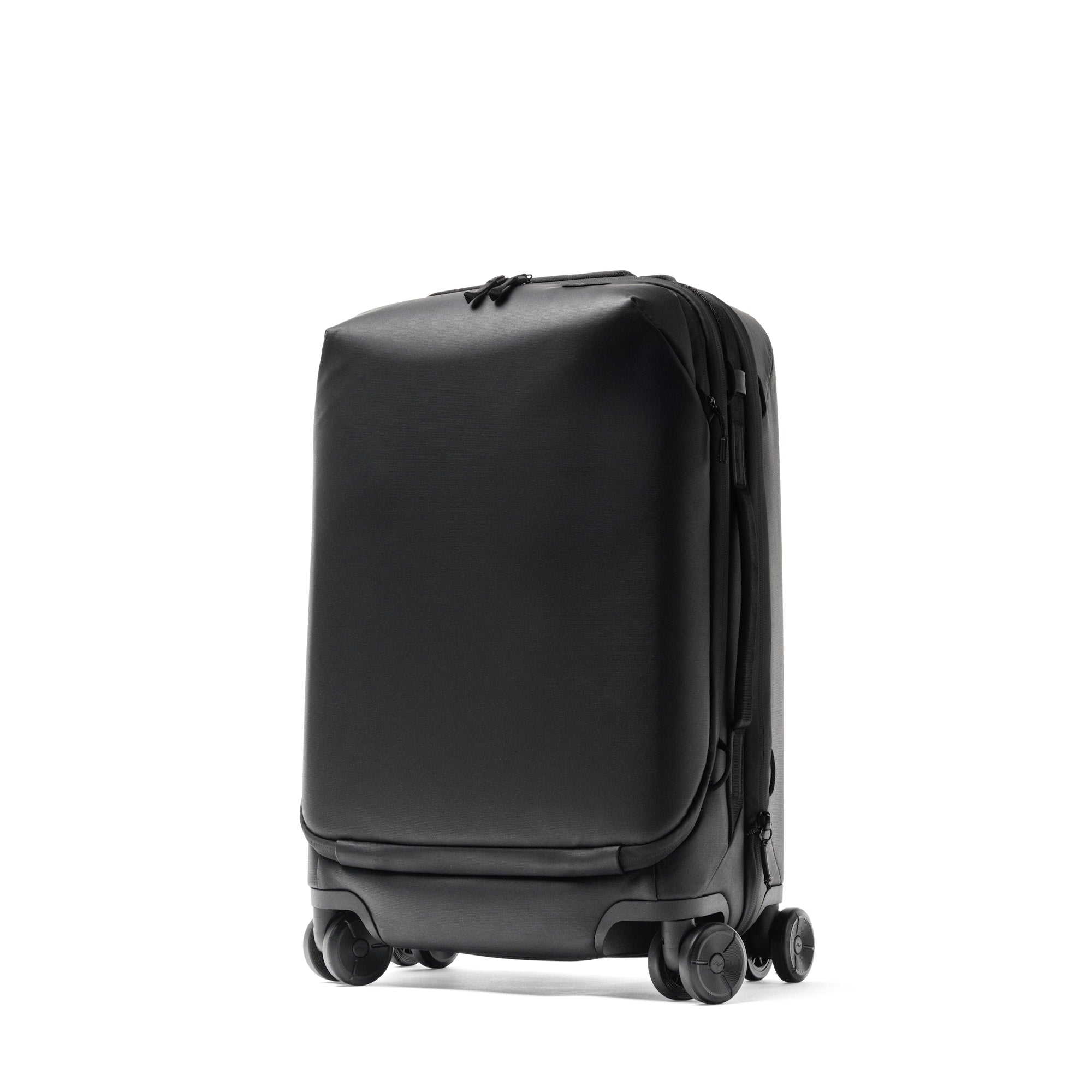
They solve slightly different problems. If I am travelling on a wildlife photography trip where the equipment can move from airport to vehicle to accommodation without me having to carry it any real distance – & where the surfaces are firm enough for wheels – I will happily take the Peak Design Roller Pro Carry-On.
The Roller Pro + XL Camera Cube is superb. It provides excellent organisation, substantially more shell protection & is wonderfully easy to move across good airport flooring.
But add hiking, awkward terrain or repeated carrying & the equation changes.
That is when I want the Airport Accelerator.
The Roller is brilliant while it can roll.
The Airport Accelerator keeps going when the wheels would stop being useful.
Airport Accelerator versus Peak Design Travel Backpack 45L
This comparison is even clearer. As a dedicated camera backpack, I prefer the Think Tank Airport Accelerator.
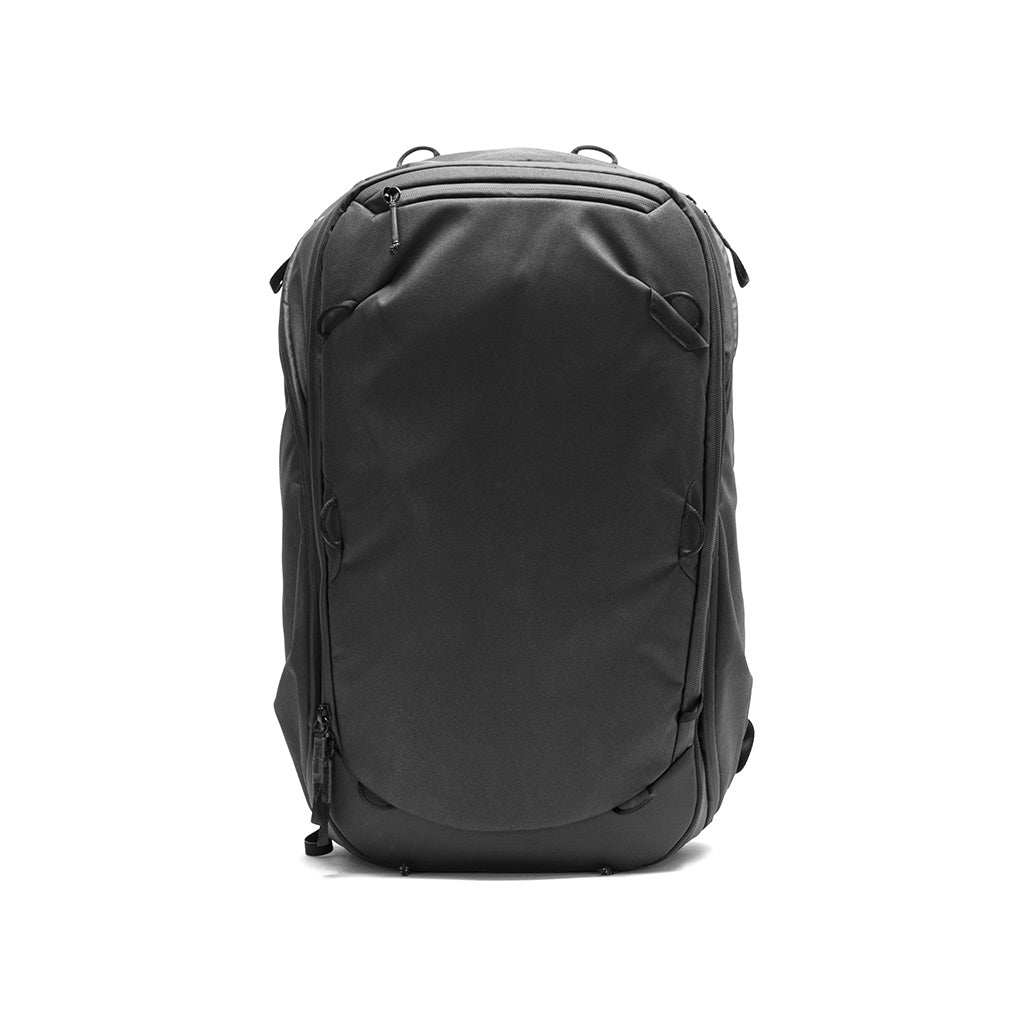
It is better padded around the outside, holds my camera equipment better, distributes the load better & is more comfortable for extended carrying.
The Peak Design wins on built-in weather resistance & overall versatility.
If I want one backpack that can carry camera equipment on one trip & clothes in packing cubes on the next, Peak Design wins easily.
If I know I am carrying camera equipment, I reach for the Think Tank more often.
If I could keep only one camera bag
I own & rate the Peak Design Roller Pro.
I own & rate the Peak Design Travel Backpack 45L.
But if somebody told me I could keep only one serious camera-carrying bag, I would keep the Think Tank Airport Accelerator.
It gives me the best balance of:
comfort, protection, capacity, durability & versatility.
The Roller beats it under some circumstances.
The Peak Design backpack beats it in others.
Neither beats it overall for the way I work.
Is the Think Tank Airport Accelerator worth the money?
Absolutely. This is where long-term ownership changes how I look at price.
A cheap camera backpack that you replace repeatedly is not necessarily cheap.
My first Airport Accelerator spent years travelling around the world before I retired it because it looked tired. My second remains my default choice. If that one eventually goes the same way, I will buy another.
I cannot offer a stronger value judgement than that.
Think Tank Airport Accelerator review: my verdict after 12 years
Camera bags are an oddly personal thing.
Dimensions & litres can tell you whether your equipment should fit, but they cannot tell you whether a bag will feel right once it contains a 400mm f/2.8, two camera bodies, extra lenses, a laptop & all the assorted bits that accumulate around professional wildlife photography.
Over the years I have tried to replace the Airport Accelerator.
Nothing else has given me quite the same combination.
It is not perfect. I want better built-in weather resistance. I want horizontal tripod straps underneath it. I dislike putting the back panel onto dirty ground when accessing my equipment.
Those shortcomings cost it half a point.
Everything else has earned my loyalty over twelve years of real travel.
The simplest way I can describe the Think Tank Airport Accelerator is still the best:
It is the perfect backpack for the wildlife photographer who has to lug kit around the world & know it is protected.
It is my Old Faithful. It has never let me down. Score: 9.5/10.
See how the Airport Accelerator compares to the Roller Pro, the Travel Backpack 45L & the Weekender in our full camera bag & travel luggage comparison.