Northern Peru is one of the most extraordinary destinations in the world for hummingbird photography, bringing together an astonishing variety of species across cloud forests, Andean valleys, mountain scrub & the humid foothills of the Amazon. For photographers, the attraction goes far beyond the number of birds that can be encountered. It is the opportunity to work with some genuinely remarkable species, including the extraordinary Marvelous Spatuletail, the diminutive Rufous-crested Coquette & the beautifully coloured Royal Sunangel, each presenting its own photographic challenges & possibilities.
Peru is home to more than 120 species of hummingbirds, with northern Peru holding an exceptional concentration of them. The diversity of habitats, combined with established reserves, specialist gardens & carefully managed feeding stations, creates opportunities that would be extraordinarily difficult to replicate through conventional birdwatching.
For our Peru’s Ultimate Hummingbirds photography holiday, I have concentrated on locations where we can spend meaningful time photographing these birds, rather than simply seeing them before moving on. With up to 50 species potentially available, the photographic variety is remarkable, but it is the quality of the encounters that really interests me.
Why Is the Marvelous Spatuletail Northern Peru’s Most Extraordinary Hummingbird?
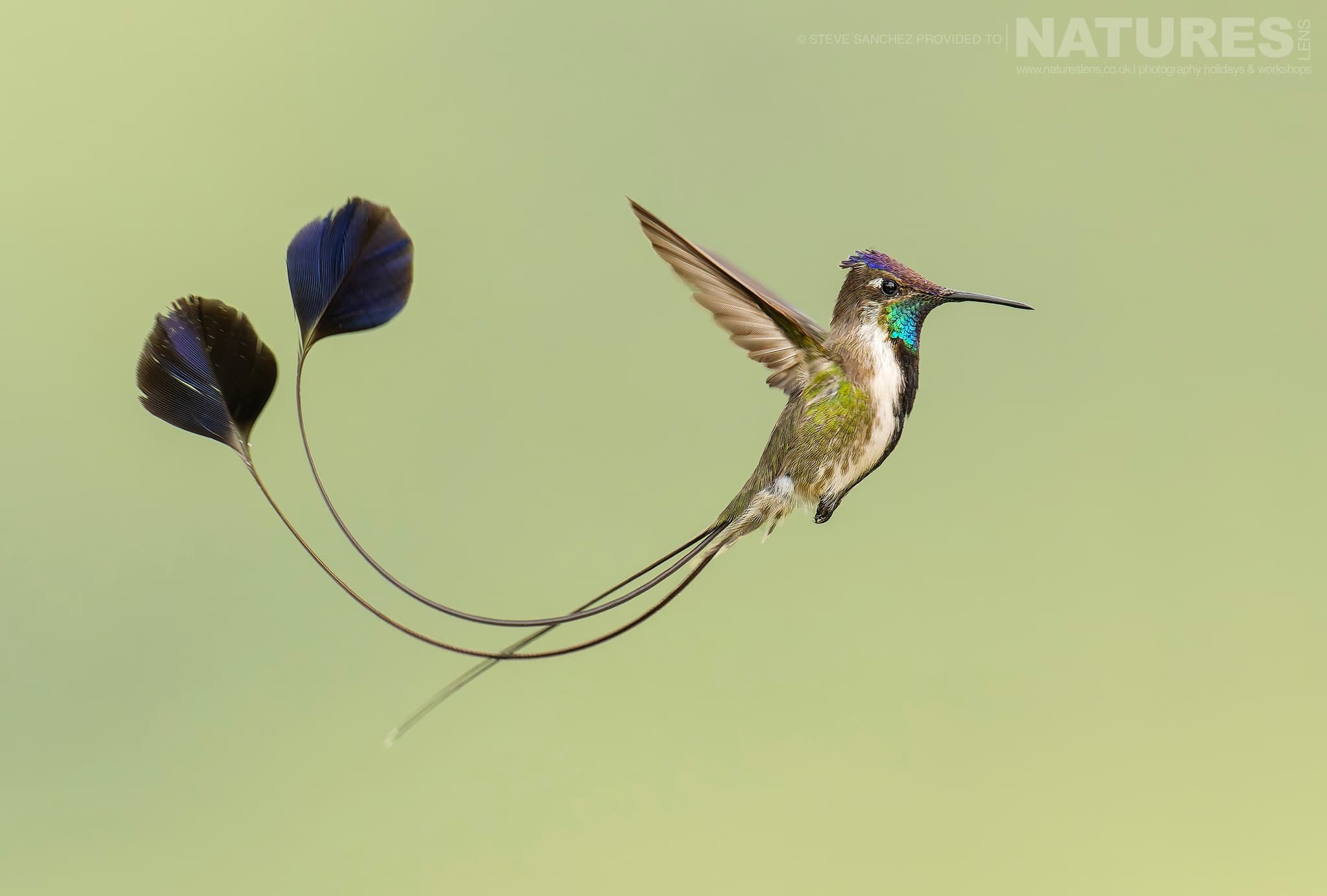
Of all the hummingbirds we hope to photograph in northern Peru, the Marvelous Spatuletail (Loddigesia mirabilis) is undoubtedly one of the most distinctive. Restricted to a relatively small area of the Andes in northern Peru, it is an extraordinary example of how evolution can produce something that almost defies belief. The male is a tiny bird with an iridescent blue-violet crown, a shimmering green throat & contrasting white underparts, but it is the remarkable tail that makes this species so sought after.
Unlike the tails of most hummingbirds, the adult male’s outer tail feathers extend into two extraordinarily long, slender streamers, each ending in a rounded, violet-blue spatula. These feathers can be moved independently, particularly during courtship, when the male performs an elaborate display to attract a female. Watching a bird of such modest proportions manoeuvre with these extravagant appendages must surely rank amongst the most remarkable spectacles in hummingbird photography.
For me, the photographic challenge is not simply recording the bird but finding a composition that does justice to its unusual proportions. A conventional tight portrait risks losing the very feature that makes the species special, whereas a wider composition can allow those long tail streamers to become part of the photograph. Background separation is particularly important, as the fine feathers can disappear against complicated vegetation, while carefully chosen shooting angles can reveal the iridescent colours of the crown & throat.

One of our principal locations is Huembo Reserve, near Pomacochas in the Amazonas region, established through conservation work involving ECOAN & the American Bird Conservancy. Here, the Marvelous Spatuletail regularly visits feeding stations, giving photographers the opportunity to study its behaviour & anticipate its movements.
I have deliberately allowed several photographic sessions at Huembo rather than treating the reserve as a brief stop. The possibility of returning to a productive perch, adjusting our position as the light changes & waiting for a particularly attractive pose is precisely what can turn a straightforward record image into something much more satisfying. Huembo also supports other hummingbirds, including the Purple-throated Sunangel, Chestnut-breasted Coronet, Bronzy Inca & Andean Emerald, creating opportunities to build a varied collection of photographs between encounters with the Spatuletail.
What Makes the Rufous-crested Coquette Such a Rewarding Photographic Subject?
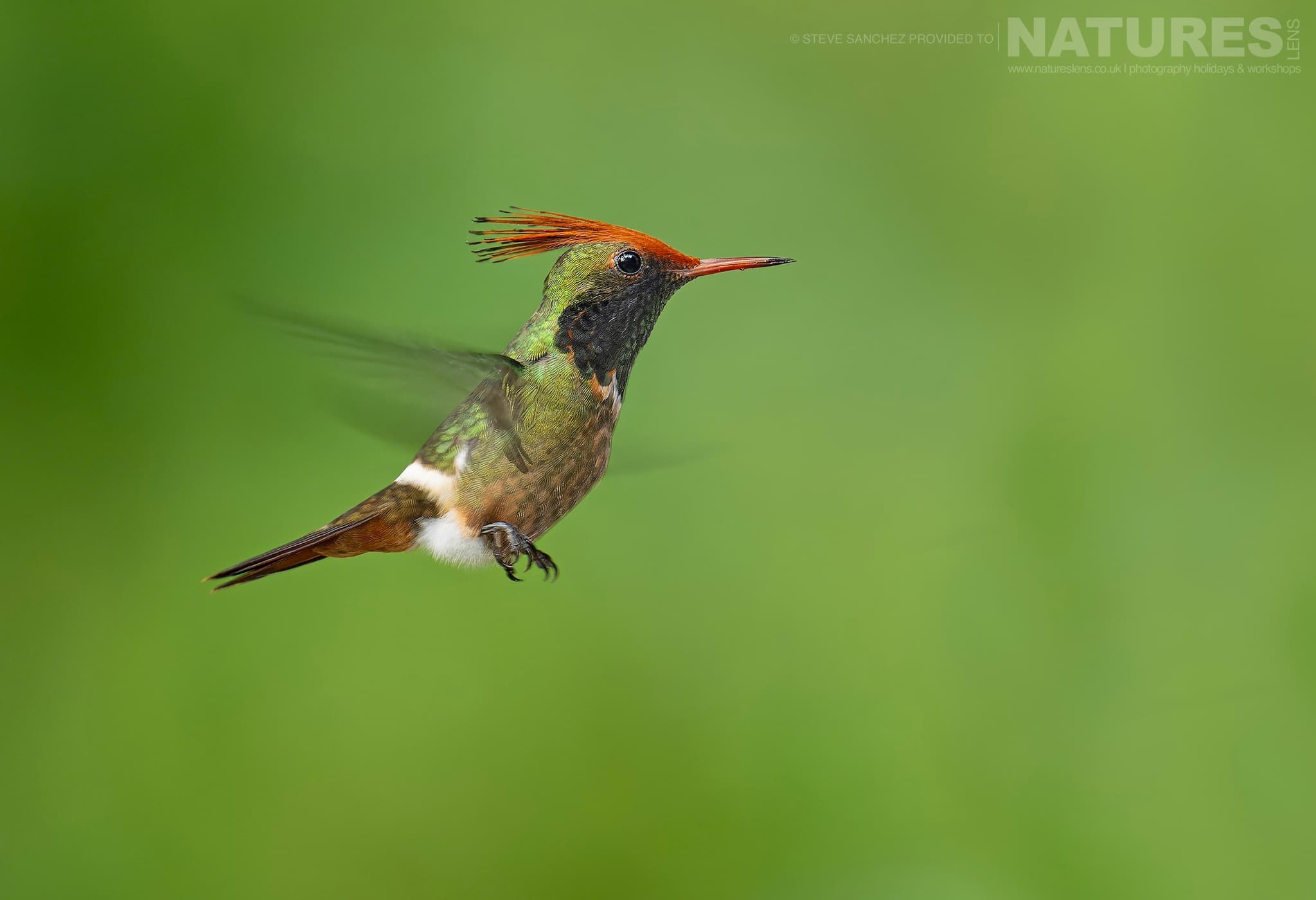
The Rufous-crested Coquette (Lophornis delattrei) offers a completely different photographic experience. Where the Marvelous Spatuletail is all about an extravagant tail, the Coquette’s character comes from its wonderfully expressive crest, tiny proportions & restless behaviour. It is a bird that can look quite different from one moment to the next, depending on its posture, the direction of the light & whether the male has raised its remarkable rufous head feathers.
The male has a glittering green body, a short rufous tail & a distinctive crest that can stand almost vertically above its head. Although small even by hummingbird standards, it has a surprisingly assertive personality, readily defending feeding opportunities & becoming involved in territorial disagreements with other birds. These interactions provide the possibility of photographing far more than a beautifully coloured bird sitting on a branch.

Waqanki Lodge, near Moyobamba, is one of the important locations on our itinerary. Its established hummingbird gardens & flowering vegetation attract an impressive selection of species, including the Rufous-crested Coquette, Violet-headed Hummingbird, Fork-tailed Woodnymph, White-chinned Sapphire & White-necked Jacobin. With a mixture of flowers, feeders & natural perches, the gardens offer different approaches to composition rather than restricting us to a single photographic setup.
For a species as small as the Coquette, positioning is particularly important. I favour working with backgrounds sufficiently distant from the subject to produce a pleasing separation, while retaining enough of the surrounding vegetation to give the photograph a natural context. The angle of the light can make an enormous difference to the appearance of the iridescent feathers, sometimes transforming an apparently dark bird into one displaying brilliant shades of green.
There is also the prospect of flight photography, especially when birds repeatedly approach favourite flowers. Once a flight path becomes predictable, we can concentrate on a particular flower or feeding position & wait for the bird to enter the composition. This is where patience, repeated opportunities & an understanding of behaviour become more valuable than simply pursuing another species elsewhere.
Why Is the Royal Sunangel One of the Most Special Birds of the Andean Cloud Forest?
The Royal Sunangel (Heliangelus regalis) is another of northern Peru’s particularly desirable hummingbirds, not least because of its restricted distribution & striking appearance. The male possesses a remarkably rich combination of dark blue & violet plumage, with colours that can appear almost black in unfavourable light before suddenly revealing an extraordinary iridescent sheen. The female is considerably more subdued, with green upperparts & cinnamon-toned underparts, creating a striking contrast between the sexes.
This is a species associated with the eastern Andean slopes of northern Peru & neighbouring Ecuador, particularly areas of stunted forest, elfin vegetation & scrub at higher elevations. These habitats have a very different character from the warmer, more luxuriant gardens around Moyobamba. Mist, cloud, rapidly changing light & dense vegetation all contribute to the atmosphere, although they can also make photography considerably more demanding.

The Abra Patricia region is an important part of our route, with photography centred around Owlet Lodge, forest feeding stations & specialist sites. Fundo Alto Nieva is another recognised location for the Royal Sunangel, where established feeders have provided close encounters with this elusive species. Our precise photographic priorities will depend on local activity & conditions, but this area offers a fascinating collection of hummingbirds & cloud forest specialities.
Photographing the Royal Sunangel presents an interesting problem because its colours are highly dependent on the relationship between the bird, the camera & the light source. A small change in head angle can transform the visible colour of the plumage, meaning that a technically sharp photograph does not necessarily reveal the bird at its best. I would rather spend time waiting for that moment of illumination than accumulate dozens of images in which the extraordinary violet colouring is barely visible.
The species is also strongly territorial around feeding areas, sometimes chasing other hummingbirds or insects away from favoured flowers. These encounters can provide opportunities for behaviour photography, although they happen quickly & require anticipation.
What makes the Royal Sunangel particularly appealing is the combination of rarity, habitat & appearance. It is not simply another colourful hummingbird to add to a collection, but a species whose character is closely connected with a very particular part of the Andean landscape.
Which Other Hummingbirds Make Northern Peru Such a Photographically Diverse Destination?
Although the Marvelous Spatuletail, Rufous-crested Coquette & Royal Sunangel are obvious highlights, concentrating exclusively on these three would overlook much of what makes northern Peru exceptional. The region supports an extraordinary collection of hummingbirds, with substantial changes in species composition as we move between the warmer Amazonian foothills, humid montane forests & higher Andean environments.
Amongst the species we hope to encounter are the Black-bellied Thorntail, Golden-tailed Sapphire, Rufous-vented Whitetip, Peruvian Racket-tail, Emerald-bellied Puffleg, White-chinned Sapphire, Koepcke’s Hermit & Black-throated Hermit. Each brings something different photographically, whether that is an unusual tail shape, distinctive feeding behaviour, particularly attractive plumage or a preference for flowers that offer interesting natural compositions.
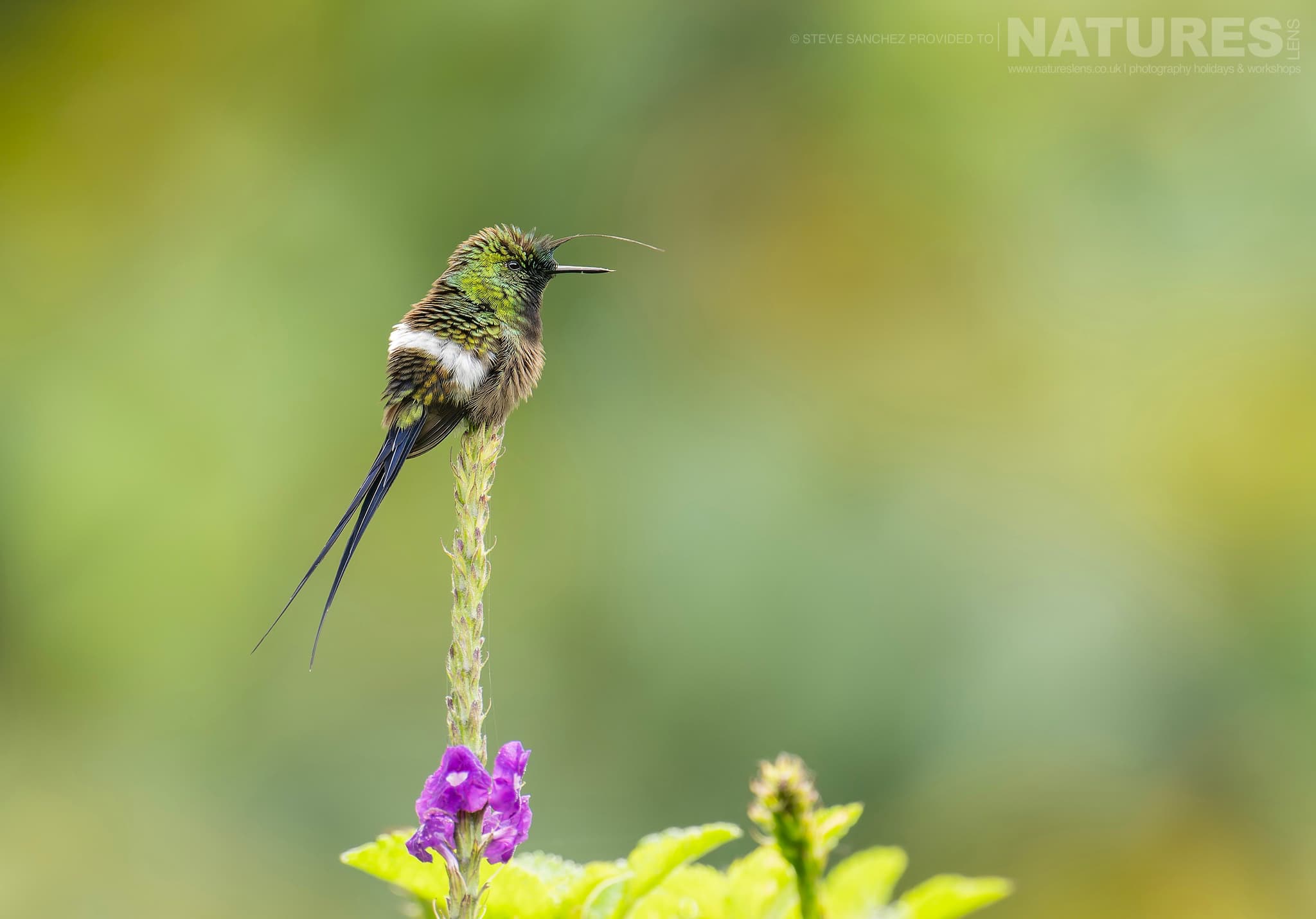
The Sword-billed Hummingbird is another memorable photographic prospect, its extraordinary bill illustrating the remarkable relationships that have developed between hummingbirds & the flowers on which they feed. Hermits present a different challenge again, often moving rapidly through shaded vegetation, while some of the smaller species can be difficult to isolate amongst the constant activity around feeding stations.
This variation is important when planning a photographic itinerary because not every species responds to the same techniques. Some are particularly suited to traditional portraits, others become more interesting when photographed in flight, while certain birds are best represented feeding naturally amongst flowers. A productive session might concentrate on a single territorial individual, while another could produce photographs of several species visiting the same carefully chosen setting.

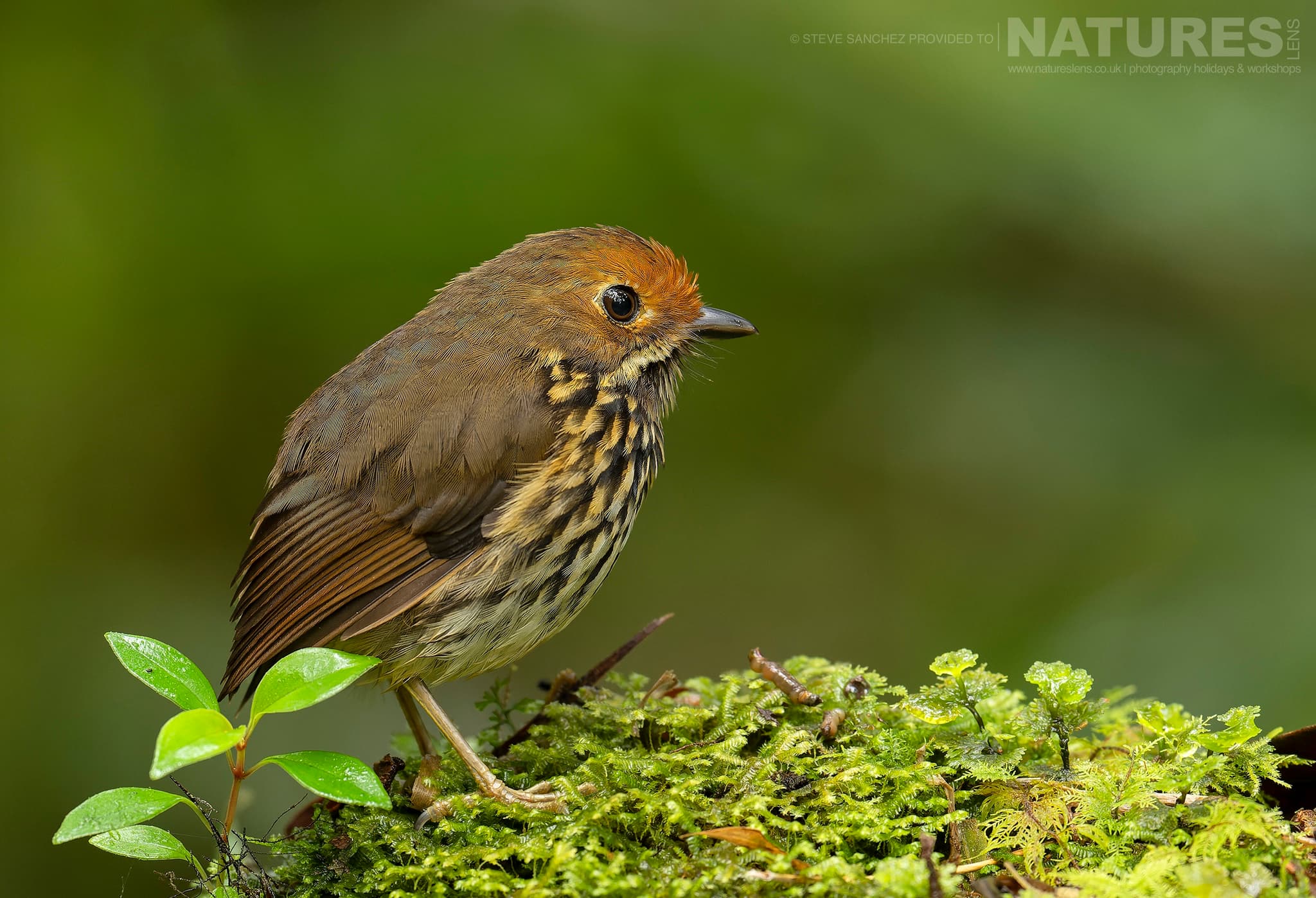
Northern Peru also offers opportunities beyond hummingbirds. Around Abra Patricia & the surrounding reserves, species such as Chestnut Antpitta, Ochre-fronted Antpitta, Johnson’s Tody-Flycatcher & the elusive Long-whiskered Owlet add another dimension to the journey. Dedicated antpitta feeding stations can be particularly rewarding because they offer opportunities to photograph normally secretive forest birds in more manageable conditions.
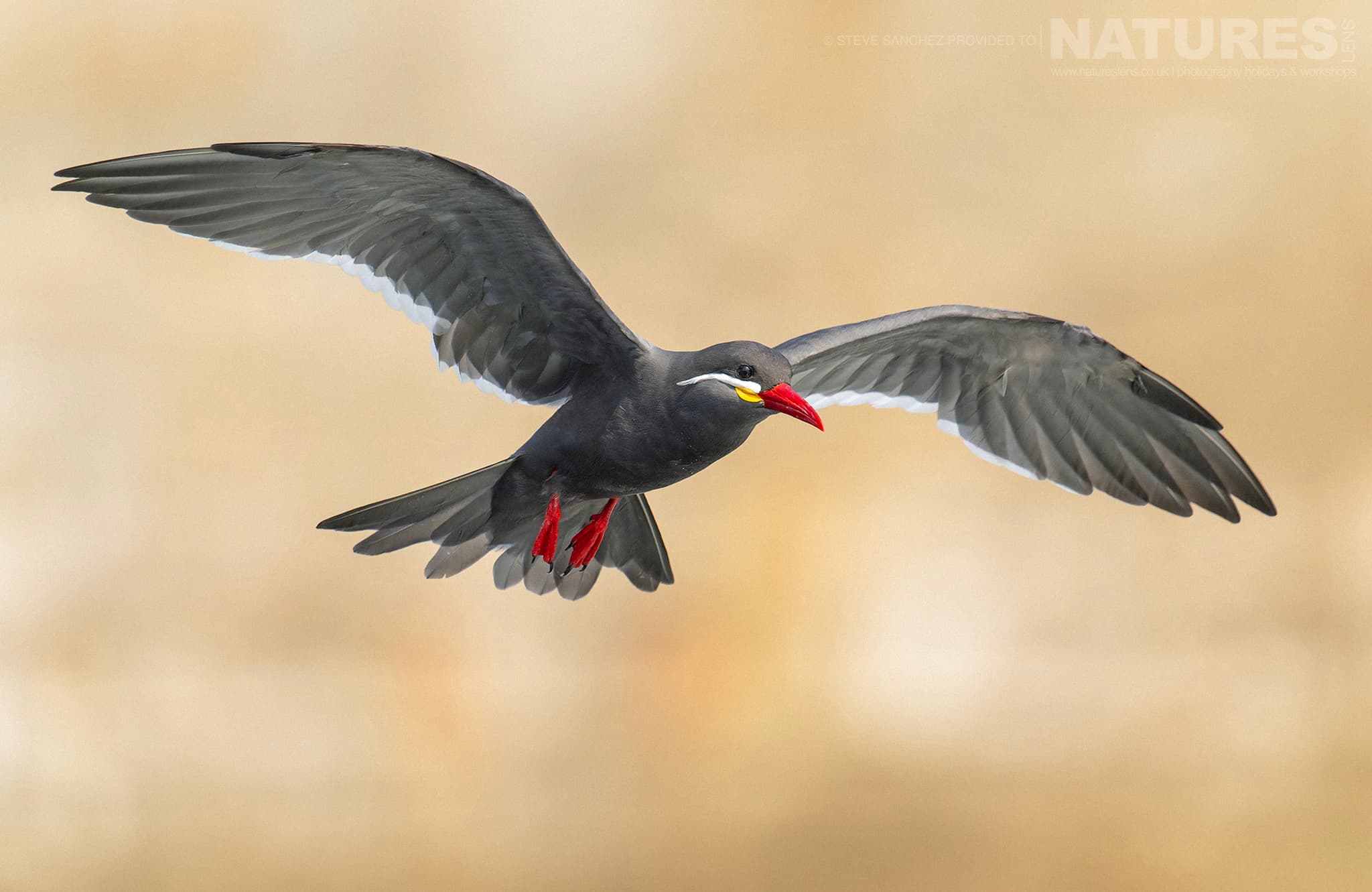
These additional subjects are not an excuse to abandon the hummingbird photography that forms the heart of the trip. Rather, they provide the flexibility to respond to what is happening locally, making the most of a productive forest session or a particular bird showing well. We also finish with coastal photography around Pucusana, providing a completely different environment & a further opportunity to broaden the portfolio before returning home.
How Do We Approach Hummingbird Photography Differently on a NaturesLens Holiday?
One of the reasons I find specialist hummingbird photography so rewarding is that success comes from a combination of preparation, understanding behaviour & spending enough time with the subject. Hummingbirds are extraordinarily fast, but they are not necessarily unpredictable. Many return repeatedly to favoured flowers, defend particular feeding stations or approach along recognisable flight paths, which means careful observation can significantly improve the quality of the photographs.
This is why I have built our northern Peru itinerary around established locations such as Waqanki Lodge, Owlet Lodge & Huembo Reserve, rather than trying to cover the greatest possible distance in pursuit of a species list. A conventional birding tour might move on once everyone has enjoyed a satisfactory view, whereas photographers often need considerably longer to explore the possibilities presented by a single bird.
At feeding stations, we can work on backgrounds, perches, shooting angles & the direction of the available light. Natural-light photography remains particularly attractive when conditions allow, especially for relaxed portraits & photographs that incorporate flowers or the surrounding habitat. In suitable circumstances, controlled multi-flash techniques can open up additional possibilities for freezing wing movement during flight, although any specialist lighting needs to be used responsibly & in accordance with local arrangements.
I also think it is important to avoid making every photograph look identical. A portfolio consisting entirely of birds suspended beside feeders quickly becomes repetitive, however technically impressive the individual images might be. My preference is to combine clean portraits with natural feeding behaviour, environmental photographs, flight studies & images that show the distinctive characteristics of each species.
With a maximum of five photographers on our Peru’s Ultimate Hummingbirds tour, there is room to work without constantly competing for the same position. Working alongside our experienced local partners also gives us the opportunity to respond to changes in bird activity, weather & access, concentrating our time where it is most likely to produce worthwhile photographs.
The practicalities matter too. Northern Peru can be warm & humid in the lower elevations, considerably cooler in the mountains & frequently wet in cloud forest habitats. Comfortable footwear, protection for camera equipment & sufficient patience to work through changing conditions are all important. Some sessions may be relatively relaxed around established feeders, while others involve forest paths, uneven ground & periods of standing or waiting.
Why Should Northern Peru Be on Every Hummingbird Photographer’s Wish List?
For me, the real attraction of northern Peru is the possibility of photographing an extraordinary range of hummingbirds without treating the experience as a race between locations. Few destinations can offer such a combination of spectacular endemics, unusual forms, distinctive habitats & established photographic facilities within one carefully organised journey.
There is also a conservation dimension that should not be overlooked. The Marvelous Spatuletail has a restricted range, while the Royal Sunangel depends on vulnerable Andean habitats. Although the Marvelous Spatuletail is currently assessed as Near Threatened rather than Endangered, habitat loss remains a serious concern. Conservation initiatives such as those supporting Huembo demonstrate how protecting habitat, supporting local communities & encouraging responsible wildlife tourism can work together.
Our approach is to make the most of these opportunities without unnecessarily disturbing the birds or compromising the environments that sustain them. The value of spending time at a productive reserve extends beyond the photographs we take, particularly where visitor income contributes directly to local conservation.
Our next Northern Peru hummingbird photography holiday runs from 9 – 23 January 2028, with single occupancy accommodation included & a small group of no more than five photographers. We begin in Lima before travelling through Moyobamba, Abra Patricia & Huembo, eventually returning towards Tarapoto & finishing with coastal photography at Pucusana.
It is a journey I have designed around the sort of opportunities I value most as a wildlife photographer: enough time to understand a subject, the flexibility to respond when conditions change & access to locations where genuinely memorable images are possible.
Ultimately, the appeal is not whether we manage to photograph 40, 45 or 50 species. It is the prospect of returning with photographs that reveal the astonishing diversity, colour, behaviour & character of these remarkable little birds. When I think about the Marvelous Spatuletail displaying its extraordinary tail, a tiny Rufous-crested Coquette poised amongst flowers or a Royal Sunangel catching just the right light, those are precisely the photographic opportunities that make northern Peru such a special destination.