The Encounter Is Not the Photograph
Deliberate image-making is what turns an encounter into a photograph. A brown bear steps out of the Finnish treeline at dusk, backlit by the last copper light over the lake, & every shutter in the hide fires simultaneously. Thirty frames a second, sustained for as long as the bear is visible. The excitement is real – it should be. But when the photographers in the hide sit down to edit the next morning, they often find the same thing: two hundred near-identical frames of a brown bear walking left to right, competently exposed, adequately sharp, & utterly interchangeable.
The encounter was exceptional. The photographs were not.

This is the central problem in wildlife photography, & it is not a technical one. It is a problem of intent. The difference between a photographer who consistently produces strong work & one who returns from the same trips with memory cards full of competent-but-forgettable images is rarely about gear, settings or even access. It is about what was in their mind before the animal appeared.
What We Mean by Intent
Deliberate image-making means deciding what the picture is about before you raise the camera.
Intent is a specific, preconceived idea about the image you want to make – formed before the subject arrives, held in mind while you work, & used to drive every decision from lens choice to exposure to the moment you choose to press the shutter. It is not a vague aspiration to “take good photos.”
A photographer without intent reacts. The animal appears, the camera comes up, the burst fires. The result is documentation: a sharp record that the animal was present. Describe that image in a single sentence & you get a noun – “a pelican on the water,” “a bear at a river,” “an eagle on a branch.” Accurate, but flat.
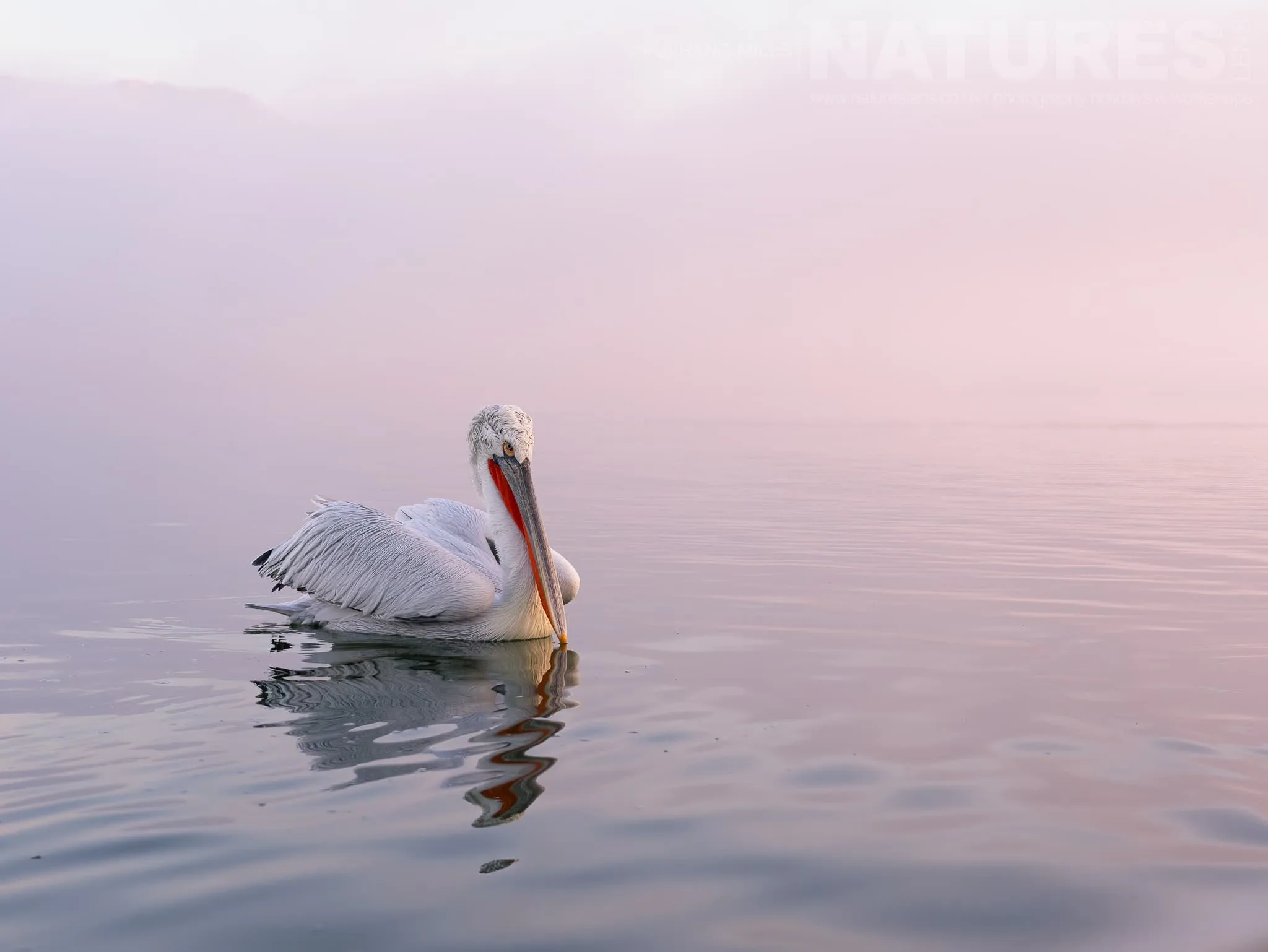
A photographer with intent anticipates. They have already decided what they are looking for – not just which species, but which moment, which quality of light, which relationship between subject & environment. When the opportunity arrives, their decisions are faster & more purposeful because the framework already exists. Describe their image in a sentence & you get a story – “a Dalmatian pelican breaking through dawn mist, water cascading from its bill, the lake behind it dissolving into nothing.” The same subject. An entirely different photograph.
How Intent Changes What You Do in the Field
In the field, deliberate image-making shows up as small decisions made early.
Intent reshapes your mechanical decisions before the animal does anything at all.
Take perspective. On our Pelicans of Lake Kerkini trips, we shoot from small boats at water level. The Dalmatian pelicans are large, tolerant & close – you could photograph them perfectly well from a sitting position in the boat. Many photographers do exactly that on day one, & the results are decent: sharp portraits, good detail, clean backgrounds. But the images feel slightly detached, as though you are observing the bird from above rather than sharing its world.
By day two, we encourage guests to get lower – bracing against the gunwale, bringing the lens down until it is barely above the waterline. The shift is dramatic. Suddenly the pelican is not below you but level with you, & the lake stretches out behind it as a vast, soft blur of silver & grey. The bird feels monumental. The image has atmosphere. Nothing changed except the photographer’s position, & that position changed because of a deliberate decision about what the image should feel like – not because the pelican did something exciting.
Or take exposure. In the boreal forests along Finland’s eastern border, the bears often emerge at the treeline as the light drops low & warm. The instinct is to keep the exposure safe – lift the ISO, open up, make sure the brown bear is well-lit & the shadows are clean. The result is technically correct & visually bland.
Everything is equally visible, equally weighted, equally uninteresting. Flat light, flat image.
But if you arrive at the hide with a different intent – “I want this bear to feel like it is materialising from the forest itself” – your exposure decisions reverse. You underexpose deliberately, letting the spruce & birch fall into deep shadow, holding detail only on the bear’s face & the ridge of its back where the last light catches the fur. The forest becomes a dark, textured presence rather than a backdrop. The bear is not just in the forest; it belongs to it. Same animal, same hide, same evening. The intent made the image.

Shutter Speed as a Creative Choice, Not a Safety Net
Deliberate image-making treats shutter speed as part of the picture, not a setting to survive on.
Nowhere is the gap between reactive & intentional shooting more visible than in the use of shutter speed.
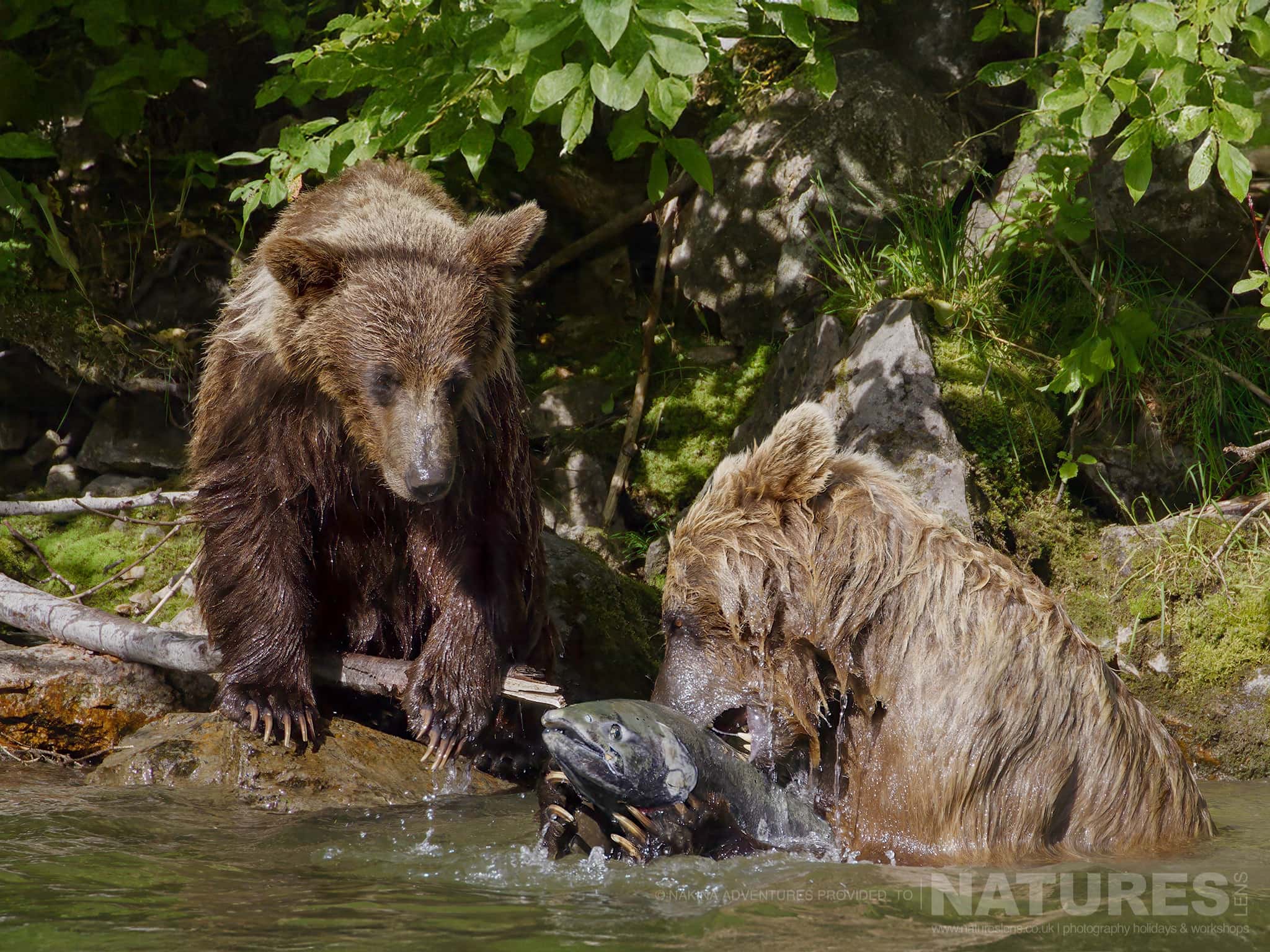
The reactive approach is to set the fastest shutter speed the light allows & leave it there. Everything frozen, everything sharp, every frame safe. On our British Columbia grizzly trips, where bears are plunging into rapids after salmon, that approach produces clean action shots – water droplets suspended in mid-air, every hair on the bear’s face rendered in detail. These images have value. They document a remarkable moment with precision.
But they are not the only way to describe that moment.
Drop the shutter to a fifteenth of a second & pan with the bear as it lunges. The salmon, the spray, the rocks & the river blur into streaks of white & silver around a bear that is sharp enough to anchor the frame but soft enough to feel like it is moving. The image is messier, less precise, & vastly more energetic. It communicates the chaos & violence of the salmon run in a way that a frozen frame cannot. You chose to make that image – it did not happen by accident because you forgot to check your settings.
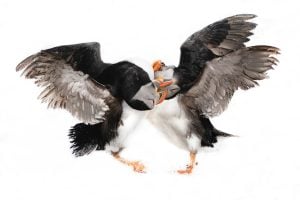
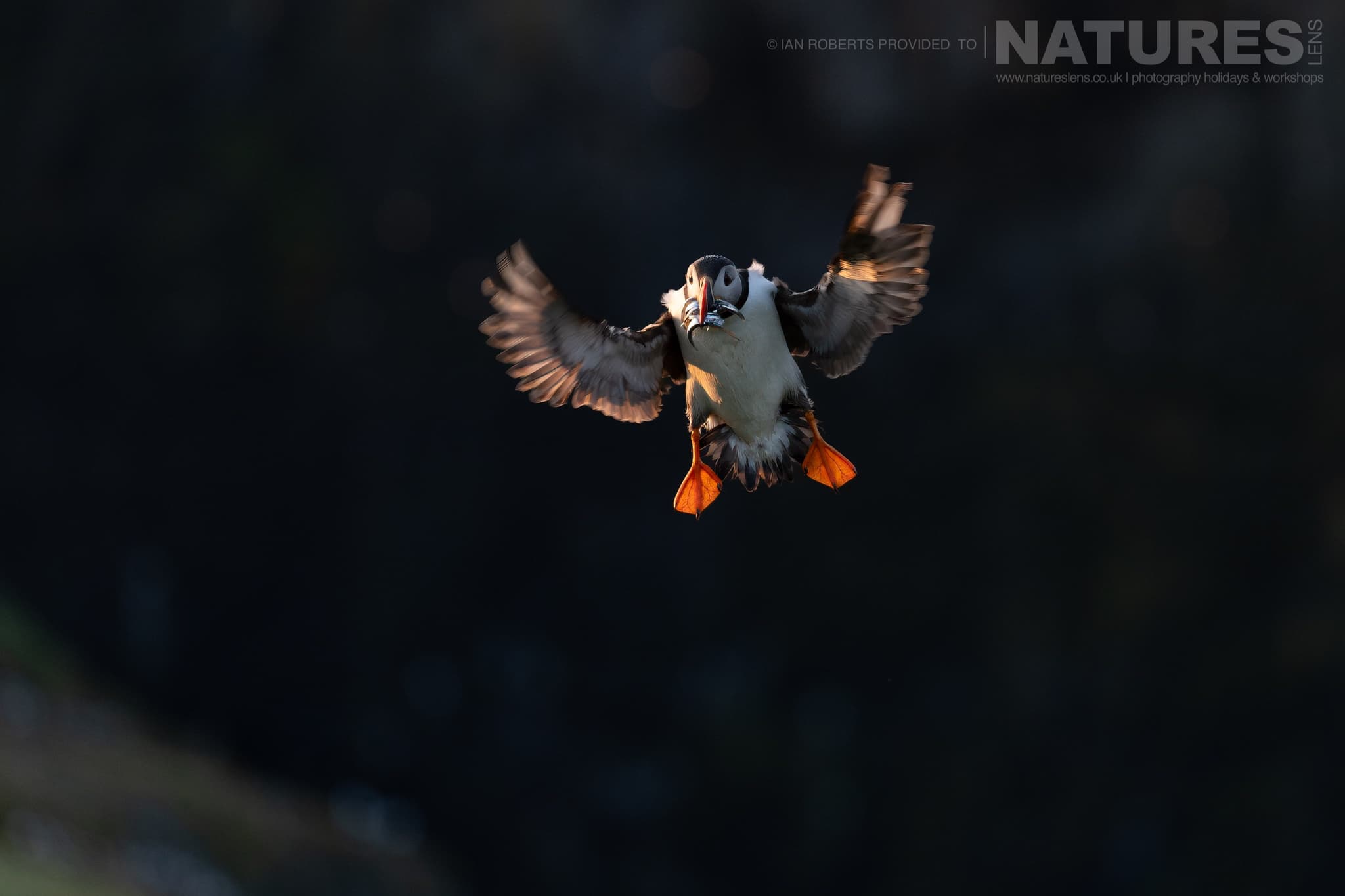
The same principle applies to bird photography. On Fair Isle, when Atlantic puffins are arriving at the colony in evening light, dropping to a thirtieth of a second & panning with a bird in flight gives you a sharp eye & bill against wings that blur into arcs of motion. It takes practice & a high failure rate. But the successes have a quality that no amount of frozen-wing sharpness can replicate – the feeling of flight itself, not just its mechanical components.
Resisting the Tight Crop
Deliberate image-making also means choosing your crop in the viewfinder rather than later.
There is a gravitational pull in wildlife photography towards filling the frame. Longer lenses, closer approach, tighter crop – the assumption is that bigger means better, that the animal’s face at maximum magnification is always the strongest image.
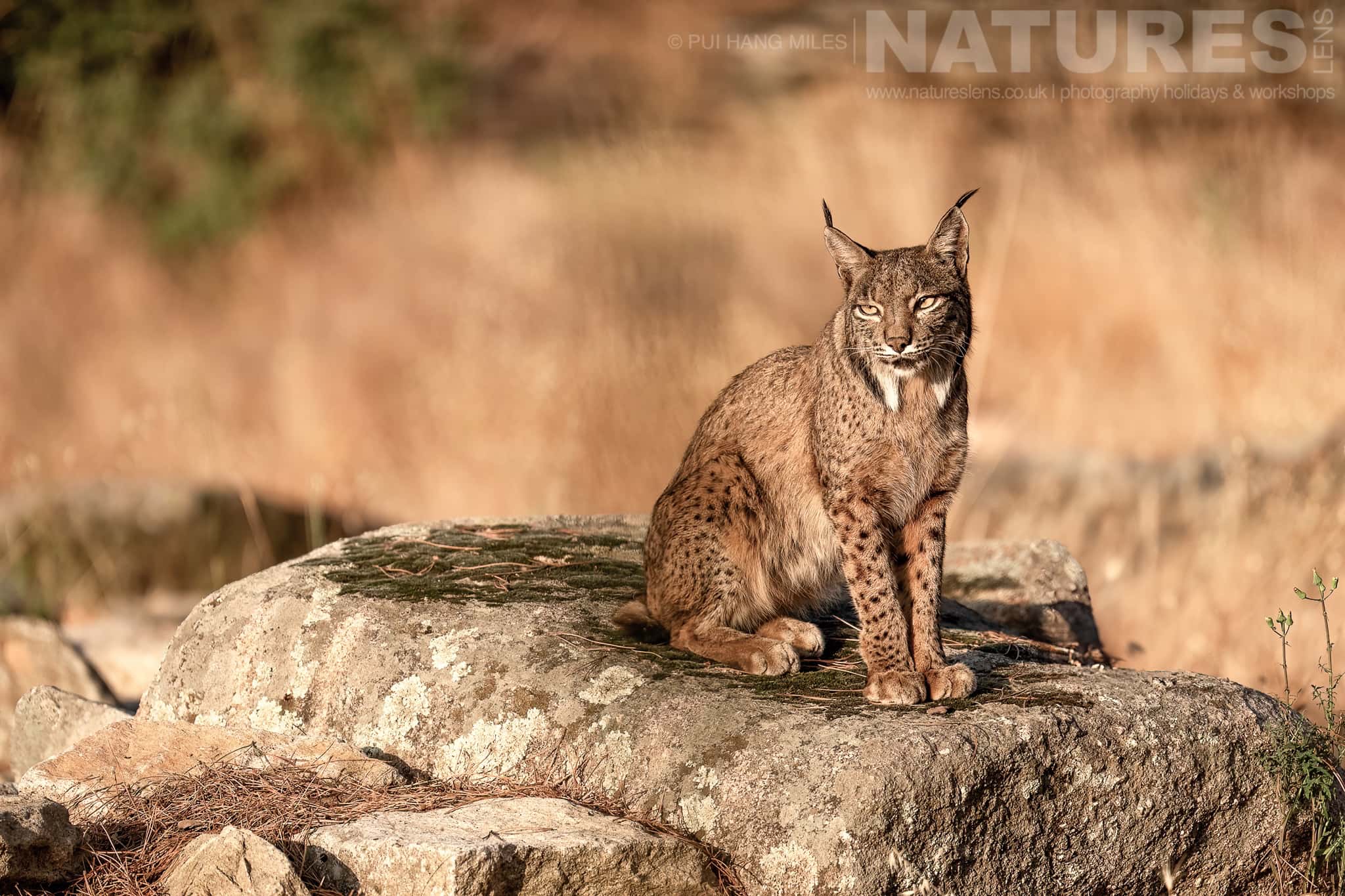
Sometimes it is. A tight portrait of an Iberian lynx making direct eye contact, backlit by low Andalusian sun with the ear tufts glowing, is a powerful photograph precisely because of that intimacy. There are moments when the animal’s expression carries everything the image needs.
But more often, the tight crop strips away the very thing that makes wildlife photography compelling: context. An animal exists within a landscape, a season, a set of conditions that define its life. Remove all of that & you are left with a specimen portrait – technically impressive, emotionally thin.
We see this shift happen on our Japan winter trips more than almost anywhere else. Photographers arrive expecting to shoot tight portraits of red-crowned cranes & snow monkeys. Many of them do, & the results are good. But the images that consistently stand out are the wider compositions – a single red-crowned crane dancing in a vast white emptiness of fresh snowfall on the Hokkaido plains, the bird small in the frame, the landscape enormous & silent around it. Or a snow monkey huddled in a hot spring while steam & falling snow blur the world beyond it into a wash of grey & white. These images work because the photographer chose to let the environment carry the weight of the story rather than demanding that the subject do all the work alone.

The decision to zoom out is an act of intent. It does not happen naturally when a dramatic animal is right in front of you. It happens because you walked into the field with the idea already formed.
Arriving with a Sentence
A single sentence is the simplest tool for deliberate image-making.
The most useful discipline we have found – & one we encourage on most of our trips – is to begin each session with a sentence. Not a species list. Not a settings plan. A sentence that describes the image you intend to make.
“A brown bear emerging from darkness into the last light of a Finnish summer night.” That sentence tells you to underexpose, to wait for the moment the bear crosses the light-to-shadow boundary, to resist shooting when the animal is fully lit & instead hold for the half-second when only the leading edge catches the sun. We use this discipline on our summer Finland departures, & it is the single most consistent factor in the quality of images photographers bring home.
“The chaos of a Chobe River elephant crossing at dusk.” That sentence tells you to slow the shutter, to shoot wide, to include the spray & the dust & the other elephants crowding the bank rather than isolating a single animal in a tight portrait.
“A single bee-eater, perfectly still, in the last warm light before the Danube Delta boat session ends.” That sentence tells you to stop shooting the action – the takeoffs, the prey deliveries, the squabbles – & wait for the quiet moment when the bee-eater simply sits on its perch & the light does the rest.

The sentence is not a guarantee. Wildlife does not cooperate with creative briefs. The bear may never cross that light boundary. The elephants may not cross at dusk. The bee-eater may not sit still. But the discipline of forming the sentence means you are scanning for the right conditions rather than reacting to whatever happens to occur. When the moment does arrive – & it does, more often than you might expect – you are ready for it because you have already made the creative decisions. All that remains is the execution.
Why Deliberate Image-Making Matters More Than Settings
Deliberate image-making is the habit that lifts your keeper rate more than any new setting.
The technical fundamentals are the floor, not the ceiling. The photographers who come home from our trips with the strongest portfolios are rarely the ones with the most expensive gear or the deepest knowledge of autofocus algorithms. They are the ones who arrived with ideas. Who sat in the hide with a picture already forming in their mind. Who resisted the urge to spray & pray when the animal appeared & instead waited – sometimes painfully – for the specific moment that matched their intent.
That discipline is learnable. It is not a gift reserved for a few naturally talented photographers. It is a habit, built through repetition, & every trip you take is an opportunity to practise it. Start with one sentence per session. Let the sentence shape your decisions. Review the results honestly. Over time, the gap between what you intended & what you achieved will narrow – & the images that emerge from that gap will be the strongest work you have ever produced.
- NaturesLens trips are designed around photographic opportunity – schedules, positions, & access are all structured to give you the best light.
- Small groups ensure unhurried access & individual guidance, with the maximum group size shown on each trip page.
- Single occupancy is included on the majority of our trips.
Composition
- Composition & Creative Intent in Wildlife Photography
- Composition in Wildlife Photography - From Record Shot to Portfolio Image
- Environmental Context in Wildlife Composition
- Intent in Wildlife Photography - From Reactive Shooting to Deliberate Image-Making