Species profile
About this species
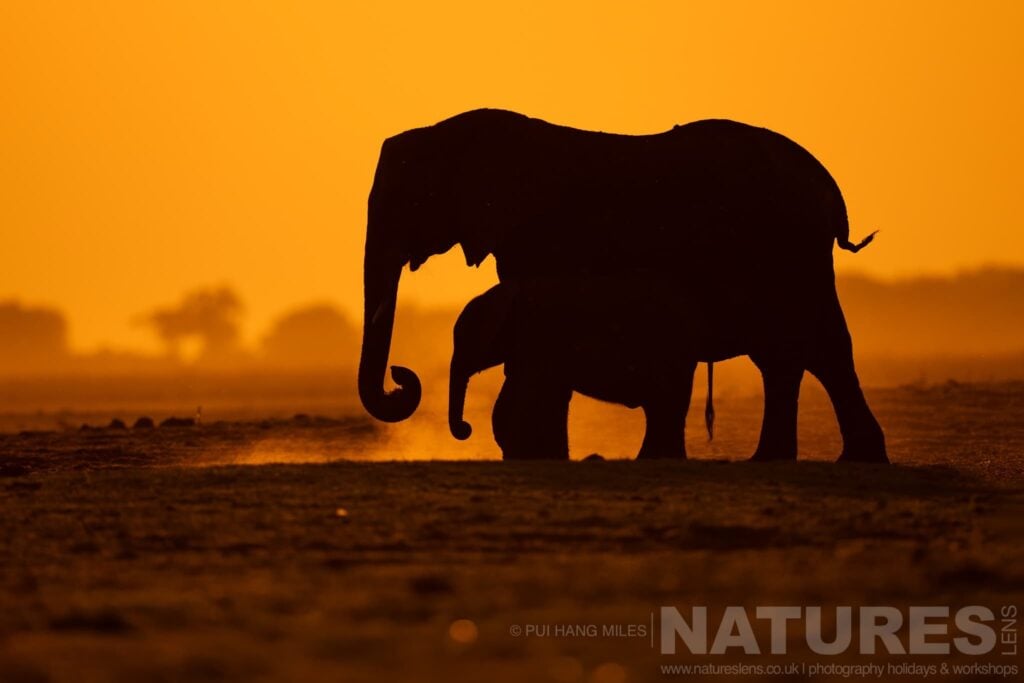
The African Elephant is the largest land animal on Earth, characterised by its enormous ears, long trunk & impressive ivory tusks. These highly intelligent & social animals live in matriarchal herds & display complex emotional behaviours including mourning their dead. They are a keystone species, playing a vital role in shaping their environment by clearing vegetation & creating water sources for other wildlife.
African Elephants inhabit a range of environments including savannah grasslands, bushveld, forests & semi-arid deserts, primarily across sub-Saharan Africa. They are commonly found in protected reserves & national parks such as the Serengeti, Amboseli & Kruger, where permanent water sources & vast stretches of vegetation support large herds.
Where to photograph
Where our trips feature this species
You can photograph African Elephant with us in Botswana, Kenya, South Africa & Tanzania.
These departures are part of our Africa programme.
In the field, David Miles & Pui Hang Miles helps guests make the most of these encounters.
Field notes
Photography notes
The dry season (June to October) is ideal as elephants congregate around water sources, making them easier to locate. Early morning & late afternoon provide the best golden light & cooler temperatures when elephants are most active.
Position yourself near watering holes or rivers at dawn & dusk when elephants are most active & the light is soft & warm. Use a telephoto lens of at least 300mm to capture intimate portraits whilst maintaining a safe distance, & look for opportunities to photograph family interactions & young calves. Pay attention to dust & mud-bathing behaviour, as these moments offer dramatic & characterful images with wonderful textural detail.
Available holidays
Trips featuring African Elephant
The holidays below are pulled from the same species relationship, so the guide stays tied to live departures rather than becoming a static article.