Saharan Desert Wildlife Photography
The Saharan Desert extends into southeastern Morocco, where the Atlas Mountains give way to vast expanses of stony hamada plains, wind-sculpted dune fields, & sparse pockets of acacia scrub. This transitional edge of the world's largest hot desert offers a stark, open landscape of gravel flats & rippling sand seas, punctuated by dry wadis & occasional oases that provide vital resources for wildlife adapted to extreme aridity & temperature swings between scorching days & cold desert nights. This arid terrain, though seemingly barren, supports a remarkable assemblage of specialist species suited to life in this harsh environment.
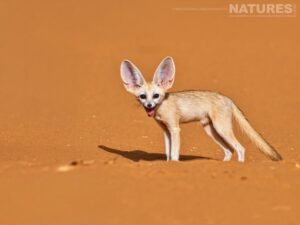
Birdlife here is characterised by cryptic, ground-dwelling species well camouflaged against the pale desert substrate, including the Bar-tailed Lark, Black-crowned Sparrow-Lark, Thick-billed Lark, & Desert Warbler, all of which forage among sparse vegetation & rocky terrain. The elusive African Houbara Bustard, a flagship desert species, patrols open plains, while the Cream-coloured Courser & nocturnal Egyptian Nightjar rely on stillness & subtle plumage to evade detection by day. After dark, the desert reveals its more secretive residents: the diminutive Fennec Fox, instantly recognisable by its oversized ears adapted for heat dissipation & acute hearing, emerges to hunt small prey, while the Desert Monitor & venomous Horned Viper, both superbly adapted reptiles, exploit the cooler hours to forage across the sand & rock.
NaturesLens Holidays Here
NaturesLens Guides Who Lead Trips Here
Frequently Asked Questions
What can I photograph at Saharan Desert?
NaturesLens visits Saharan Desert for excellent opportunities to photograph Fennec Fox and good chances of photographing African Houbara Bustard, Bar-tailed Lark, Black-crowned Sparrow-Lark, Cream-coloured Courser, Desert Monitor, Desert Warbler, Egyptian Nightjar, Horned Viper and Thick-billed Lark.
Can I photograph the Fennec Fox at Saharan Desert?
Yes — the Fennec Fox is one of the best subjects at Saharan Desert and a core focus of NaturesLens holidays there.
Can I photograph the African Houbara Bustard at Saharan Desert?
Yes — NaturesLens regularly photographs the African Houbara Bustard at Saharan Desert.
Can I photograph the Bar-tailed Lark at Saharan Desert?
Yes — NaturesLens regularly photographs the Bar-tailed Lark at Saharan Desert.
Can I photograph the Black-crowned Sparrow-Lark at Saharan Desert?
Yes — NaturesLens regularly photographs the Black-crowned Sparrow-Lark at Saharan Desert.
Can I photograph the Cream-coloured Courser at Saharan Desert?
Yes — NaturesLens regularly photographs the Cream-coloured Courser at Saharan Desert.
Can I photograph the Desert Monitor at Saharan Desert?
Yes — NaturesLens regularly photographs the Desert Monitor at Saharan Desert.
Can I photograph the Desert Warbler at Saharan Desert?
Yes — NaturesLens regularly photographs the Desert Warbler at Saharan Desert.
Can I photograph the Egyptian Nightjar at Saharan Desert?
Yes — NaturesLens regularly photographs the Egyptian Nightjar at Saharan Desert.
Can I photograph the Horned Viper at Saharan Desert?
Yes — NaturesLens regularly photographs the Horned Viper at Saharan Desert.
Can I photograph the Thick-billed Lark at Saharan Desert?
Yes — NaturesLens regularly photographs the Thick-billed Lark at Saharan Desert.