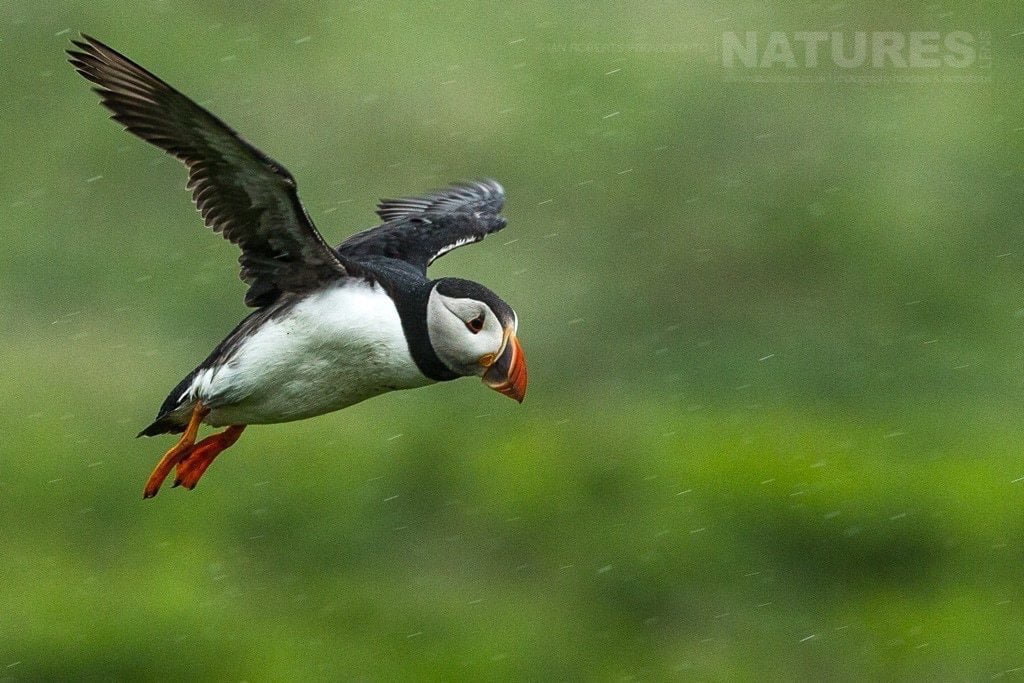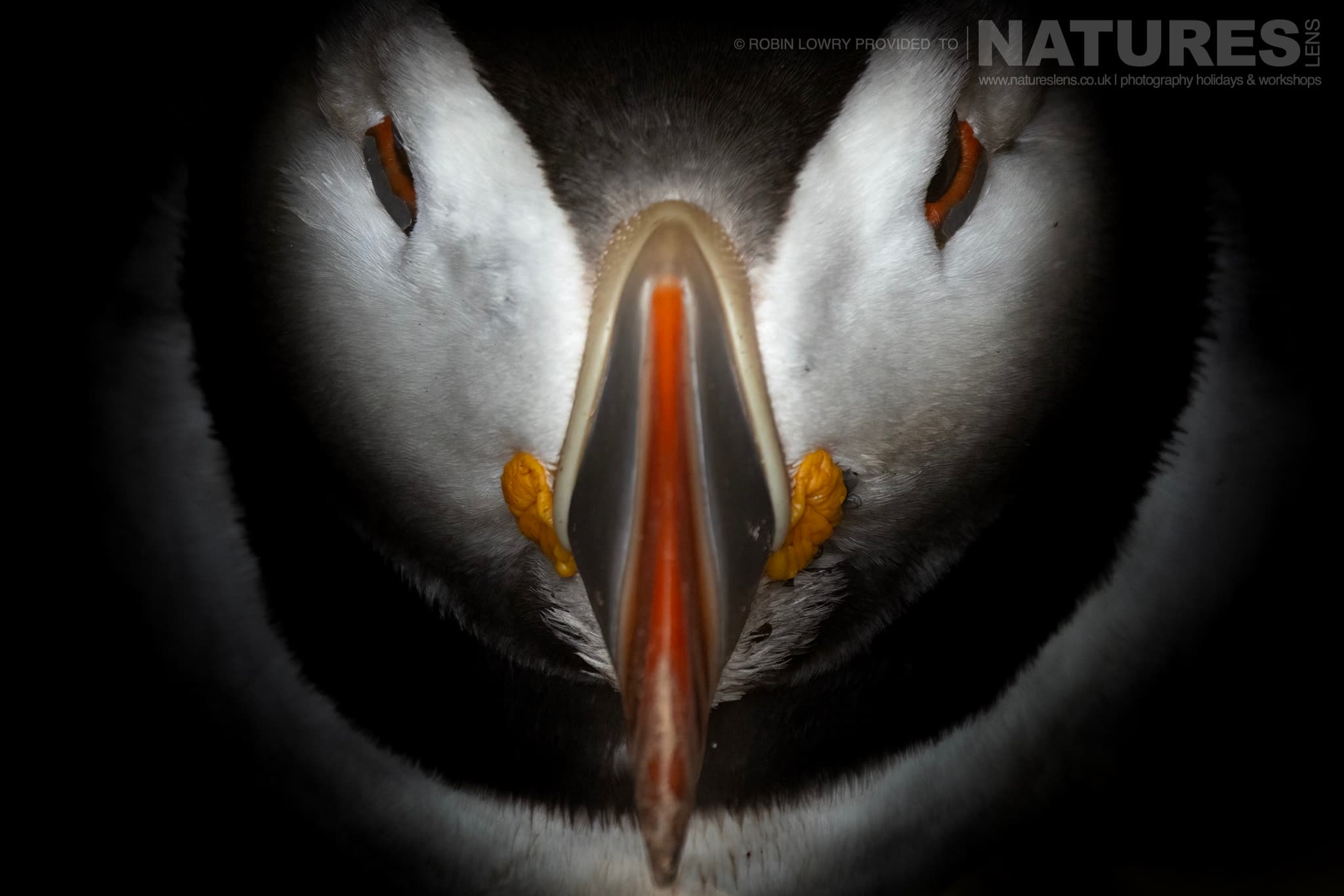
Nestled off the coast of Pembrokeshire, Skomer Island is a haven for wildlife enthusiasts & photographers alike. Home to one of the UK’s largest puffin colonies, along with razorbills, guillemots, & an array of other seabirds & mammals, it’s a place where nature takes centre stage.
I recently spent four days on the island, guiding for NaturesLens & immersing myself in its wild beauty & capturing its charismatic inhabitants, the famous Skomer Island Puffins. Here’s how the adventure unfolded.
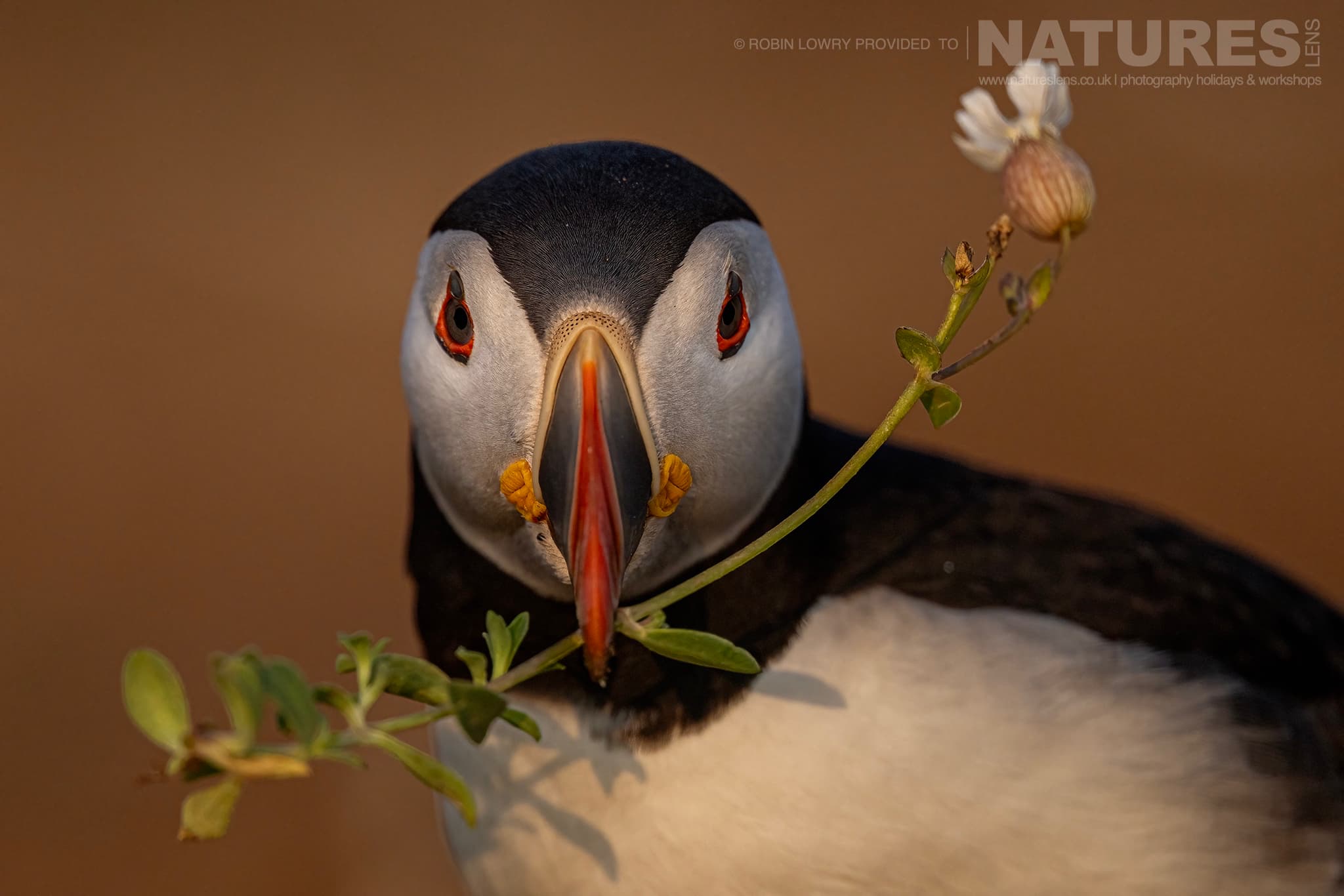
Day 1 – Arrival & First Light
Our journey began with a slightly damp crossing from Martin’s Haven to Skomer, the sea mist lending an atmospheric touch to our arrival. After settling in, we spent the afternoon acquainting ourselves with the island’s rugged terrain, its winding paths lined with wildflowers & the distant calls of seabirds filling the air.
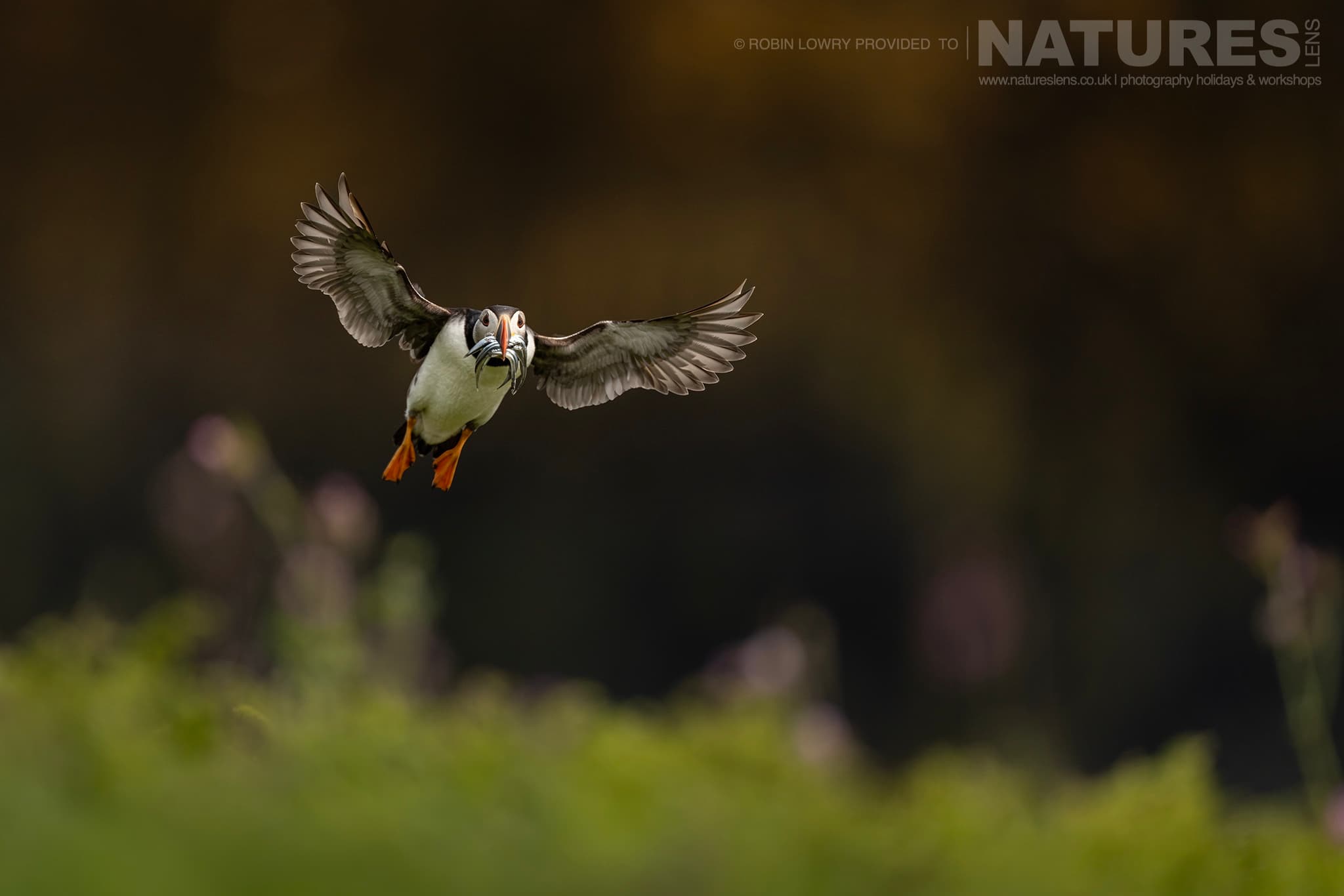
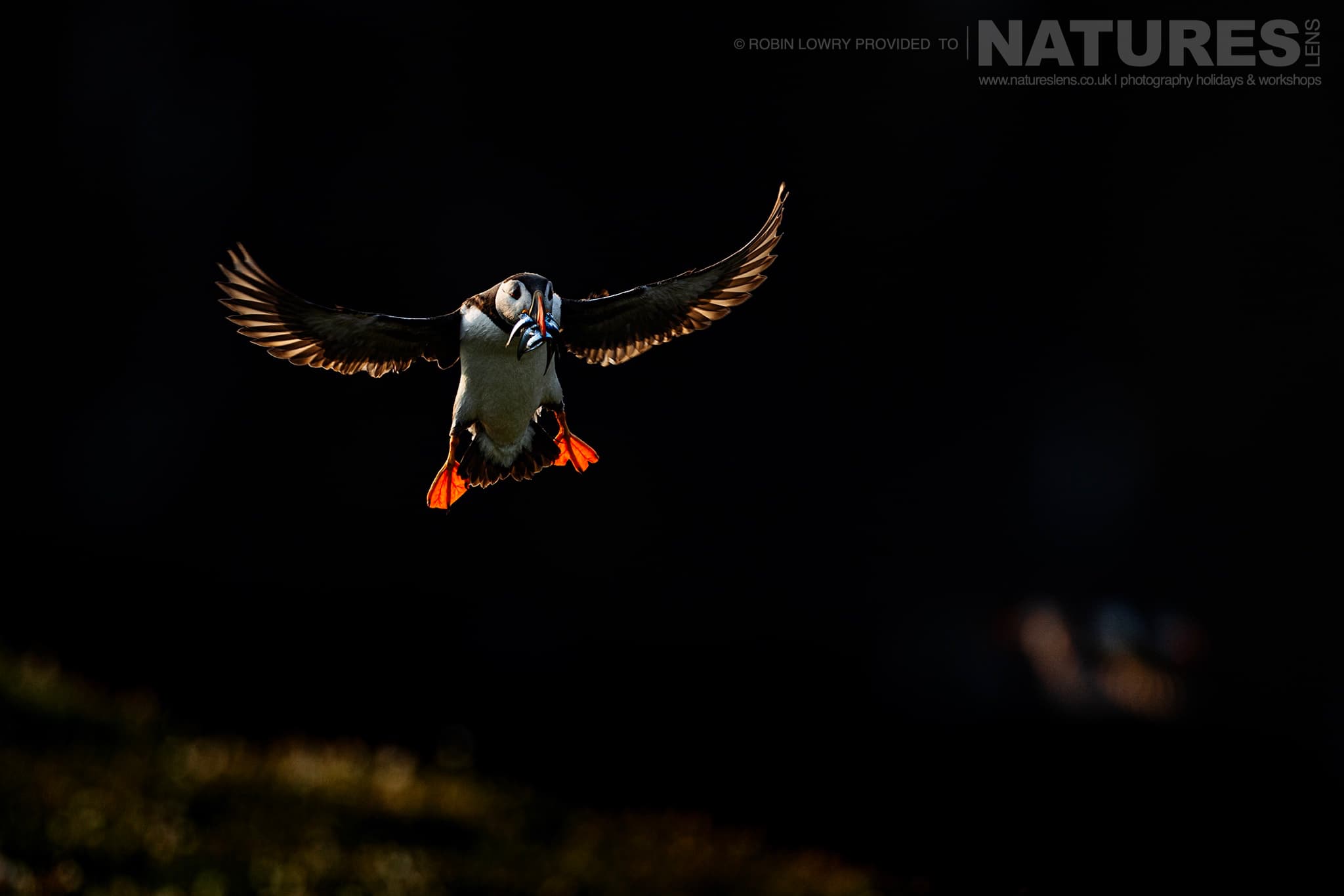
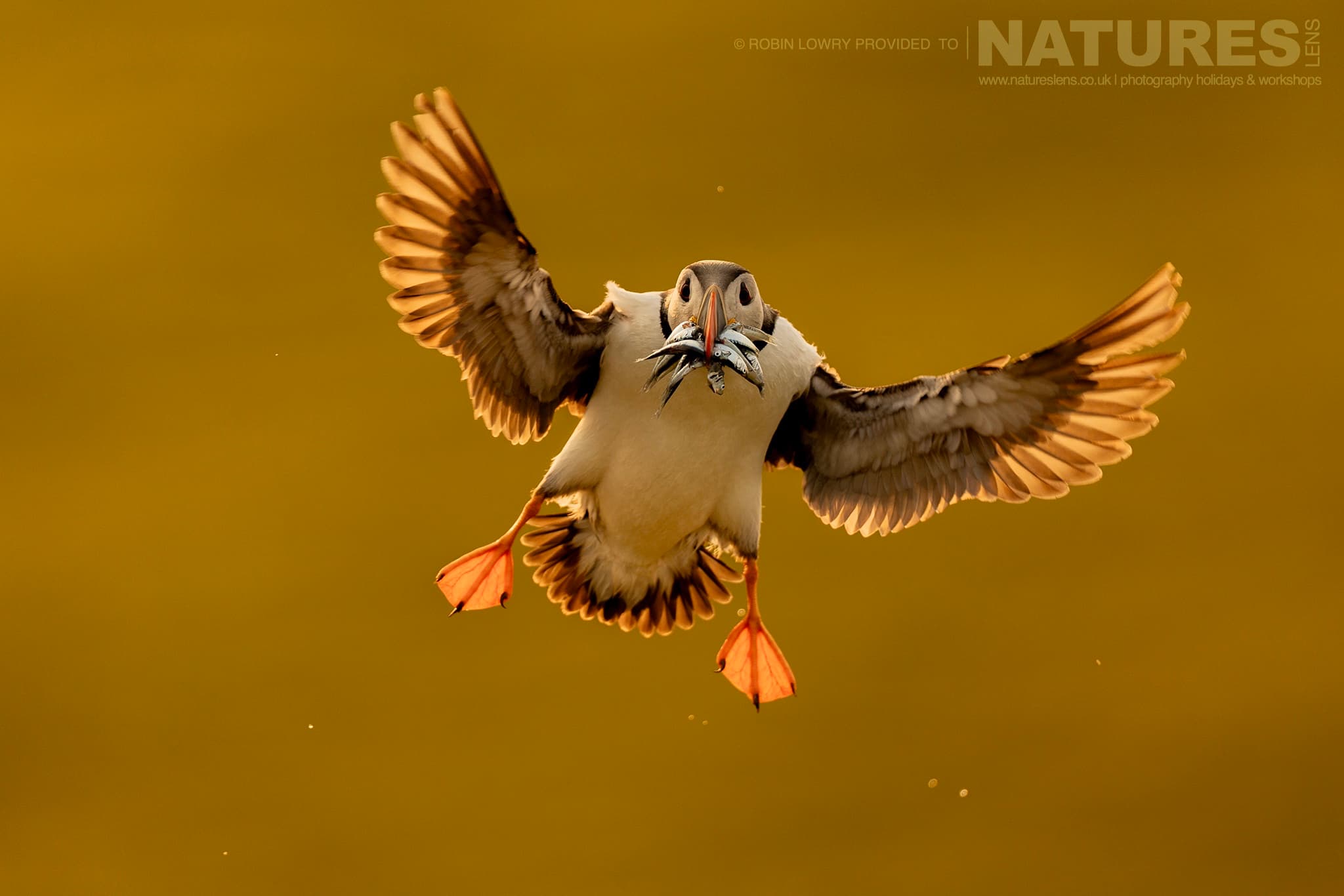
By evening, the skies cleared, bathing the landscape in a golden glow – perfect conditions for photography. We headed to The Wick, a hotspot for puffins, where we were treated to stunning backlit shots. The birds’ silhouettes, illuminated by the low sun, made for a magical introduction to Skomer’s avian wonders.
Day 2 – Sunrise, Silhouettes, & an Elusive Owl
An early start saw us out before 5 a.m., hopeful for a dramatic sunrise at The Harbour. However, the sun remained coy, hidden behind a bank of low clouds. Undeterred, we relocated to The Wick, where the light eventually broke through, casting a warm glow over the puffins as they returned from sea.
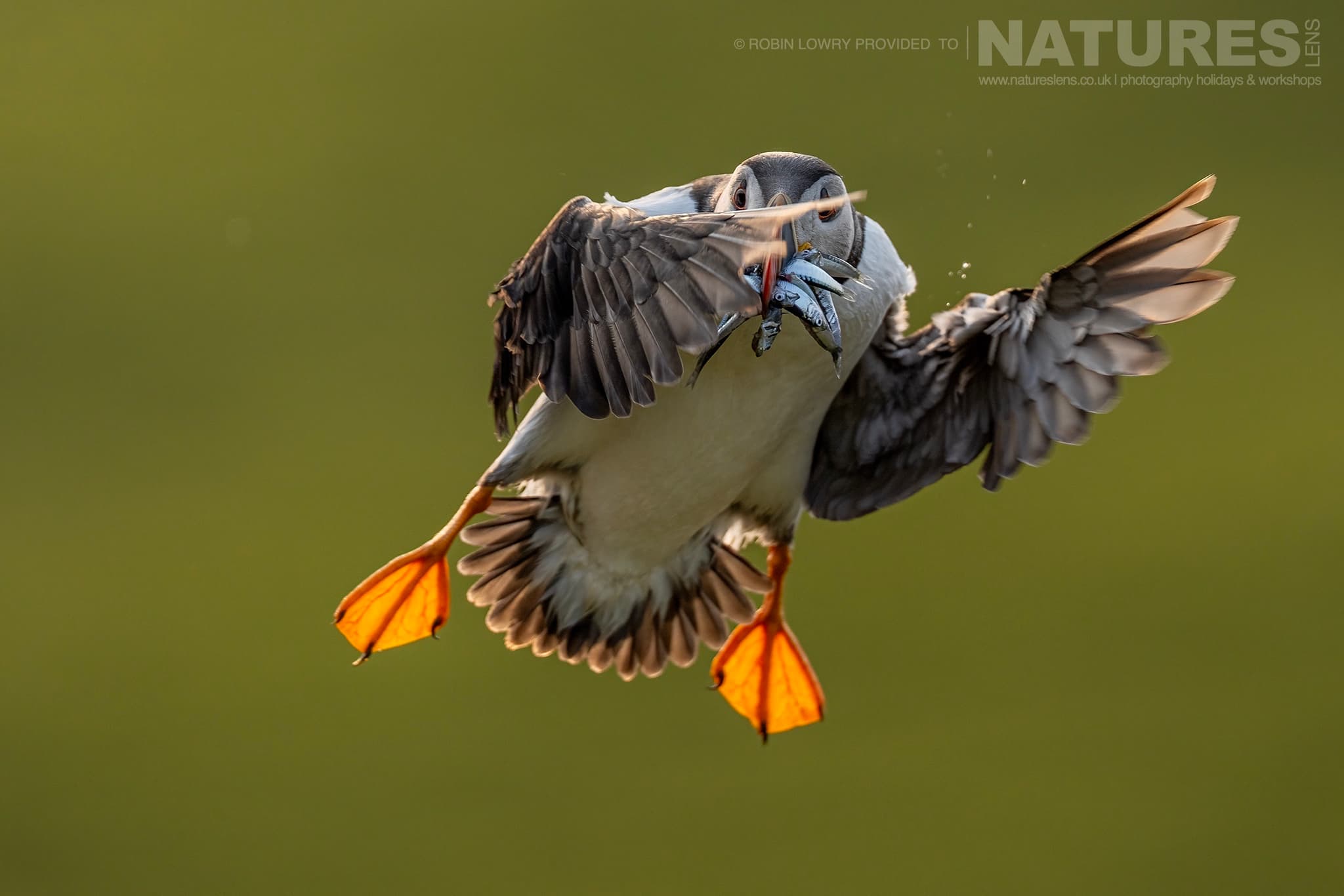
We captured head-on landing shots, their wings outstretched & beaks full of sand eels, alongside striking silhouettes against the brightening sky.
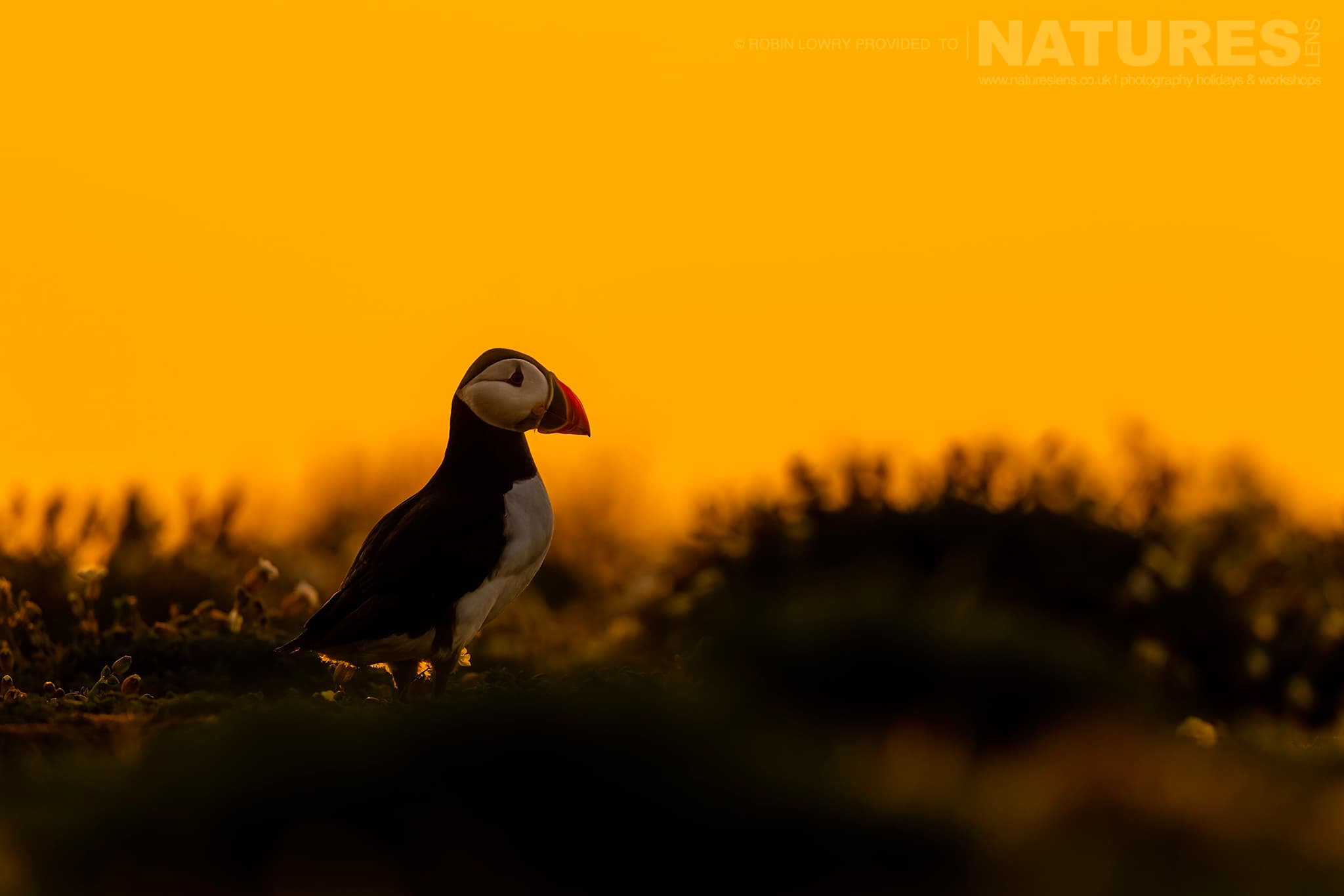
The puffins’ comical waddles & rapid take-offs provided endless entertainment.
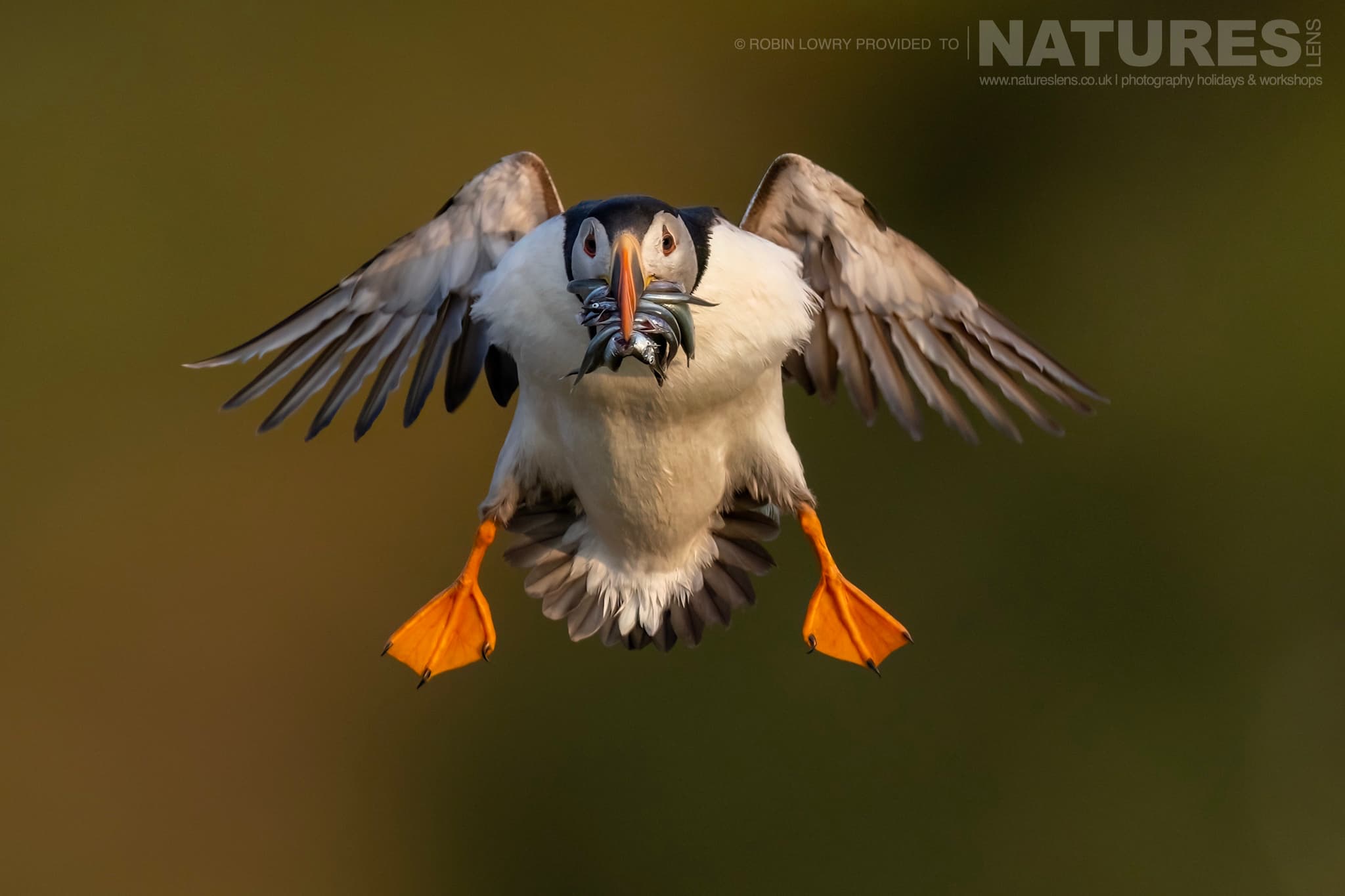
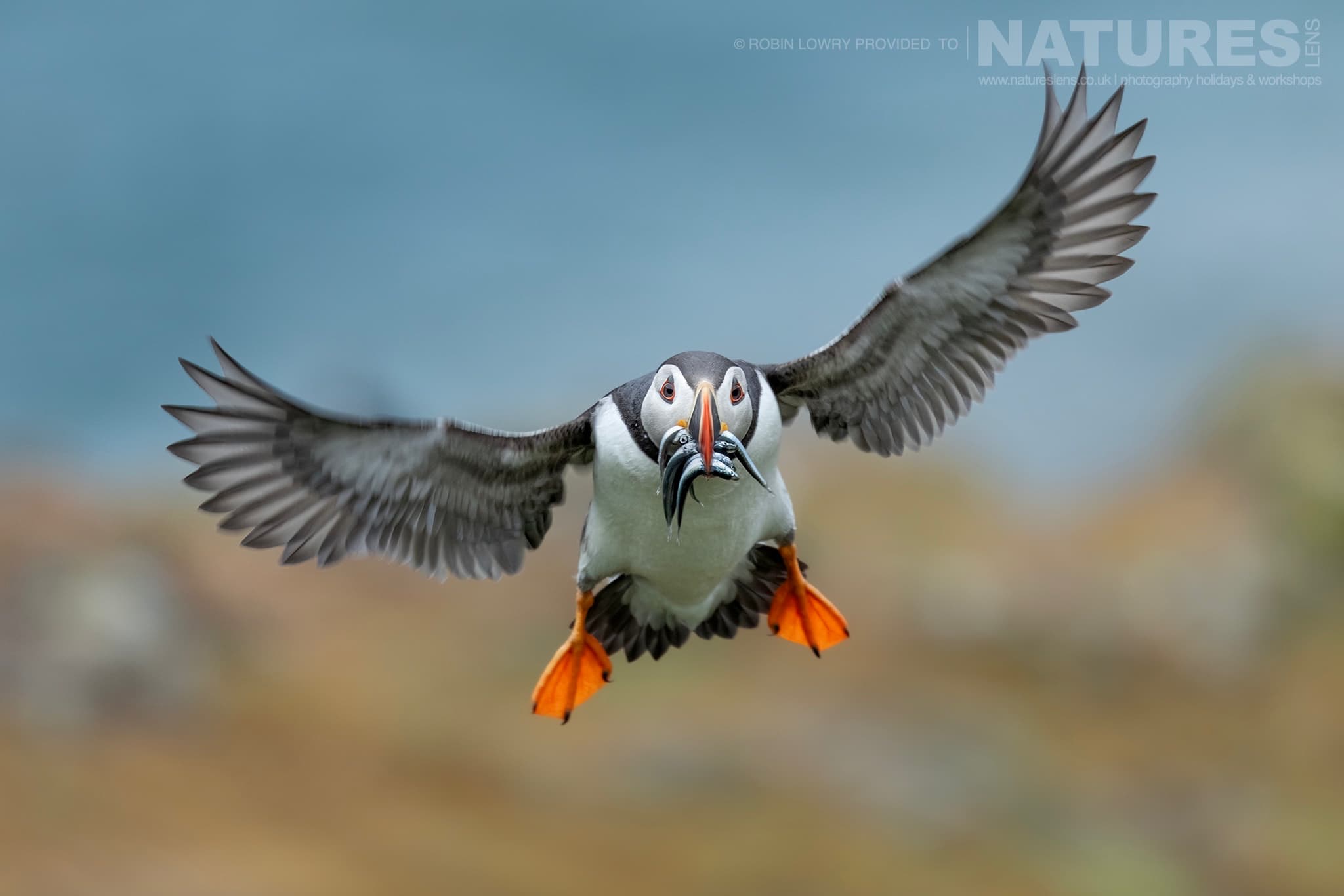
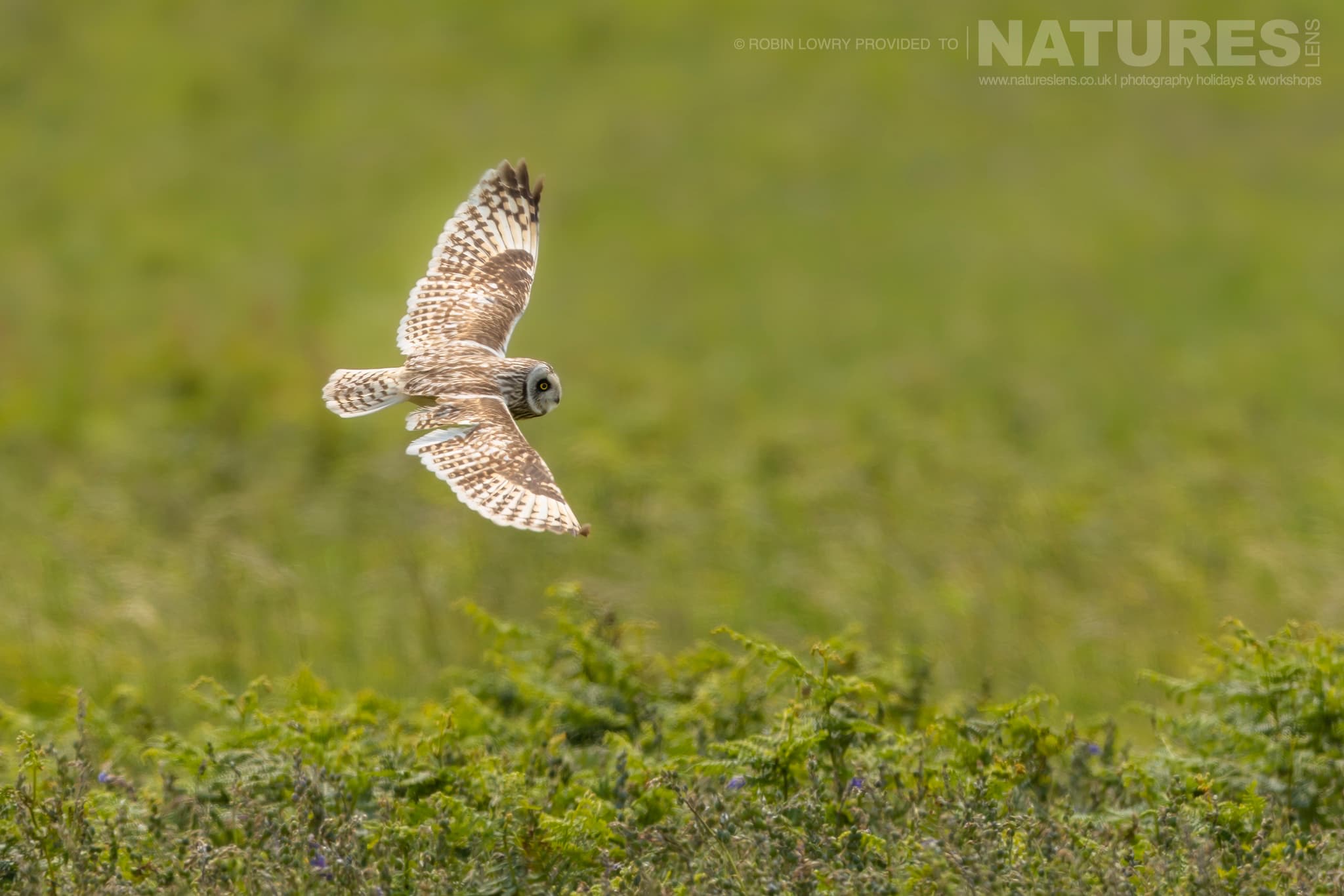
On the walk back, a fleeting shadow caught our attention – a short-eared owl gliding silently over the grassland. It was a brief but thrilling sighting that added an unexpected thrill to our day!
Later, at Garland Stone, we found a different dynamic – puffins perched on rocky outcrops, razorbills nesting at eye level, & photogenic wheatears flitting between boulders.
The razorbills were remarkably confiding, offering fantastic close-up opportunities that any wildlife photographer would be inspired by.
Day 3 – A Moody Morning & Slow Shutter Experiments
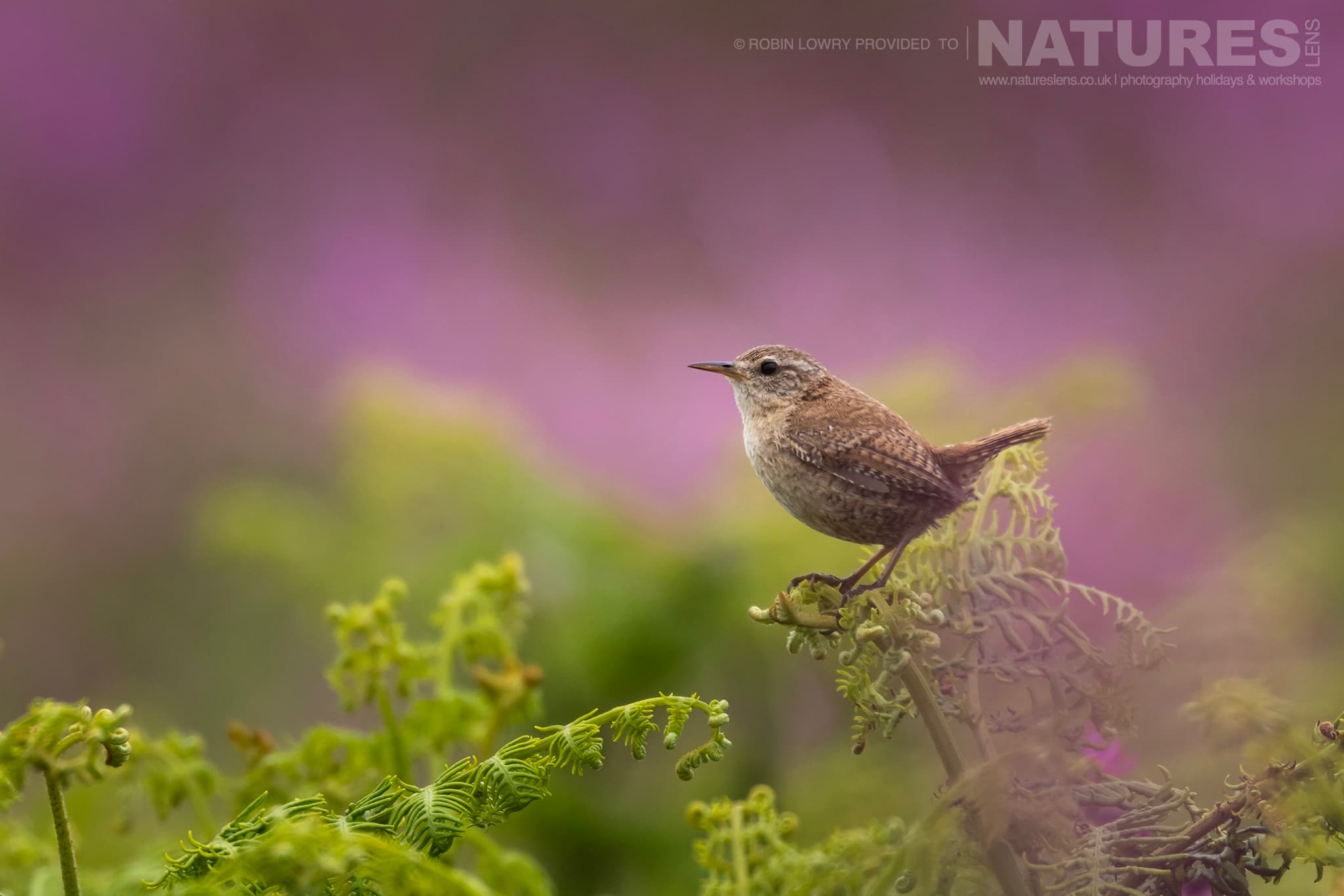
Heavy clouds loomed overhead as we set off at dawn, but Skomer’s wildlife was as lively as ever. A harbour seal watched us curiously from the water’s edge while small birds – wrens, oystercatchers, stonechats, & sedge warblers – darted through the undergrowth. The overcast sky added a dramatic touch to the landscape, enhancing the mood of the morning.
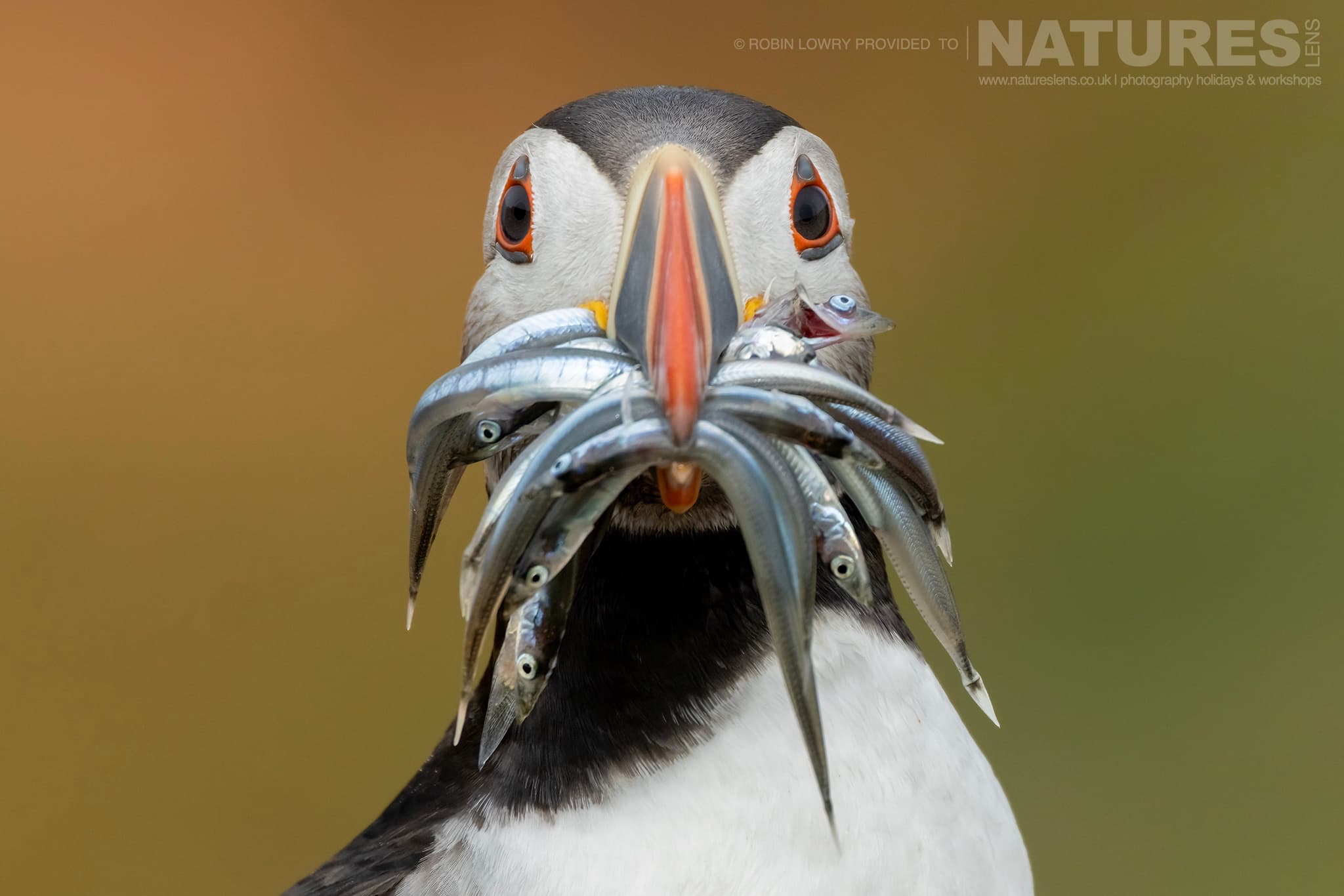
Another attempt to spot the short-eared owl proved fruitless, so we returned to The Wick, only to find the wind had shifted. The puffins were now flying in from High Cliff, their trajectories perfect for in-flight shots.
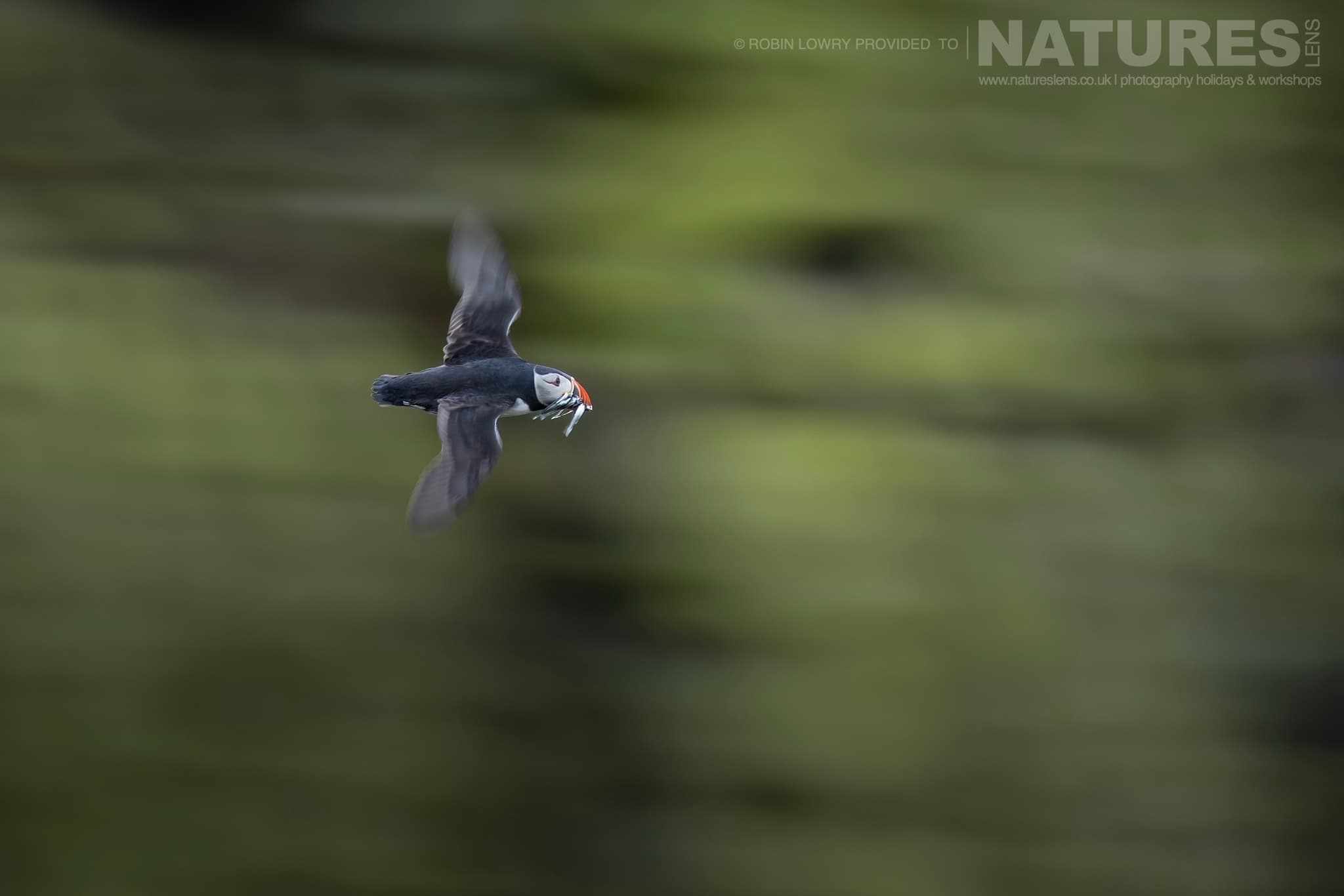
With the light still subdued, we turned our attention to slow shutter panning, a technique that involves using a slow shutter speed to capture motion. This technique blurs the background while keeping the subject sharp & in focus, creating a sense of movement in the image. The results were a mix of near-misses & triumphant captures – great fun & excellent practice.
A highlight was watching a family of choughs feeding their fledglings, their glossy black plumage & striking red bills standing out against the grassy slopes.
Day 4 – Peregrines & Farewell
Our final morning was another overcast affair, but Skomer had one last surprise in store. A pre-breakfast visit to The Wick rewarded me with a peregrine falcon streaking past the cliffs – a fleeting but exhilarating encounter. As we packed our gear & boarded the boat back to the mainland, we reflected on an incredible trip. The peregrine falcon’s majestic flight was a fitting end to our wildlife adventure, leaving us with a sense of awe & fulfilment.
As we packed our gear & boarded the boat back to the mainland, we reflected on an incredible trip. Despite changeable weather, the island’s wildlife had delivered in abundance, offering endless photographic opportunities & unforgettable moments.
Species Photographed during the Skomer Island Puffins Photography Holiday
Birds
-
- Atlantic Puffin (Fratercula arctica) – Feeding, flying, & posing on cliffs.
- Razorbill (Alca torda) – Nesting close to paths, allowing intimate portraits.
- Guillemot (Uria aalge) – Crowded on ledges at High Cliff.
- Short-eared Owl (Asio flammeus) – A brief but thrilling sighting.
- Peregrine Falcon (Falco peregrinus) – A high-speed flyby.
- Chough (Pyrrhocorax pyrrhocorax) – Feeding young near the farmhouse.
- Wheatear (Oenanthe oenanthe) – Perched on rocks & drystone walls.
- Stonechat (Saxicola rubicola) – Frequently seen on gorse bushes.
- Sedge Warbler (Acrocephalus schoenobaenus) – Singing from reed beds.
- Wren (Troglodytes troglodytes) – Darting through the undergrowth.
- Oystercatcher (Haematopus ostralegus) – Noisy & conspicuous along the coast.
Mammals
-
- Harbour Seal (Phoca vitulina) – Watching us from the water’s edge.
The Skomer Island puffins never disappoint, offering both seasoned & budding wildlife photographers a chance to hone their skills amidst some of Britain’s most spectacular wildlife.