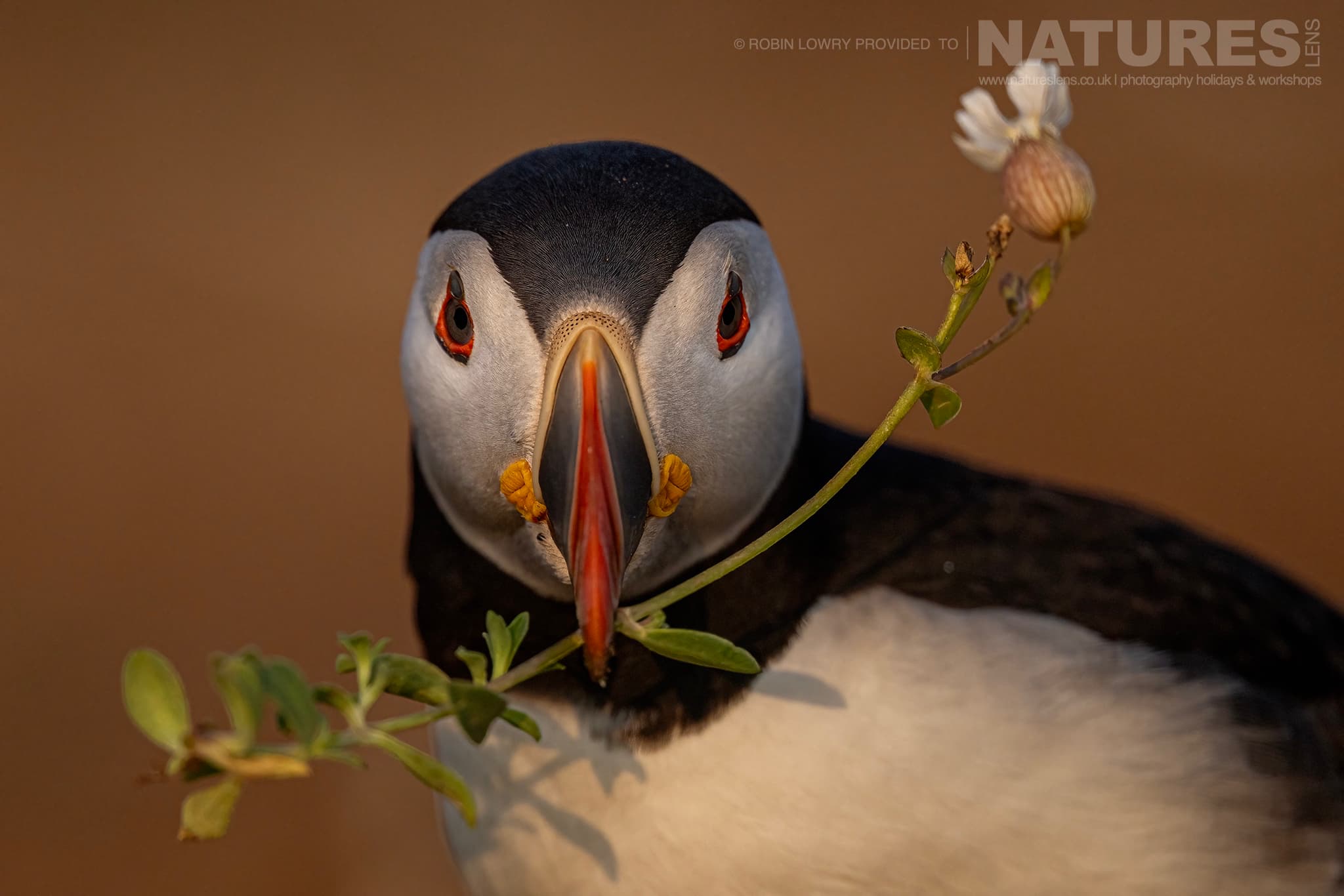
Skomer Island, off the Pembrokeshire coast, holds one of the UK’s largest puffin colonies alongside razorbills, guillemots, & a good range of other seabirds & mammals. For wildlife photographers, it is among the most productive locations in Britain.
I recently spent four days on the island, leading a NaturesLens group & working the colony from first light to last, photographing the famous Skomer Island Puffins & everything else the island offered up. Here is how the four days went.
Day 1 – Arrival & First Light
We crossed from Martin’s Haven in damp conditions, sea mist sitting low over the water. After settling in, we spent the afternoon walking the island to learn the layout – the paths, the key viewpoints, & where the birds were most active.
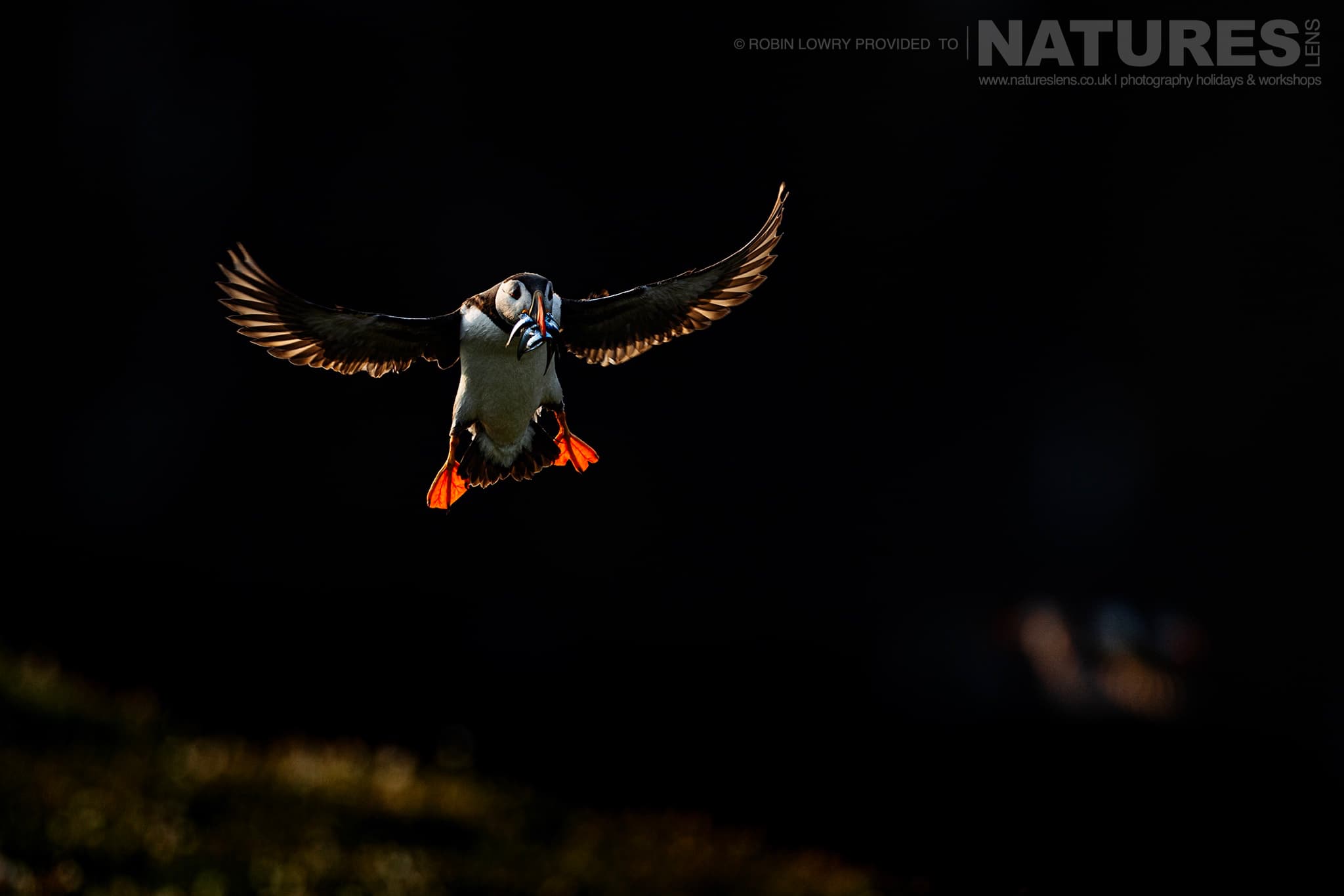
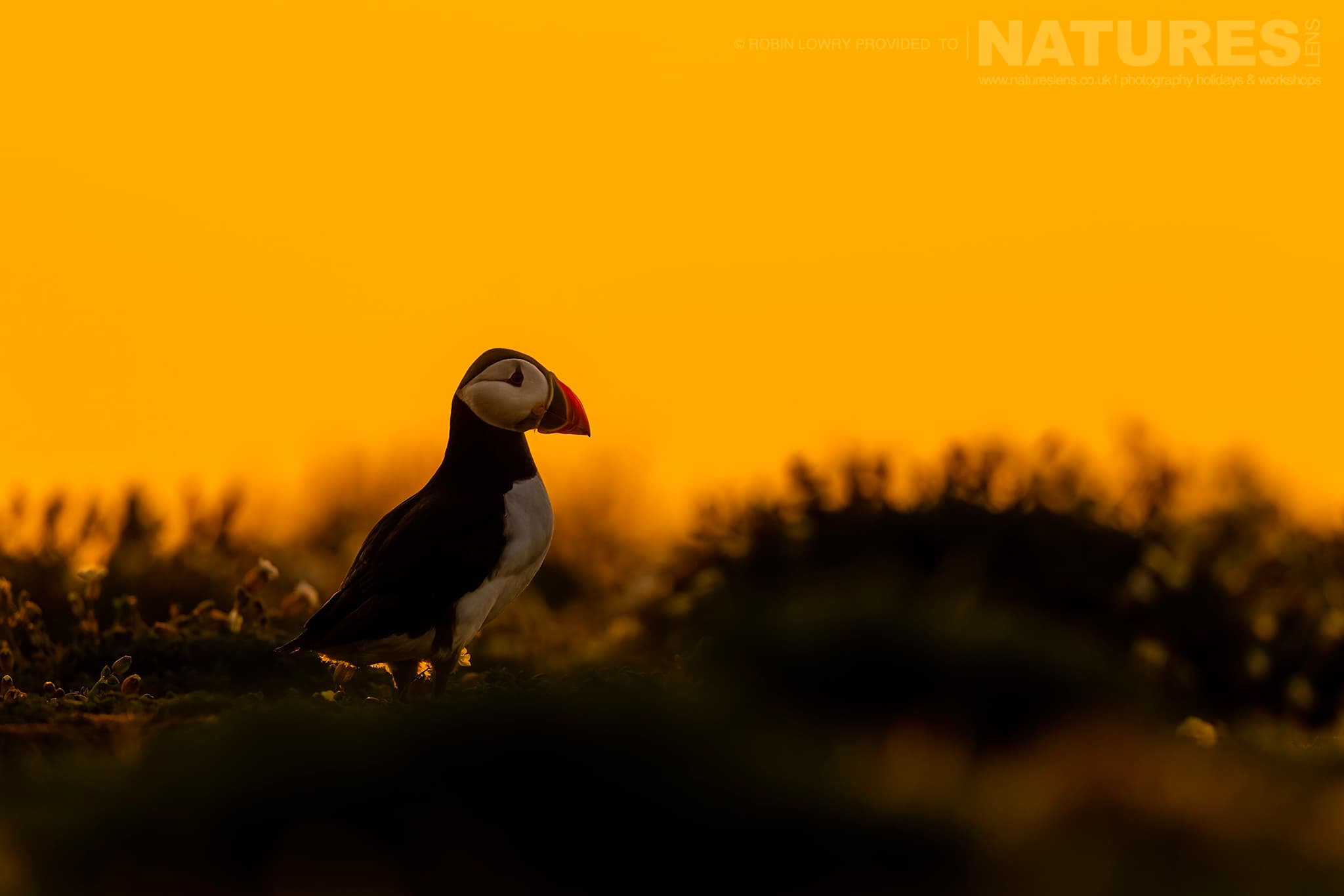
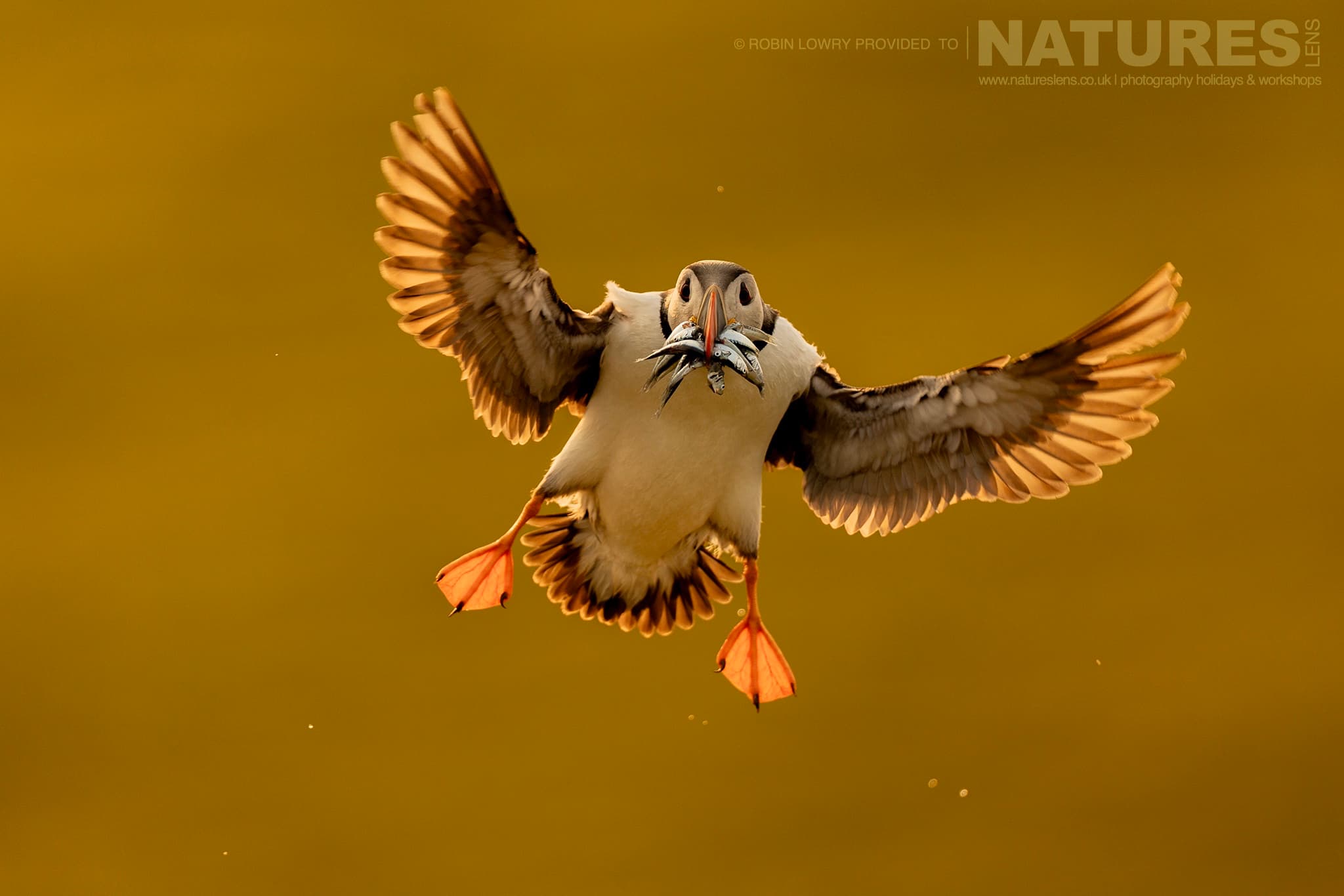
By evening, the skies cleared & the light turned golden. We headed to The Wick, the main puffin hotspot, where the low sun gave us strong backlit conditions. Puffin silhouettes against that warm evening light set the tone for the rest of the trip.
Day 2 – Sunrise, Silhouettes, & an Elusive Owl
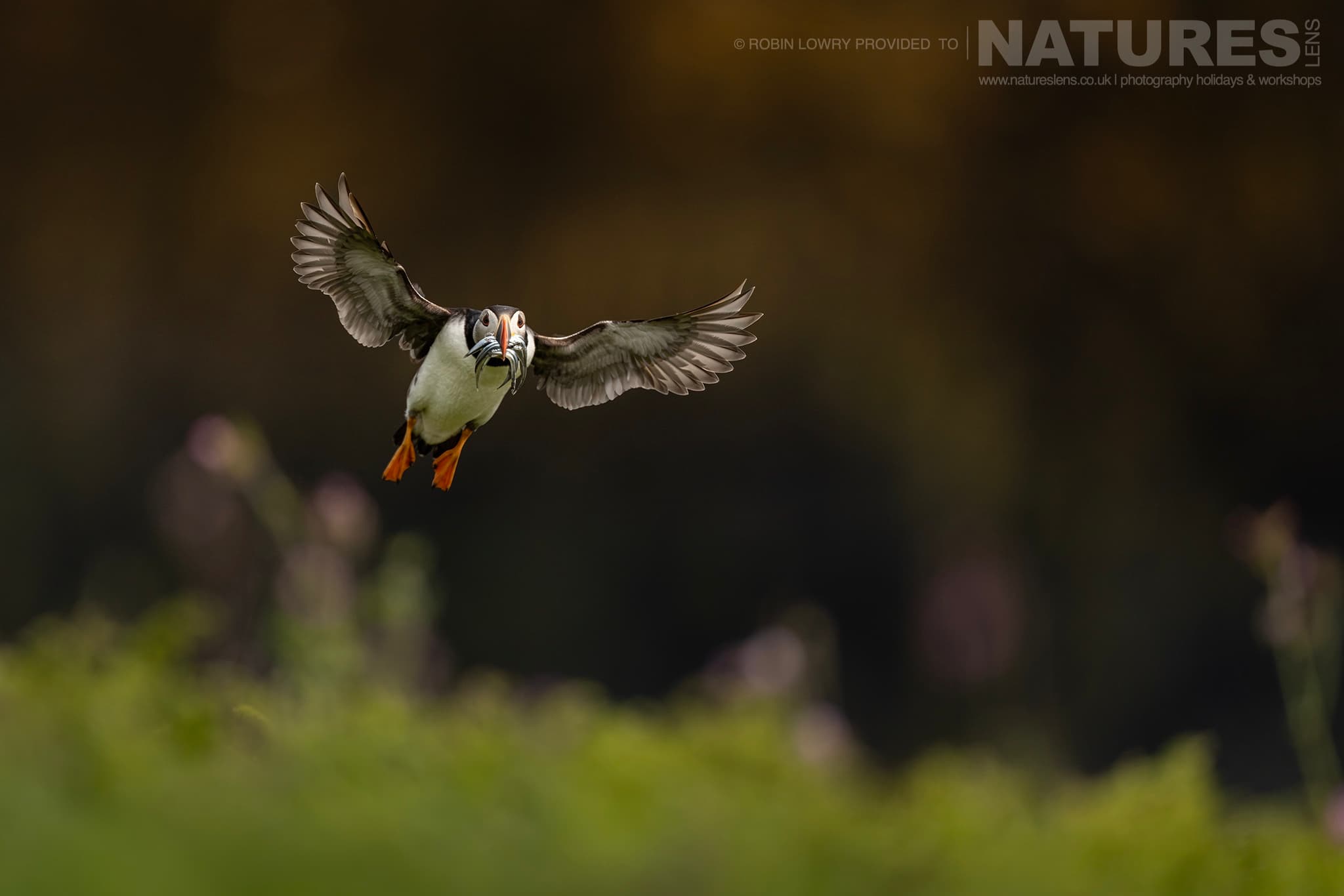
We were out before 5 a.m., hoping for sunrise colour at The Harbour. The sun stayed behind a bank of cloud, so we moved to The Wick instead, where the light eventually broke through & caught the puffins returning from their fishing runs.
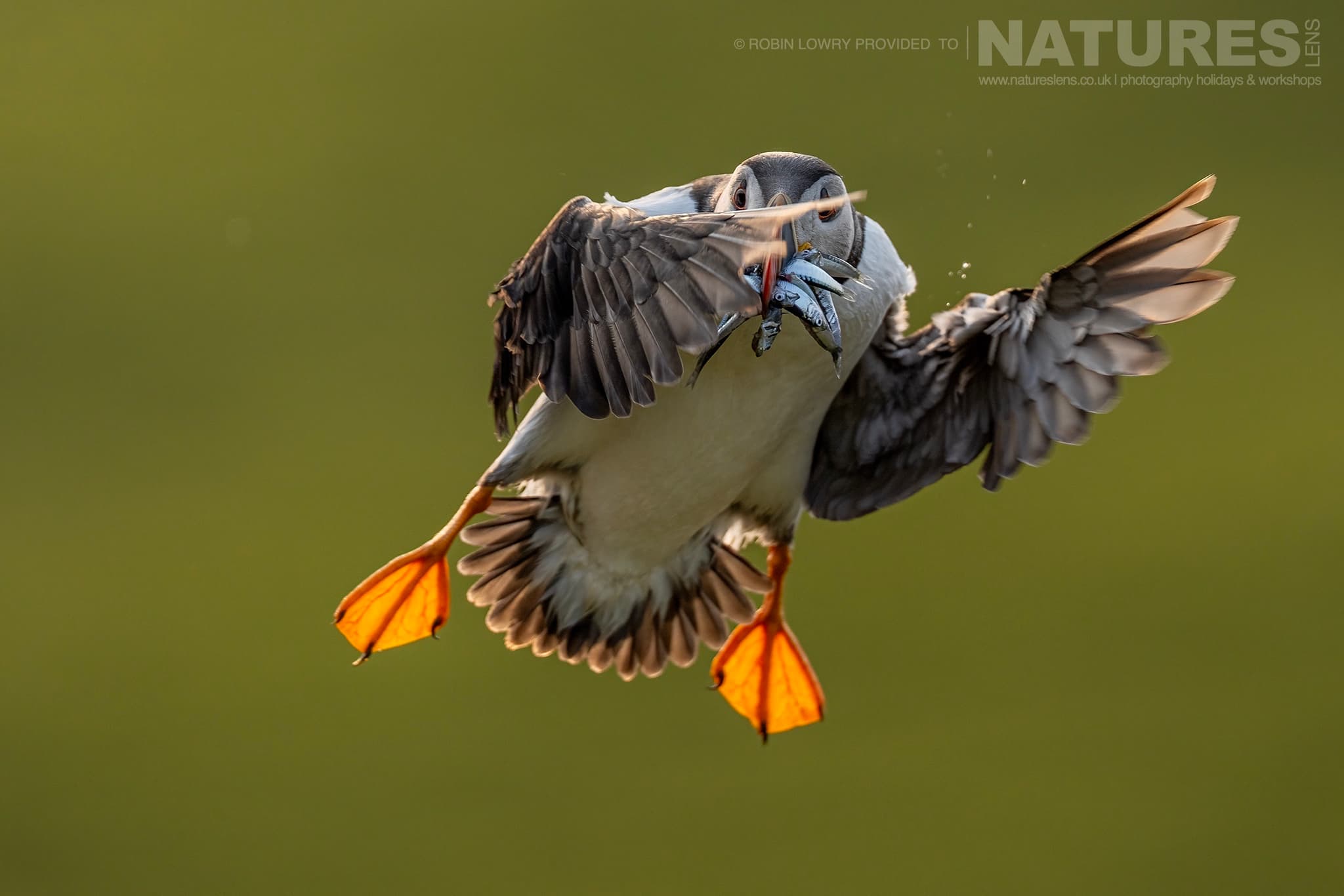
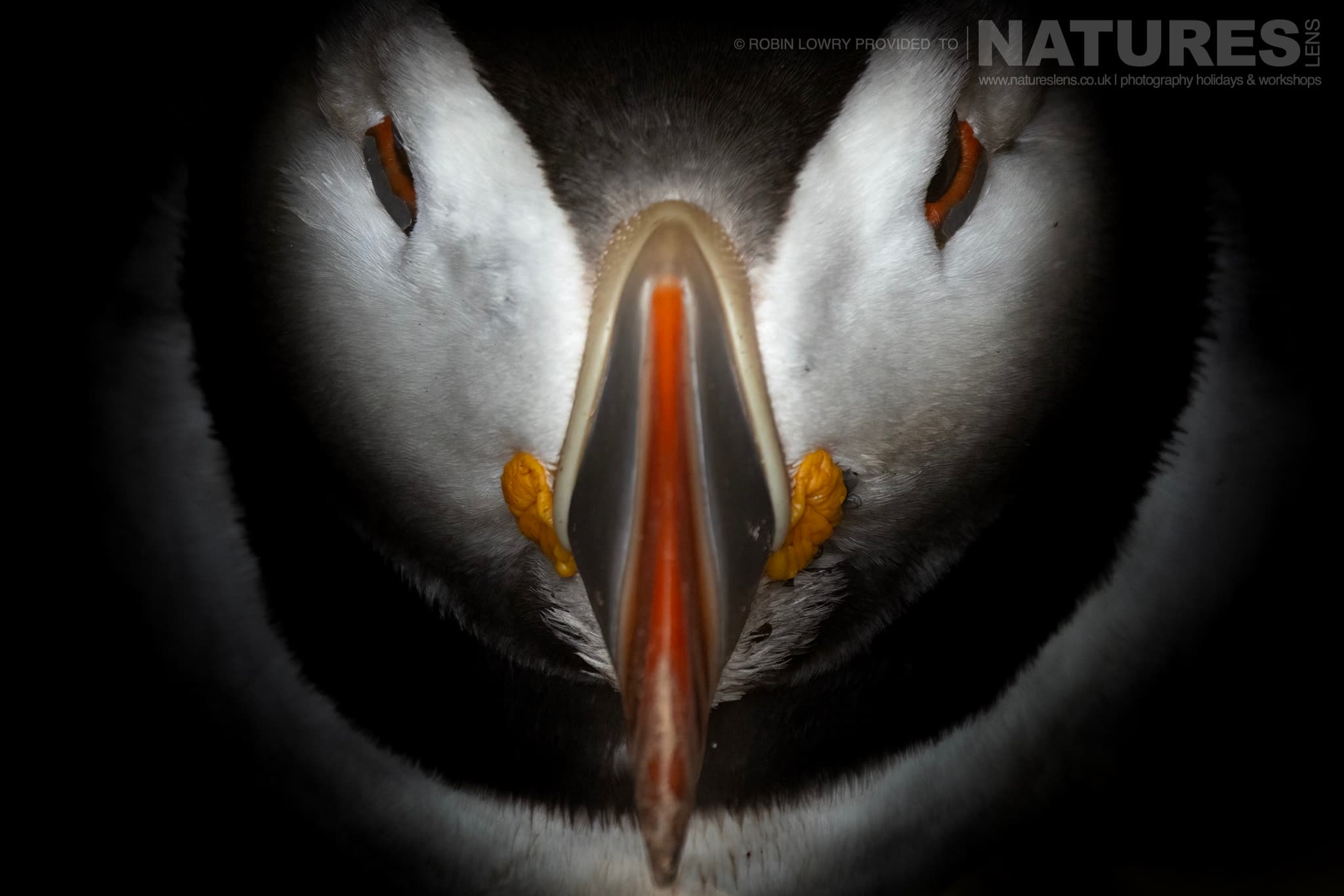
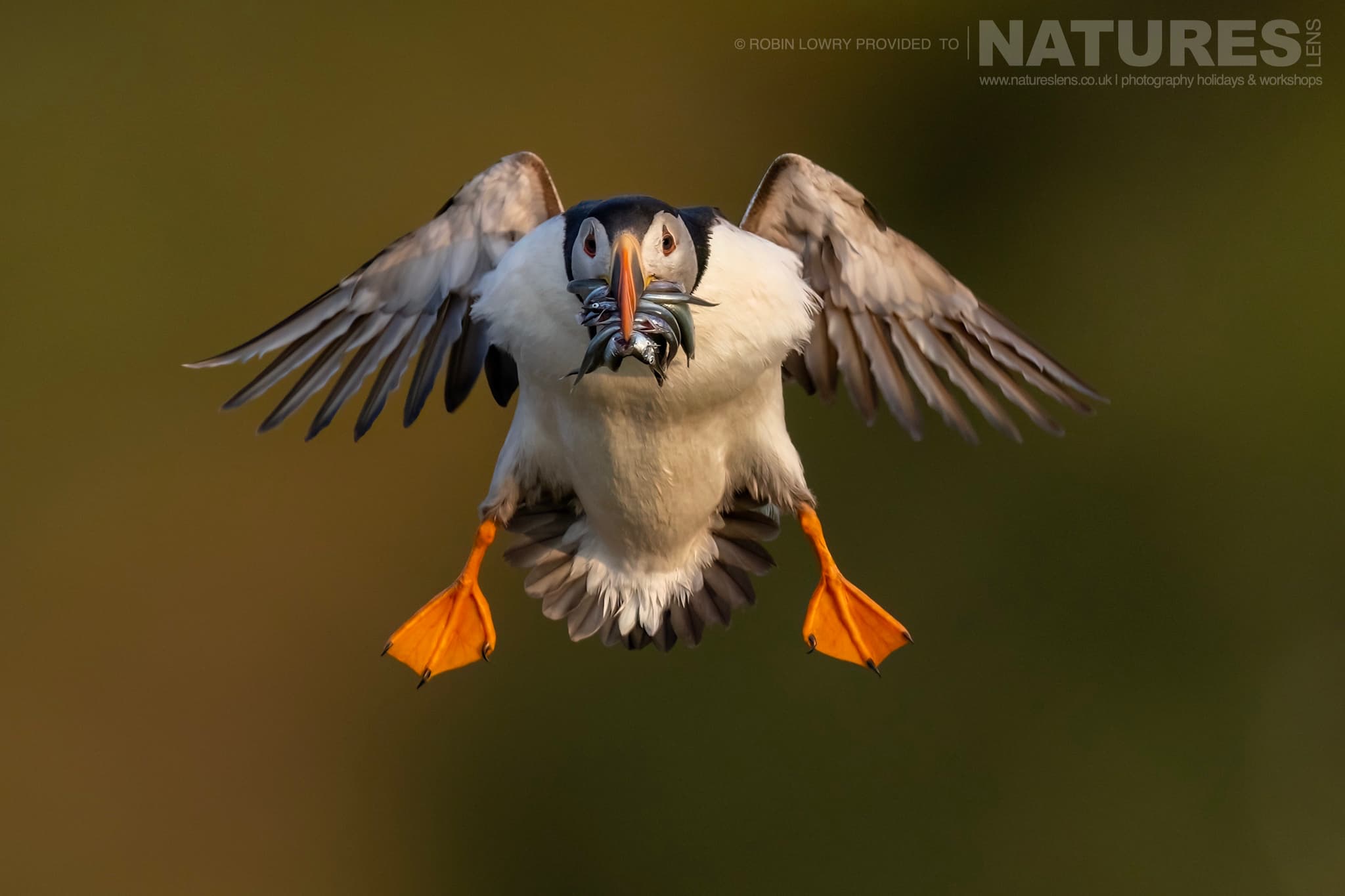
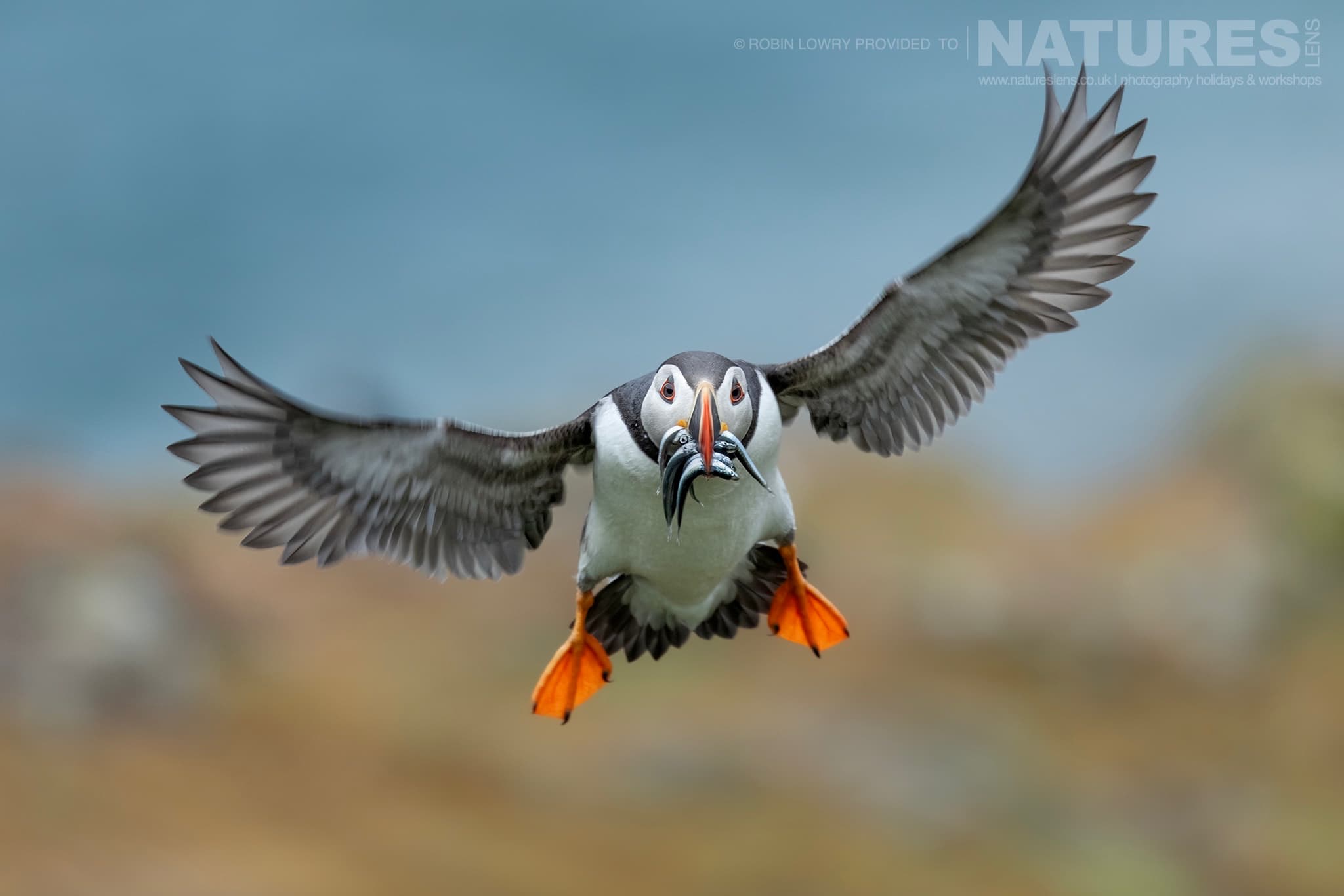
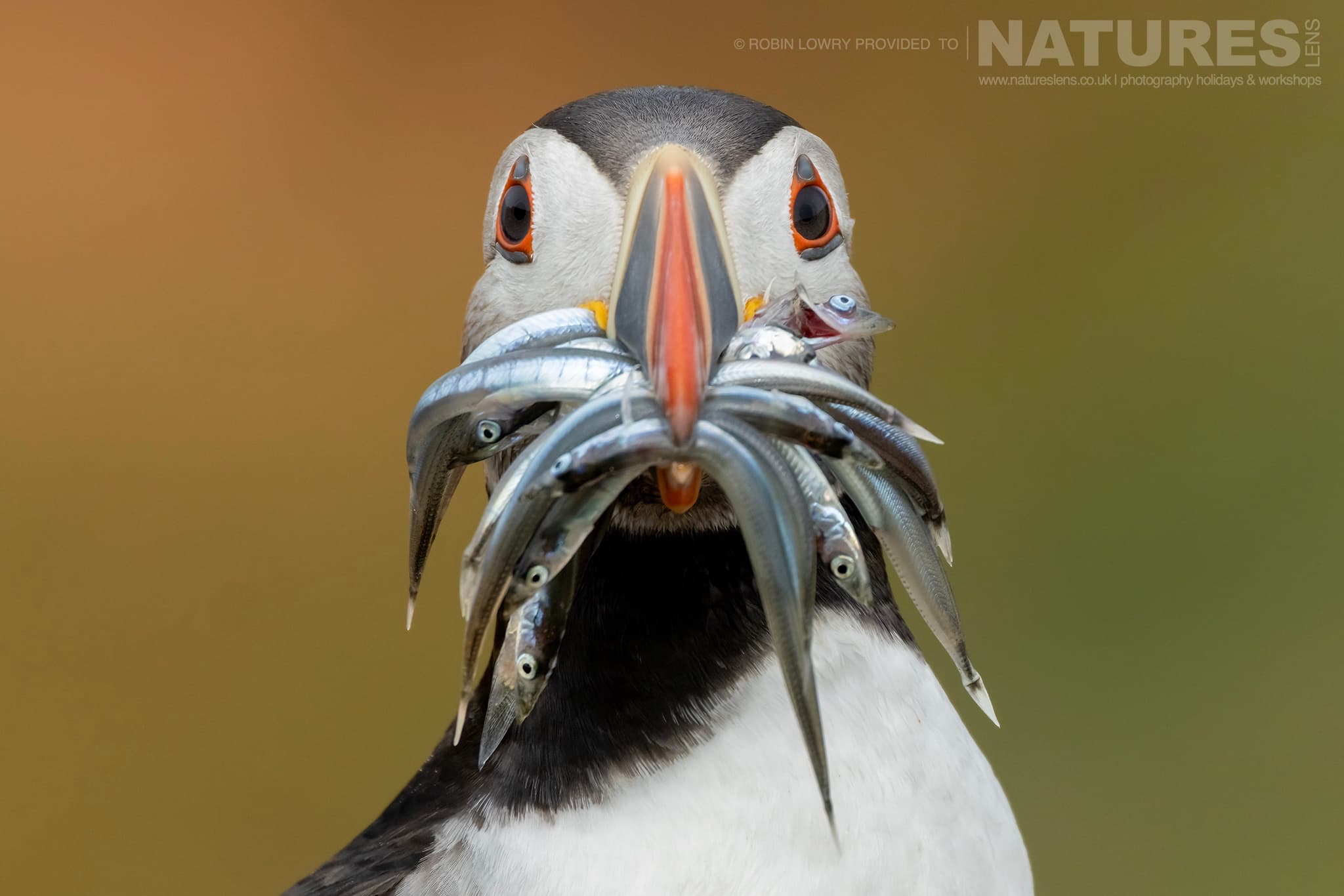
We worked on head-on landing shots – wings outstretched, beaks crammed with sand eels – as well as silhouettes against the brightening sky.
The puffins’ short-legged waddles & rapid wing-buzzing take-offs kept everyone busy with the shutter.
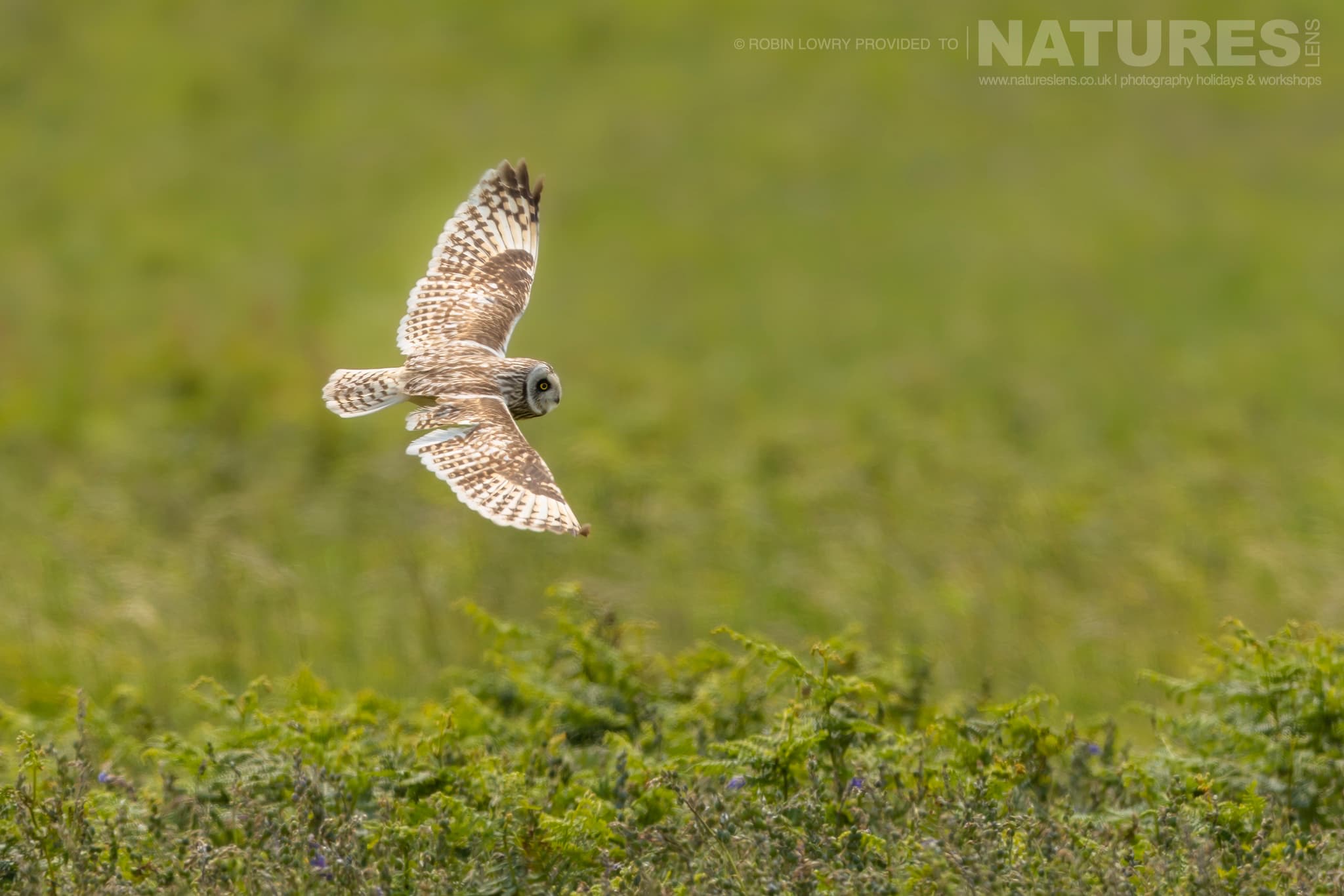
On the walk back, a short-eared owl glided low over the grassland – a brief sighting, but enough to get a few frames off before it dropped behind the ridge.
Later, at Garland Stone, the dynamic was different – puffins perched on rocky outcrops, razorbills nesting at eye level, & wheatears flitting between boulders, all within comfortable working range.
The razorbills here are remarkably confiding. You can fill the frame without needing extreme focal lengths, which makes for very sharp, detailed portraits.
Day 3 – A Moody Morning & Slow Shutter Experiments
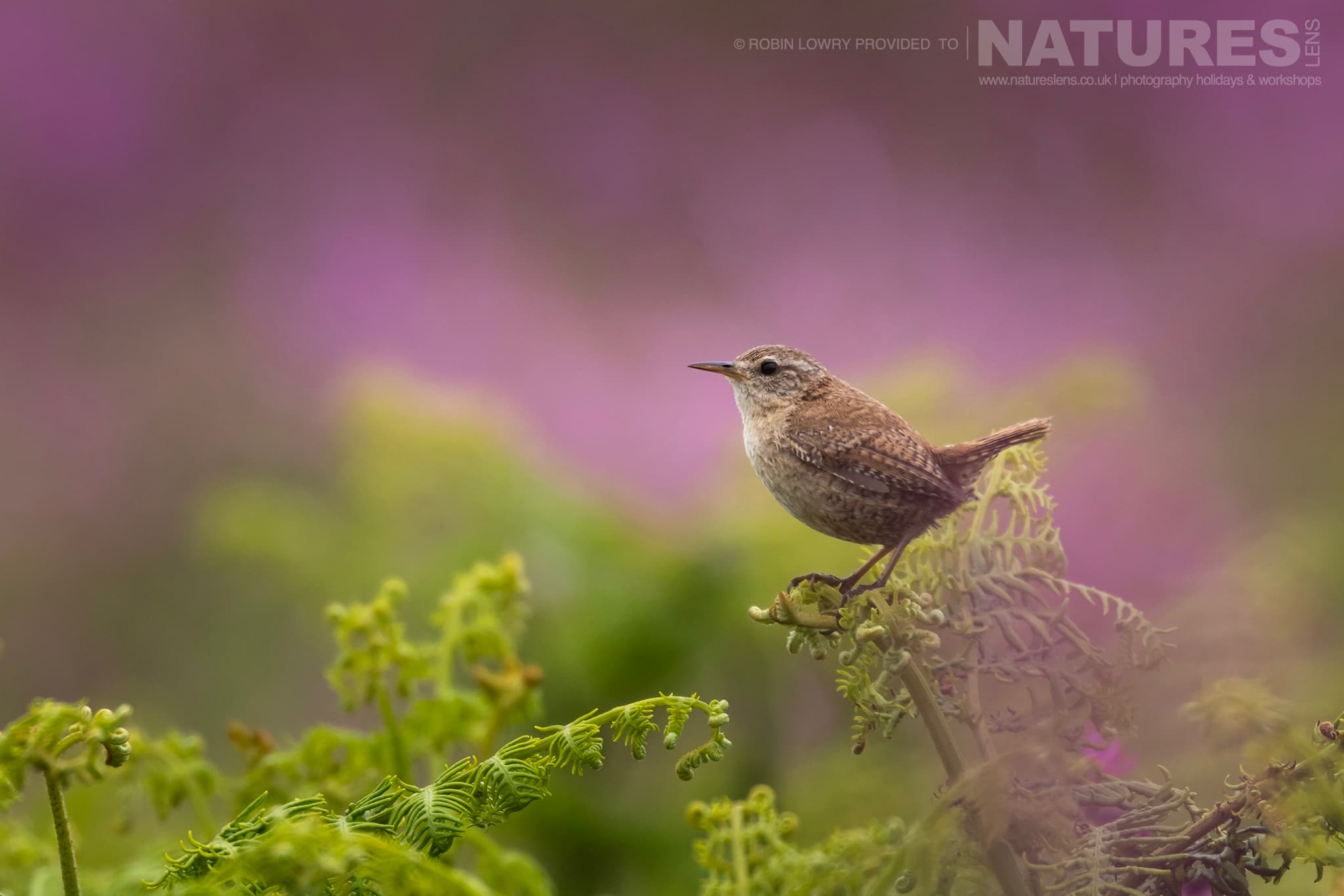
Heavy cloud at dawn, but the wildlife was unaffected. A harbour seal surfaced close to the landing steps, & the smaller birds – wrens, oystercatchers, stonechats, sedge warblers – were active along the paths. Overcast light like this is actually useful: no harsh shadows, & the colours in feather detail come through well.
No luck with the short-eared owl, so we returned to The Wick. The wind had shifted, pushing the puffins’ flight path in from High Cliff – a different angle from the day before, & better for in-flight work.
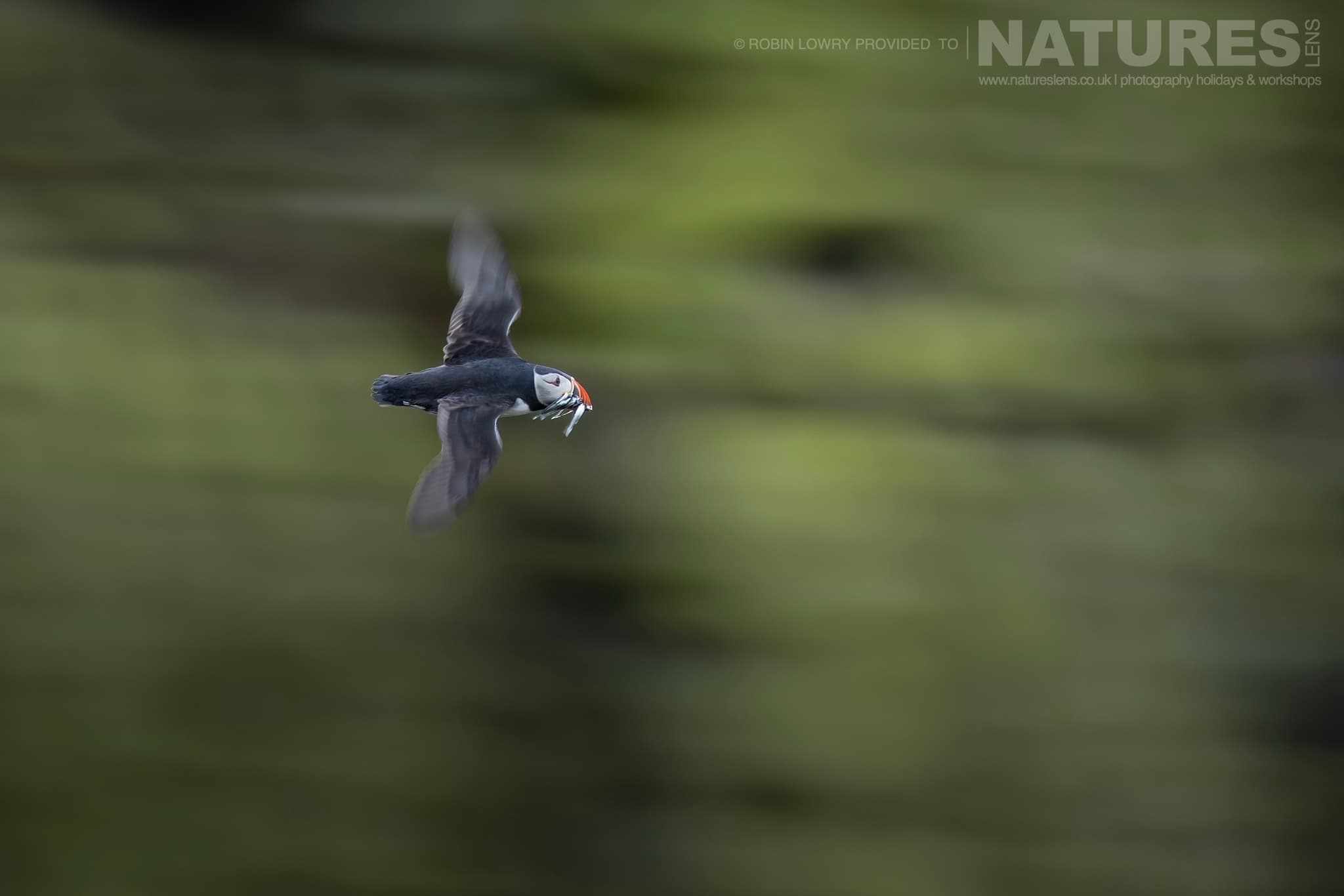
With the light still subdued, we switched to slow shutter panning – dropping to around 1/30s & tracking the birds through the frame. The idea is to blur the background while keeping the subject reasonably sharp, creating a real sense of movement. Hit rate was maybe one in ten, but the good ones were worth it.
A bonus was a family of choughs feeding fledglings on the grassy slopes – glossy black plumage & red bills against green grass. Clean, graphic compositions.
Day 4 – Peregrines & Farewell
Our final morning was overcast again, but Skomer had one more subject to offer. A pre-breakfast visit to The Wick produced a peregrine falcon powering past the cliffs at speed – barely time to raise the lens, but I managed a few tracking frames.
As we packed up & caught the boat back, the consensus was clear: four days is the right amount of time here. The weather varied, but that just meant we worked different techniques each day – backlit silhouettes in the sun, slow pans under cloud, tight portraits in flat light. Skomer always delivers.
Species Photographed during the Skomer Island Puffins Photography Holiday
Birds
-
- Atlantic Puffin (Fratercula arctica) – Feeding runs, flight, portraits on the cliff edge.
- Razorbill (Alca torda) – Nesting close to paths, allowing intimate portraits.
- Guillemot (Uria aalge) – Crowded on ledges at High Cliff.
- Short-eared Owl (Asio flammeus) – Brief sighting over grassland.
- Peregrine Falcon (Falco peregrinus) – Fast flyby along the cliffs.
- Chough (Pyrrhocorax pyrrhocorax) – Feeding young near the farmhouse.
- Wheatear (Oenanthe oenanthe) – Perched on rocks & drystone walls.
- Stonechat (Saxicola rubicola) – Frequently seen on gorse bushes.
- Sedge Warbler (Acrocephalus schoenobaenus) – Singing from reed beds.
- Wren (Troglodytes troglodytes) – Darting through the undergrowth.
- Oystercatcher (Haematopus ostralegus) – Noisy & conspicuous along the coast.
What Is Mammals?
-
- Harbour Seal (Phoca vitulina) – Watching us from the water’s edge.
The Skomer Island puffins are reliable, confiding, & endlessly variable as subjects. Whether you are refining flight technique or after frame-filling portraits, this is one of the best seabird locations in Britain.