Spend enough time photographing wildlife & eventually every expensive telephoto lens starts to look the same: scratched tripod feet, worn paint around the barrel, scuffs from hides, boats, jeep rails & airport security trays. Super-telephotos are tools, & for those using them properly they are going to pick up marks.
That said, there is a big difference between honest wear & simply letting a £10,000 lens get battered unnecessarily.
Lens covers have become almost standard equipment amongst wildlife photographers over the last decade. They protect lenses from knocks & scratches, help preserve resale value, reduce glare & reflections, & in some situations even make you slightly less conspicuous around wildlife. But not all lens covers are equal, & after trying pretty much everything available over the years, I’ve ended up becoming increasingly biased towards one brand in particular: RolanPro.
That does not mean the others are bad. Far from it. Each has strengths, weaknesses & a slightly different philosophy. Some prioritise protection, some camouflage, some weight, & others simply appearance.
Here is a realistic look at the main options available today from the perspective of somebody who has actually used them extensively in the field.
Why Do Wildlife Photographers Use Lens Covers?
Lens covers serve two real purposes in the field: protection from physical wear & the preservation of resale value. The camouflage benefits are secondary.
Before diving into brands, it is worth addressing the obvious question: do you actually need a lens cover?
Strictly speaking, no.
A professional telephoto lens will function perfectly well without one. Plenty of photographers prefer the clean factory finish & dislike adding bulk. However, once you start working regularly in wildlife environments, especially from vehicles, hides, boats or rough terrain, covers begin making a lot of sense.
The main benefits are:
- Protection from scratches & abrasions
- Minor impact cushioning
- Better resale value
- Thermal insulation in cold weather
- Reduced glare & reflections
- Camouflage & shape breakup
- Easier grip in wet conditions
Most photographers initially buy them for camouflage, then later realise the real value is protection.
LensCoat – The Original Big Name
For years, LensCoat was effectively the default choice. If you attended any wildlife photography festival or major birding event ten years ago, almost every large lens wore a LensCoat.
LensCoat built its reputation around neoprene protection systems designed specifically for telephoto lenses. Their covers became hugely popular because they offered reasonably good protection whilst remaining lightweight & relatively unobtrusive. (Lenscoat)
The biggest strength of LensCoat is experience & compatibility. They produce covers for an enormous range of lenses, including obscure models many competitors ignore. Their camouflage options are also extensive, ranging from woodland patterns through to plain black & snow variants.
The neoprene material gives lenses a softer, warmer feel in winter & helps protect paintwork from light impacts & rubbing. For years, this was more than enough.
However, over time many wildlife photographers started noticing the same weaknesses repeatedly:
- Edges fraying after heavy use
- Neoprene stretching
- Sections loosening over time
- Covers shifting slightly during prolonged fieldwork
This criticism appears regularly across wildlife photography forums & discussions. (Backcountry Gallery Photography Forums)
That does not make LensCoat bad. For many casual or moderate users they remain perfectly adequate. But photographers shooting heavily year-round often begin looking for something more durable.
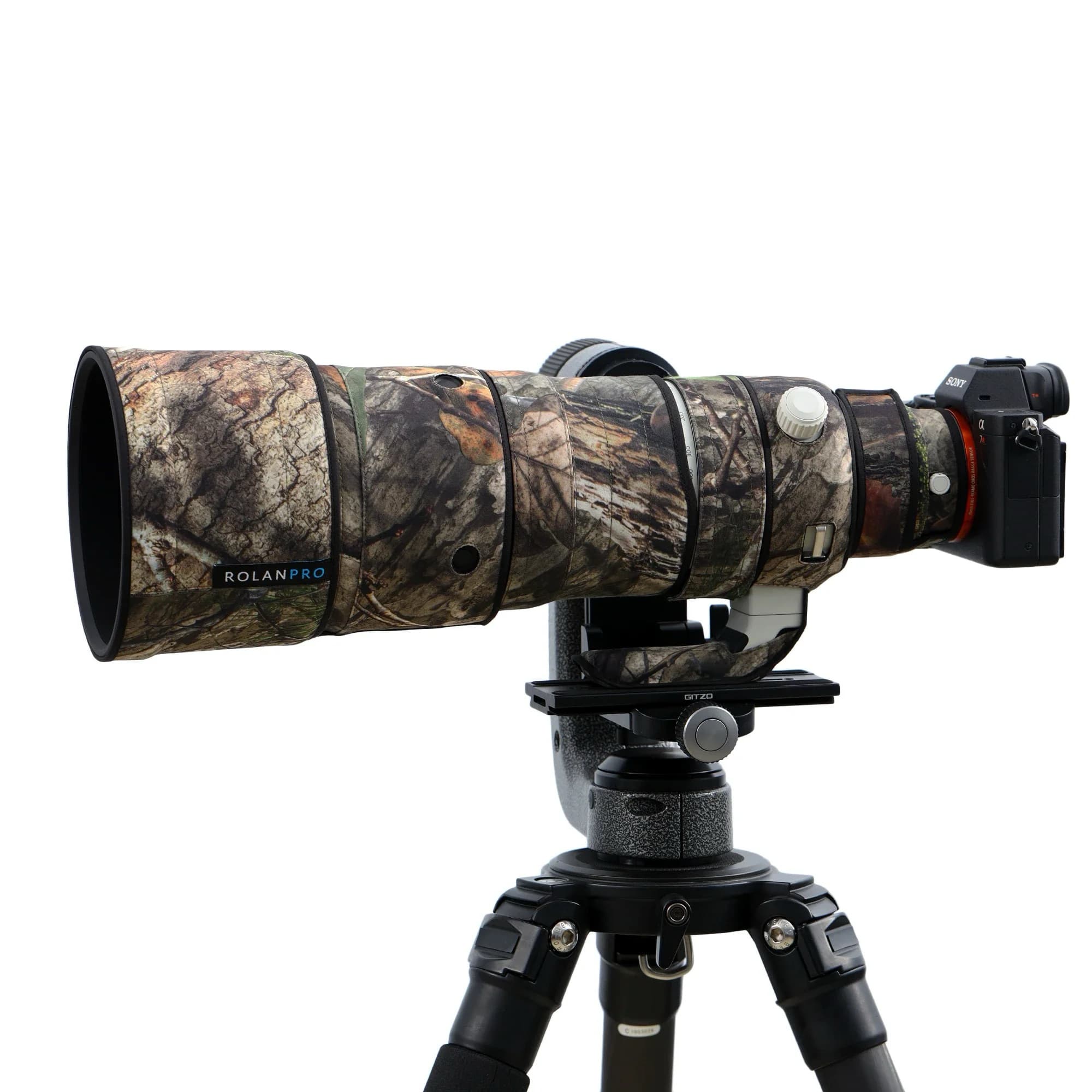
RolanPro – The One I Keep Coming Back To
RolanPro has become increasingly popular amongst serious wildlife photographers over the past few years, particularly those regularly working with modern Sony, Canon & Nikon super-telephotos. The material is the key difference.
Rather than soft stretch neoprene, many RolanPro covers use a tougher fabric-backed construction with stitched edging throughout. That sounds like a small detail until you have used covers for several years in rough conditions. The stitched edges become a major advantage.
Repeatedly, photographers comment on exactly the same thing:
- Better durability
- Less fraying
- More precise fit
- Cleaner cut-outs around switches & controls
- Improved long-term appearance
Those points appear consistently across forums & reviews. (Backcountry Gallery Photography Forums)
Personally, that mirrors my own experience almost exactly.
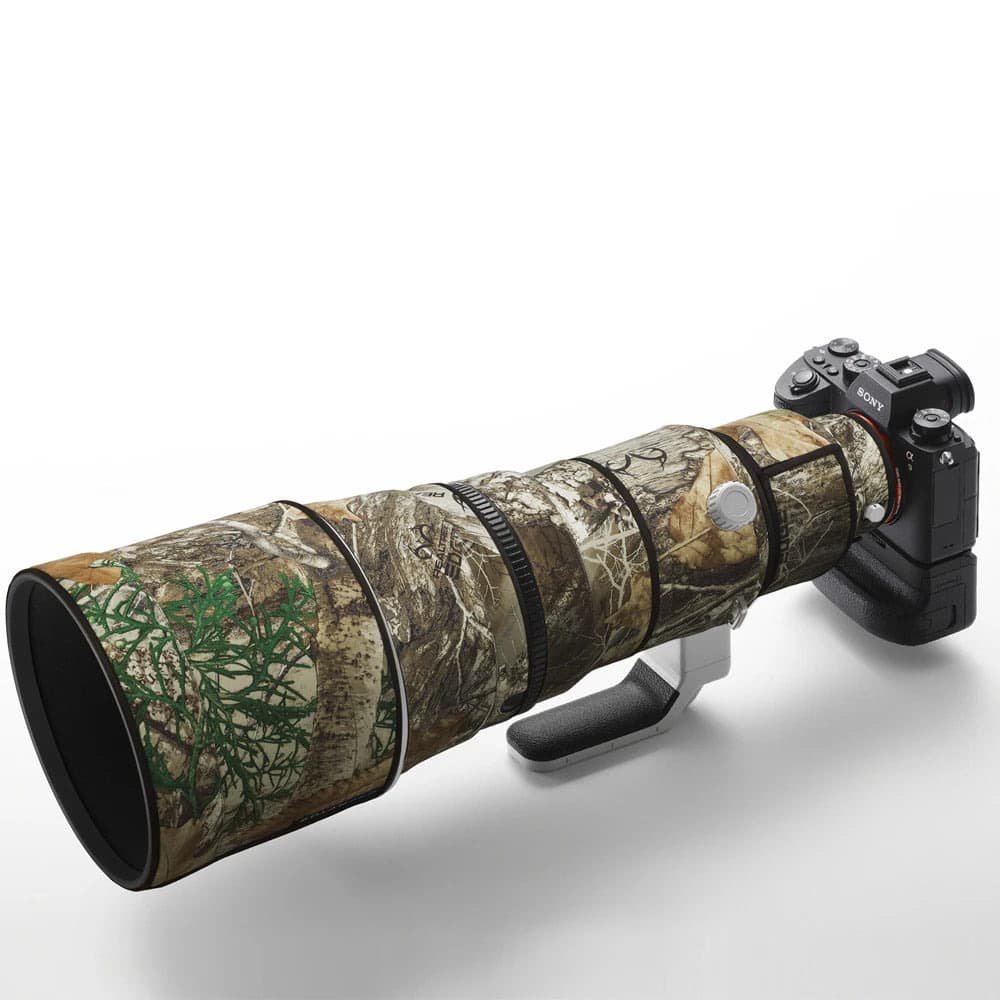
The fit tends to feel tighter & more deliberate. On modern lenses with lots of switches, custom buttons & rotating collars, RolanPro generally feels more refined & better engineered. Some models even include thoughtful details around teleconverter switches & zoom extensions which older designs often ignored.
Another advantage is visual subtlety. Some LensCoat designs can look slightly bulky or “puffy”. RolanPro covers often appear cleaner & closer to the lens body itself.
There are downsides though. The tougher material can feel slightly bulkier than classic neoprene, & installation is sometimes more fiddly. Certain photographers still prefer the softer feel of traditional neoprene covers. There are also photographers who argue LensCoat provides slightly better cushioning due to its thicker neoprene construction. (DPReview)
But overall, after using both heavily, I increasingly find myself preferring RolanPro. The durability alone makes a huge difference if you spend serious time in the field.
Chasing Birds – Beautifully Designed & Increasingly Popular
Chasing Birds has gained a very loyal following, particularly amongst bird photographers wanting something slightly more refined aesthetically.
Their covers often look superb. The camouflage patterns are tasteful & modern, & the overall finish feels premium. Many photographers also appreciate that they are produced by photographers who clearly understand how equipment is actually used.
Compared to older-style neoprene covers, Chasing Birds products often feel more contemporary & visually cleaner. Protection levels are good, though perhaps slightly less “armoured” than some heavier-duty RolanPro options.
One area where Chasing Birds scores highly is appearance. Some wildlife photographers simply dislike the older bulky camouflage aesthetic. Chasing Birds feels more modern & understated.
That said, if pure ruggedness is your priority, I still think RolanPro edges ahead for long-term durability.
Stealth Gear – Functional & Practical
Stealth Gear has long focused on practical wildlife photography accessories, including hides, rain covers & lens protection systems.
Their lens covers tend to lean more towards practicality than premium refinement. They generally offer solid protection & decent camouflage options without trying to reinvent the wheel.
The advantage of Stealth Gear has often been affordability & straightforward functionality. If you simply want a protective camouflage layer without obsessing over stitching quality or aesthetics, they remain a sensible option.
However, compared to newer premium alternatives, some of their products can feel slightly dated in design & finishing.
Outdoor Photography Gear & Smaller UK Manufacturers
One interesting part of the market is the number of smaller manufacturers now producing custom neoprene lens covers, particularly in the UK.
Outdoor Photography Gear offers UK-made neoprene covers in various camouflage finishes. (outdoorphotographygear.co.uk)
These smaller companies can sometimes provide excellent value & unusual camouflage patterns unavailable elsewhere. Build quality varies, but many wildlife photographers like supporting smaller niche businesses.
Similarly, companies like Kevin Keatley Wildlife Watching Supplies produce practical accessories & protective covers aimed squarely at field use rather than flashy marketing. (wildlifewatchingsupplies.co.uk)
Vinyl Wraps & 3M-Style Skins
A slightly different category altogether is adhesive vinyl protection.
Rather than padded neoprene-style sections, these systems use precision-cut adhesive skins applied directly to the lens body.
The advantages are obvious:
- Very low bulk
- Clean appearance
- No movement or slipping
- Excellent cosmetic protection
- Lightweight
The disadvantages are equally obvious:
- Minimal impact cushioning
- Difficult removal if poorly applied
- Less insulation in cold weather
- No real shock absorption
Some photographers absolutely love them, especially those travelling frequently where every bit of bulk matters. Others miss the grip & protection of traditional covers. I still prefer proper padded covers on large wildlife lenses.
Does Camouflage Actually Matter?
This is always slightly controversial.
Manufacturers understandably emphasise camouflage heavily in their marketing. LensCoat specifically highlights concealment benefits for wildlife photography. (Lenscoat)
In reality, camouflage probably matters less than many photographers imagine. Movement, behaviour & positioning are usually vastly more important than whether your lens is woodland green or plain white. Most mammals & birds are not particularly alarmed by lens colour alone.
However, camouflage can still help slightly by breaking up the recognisable shape of a large telephoto lens, especially in hides or close bird photography situations. (Open Source Photography)
Honestly though, most photographers buy covers primarily for protection rather than concealment.
Which Lens Cover Would I Actually Recommend?
After years of trying almost everything, RolanPro is where I keep landing – not for dramatic reasons, but because after heavy use in hides, rain, dust, & salt spray, they hold up more gracefully than the alternatives.
The stitching is better. The fit is cleaner. The durability is better. The controls are usually better integrated. & after heavy use, they simply seem to hold up more gracefully.
LensCoat deserves enormous credit for effectively creating & popularising this market, & for many photographers they still make perfect sense. Chasing Birds produces some genuinely attractive modern alternatives, while Stealth Gear & smaller UK manufacturers continue offering practical field-ready options.
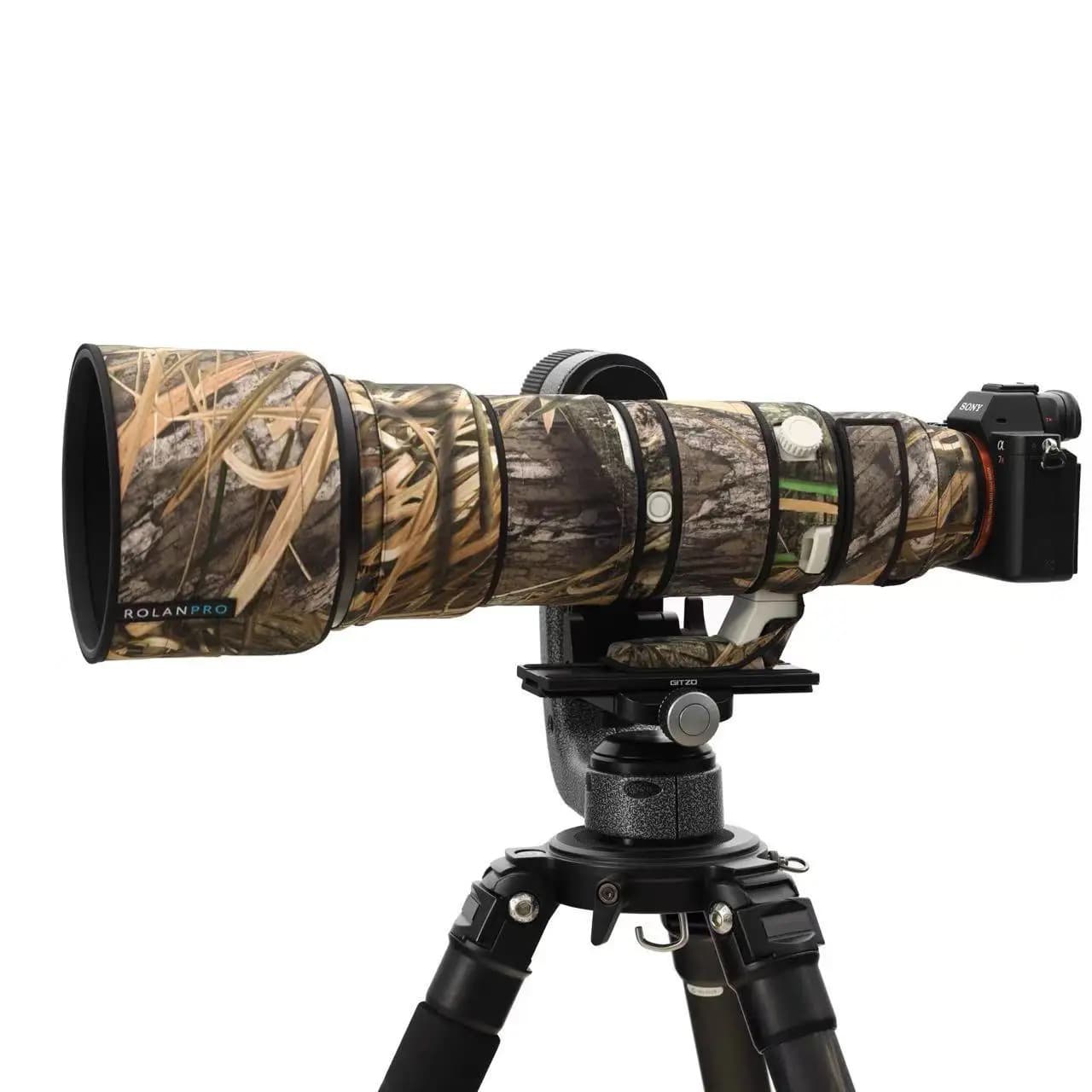
But if somebody asked me today what I would put on a brand-new wildlife lens costing several thousand pounds, I would almost certainly point them towards RolanPro first.
Not because the others are unusable. Simply because after years in hides, rain, dust, salt spray, airport security queues & endless vehicle doors, they are the ones I now trust most.
NaturesLens runs small-group wildlife photography holidays built entirely around photographic opportunity. Every departure is led by specialist guides who know the light, the behaviour, & the best positions. For dates, destinations, & availability, see our full range of wildlife photography holidays.
- NaturesLens trips are designed around photographic opportunity – schedules, positions, & access are all structured to give you the best light.
- Groups of 4 – 8 photographers ensure unhurried access & individual guidance.
- Single occupancy is included on virtually all NaturesLens trips.