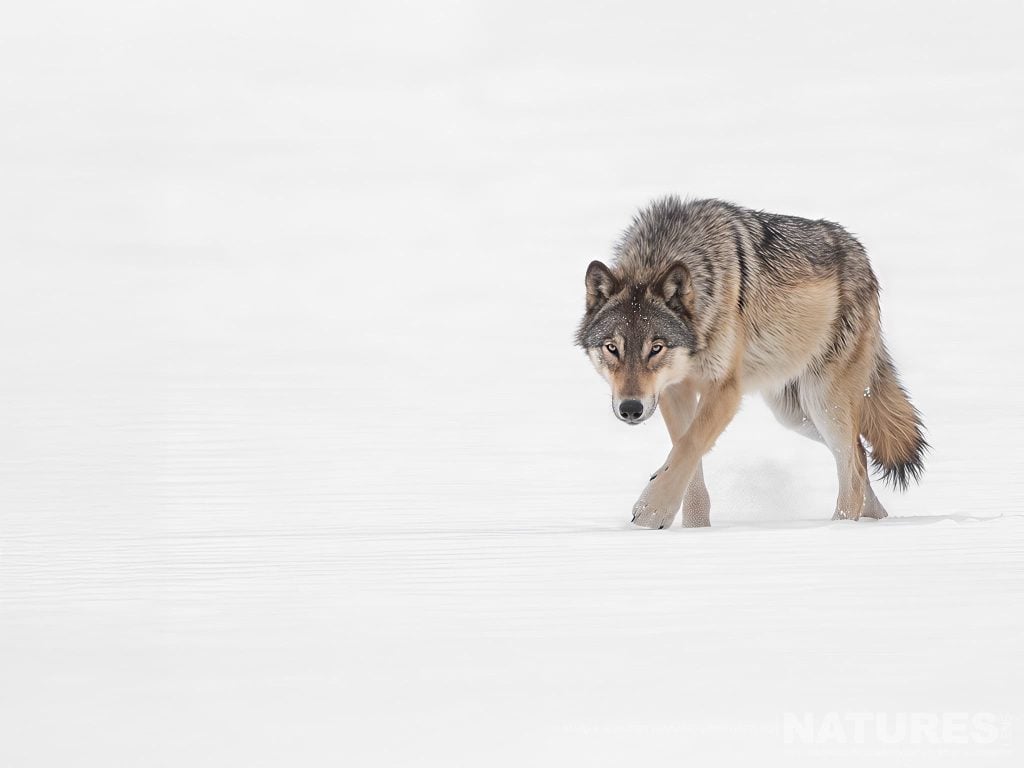
Species profile
About this species
The Timber Wolf, also known as the Grey Wolf, is the largest wild member of the Canidae family, native to North America, Europe & Asia. It is a highly social animal that lives & hunts in organised family packs, displaying complex communication behaviours including howling, body language & scent marking. Adults typically weigh between 30 & 80 kilograms, with thick fur coats that vary in colour from white & grey to black & brown.
Timber Wolves inhabit a wide range of environments including boreal forests, tundra, grasslands & mountainous regions across North America, Europe & Asia. They favour areas with dense forest cover combined with open terrain for hunting large ungulates such as elk, deer & moose.
Where to photograph
Where our trips feature this species
You can photograph Timber Wolf with us in Canada.
These departures are part of our North America programme.
In the field, David Miles & Pui Hang Miles helps guests make the most of these encounters.
Field notes
Photography notes
Early morning & late evening during winter months offer the best light & activity, as wolves are most active at dawn & dusk. The winter season also provides snow backgrounds that contrast beautifully with the wolves fur & makes tracking & locating packs far easier.
Use a long telephoto lens of at least 400mm to capture wolves without disturbing their natural behaviour, as close proximity will cause them to retreat. Position yourself downwind & wear muted, natural colours to avoid detection, remaining patient & still for extended periods. Shoot in burst mode when wolves are active, as their movements are swift & unpredictable, & aim for low angles to achieve a more compelling & intimate perspective.
Available holidays
Trips featuring Timber Wolf
The holidays below are pulled from the same species relationship, so the guide stays tied to live departures rather than becoming a static article.