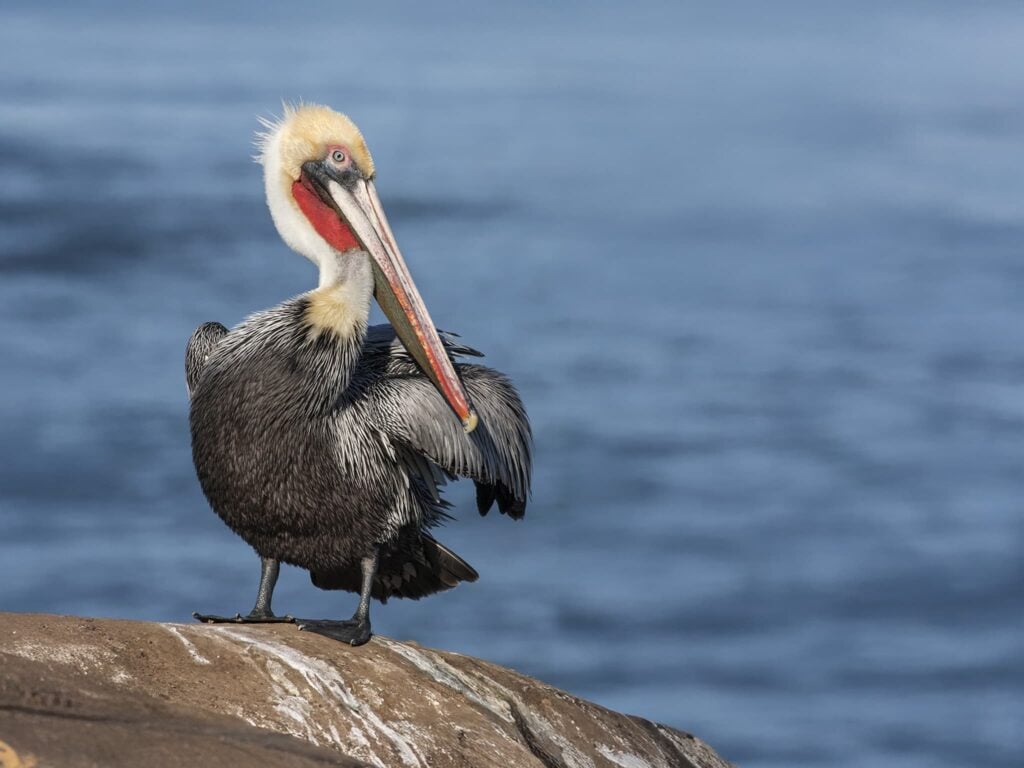
Species profile
About this species
The Western Gull is a large seabird native to the Pacific Coast of North America, recognised by its dark grey back, white head & underparts, and bright yellow bill with a red spot. It is one of the few gull species that breeds exclusively along the western coastline of North America, nesting in large colonies on rocky offshore islands & coastal cliffs. As an opportunistic feeder, it consumes fish, invertebrates, carrion & scraps, often gathering in harbours & fishing ports.
Rocky coastal cliffs, offshore islands, sandy beaches, harbours & fishing ports along the Pacific Coast of North America, from British Columbia south to Baja California.
Where to photograph
Where our trips feature this species
You can photograph Western Gull with us in the United States.
These departures are part of our North America programme.
In the field, David Miles helps guests make the most of these encounters.
Field notes
Photography notes
Early morning light during the summer breeding season, typically May to July, provides warm directional light & peak activity around nesting sites. Winter months at busy harbours & fishing ports also offer reliable sightings throughout the day.
Position yourself at a low angle near harbour walls or piers to capture eye-level shots that give a sense of connection with the bird & reveal its bold markings clearly. Use a fast shutter speed of at least 1/1000s to freeze wing motion during flight, particularly when gulls are soaring on coastal updrafts. Visiting active nesting colonies in summer offers excellent opportunities to photograph natural behaviours such as courtship & chick-rearing, so use a telephoto lens of 400mm or more to avoid disturbing the birds.
Available holidays
Trips featuring Western Gull
The holidays below are pulled from the same species relationship, so the guide stays tied to live departures rather than becoming a static article.