Costa Rica is known for its astonishing natural beauty, from lush rainforests & hidden waterfalls to the vibrant wildlife that inhabits its landscapes. One beautiful, exotic bird species stands out among the many creatures that call this paradise home: the toucan. With their brightly coloured bills & unique, cheerful calls, toucans in Costa Rica are beloved residents of the rainforest & firm favourites with bird photographers from around the world.
In this blog, illustrated with images captured during our Costa Rican photography tours, we showcase several of the toucan species found in Costa Rica & highlight the beauty of these enchanting birds. From vibrant plumage to playful behaviour, there is much to discover about these remarkable rainforest icons.
An Introduction to the Toucans of Costa Rica
Belonging to the Ramphastidae family, toucans are Neotropical birds with large, brightly coloured bills. Of the roughly 40 species found across the Americas, six occur in Costa Rica, making it one of the best destinations for toucan photography. Of these six, our itineraries currently offer opportunities to photograph five.
Despite their substantial bills, toucans are surprisingly lightweight due to their hollow, keratin-covered bone structure, typically weighing under 16 ounces. This adaptation allows them to feed efficiently on fruits such as papayas & bananas, alongside a broader omnivorous diet.
The three aracaris – Cassin’s, Collared & Fiery-billed – are smaller toucan relatives, alongside larger species such as the Keel-billed & Chestnut-mandibled Toucan.
Toucans are social birds & are rarely seen alone. They are highly adaptable feeders, consuming fruits, berries, insects, lizards, rodents, & occasionally small birds.
Types of Toucans in Costa Rica
Several toucan species are native to Costa Rica, including the Keel-billed Toucan & the Chestnut-mandibled Toucan, alongside their smaller cousins: the Collared Aracari, Fiery-billed Aracari, Cassin’s Aracari, & the Emerald Toucanet.
-
Keel-billed Toucan (Ramphastos sulfuratus)
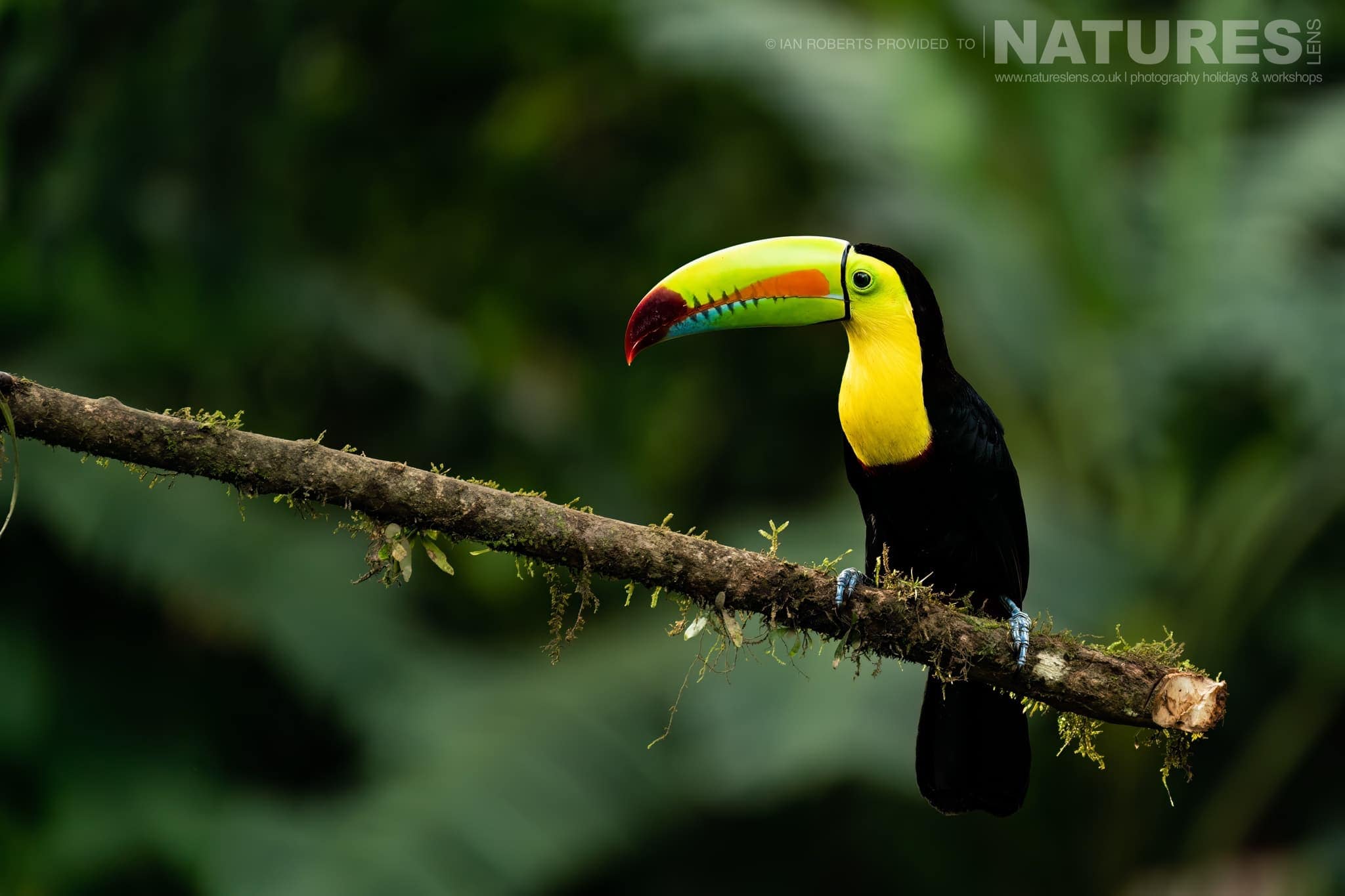
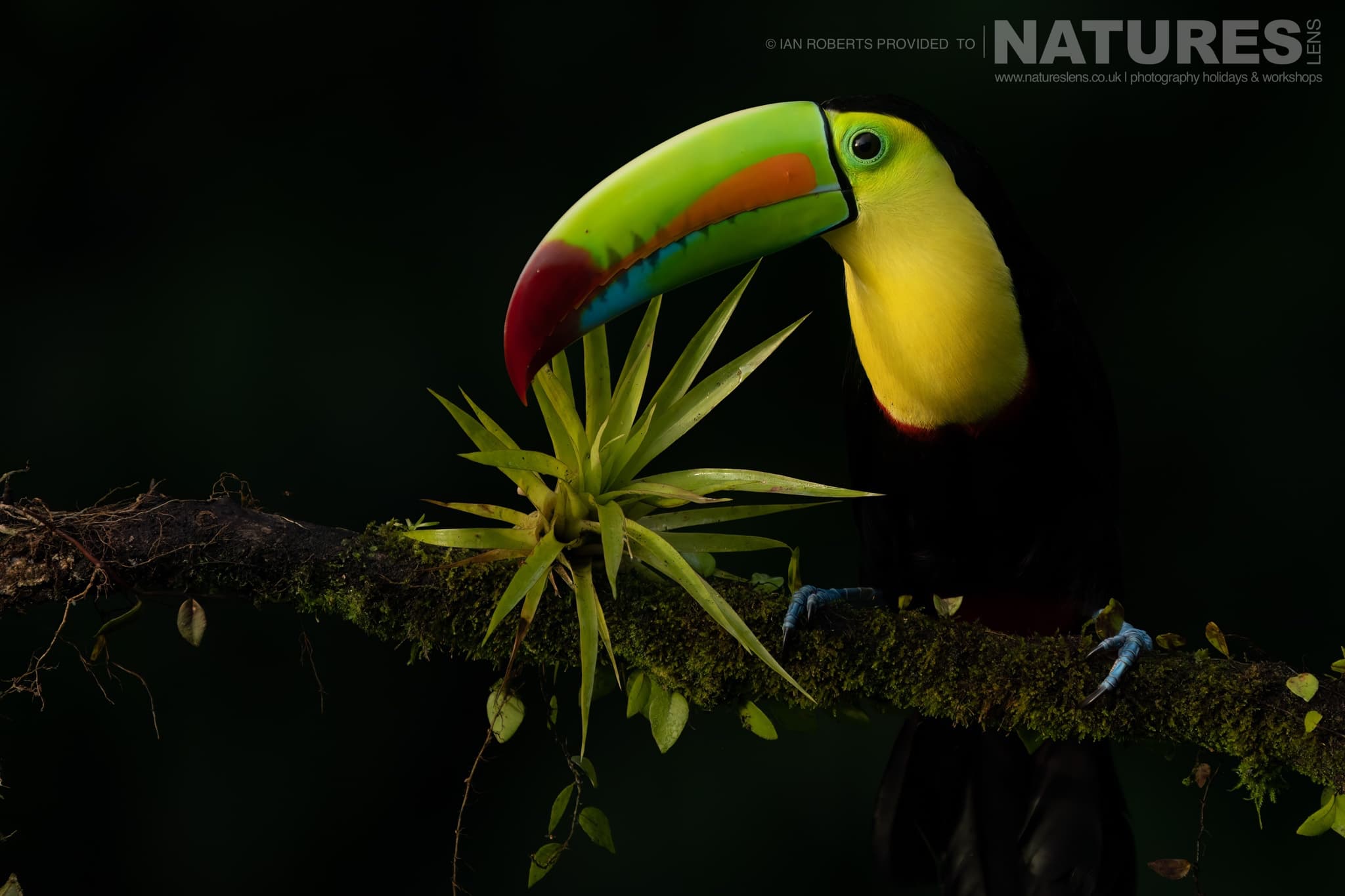
The Keel-billed Toucan is a colourful & charismatic bird native to Central & South America. It is the national bird of Belize & is instantly recognisable by its large, multi-coloured bill with a red tip. Its body is primarily black, contrasted by a yellow throat, blue legs, & a stubby red tail.
An arboreal species, it inhabits tropical & subtropical forests where it feeds mainly on fruits & insects. Its vivid colours make it one of the most popular subjects for bird photographers.
-
Chestnut-mandibled Toucan (Ramphastos ambiguus swainsonii)

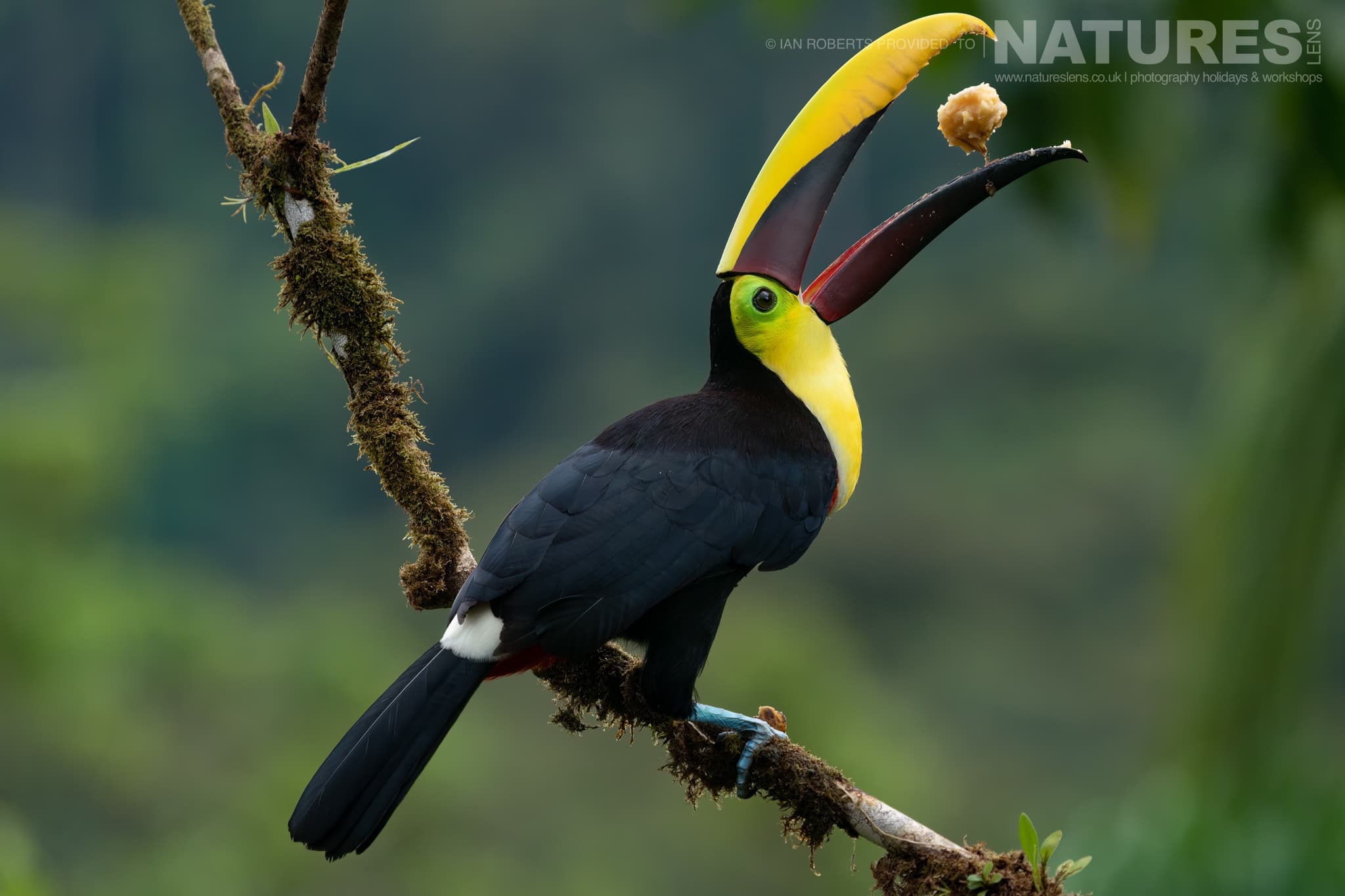
The Chestnut-mandibled Toucan is a large, striking species that typically lives in pairs or small family groups. Its loud, resonant call often echoes through the forest canopy.
This species plays an important ecological role as a seed disperser, making it a keystone species within rainforest ecosystems.
-
Collared Aracari (Pteroglossus torquatus)
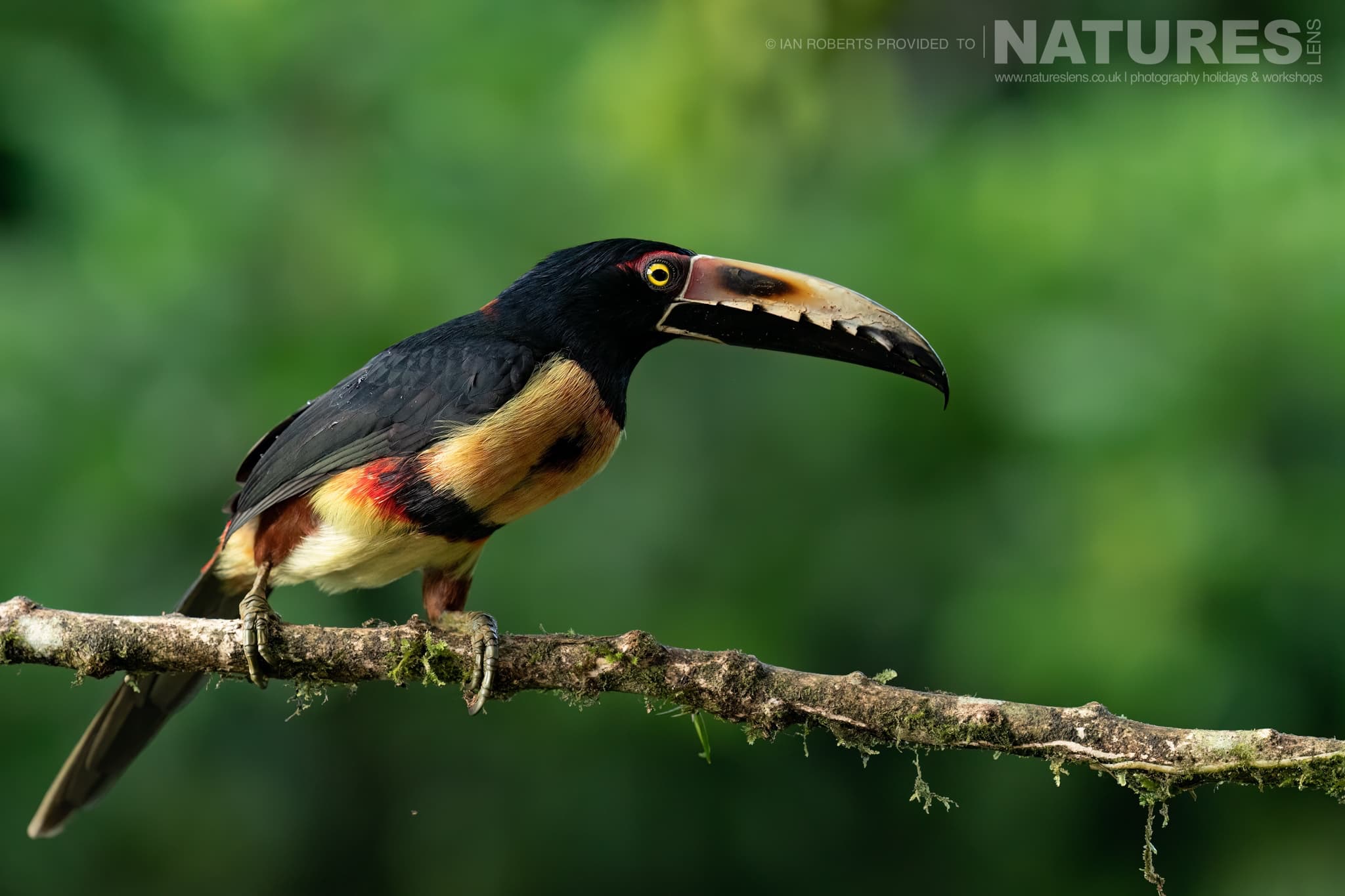
The Collared Aracari is a smaller, colourful toucan found throughout Central & South American rainforests. It feeds on fruits, insects, & small vertebrates & is known for its lively whistles & chirps.

-
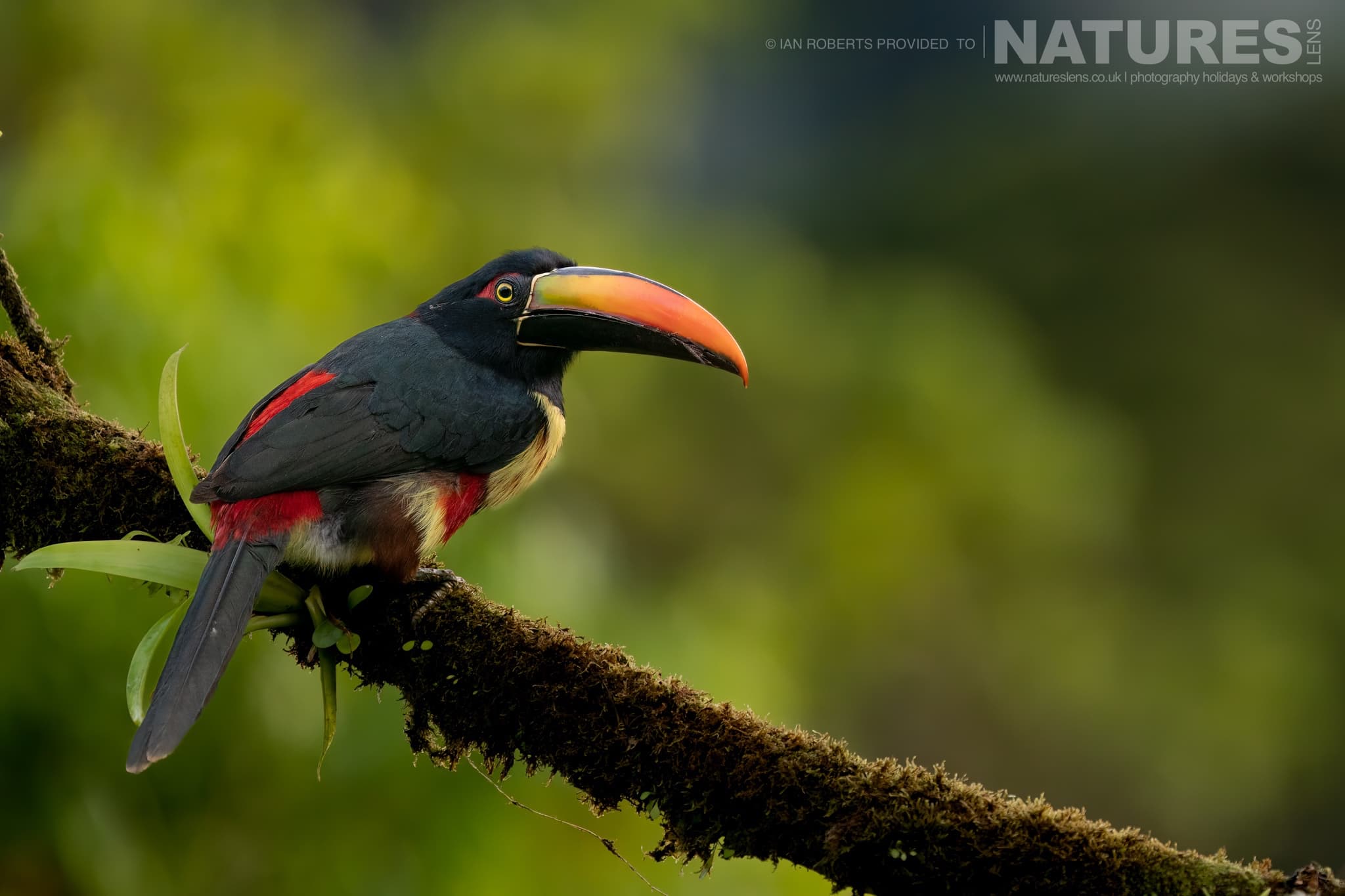
Fiery-billed Aracari (Pteroglossus frantzii)
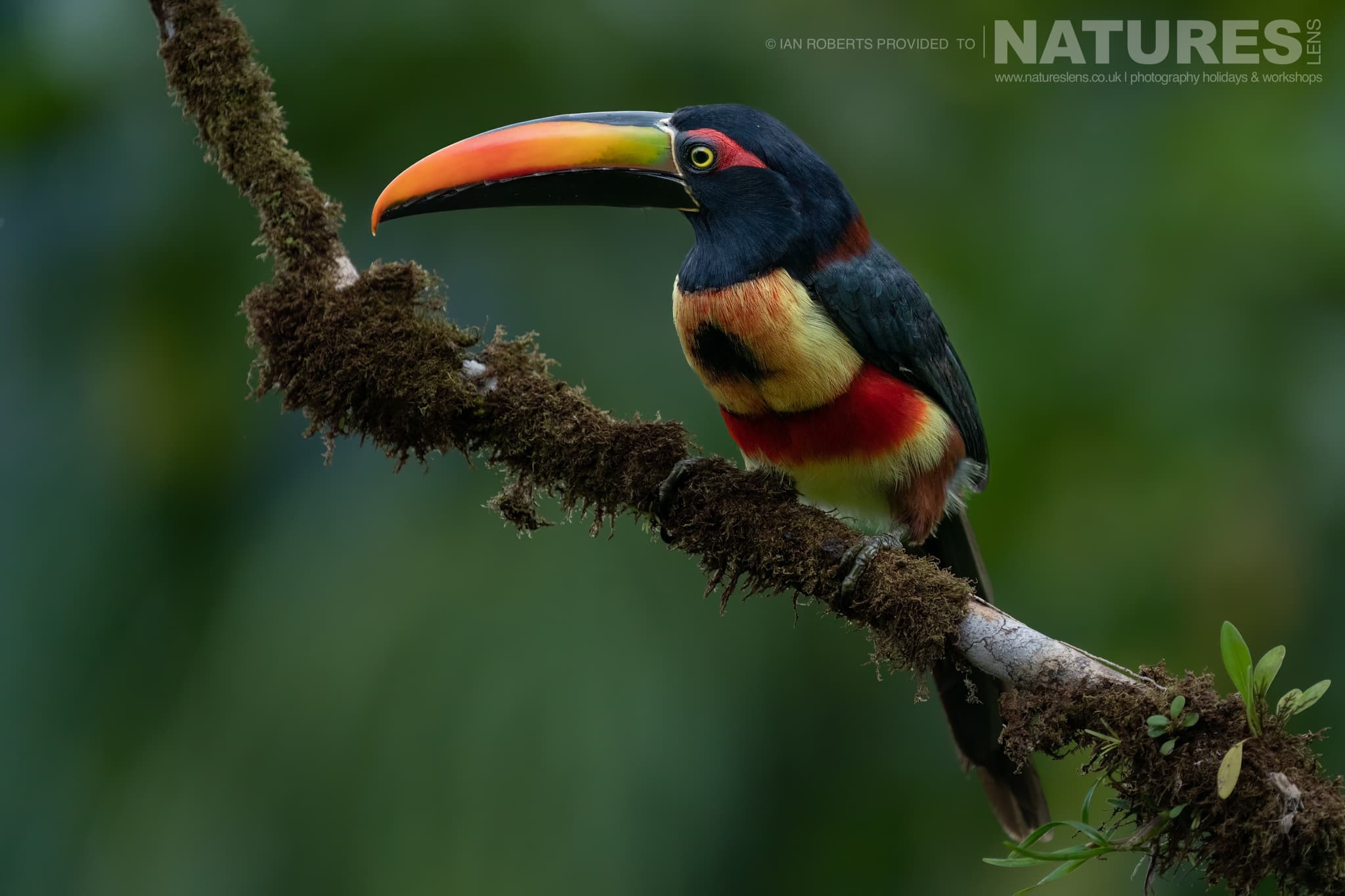
The Fiery-billed Aracari is native to Costa Rica & nearby regions. Its bold plumage features black, yellow, & white tones, complemented by a striking red-orange bill. It is most often found in mid-elevation wet forests.
An important seed disperser, this species feeds primarily on fruits & is frequently heard before it is seen, thanks to its distinctive call.
-
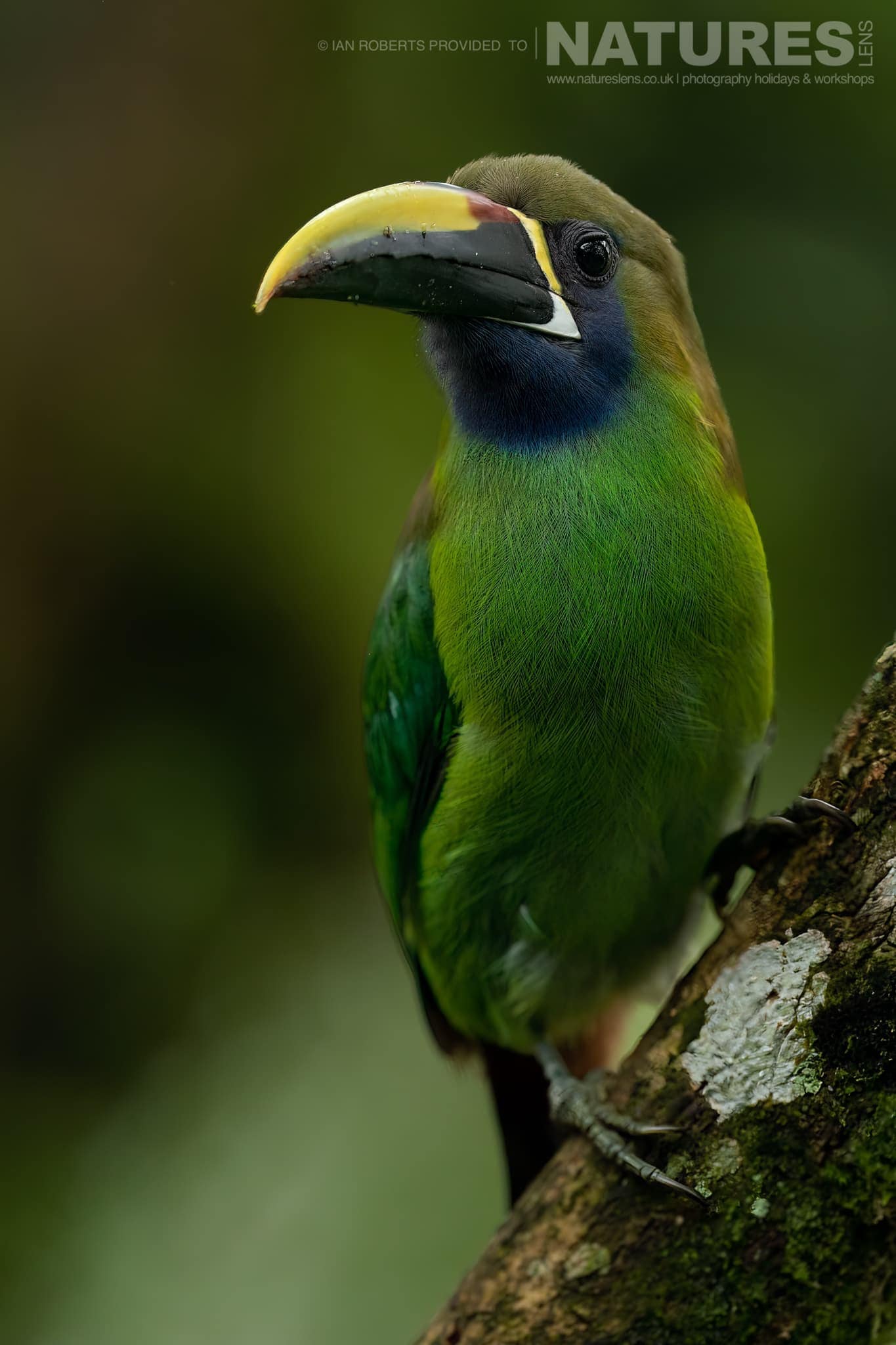
Emerald Toucanet (Aulacorhynchus prasinus)

The Emerald Toucanet is a medium-sized forest species with an emerald-green body & a brightly coloured bill. It inhabits montane evergreen forests at elevations between 1,000 & 2,500 metres.
Feeding on fruits, insects, & small invertebrates, it forages alone or in pairs & is best identified by its loud, distinctive call.
-
Yellow-eared Toucanet, aka Cassin’s Aracari (Selenidera spectabilis)
Cassin’s Aracari inhabits tropical & subtropical lowland forests, forest edges, & secondary growth. Its diet consists mainly of fruits & insects, with occasional small reptiles & birds.
This species is commonly found along wet forested slopes, ridges, & fruiting trees near forest margins.
Tips for Photographing Toucans in Costa Rica
Costa Rica is one of the world’s finest destinations for toucan photography. Their vibrant colours & engaging behaviour make them rewarding photographic subjects, but patience is key.
Allow yourself plenty of time in the field, as toucans can be shy & easily disturbed. A telephoto lens is essential, as birds are often perched high in the canopy. For frame-filling portraits, 600mm or more may be required, while 400-600mm works well for environmental compositions.
On many NaturesLens tours, we photograph toucans at carefully positioned feeder setups & photography decks, allowing for excellent angles, clean backgrounds, & consistently high-quality results.
Which of Our Tours Are Suitable for Photographing Toucans in Costa Rica?
NaturesLens offers a range of Costa Rican wildlife photography tours, all of which provide excellent opportunities to photograph toucans. Our itineraries are carefully planned to maximise time in productive habitats using a variety of proven locations.
Our guides provide experienced guidance throughout, helping you refine technique while enjoying Costa Rica’s rainforests, cuisine, & culture. This makes our Costa Rica photography holidays an outstanding choice for wildlife photographers.
About the Images Used in This Article
All images featured above were taken by Ian Roberts, who has kindly allowed us to use them. Ian guides for NaturesLens & has joined several Costa Rica tours both as guide & guest.