Species profile
About this species
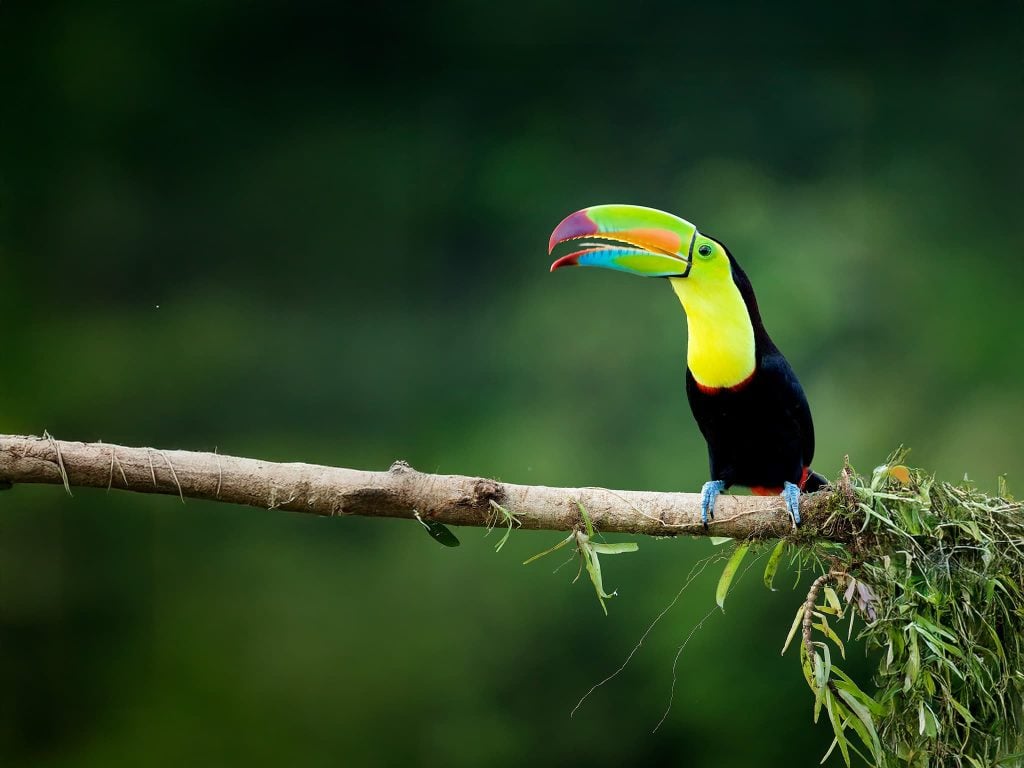
The Chestnut-mandibled Toucan is a large, striking bird found in Central & South America, recognisable by its vivid yellow & black plumage and its distinctive two-toned bill, which is yellow on top and chestnut-brown beneath. It is the second-largest toucan species and is commonly found in humid tropical forests & forest edges. The species is highly vocal, producing loud, repetitive calls that carry considerable distances through the forest canopy.
Humid lowland & foothill tropical forests, forest edges, & partially open areas with tall trees, ranging from sea level up to around 1500 metres elevation across Central America & north-western South America.
Where to photograph
Where our trips feature this species
You can photograph Chestnut-mandibled Toucan with us in Costa Rica.
These departures are part of our Central America programme.
In the field, David Miles helps guests make the most of these encounters.
Field notes
Photography notes
Early morning hours between 6am & 9am offer the best light & highest activity levels, particularly during fruiting seasons from late dry season into early wet season when food sources are abundant.
Position yourself near fruiting trees at forest edges where toucans regularly feed, as this allows for clear sightlines without dense foliage obscuring your subject. Use a telephoto lens of at least 400mm to capture close detail while maintaining a respectful distance that avoids disturbing natural behaviour. Expose carefully for the high contrast between the bright yellow chest & dark body, using spot metering on the bird to avoid blown highlights.
Available holidays
Trips featuring Chestnut-mandibled Toucan
The holidays below are pulled from the same species relationship, so the guide stays tied to live departures rather than becoming a static article.