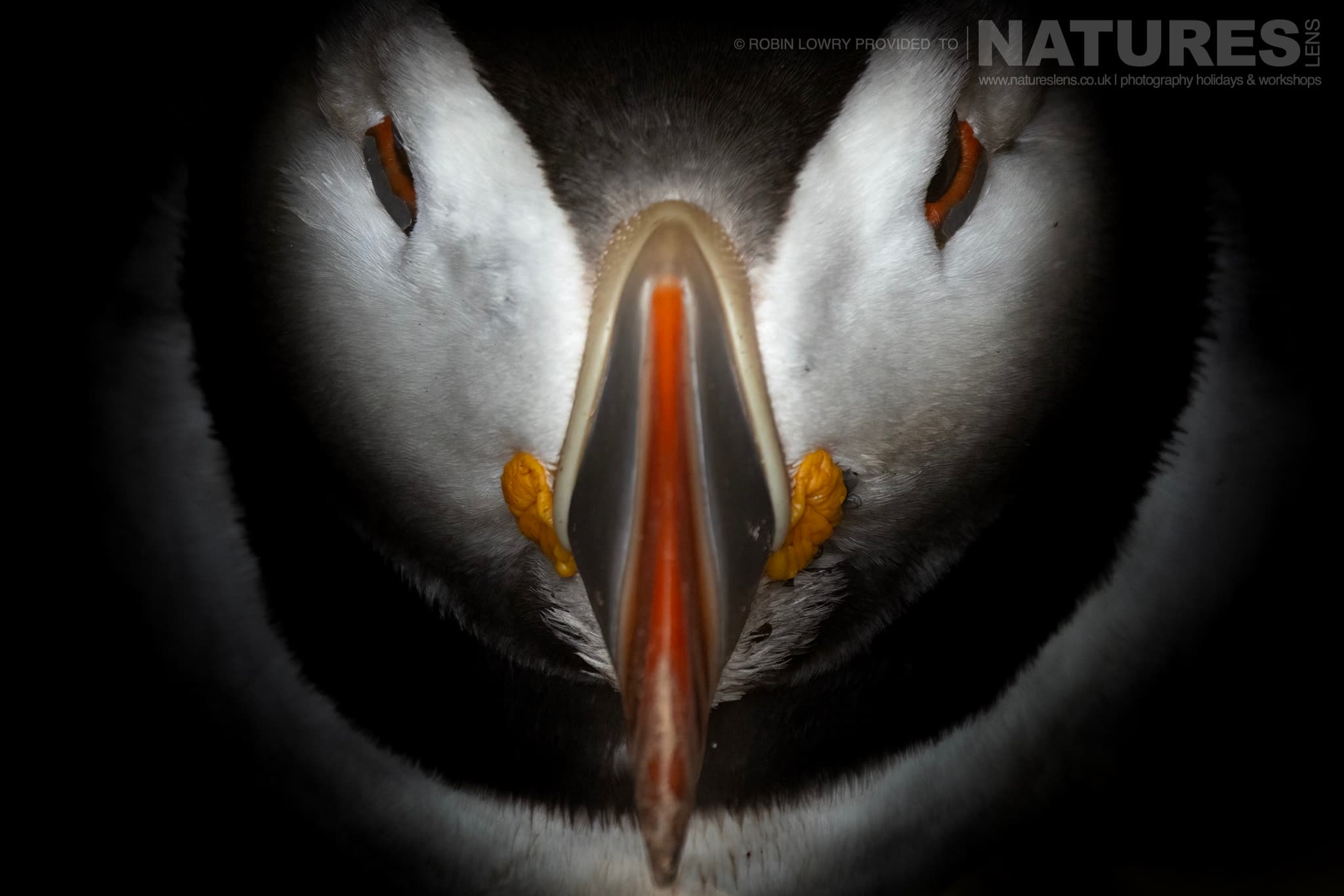
Few seabirds capture the imagination of wildlife photographers quite like the Atlantic Puffin. With its colourful bill, upright stance, expressive eye, & engaging behaviour, the puffin is both instantly recognisable & endlessly rewarding to photograph. During the breeding season, puffins gather at a relatively small number of accessible colonies across the North Atlantic, creating some of the most productive seabird photography opportunities anywhere in the world.
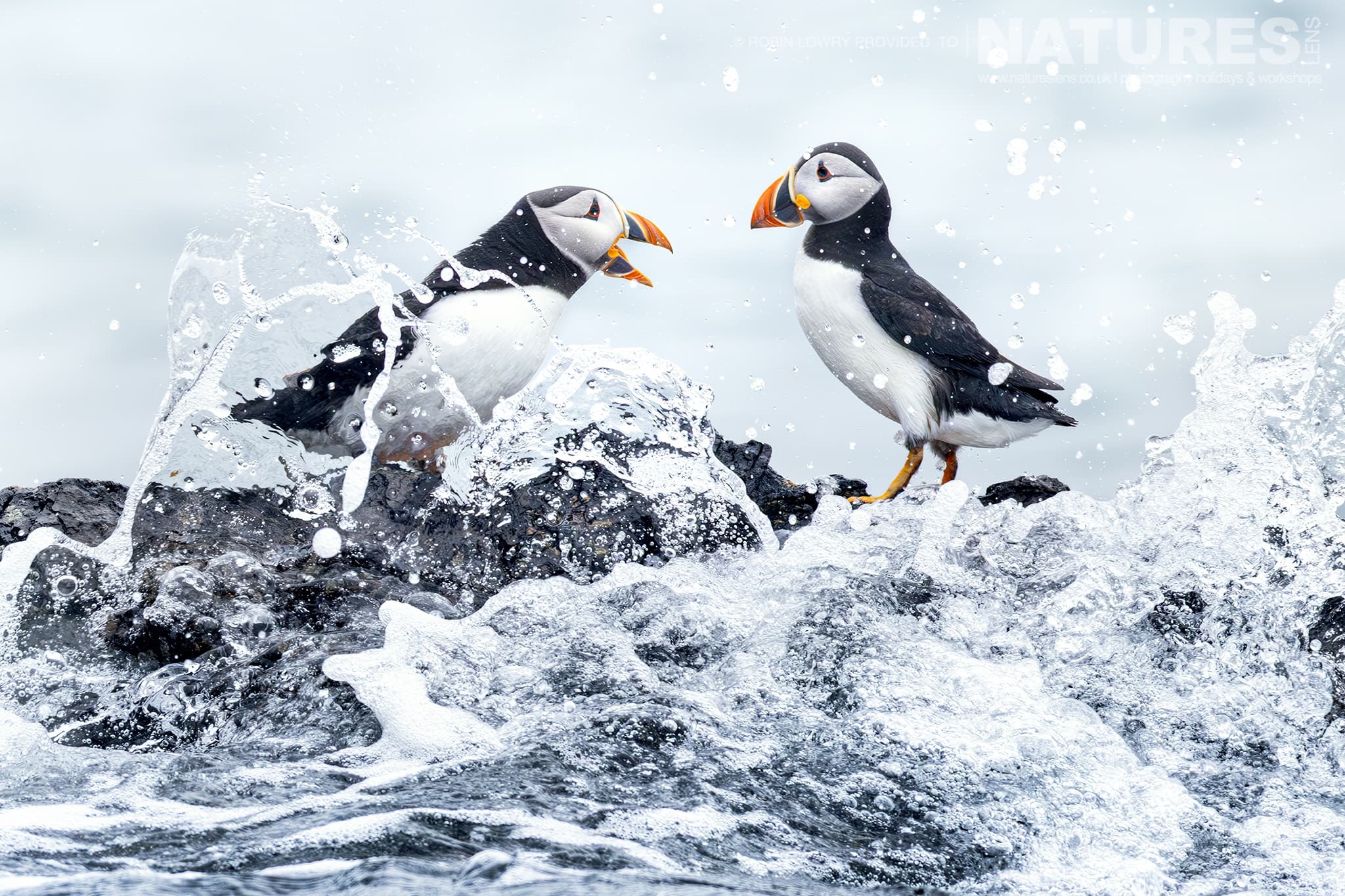
This guide focuses on the best hotspots for photographing puffins, prioritising locations that deliver close access, repeatable behaviour, & crucially, the ability to work the light properly. While many sites host puffins, only a handful consistently produce standout photographic results.
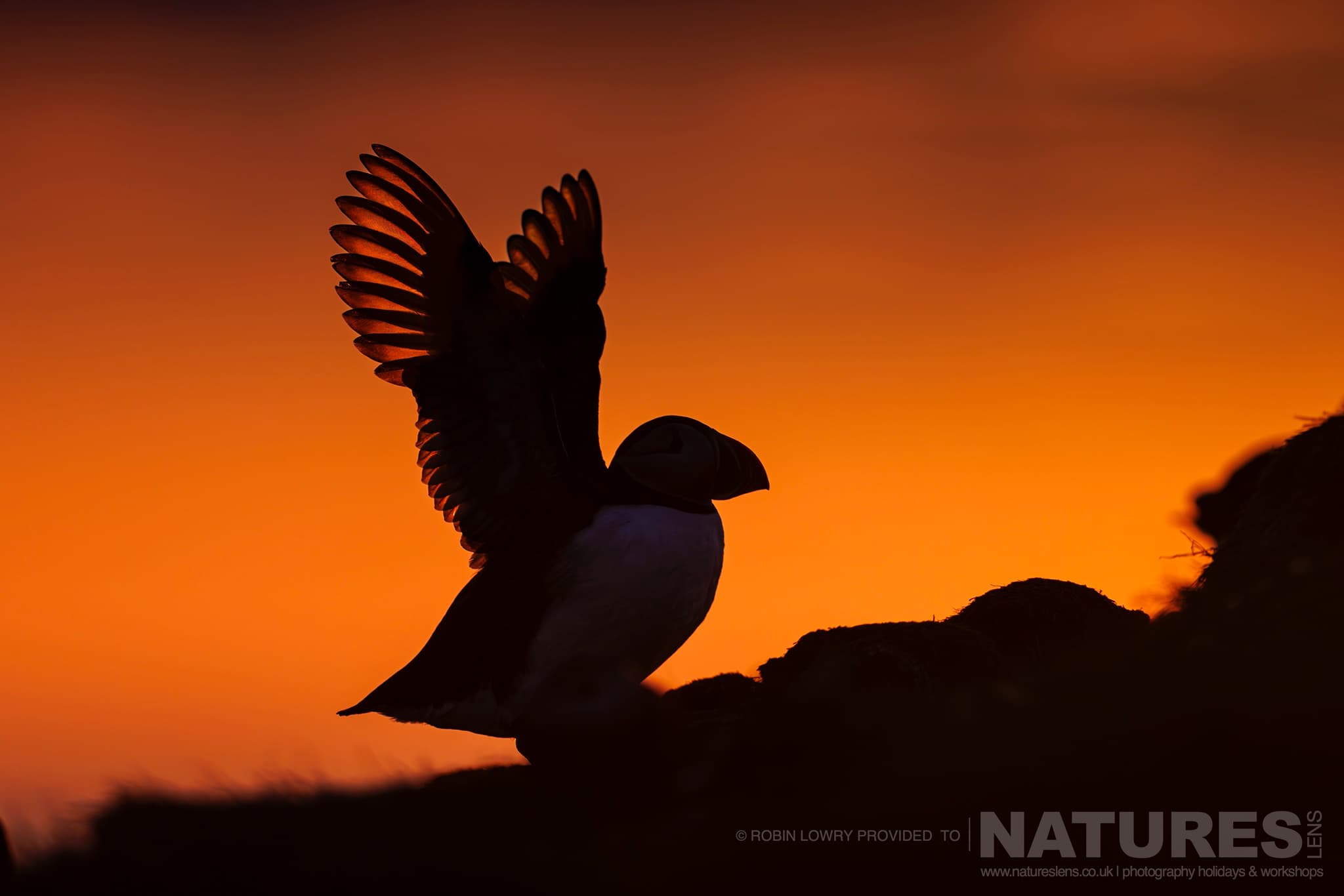
1 – Fair Isle, Scotland
Fair Isle sits firmly at the top of the list for puffin photography in the UK, & arguably Europe. Located between Orkney & Shetland, this remote island supports one of Britain’s most important seabird colonies & offers a level of photographic access that few other puffin sites can match.
Puffins on Fair Isle nest close to grassy cliff edges, often allowing photographers to work at eye level without hides or extreme focal lengths. Frame-filling portraits, behavioural studies, & environmental images can all be produced within a short walk of accommodation.
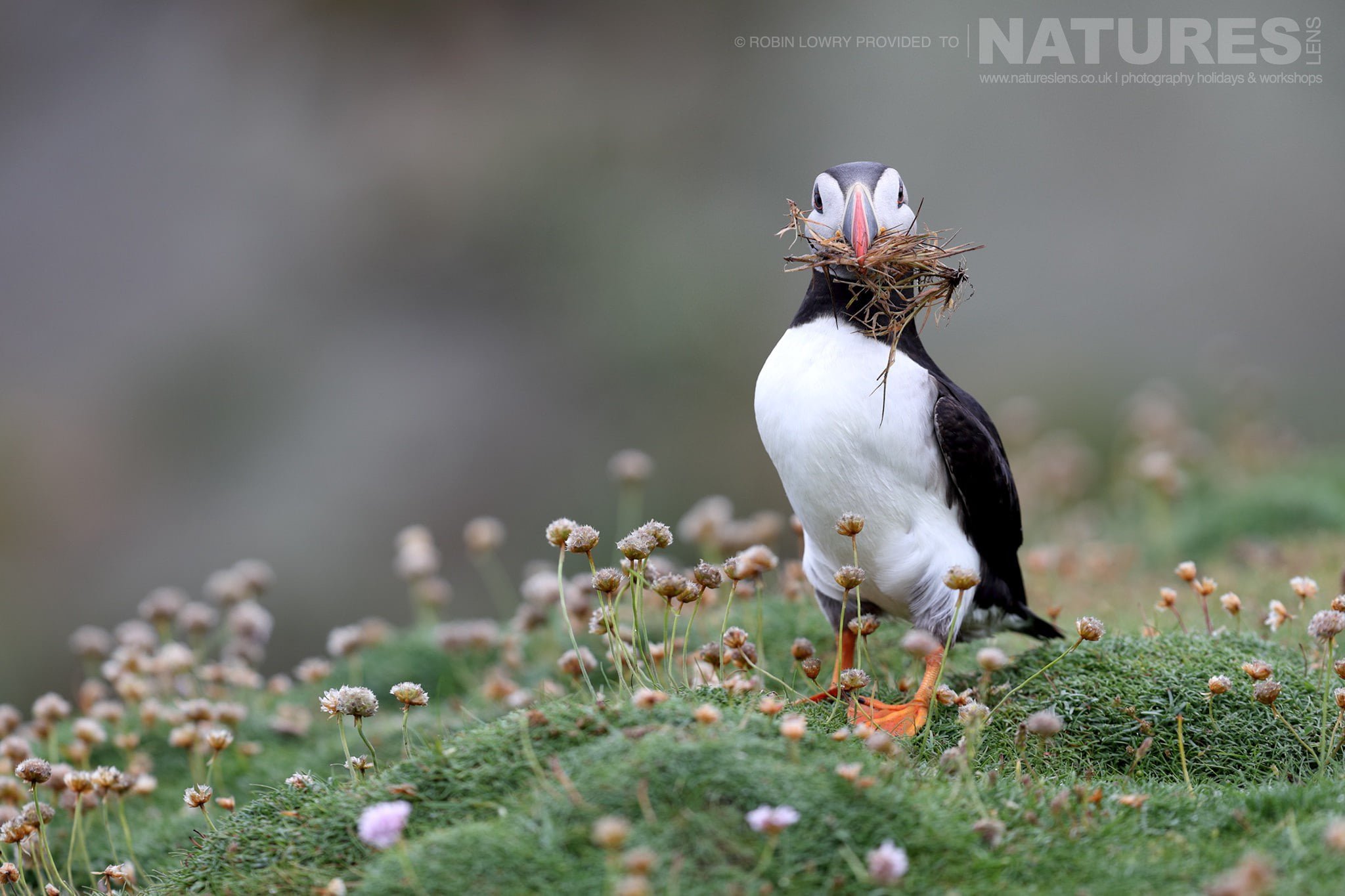
A defining advantage of Fair Isle is the ability to stay overnight on the island. This allows photographers to work during early morning & late evening sessions, when light is soft, directional, & far more flattering than mid-day conditions. Golden-hour light enhances feather detail, bill colour, & background separation in a way that simply is not possible on day-only sites.
From a photographic perspective, Fair Isle consistently delivers:
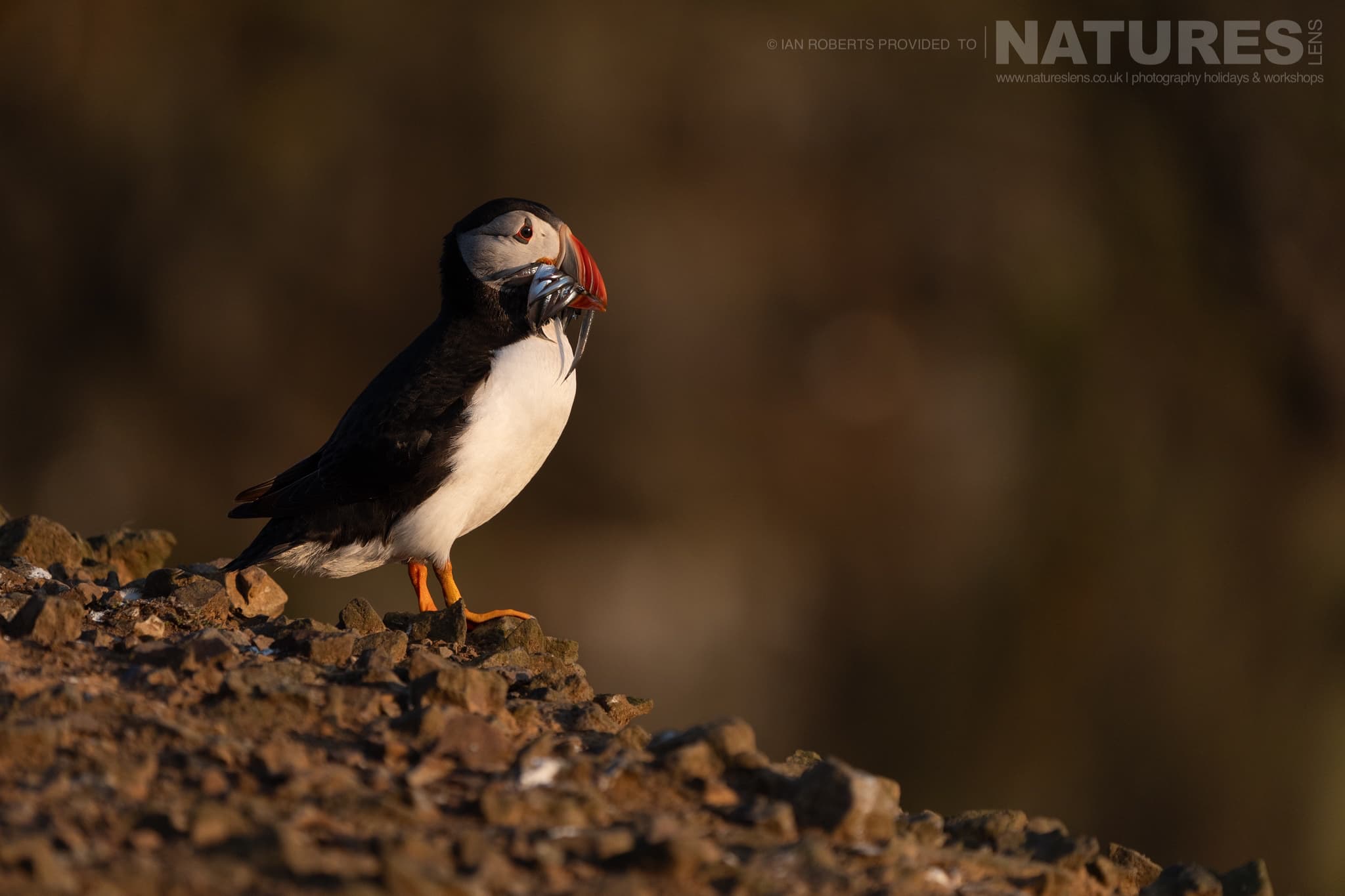
- Puffins landing with bills full of sand eels
- Courtship behaviour & pair interactions
- Clean cliff-top backgrounds & open sky
- Flight photography in predictable wind conditions
- Golden-light working windows unavailable on mainland day trips
We schedule dedicated Atlantic Puffins of Fair Isle photography holidays, designed specifically around maximising time at the colonies rather than fitting photography around logistics.
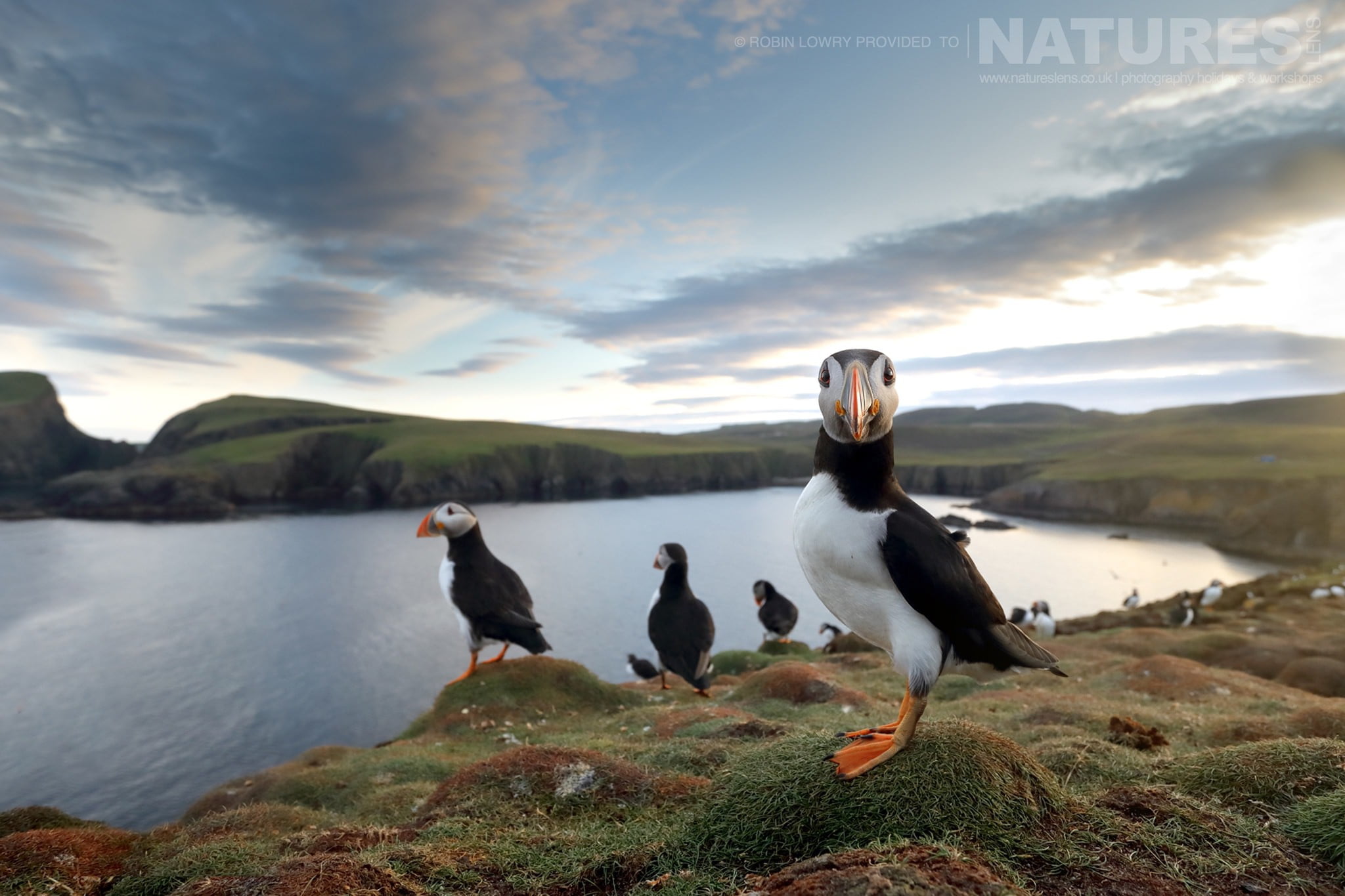
The majority of these departures are led by Robin Lowry, whose calm, field-craft-led approach & deep familiarity with Fair Isle’s puffin colonies consistently helps guests achieve strong, repeatable images across a wide range of conditions.
Fair Isle is not just a puffin destination – it is a photographer-first seabird experience, where access, behaviour, & light align exceptionally well.
2 – Grímsey Island, Iceland
Grímsey Island, located on the Arctic Circle off Iceland’s north coast, is one of the most reliable puffin photography locations in the North Atlantic. Like Fair Isle, the ability to stay overnight transforms what is photographically possible.

Puffins on Grímsey are notably tolerant of people, & colonies are positioned along accessible cliff edges & grassy slopes. Photographers can work with low-angle evening light, extended daylight hours, & predictable flight paths as birds return repeatedly to their burrows.

Grímsey excels for:
- Close-range portraits with clean ocean backdrops
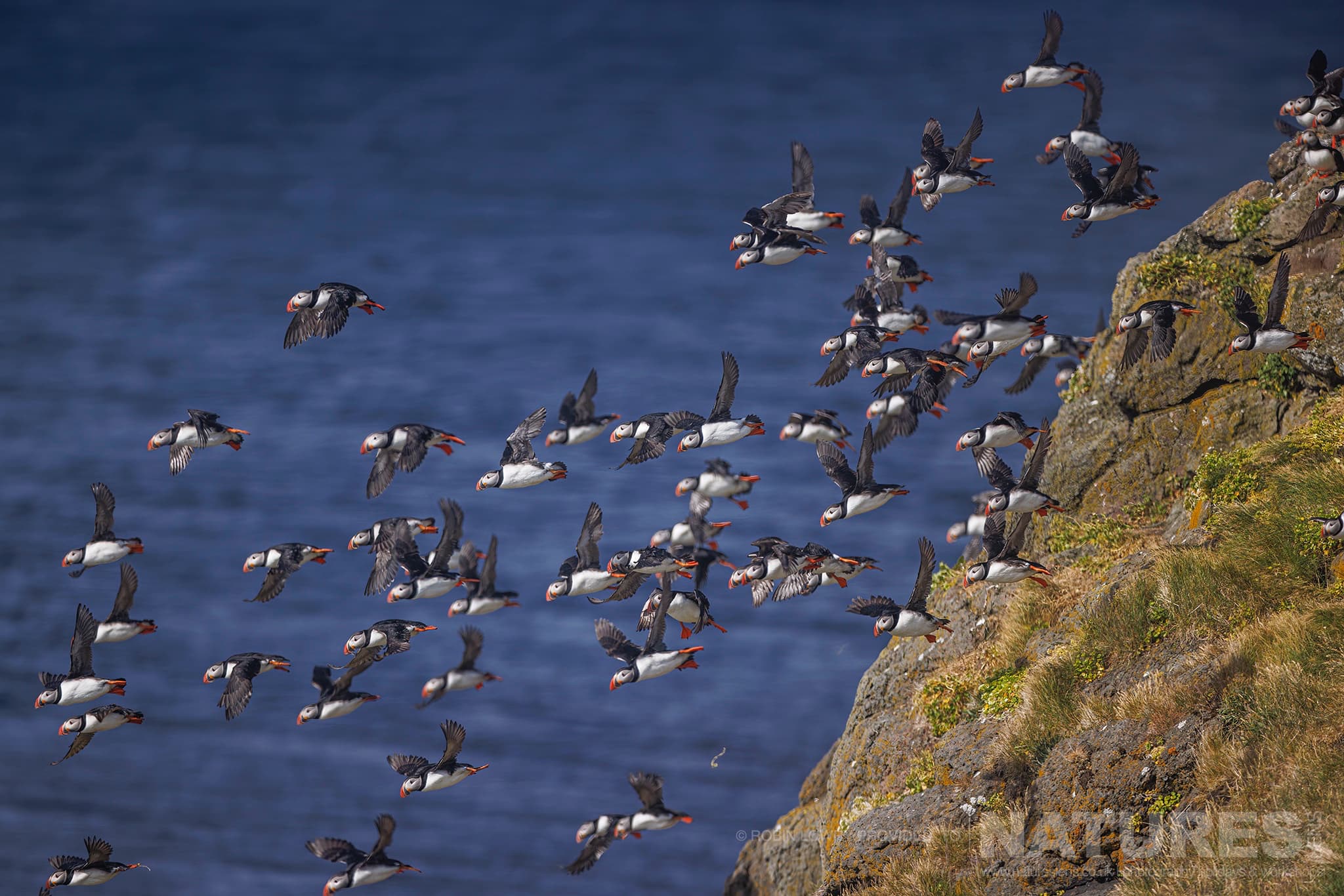
- Eye-level flight photography
- Extended working windows due to long summer days
- Late-evening light that adds depth & colour to otherwise simple compositions
As with Fair Isle, the freedom to remain on location rather than leave on a fixed schedule is a major advantage for serious wildlife photographers.

3 – Látrabjarg Cliffs, Westfjords, Iceland
Látrabjarg is Europe’s largest seabird cliff & one of Iceland’s most dramatic wildlife photography locations. Puffins nest directly along the cliff edge, often allowing for close approach distances in an expansive landscape setting.
Accommodation in the wider Westfjords region allows photographers to time visits around light & weather, with evening conditions often producing particularly striking images.

4 – Runde Island, Norway
Runde Island is Norway’s most famous seabird colony & a strong puffin photography destination during the breeding season. Puffins are most active later in the day, making the island well suited to photographers working with directional evening light.
Overnight stays in the surrounding area allow flexibility to revisit colonies when conditions align.
5 – Mykines, Faroe Islands
Mykines offers one of the most atmospheric puffin photography settings in the North Atlantic. Steep green slopes, dramatic cliffs, & fast-moving weather systems create highly distinctive images, particularly in evening light.
While conditions can be unpredictable, photographers who are flexible with timing are often rewarded with moody, characterful images that emphasise place as much as subject.

6 – Skomer Island, Wales
Skomer Island is one of the UK’s most accessible puffin photography locations & a favourite among photographers new to seabird work. The island hosts tens of thousands of puffins, many of which nest directly beside well-maintained paths.

Skomer excels for:
- Close-range puffin portraits
- Low-stress photography without hides
- Educational & conservation-focused visits

Because access is tightly managed, numbers are controlled & disturbance is kept to a minimum. While the experience is more structured than at remote islands, the photographic potential remains very strong, particularly for intimate portraits & behavioural details.
Choosing the Best Puffin Photography Hotspot
For photographers, the ability to stay overnight is often the single biggest factor separating good puffin images from exceptional ones.
- For golden-hour access & full flexibility: Fair Isle, Grímsey
- For dramatic landscapes: Látrabjarg, Mykines
- For easy access & close encounters: Skomer
Puffins are typically present from late April to late July, with peak photographic activity from May to early July, when adults are regularly returning to burrows with fish.
Which of these Hotspots for Photographing Puffins is my top pick?
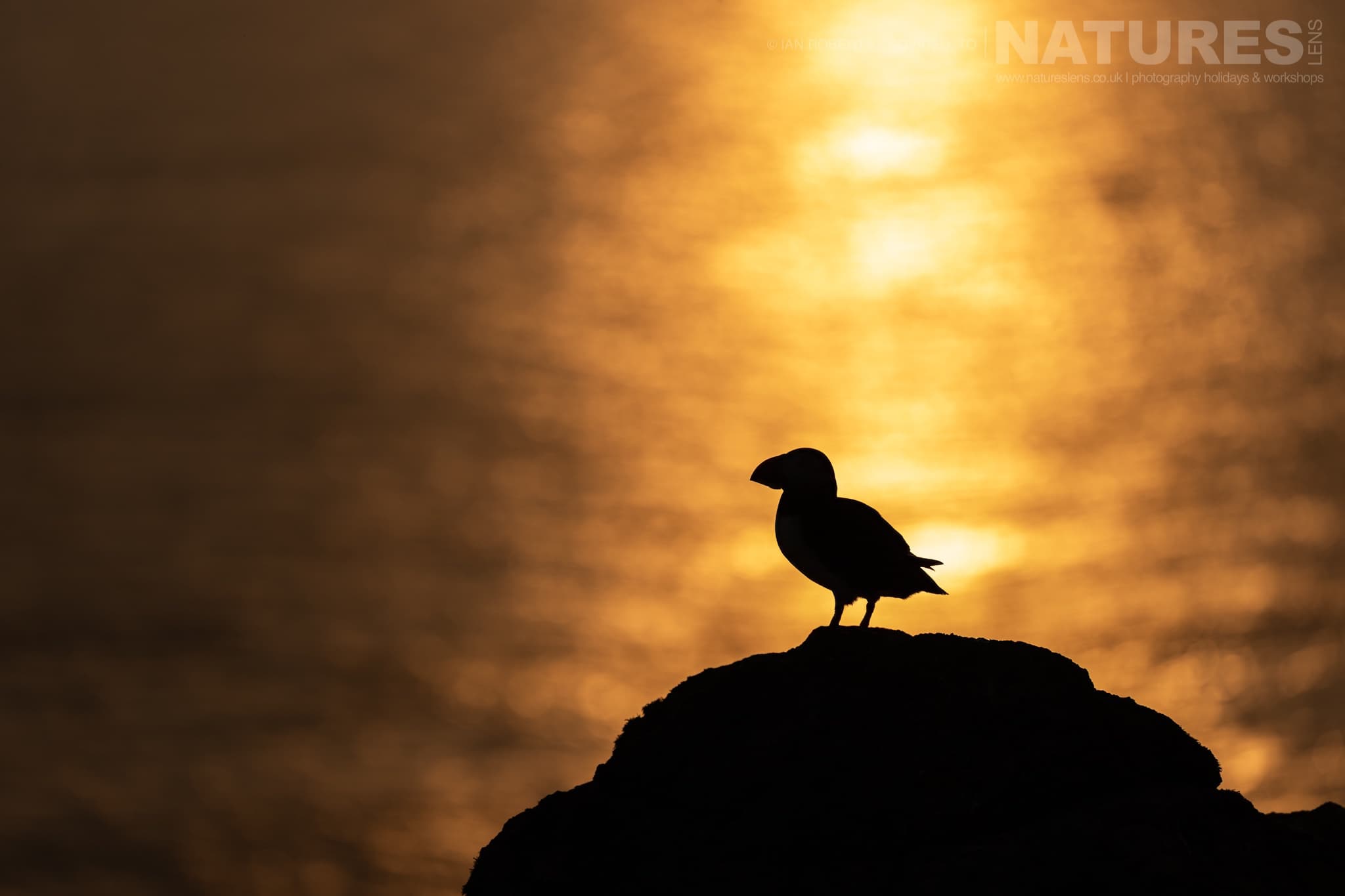
If I had to choose a single hotspot for photographing puffins, it would be Grímsey Island. Not because it is the most dramatic location, nor because it has the largest colony, but because it consistently offers the most flexible & photographer-friendly working conditions.
Grímsey combines very close access with exceptionally tolerant birds, predictable flight paths, & the ability to stay overnight on the island. That freedom removes the pressure of ferry schedules & fixed departure times, allowing photographers to return to the colonies repeatedly & work images properly rather than rushing encounters.
Extended daylight hours during the puffin season mean that even late evening sessions retain usable light, often with softer tones & lower contrast than mid-day conditions. This makes Grímsey particularly strong for flight photography, eye-level perspectives, & clean compositions with ocean or sky backgrounds.
While Fair Isle remains outstanding for its structure & consistency, Grímsey edges ahead for me because of its combination of calm working conditions, flexibility, & the sheer ease with which photographers can refine & repeat shots across changing light & weather.
FAQ – Planning Puffin Photography
When is the best time to photograph Atlantic Puffins?
Puffins are typically present from late April to late July, with peak opportunities from May to early July when adults are commuting regularly with fish & interactions around burrows are most frequent.
What makes one colony better than another for photography?
The best sites combine close access, safe viewpoints, predictable behaviour, & the ability to work early or late light. Time on location matters – the more freedom you have to return in good conditions, the more consistent your results become.
Do I need a long lens for puffins?
Not always. Many colonies allow close work, where 300-500mm is often ideal. Wider lenses can also be useful for environmental frames when birds are comfortable near paths or cliff edges.
Why does overnight access change what is possible?
It gives you usable working windows outside the harshest part of the day, plus the flexibility to wait out weather, return when flight lines improve, & refine compositions without rushing.
Final Thoughts
Puffins may be widespread across the North Atlantic, but truly outstanding photographic opportunities are concentrated in a small number of locations. Fair Isle & Grímsey Island stand apart not only for puffin numbers & approachability, but for the freedom they offer photographers to work the light properly.
For those seeking a dedicated, photographer-first experience, our Fair Isle puffin photography holiday & the similar trip on Grímsey Island remain a pair of the most consistent & rewarding ways to photograph Atlantic Puffins anywhere in the UK.
Galleries from our Atlantic Puffin Photography Holidays
These galleries showcase imagery closely connected to the locations & experiences featured during our Atlantic Puffin Photography Holidays.
Related Atlantic Puffin Photography Holidays
If you're interested in Atlantic Puffin photography, the following list of our upcoming photography holidays may be of interest.