Every time Sony produces, or even rumours, another long wildlife lens, I find myself asking a slightly different question from the one that tends to dominate the specifications discussions. I am less interested in whether one lens is theoretically sharper than another than I am in whether I would actually carry it for a full day in the field. That distinction matters to us because we already have some of Sony’s very best wildlife lenses, including the FE 400mm f/2.8 GM OSS & FE 600mm f/4 GM OSS, yet the lens we own is not necessarily the lens we choose to travel with.
That is why the rumoured Sony FE 400mm f/4.5 GM OSS & particularly the rumoured FE 600mm f/6.3 GM OSS have caught my attention. If the leaked specifications are accurate, Sony may be about to create two remarkably portable super-telephoto primes. Put them alongside the FE 300mm f/2.8 GM OSS, our 400mm f/2.8, our little-used 600mm f/4 & Sony’s newly released FE 100 – 400mm f/4.5 GM OSS, & there is suddenly a much more interesting discussion about how wildlife photographers choose equipment in the real world.
At the time of writing, the 400mm f/4.5 & 600mm f/6.3 remain rumours rather than announced Sony products. An anticipated 8 September announcement did not happen, although subsequent reporting & a leaked image of the 400mm suggest both lenses are still expected. The rumoured specifications put the 400mm at just 994g & the 600mm at 995g, figures which, if correct, are far more significant to me than another incremental improvement in resolution.
Why does lens weight matter so much more to us than the specifications suggest?
Lens weight matters because a wildlife lens only has photographic value when it is actually with you, & our Sony 600mm f/4 has taught me that lesson better than almost anything else we own. It is an outstanding lens, but at 3,040g before adding the camera body, it is a serious object to transport, carry, manoeuvre & work with for prolonged periods. Sony itself lists the lens at 449mm long, so this is not simply a question of putting another kilogram into a camera bag; it affects the size of the bag, airline carry-on decisions, how readily you pick the camera up, how quickly you reposition & how comfortable you remain after several hours.
We own the 600mm f/4, yet we hardly use it, largely because of that weight. That may sound slightly ridiculous when discussing a lens of its quality & cost, but it is precisely why these new rumours interest me. A 600mm lens that is optically magnificent but stays at home is photographically less useful than a slightly slower 600mm that comes to Japan, Costa Rica or Africa with us.
This becomes particularly obvious on a photography-led trip. On our Japanese Wildlife in Winter photography tour, for example, we are not standing in one fixed position for fourteen days. We move between crane locations around eastern Hokkaido, photograph Whooper Swans, work from boats for Steller’s & White-tailed Sea Eagles around Rausu, photograph foxes when opportunities arise & later head to mainland Japan for the snow monkeys. The current itinerary includes dawn work at Otowa Bridge, crane photography at several sites, early-morning swan sessions & sea-eagle photography from Rausu. Equipment has to move with us through all of that.
A lens that saves two kilograms therefore does more than make my shoulder happier. It makes me more willing to carry a second body, respond when a subject changes position, work handheld when appropriate & take the long lens somewhere I might otherwise decide it is not worth the effort.
Would the rumoured Sony 600mm f/6.3 GM solve the problem we have with our 600mm f/4 GM?
If the leaked 995g figure is correct, I think the rumoured Sony 600mm f/6.3 GM potentially solves exactly the problem we have with our 600mm f/4. The question is not whether f/6.3 is optically or photographically superior to f/4, because it plainly is not. The question is whether losing roughly 1⅓ stops is an acceptable compromise in return for losing about two kilograms of lens, & for a great deal of our photography I think it would be.
Sony’s existing 600mm f/4 weighs 3,040g & measures 163.6 × 449mm. The leaked specification for the new 600mm f/6.3 is 995g & only 108 × 263mm. That would make the new lens approximately the same physical length as Sony’s 300mm f/2.8, which is 265mm long, while being substantially lighter still. That is an extraordinary proposition for a genuine 600mm prime.

There are absolutely situations where I would still want the f/4. When light levels fall, shutter speed matters & wildlife does not politely stop moving while the ISO climbs. At Shompole in Kenya, for example, our photography is deliberately built around nocturnal wildlife using specialist waterhole hides. African Civet, Leopard, Lion, Bat-eared Fox & other species may appear in darkness or extremely low ambient light, so aperture has real photographic value rather than simply being a specification to boast about. Our Wildlife of Shompole photography holiday is designed around productive night-time photographic sessions, not a conventional safari itinerary attempting to accumulate as many sightings as possible.
In good daylight, however, f/6.3 worries me far less. Modern Sony bodies, including the Alpha 1 II cameras we use, make higher ISO settings considerably less frightening than they once were. If the choice is between having 600mm at f/6.3 available or deciding the 600mm f/4 is too heavy to bring at all, I know which one is more likely to produce photographs.
There is another intriguing rumoured figure too: a 2.5m minimum focusing distance. Sony’s existing 600mm f/4 focuses to 4.5m. If that 2.5m figure is confirmed, the smaller lens could be exceptionally useful with close birds, reptiles & smaller subjects where being able to remain at 600mm while working surprisingly close could create very clean backgrounds. That is something I would want to test before drawing conclusions, but photographically it could be every bit as interesting as the weight reduction.
Where does Sony’s new 100 – 400mm f/4.5 GM fit into this?
Sony’s new FE 100 – 400mm f/4.5 GM OSS approaches the problem from the opposite direction. Rather than making a featherweight fixed focal-length lens, Sony has built a serious professional wildlife zoom with a constant f/4.5 aperture, internal zooming & a considerably faster autofocus system. Sony quotes a weight of 1,840g, says autofocus can be up to three times faster than the previous 100 – 400mm GM under its test conditions & confirms compatibility with both the 1.4× & 2× teleconverters.
It is not particularly light. In fact, at 1,840g.
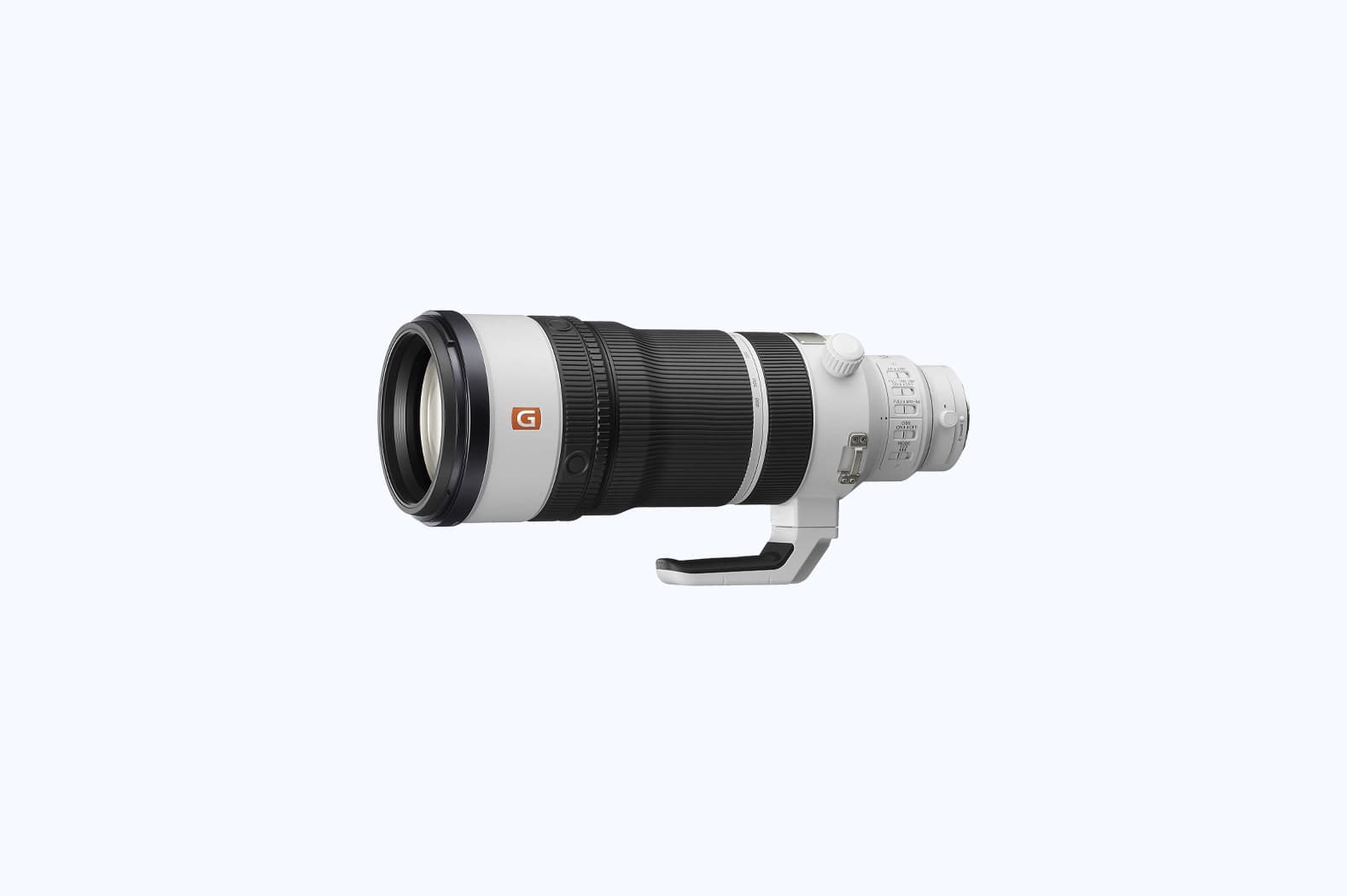
This means, it is 445g heavier than the original Sony 100 – 400mm f/4.5 – 5.6 GM that we previously used, & remarkably it is also heavier than Sony’s 1,470g 300mm f/2.8 GM … but what it buys for that weight is flexibility.
That matters enormously with wildlife whose distance from us changes quickly. A large mammal can move from a clean environmental composition at 200mm to filling the frame at 400mm within seconds. A Japanese crane can suddenly take flight towards us. A sea eagle can approach the boat far more closely than expected. In Costa Rica, where we move between very different habitats & subjects on our wildlife photography holidays in Costa Rica, the ability to reframe immediately can sometimes be more valuable than the extra stop provided by a large prime.
The constant f/4.5 aperture is significant too. At 400mm the old 100 – 400mm GM is f/5.6, so the new lens gains roughly two-thirds of a stop at the long end while avoiding exposure changes as the focal length changes. Its internal zoom design also keeps the physical length & centre of gravity stable rather than extending the barrel as you zoom, something I particularly like for wildlife because camera balance becomes predictable when following moving subjects. Sony lists the new lens at approximately £4,400 in the UK, so it is certainly not being positioned as a casual upgrade.
For us, therefore, I see Sony’s 100 – 400mm f/4.5 as the flexible working lens rather than the lightweight one. It makes most sense where subject distance changes constantly & framing flexibility matters more than having the smallest possible lens.
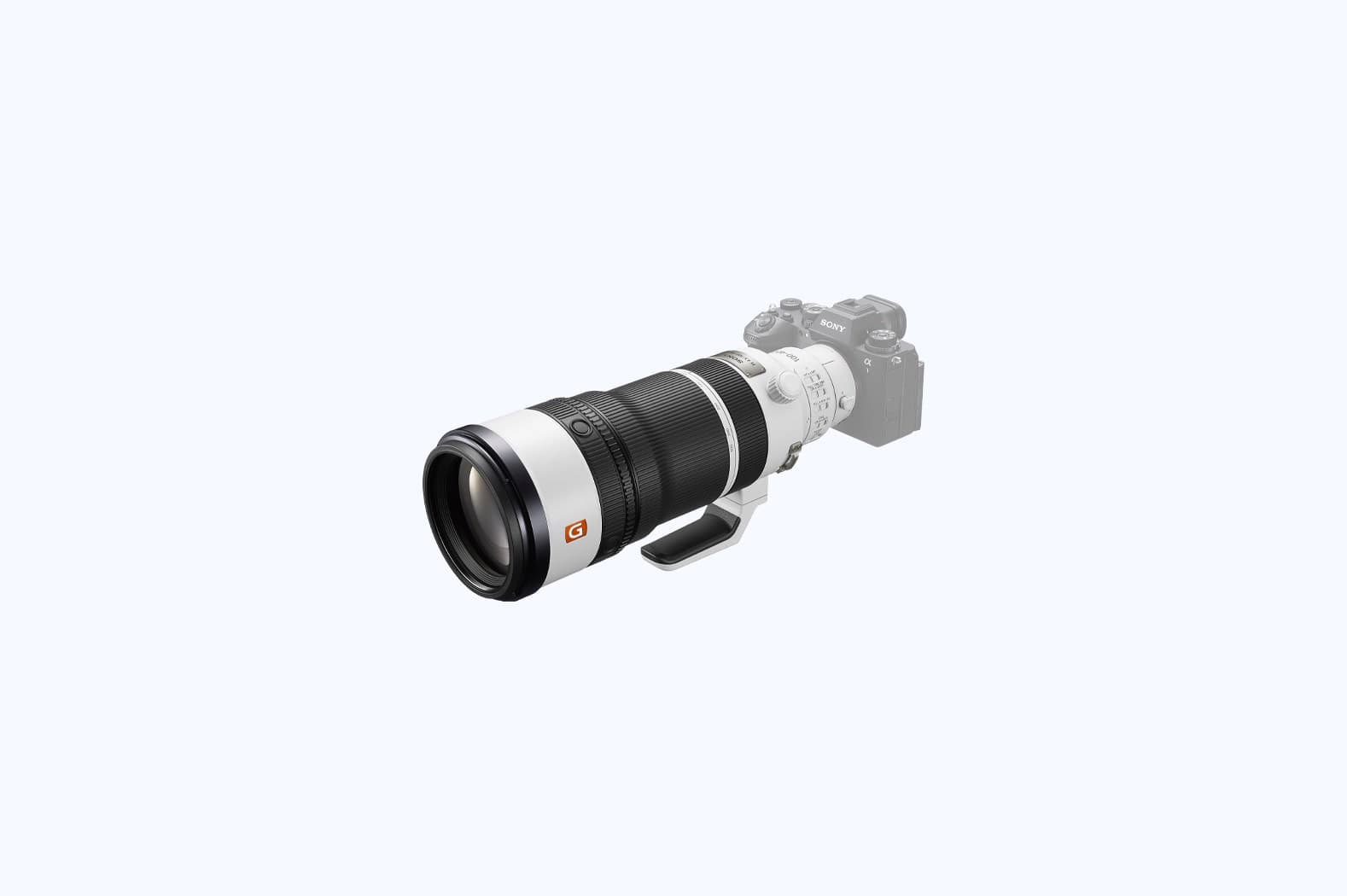
Does the rumoured 400mm f/4.5 make sense when we already use the 400mm f/2.8?
For us, the rumoured 400mm f/4.5 is probably the least necessary of the new possibilities, although that does not make it an uninteresting lens. Our FE 400mm f/2.8 GM OSS remains one of the lenses I would least want to give up because f/2.8 at 400mm produces something genuinely different photographically, particularly in difficult light & when I want to separate a subject completely from an untidy background.
The existing Sony 400mm f/2.8 weighs 2,895g & measures 158.1 × 359mm. The leaked 400mm f/4.5 specification is just 994g at 108 × 242mm. If those figures survive the eventual announcement, Sony will effectively have removed 1.9kg from a 400mm prime, which is a remarkable engineering difference.
What it cannot remove is the aperture difference. Moving from f/2.8 to f/4.5 costs approximately 1⅓ stops. If I can photograph an active subject at 1/2000sec, f/2.8 & ISO 3200, maintaining that shutter speed at f/4.5 pushes me somewhere around ISO 8000. Sometimes that does not matter; sometimes it matters enormously.
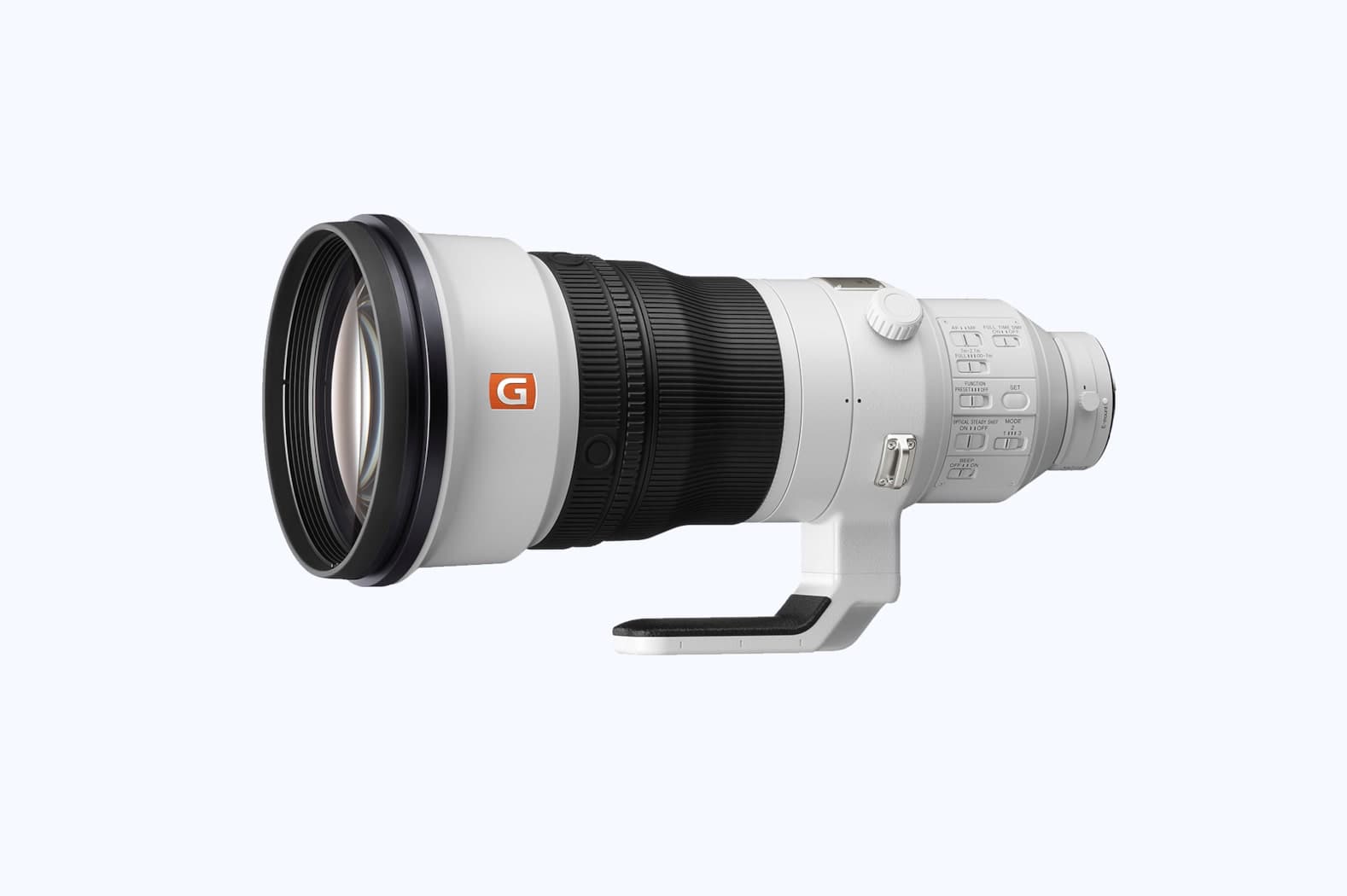
There is also the way a 400mm f/2.8 renders a photograph. At close to medium subject distances, the large entrance pupil gives me the ability to isolate an animal against a distant background in a way that can turn an otherwise ordinary position into something visually much cleaner. That matters on our trips because we are not simply interested in recording the presence of a species. I would rather spend productive time working one subject, waiting for the right head angle, behaviour, light & background than move on simply because another species has appeared somewhere else.

The rumoured f/4.5 would nevertheless be tremendously attractive when walking is involved. A sub-one-kilogram 400mm prime could come with me almost by default. I just do not think it solves as large a problem for us as the 600mm f/6.3 does, because we already use our 400mm f/2.8 regularly, whereas the weight of our 600mm f/4 is precisely why that lens so often stays behind.
Is the 300mm f/2.8 still the cleverest compromise in Sony’s wildlife system?
The more lenses Sony adds around it, the more impressive I think the FE 300mm f/2.8 GM OSS looks. At 1,470g, it is already astonishingly light for a professional f/2.8 super-telephoto, & Sony confirms compatibility with both the 1.4× & 2× teleconverters. That means one relatively manageable lens can become a 420mm f/4 with the 1.4× or a 600mm f/5.6 with the 2×.
That gives it a versatility which is easy to overlook when simply comparing focal lengths. A 300mm f/2.8 is useful when subjects are relatively close or when I deliberately want more habitat around them. Add the 1.4× & there is a 420mm f/4 combination which sits between the rumoured 400mm f/4.5 & our much heavier 400mm f/2.8. Add the 2× & in principle there is a 600mm f/5.6 which remains substantially lighter than our 600mm f/4, although I would want to judge image quality & autofocus behaviour with the 2× in exactly the situations in which we would actually use it rather than assuming a specification tells the whole story.

There is a temptation with wildlife photography to believe that longer is automatically better, but many of the photographs I like are not frame-filling identification pictures. Habitat matters, behaviour matters & background matters. If an animal is beautifully positioned within falling snow, rainforest foliage or an African landscape, sometimes backing off from 600mm produces the stronger photograph.
That is particularly relevant to the way NaturesLens trips are designed. We build itineraries around photography rather than sightseeing, normally with four to six photographers & the exact maximum shown on each trip page. That gives us time to work a situation rather than racing onward, & it means I value lenses which let me respond creatively as a photographic opportunity develops.

The Sony 300mm f/2.8 therefore remains an extraordinarily convincing middle ground: fast enough for difficult conditions, light enough to carry seriously & adaptable enough with converters to cover much of the territory occupied by several larger primes.
Would these new Sony lenses actually change what we take on NaturesLens trips?
I think they could, but the biggest change would almost certainly come from the rumoured 600mm f/6.3 rather than the 400mm f/4.5. We already have a superb 400mm solution in the 400mm f/2.8 & we use it because the speed, autofocus performance & way it renders subjects justify taking it. Our 600mm f/4 presents a different problem: it is optically exceptional, but we use it far less than we should because three kilograms of lens is difficult to justify every time we pack.
If they really produce a Sony 600mm f/6.3 GM weighing about 995g, I can imagine that lens travelling with us a great deal. It would give us genuine 600mm reach for birds & more distant wildlife while weighing approximately one third as much as our 600mm f/4. On trips where light levels are favourable, that is a trade I would seriously consider making.
Sony’s new 100 – 400mm f/4.5 appeals for a different reason. It is not the tiny travel solution these rumoured primes promise to be, but 100 – 400mm at a constant f/4.5 with an internal zoom & Sony’s latest autofocus technology could be an extremely effective working lens when subject distance changes constantly. I can easily imagine pairing that flexibility with a lightweight 600mm rather than carrying one enormous prime which dictates so much of the rest of the bag.
The 400mm f/2.8 would remain. There are too many occasions when that f/2.8 aperture makes a real photographic difference, particularly with poor light, fast behaviour & backgrounds which benefit from stronger isolation. The rumoured 400mm f/4.5 might become a wonderful walking lens, but it duplicates a focal length we already cover exceptionally well.
Ultimately, this is why I find the 600mm rumour so interesting. Wildlife photography equipment is not really about assembling the finest possible specification sheet. It is about creating a kit which allows us to stay with a subject, react quickly, position ourselves properly & keep working when the light, behaviour or distance changes. The best lens in the world cannot make a photograph from the cupboard at home. If Sony really can give us a 600mm GM weighing less than a kilogram, that might be the lens which proves the point better than any other.