Winter Eagle photography is exceptional. But not all winter eagle photography trips are the same.
The NaturesLens winter calendar offers two eagle photography trips – Hortobágy in January & Northern Sweden in March – that sit at opposite ends of the photographic spectrum. They’re not in competition with each other – they’re fundamentally different experiences designed for fundamentally different approaches to image-making.
One rewards your instincts & your ability to read unfolding drama in real time.
The other rewards your precision, your patience, & your commitment to refining each frame until it’s exactly right.
Both deliver distinctive images. But how you work to get them – & what you come home with – differs in ways that matter deeply.
Eagle Photography Like at Hortobágy in January
White-tailed Sea Eagles, Eastern Imperial Eagles, & the Intensity of Winter
Our Eagles of the Hortobágy Photography Holiday in January isn’t gentle. It’s stripped-back, exposed, & utterly compelling.
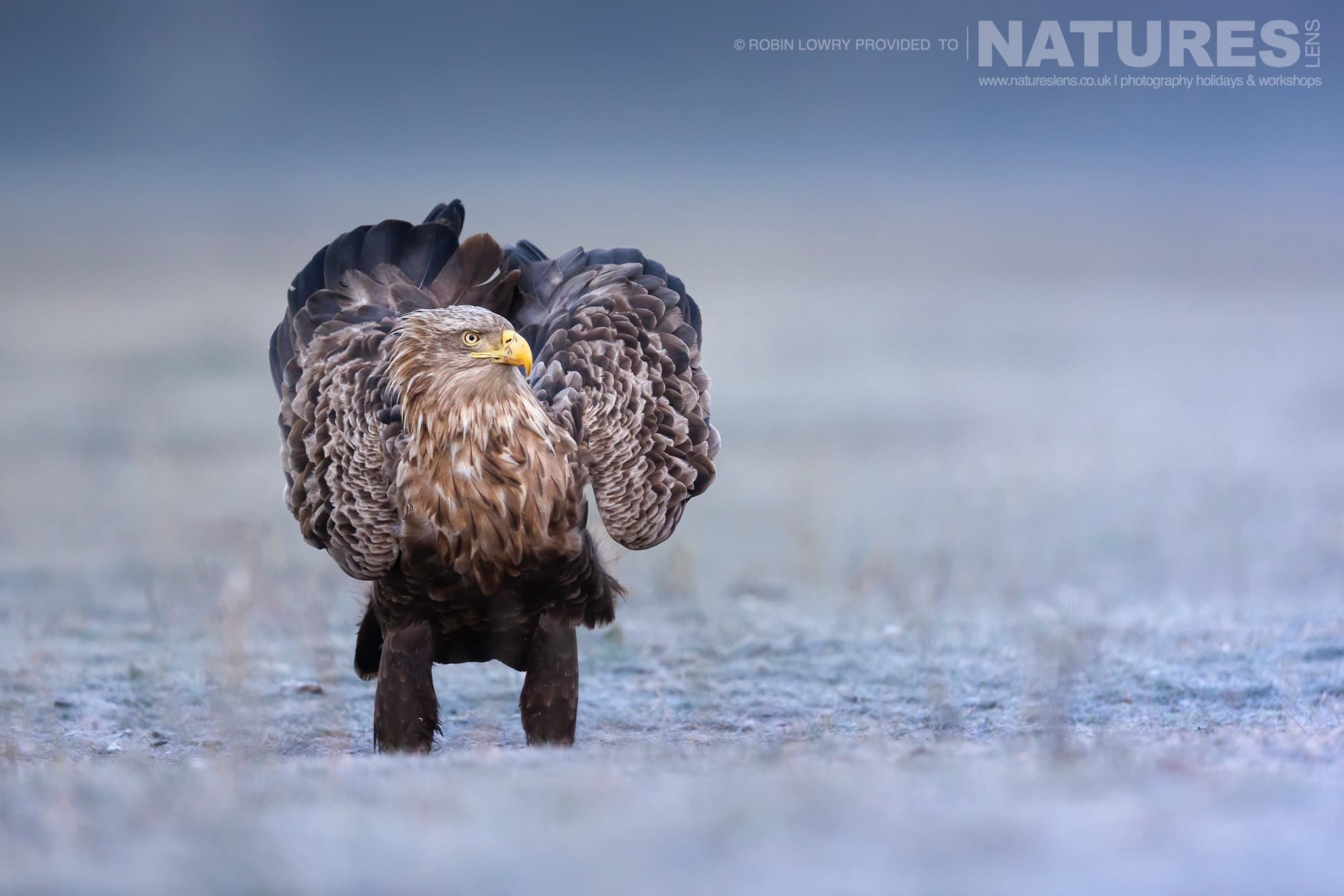
Imagine vast plains covered in frost. Frozen ground. A landscape that feels simultaneously empty & alive. Into that space come the eagles – often multiple at once, & rarely peacefully coexisting.
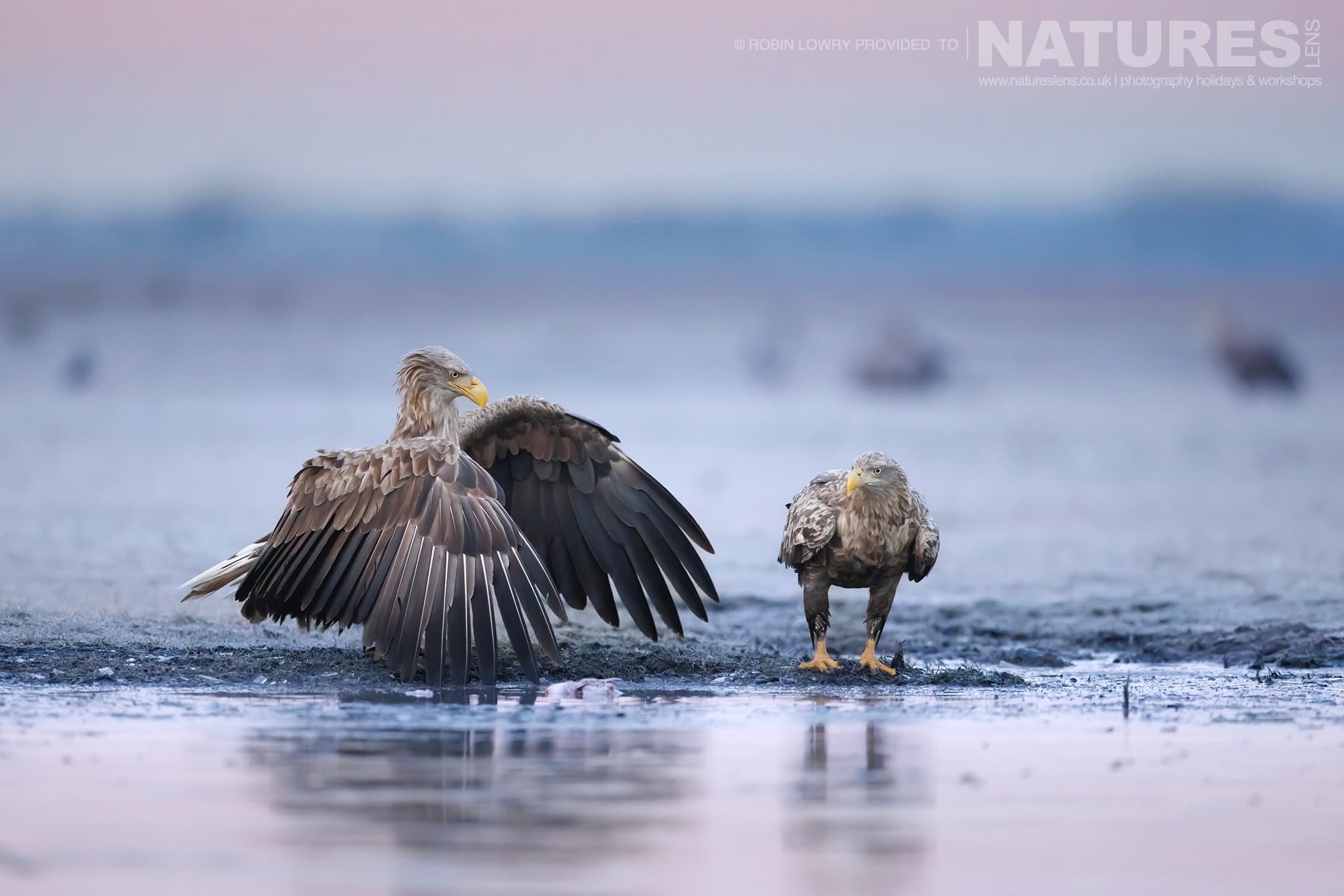
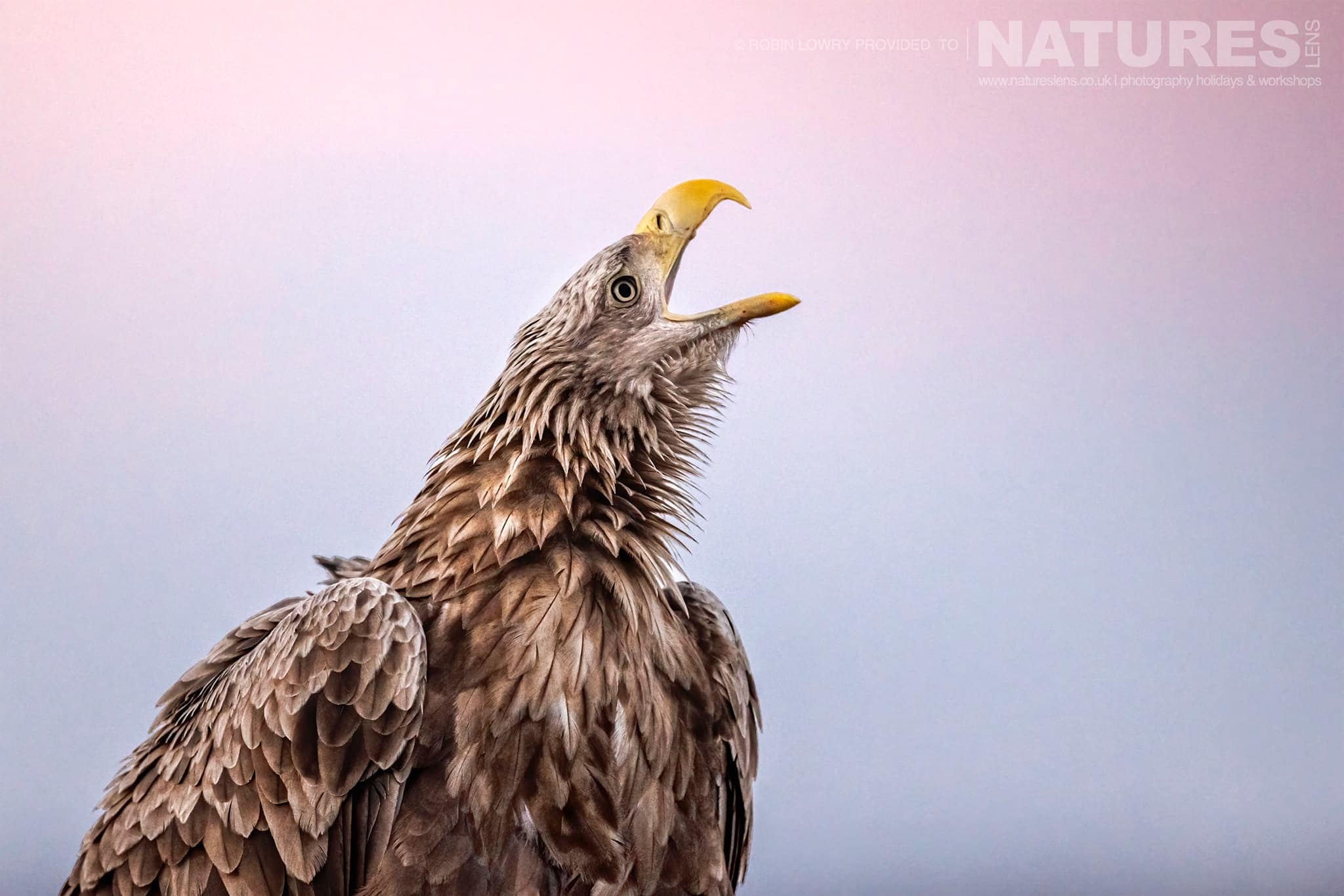
White-tailed sea eagles are the primary subject, but they’re never alone. Eastern imperial eagles occasionally enter the frame. & this mix – this tension between species competing for the same space – is what makes Hortobágy distinctive.
You’re not photographing a single bird executing a clean landing. You’re capturing interaction. You’re documenting behaviour under pressure. One bird displacing another, wings flared, talons extended, moments that build rather than simply occur. It’s dynamic, unpredictable, & absolutely riveting.
How Does Hortobágy Demand Reaction Over Refinement?
Hortobágy demands speed. It rewards anticipation.
You’re watching the edges of the frame before movement enters it. You’re tracking birds before they’re centre-frame. You’re committing decisively when the moment peaks – knowing another just like it might not come for hours. The conditions are harder. The working windows are shorter & more intense. Weather moves quickly. Light shifts unpredictably. There’s no time to pause & reconsider.

The Eagles of the Hortobágy Photography Holiday is reactive photography at its most visceral. It sharpens your reading of behaviour, deepens your understanding of eagle dynamics, & pushes your reaction speed in ways that only come from photographing under genuine pressure.
The images that emerge tend to be:
- Broader & more environmental – eagles in their landscape, not isolated against sky
- Rich with story & tension – multiple subjects, competing interests, genuine drama
- Alive with wing detail, extended talons, & behavioural intensity
- Representative of a wider species portfolio – you’re capturing sea eagles &, hopefully, imperials, not just one
What Kind of Images Do You Return With from Hortobágy?
You’ll come home with a portfolio that feels lived in. Images that document genuine eagle behaviour, not staged moments. A sharper eye for reading movement before it happens. An understanding of how different species interact in winter. & something harder to quantify but no less valuable: the confidence that comes from working fast & making it count.
Hortobágy sharpens you as a photographer. The intensity demands it.
Eagle Photography Like in Northern Sweden in March
Golden Eagles, Snow, & the Perfection of Control
Sweden in March remains firmly winter – but winter becomes your collaborator rather than your adversary.
The snow is deep. The ground is frozen. The landscape simplifies everything into tone, shape, contrast, & light. But by March, the light sits higher in the sky, giving you a slightly more generous working window & genuine flexibility in how you approach each session. It’s still cold & stark – but it’s workable. Controllable, even … & at the centre of everything stands the golden eagle.

Our Northern Sweden’s Eagles in Winter Photography Holiday pivots toward focus. You’re not juggling multiple species. You’re not reacting to sudden chaos. You’re working one fine subject, repeatedly, in conditions that allow you to refine your approach with each session. That repetition – that chance to photograph the same bird in similar conditions across multiple days – is where real growth happens.
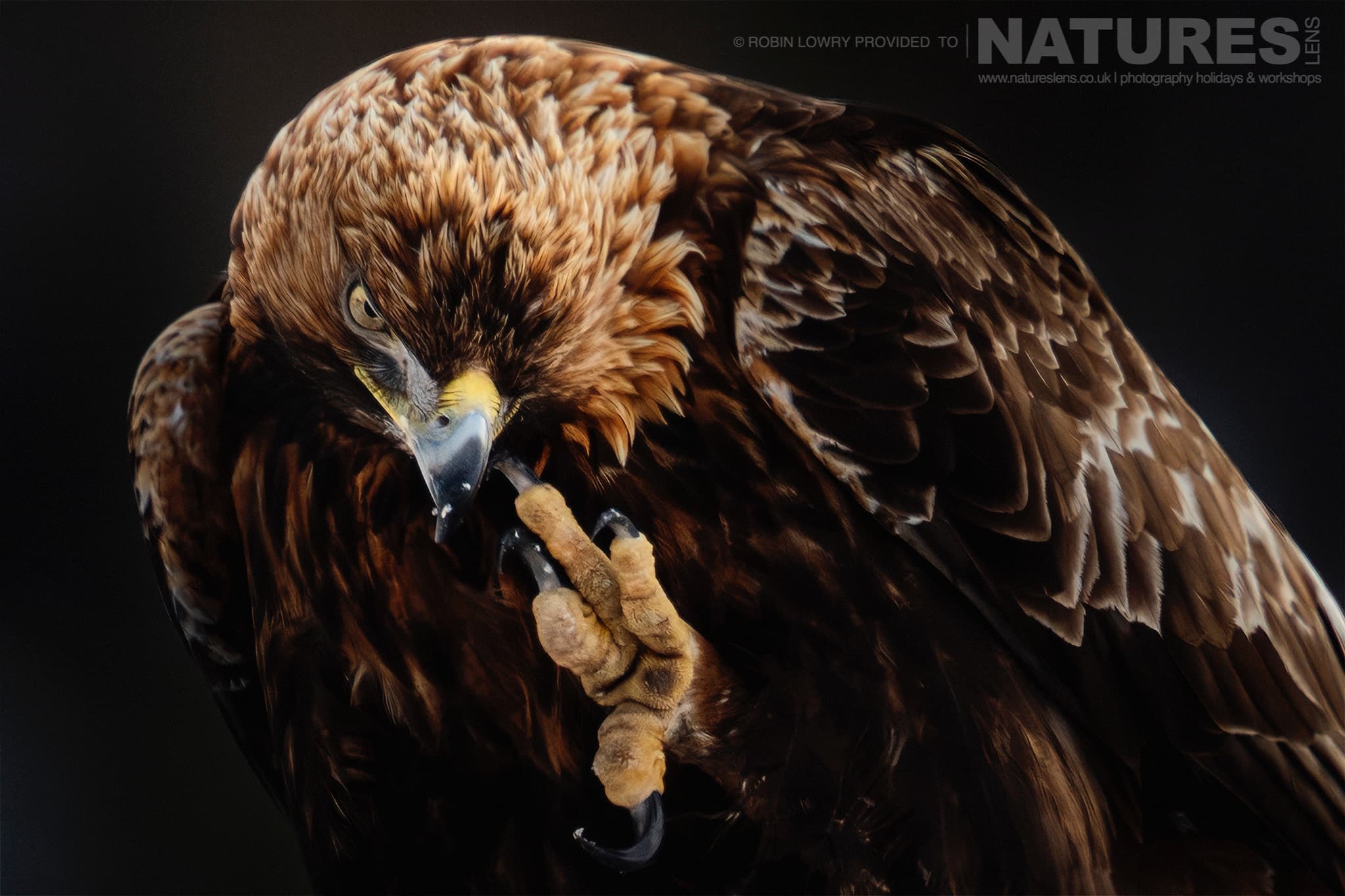
Golden eagles possess a different quality than sea eagles. They’re measured. Often deliberate. Extraordinarily rewarding to photograph well. & the trip is structured specifically to give you clarity, consistency, & the luxury of space to think between frames.
This is where you move from getting the image to making the image. From capturing a moment to crafting a frame.
How Does Sweden Reward Precision Over Urgency?
In Sweden, small changes translate directly into stronger work.
A frame shifted by inches. Timing adjusted by a fraction of a second. An exposure choice that brings the background from muddy to luminous. Your attention to these details – the micro-refinements that separate good images from exceptional ones – becomes the entire focus.
The setups provide consistency. The conditions allow for patience. You’re not fighting time or chaos. You’re fighting yourself – pushing your understanding of light, your instinct for composition, your timing on the wing extension that makes the difference between a good frame & a frame that stops people mid-scroll.

The images that emerge tend to be:
- Clean & controlled – flight & landing sequences against clear, snow-based backgrounds
- Defined by subject isolation – the eagle stands apart, unmistakably primary
- Consistent in quality across the body of work – not a handful of exceptional frames among many decent ones, but a whole portfolio that feels curated
- Deliberate in character – refined rather than opportunistic, considered rather than reactionary
What Kind of Images Do You Return With from Sweden?
You’ll come home from the Northern Sweden’s Eagles in Winter with a portfolio that feels complete. A cohesive set of images that demonstrate not just what golden eagles look like, but how well you can photograph them. A deeper, more nuanced understanding of working with winter light. The confidence that comes from refining your craft under conditions that allow for genuine experimentation & iteration. & images that feel like the result of craft, not just luck.

Sweden sharpens your eye. The consistency demands it.
What Are the Real Differences Between January & March?
Both are winter. Both deliver eagles. But they’re fundamentally different experiences.
What Does Hortobágy in January Offer?
- Conditions: Harder, more compressed, more unpredictable
- Light: Shorter working windows, rapid shifts
- Approach: Reactive & immediate
- Outcome: Dynamic, multi-species, story-driven images
- Growth Path: Reaction speed, behavioural reading, working under pressure
What Does Northern Sweden in March Offer?
- Conditions: More stable, more workable, more generous
- Light: Longer working windows, more consistent positioning
- Approach: Deliberate & refined
- Outcome: Clean, controlled, consistent, curated images
- Growth Path: Precision, light understanding, refinement & iteration
Neither is easier. They’re just different. & the question isn’t which one is objectively better – it’s which one aligns with how you want to develop as a photographer.
Which One Should You Choose?
This comes down to knowing yourself.
Should You Choose Hortobágy?
- You thrive on intensity & unpredictability
- You want to photograph multiple species interacting in real time
- You’re motivated by the challenge of reading behaviour under pressure
- You want images that crackle with energy & tension
- You view winter wildlife photography as a reactive discipline
- You want to push your instincts & your speed
Should You Choose Northern Sweden?
- You want to photograph with control & intention
- You prefer depth over breadth – mastering one subject rather than juggling several
- You’re motivated by refinement & incremental improvement
- You want a consistent, polished body of work you’re genuinely proud of
- You view winter wildlife photography as a craft to be refined
- You want time to think, adjust, & try again
What Is The Honest Truth About These Two Trips?
Many photographers end up doing both – because they complement each other perfectly.
Hortobágy teaches you to see faster. Sweden teaches you to see deeper. Together, they develop you as a photographer in ways that neither alone could manage.
What Do These Winter Eagle Photography Trips Actually Deliver?
Both are built on the same core principle: you return with images that matter.
You don’t come home with thousands of frames & a handful of keepers. You come home with a significantly smaller set – but one where nearly everything is usable, where the editing process is about refining rather than triage, where the final gallery feels intentional.
In Hungary, you’ll have sharpened your ability to read behaviour, your reaction speed, & your capacity to work decisively under genuine pressure. Your portfolio will feel alive.
In Sweden, you’ll have sharpened your eye for light, deepened your understanding of composition, & built the confidence that comes from refinement. Your portfolio will feel masterful.
Both trips are run in small groups. Both include single occupancy as standard. Both are structured obsessively around getting you to the right place at the right time, with experienced guidance throughout every session.
The only variable is how you prefer to work while you’re there.
Which Practical Details Matter When Choosing?
Both trips operate with the following principles:
- Small groups: Not large tours. You’re working with a handful of fellow photographers, not dozens.
- Experienced guidance: Guides who understand eagle behaviour, light, & what makes an image work.
- Single occupancy included: You’re not sharing accommodation. Your space is yours.
- Structured for success: Every session is timed, positioned, & planned around maximizing your opportunities.
- Image-first philosophy: The entire trip is built around one goal: you returning with work you’re genuinely excited about.
How Should You Make Your Final Decision?
If one of these trips has resonated as you’ve read – if you’ve found yourself thinking “yes, that’s how I want to work” – that instinct is probably right.
Hortobágy in January is for photographers who want intensity. Multiple eagles, real interaction, the need to read & react in the moment, images that pulse with energy.
Sweden in March is for photographers who want mastery. A single exceptional subject, consistent conditions, the space to refine, a portfolio that feels deliberately crafted.
Both will change how you see winter wildlife. Both will deliver images that stay with you long after you’ve returned home.
The difference is simply how you prefer to get there.
What Are the Next Steps?
If you’re leaning toward one of these winter eagle photography trips, the next move is straightforward:
Hortobágy – Eagles of the Hortobágy Photography Holiday (January) – Intensity. Multiple species. Reactive photography at its finest.
Sweden – Northern Sweden’s Eagles in Winter Photography Holiday (March) – Precision. Single-subject mastery. Refinement & control.
Not sure yet? Get in touch. We’re always happy to discuss which direction aligns with your approach to photography, your goals for the year, & what kind of images matter most to you right now.
Either way – you’re going to come back with something special.
Our Final Word on These Two Eagle Experiences
Eagles in winter are always compelling. But how you choose to photograph them changes everything.
In Hungary, it’s about being ready when the moment unfolds – reading the drama, committing decisively, capturing behaviour in real time.
In Sweden, it’s about making each frame count – refinement, light, precision, & the satisfaction of a body of work that feels intentional.
Both are exceptional. Both will develop you as a photographer in different but equally valuable ways … & that’s exactly why they work so well together.
- NaturesLens trips are designed around photographic opportunity – schedules, positions, & access are all structured to give you the best light.
- Small groups, normally four to six photographers, ensure unhurried access & individual guidance, with the exact maximum shown on the trip page.
- Single occupancy is included as standard on the majority of our wildlife photography holidays.
Prefer to see the full range first? Browse all our wildlife photography holidays.