There are some wildlife photography locations which become part of the fabric of what you do, not simply because they are productive, but because repeated visits teach you how much more there is to a place than the obvious headline species. Skomer was one of those places for NaturesLens. For more than a decade we ran residential puffin photography workshops there, returning year after year because staying on the island allowed us to work around the birds, the weather & the light rather than the timetable of the day boats. Sadly, from 2026 commercial operators are no longer permitted to book overnight stays on Skomer or Skokholm, bringing that long chapter of our programme to an end, while our 2027 Fair Isle trip with Robin Lowry is already full. That makes Grímsey Island for Puffin Photography especially important for us in 2027, because it still gives photographers something that is becoming increasingly difficult to find: several uninterrupted days with Atlantic Puffins, extraordinary Arctic summer light & enough freedom to photograph the birds properly rather than simply seeing them.
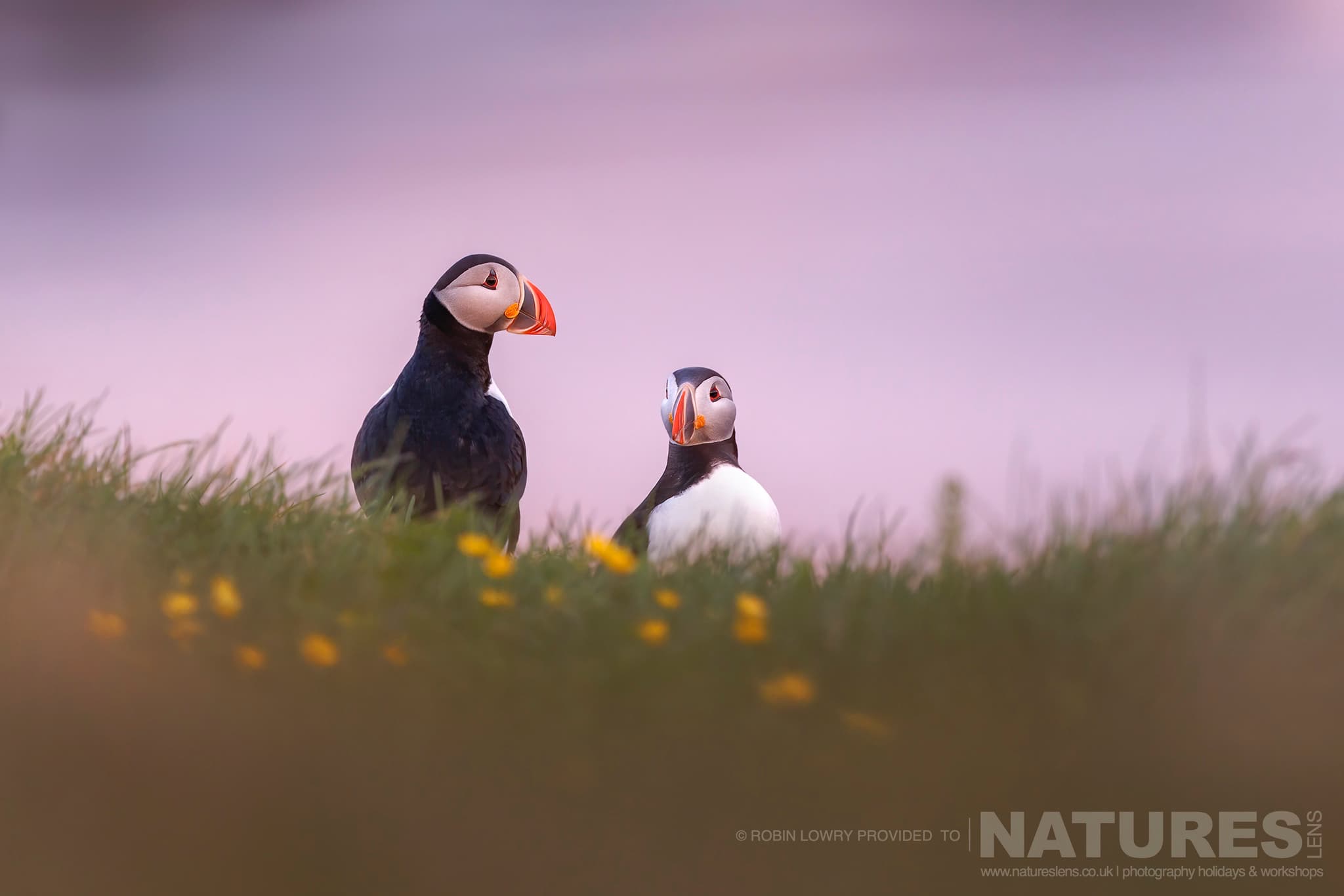
Why has Grímsey Island become so important for puffin photography?
The appeal of Grímsey is not simply that there are large numbers of Atlantic Puffins, because there are plenty of places around Britain & northern Europe where puffins can be seen in good numbers; what makes the island particularly valuable to us is the combination of access, time, variety & the ability to respond to conditions as they change. Photography requires a very different rhythm from birding or general wildlife watching, because once we find a productive subject in good circumstances there is very little benefit in leaving it simply so that another species can be added to the day’s tally.
That was always one of the great strengths of Skomer. Staying on the island allowed us to watch the weather develop, return to locations when the light changed & spend enough time with individual birds or particular flight lines to move beyond simple record photographs. Losing the ability to operate residential workshops there from 2026 was genuinely disappointing after more than a decade of taking NaturesLens photographers to the island, because that freedom to work outside the restrictions of the day-visitor timetable was central to the way we used Skomer photographically.
Grímsey Island gives us that same sense of immersion, although in a completely different landscape & at a very different latitude. We have now been operating there for several years, & each visit has reinforced the same conclusion: this is a location which becomes more rewarding the longer you stay. Instead of arriving, photographing furiously & watching the clock because a boat is leaving, you can begin to understand how the colony works, where the birds are moving, which areas are giving the cleanest backgrounds & how wind direction alters the way puffins approach the cliffs. Those observations are what gradually turn a productive wildlife location into a genuinely strong place for Puffin Photography.
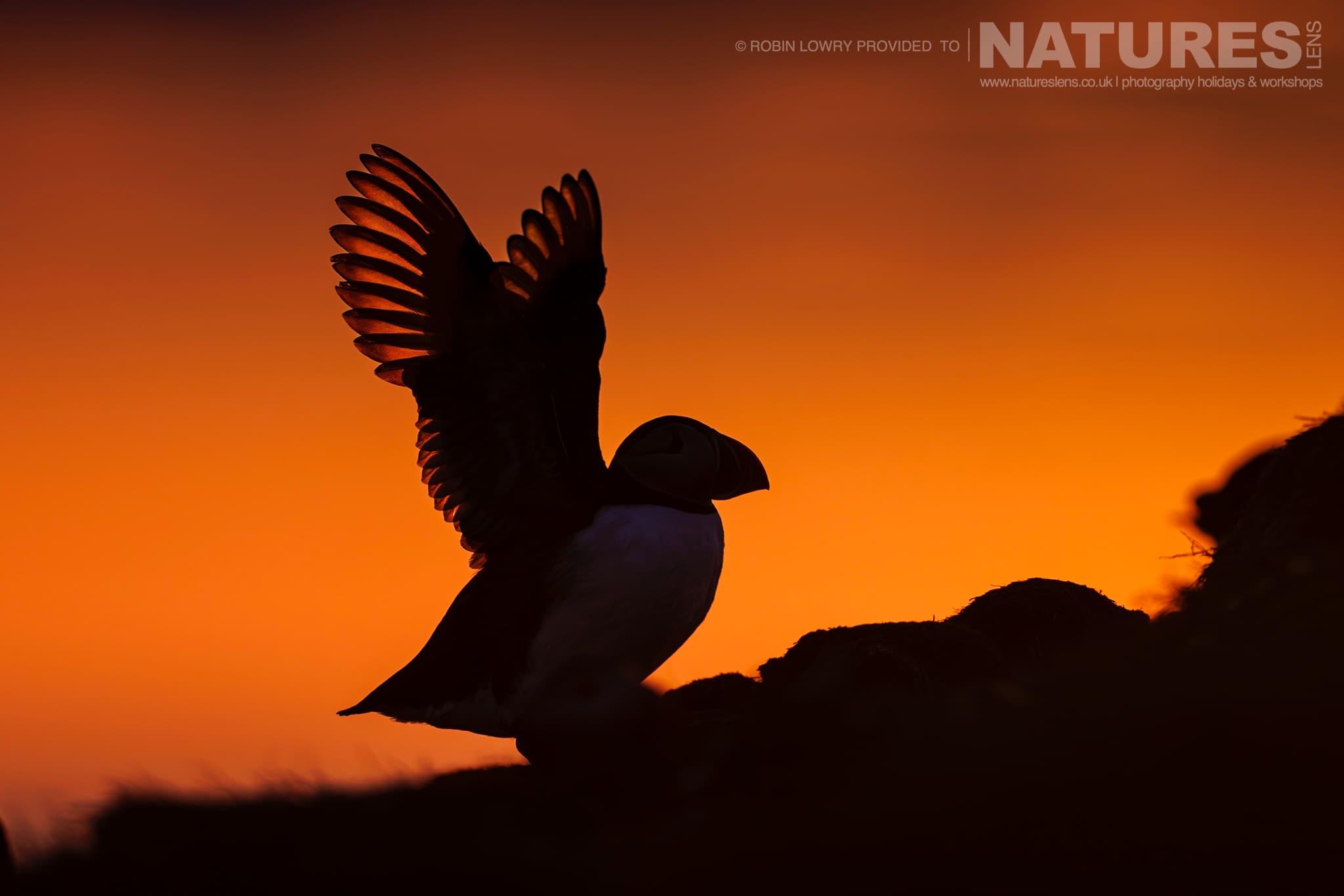
What makes Grímsey Island for Puffin Photography so photographically distinctive?
For me, the two great strengths of Grímsey are its potential for puffins in flight & the extraordinary quality of the Arctic summer light, but both become valuable because photographers have enough time to learn how to use them rather than merely encountering them by chance. Atlantic Puffins look charmingly awkward when standing on land, yet in flight they are quick, compact & surprisingly difficult to follow, with rapid wingbeats & a tendency to appear over the cliff edge with very little warning before changing direction or disappearing below you.
The temptation when you first try photographing them is to chase every bird that enters your field of view, but that usually produces frustration rather than consistency. On Grímsey we can spend long enough watching particular areas to identify repeated flight paths, notice how the wind is influencing incoming birds & work out which positions are producing the best separation between the puffins & the sea or cliffs behind them. Once you begin anticipating where a bird is likely to appear rather than reacting after it has already arrived, the whole character of the photography changes, & you can start thinking about composition, wing position, background & light rather than simply trying to keep the subject somewhere inside the frame.

The other major advantage is the extraordinary length of the day. Our 2027 trip runs from 28 June – 5 July, when Grímsey is experiencing around 22 hours of daylight, & that completely changes the normal rhythm of wildlife photography. Nobody needs, or should attempt, to photograph for 22 hours continuously, but what we gain is flexibility. If the light is poor during what would normally be the final session of the day, we do not automatically lose the evening because darkness is about to fall; if cloud begins to break later, or a low sun starts illuminating the cliffs at an hour when most photographers elsewhere would already have packed away their cameras, we can respond. For Grímsey Island for Puffin Photography, that prolonged northern light is not merely atmospheric, because it gives us a much wider window in which strong photographic conditions can develop.
Why does staying on Grímsey itself make such a difference?
Grímsey lies around 40 kilometres off Iceland’s north coast, with the Arctic Circle passing through the island, & although it can be visited without spending several days there, I think approaching it as a brief excursion misses most of what makes the place valuable to a photographer. Our 2027 Puffins of Iceland trip is seven nights, beginning & ending in Akureyri, with the core of the experience spent on Grímsey itself, which means that once Robin & the group have settled onto the island, photography rather than logistics becomes the organising principle of the day.
That distinction matters because wildlife rarely behaves according to an itinerary written months earlier. If the wind is creating particularly good flight opportunities in one part of the colony, there is no sensible reason to leave simply because a schedule says another location should come next; equally, if a bank of cloud is beginning to break & the light looks more promising elsewhere, Robin has the freedom to change direction without the group having to worry about transfers, ferry departures or fitting photography into a narrow visitor window. A photography-led itinerary should respond to what is actually happening in front of us, because productive conditions are too valuable to abandon for the sake of ticking off another planned stop.
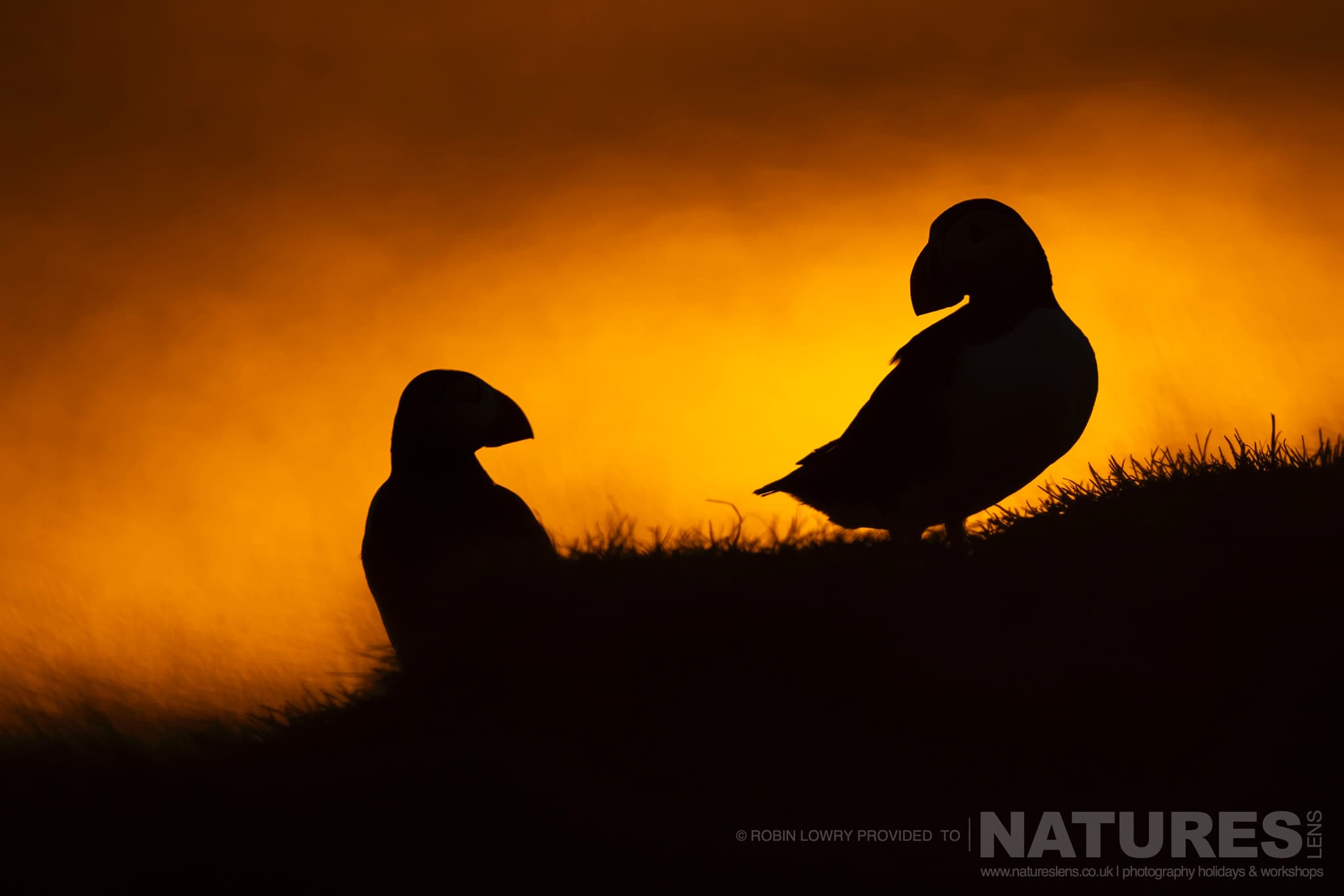
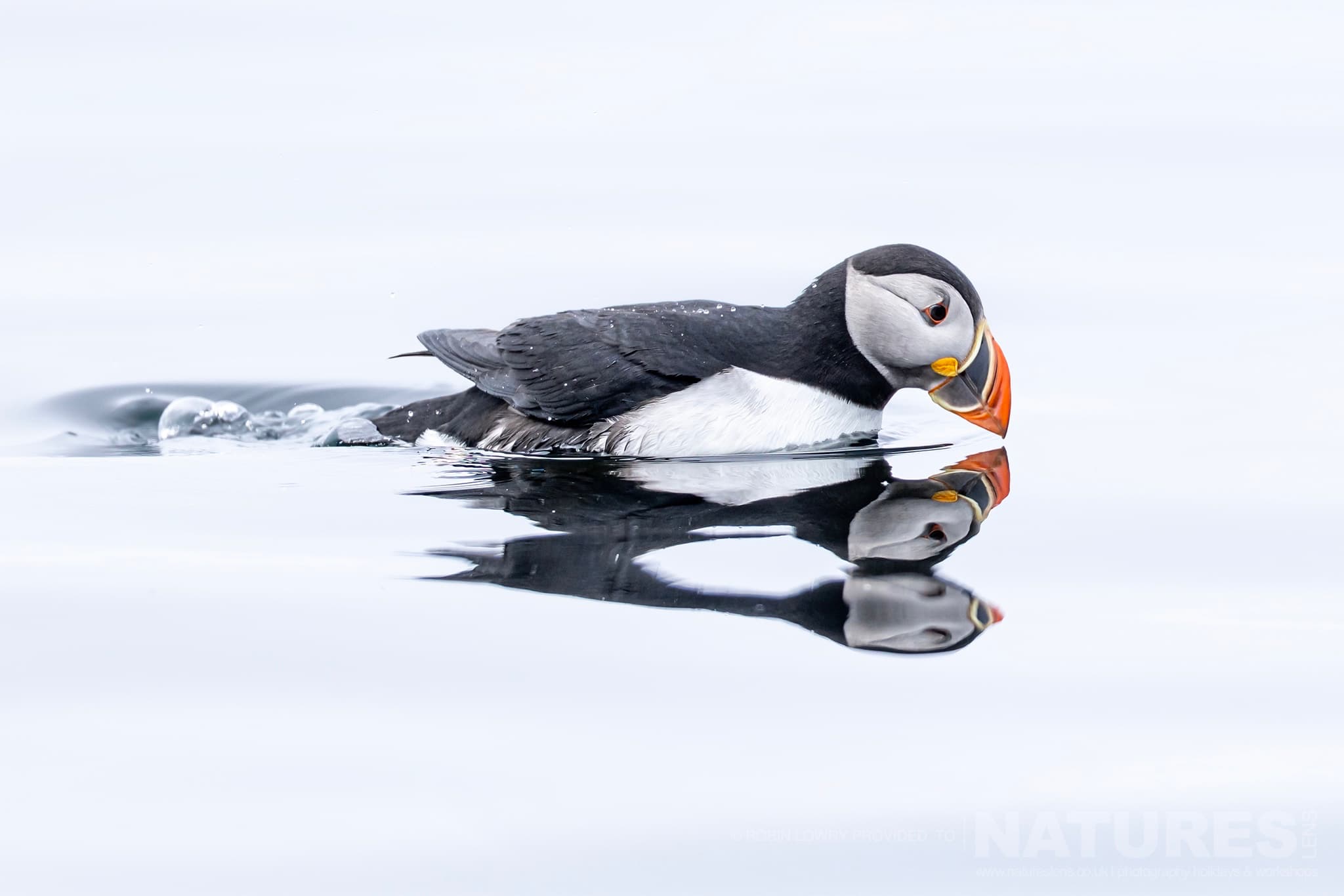
One of the things I particularly like about Grímsey Island is that this flexibility does not mean sacrificing visual variety. The island gives us steep sea cliffs, grassy slopes, basalt formations, wildflowers, open ocean & huge northern skies, all of which can become part of the photograph rather than simply scenery between subjects. A puffin portrait against a clean background is always appealing, but I would hope that somebody returning from Grímsey also has birds crossing the sea, puffins within the wider landscape, flight images, behaviour, colony scenes & photographs which show something of what it actually feels like to be on an Arctic island during the height of summer. That breadth of imagery comes from having enough time to stop thinking only about the bird & start considering the relationship between the subject, its surroundings & the light.
Is Grímsey Island only worthwhile for Atlantic Puffins?
Atlantic Puffins are unquestionably the main reason we go to Grímsey, & I think it is important to be clear about that rather than pretending the trip is designed to accumulate the longest possible species list. One of the mistakes I see in wildlife travel is the assumption that variety must always mean more species, whereas from a photographer’s perspective variety can just as easily come from different behaviour, different light, different backgrounds, different focal lengths & different ways of interpreting the same subject.
Grímsey supports enormous numbers of breeding seabirds, so there are opportunities involving Razorbills, Guillemots, Black-legged Kittiwakes, Northern Fulmars, Arctic Terns, gulls & other species associated with these northern cliffs, while other wildlife may occasionally provide additional opportunities. If Robin finds Arctic Terns behaving beautifully in a useful area, or another species presents itself in exceptional light, then of course it makes sense to work with that opportunity, but the important point is that we do not feel obliged to leave productive puffins simply because another species happens to be present elsewhere on the island.

This is fundamental to how we approach NaturesLens trips. There is usually a point during a good wildlife session where the straightforward images have already been made, the camera settings are no longer demanding much thought & you begin noticing the subtler details that were invisible when you first arrived. Perhaps one bird repeatedly turns in the same direction before taking off, perhaps the background becomes cleaner if you move a metre along the cliff, or perhaps a particular individual is returning to the same position often enough that you can begin anticipating its behaviour. That sort of understanding rarely develops in ten hurried minutes, which is why I would rather spend two genuinely productive hours with one subject than race around the island collecting photographs of everything we happen to see.
Why is Robin Lowry a great leader for our Grímsey trips?
Robin understands the way we want NaturesLens trips to operate, & for me that is far more important than simply placing somebody in front of a group because they know how to use a camera. Good photographic guidance is rarely about standing beside somebody constantly discussing aperture or shutter speed; it is much more often about recognising what the conditions are offering, helping someone improve their position, noticing a repeated behaviour pattern or understanding that the best decision at that moment may simply be to stay exactly where you are.
Grímsey rewards that kind of judgement because it is not a fixed-hide experience where everyone is pointing at the same perch from predetermined positions. Wind direction matters, background matters, the height at which you choose to work matters, & the strongest opportunity can shift quite quickly as birds change their approach lines or the light moves across the cliffs. Robin’s role is therefore as much about helping photographers read those circumstances as it is about conventional photographic technique, which fits very naturally with the way we want the trip to work.
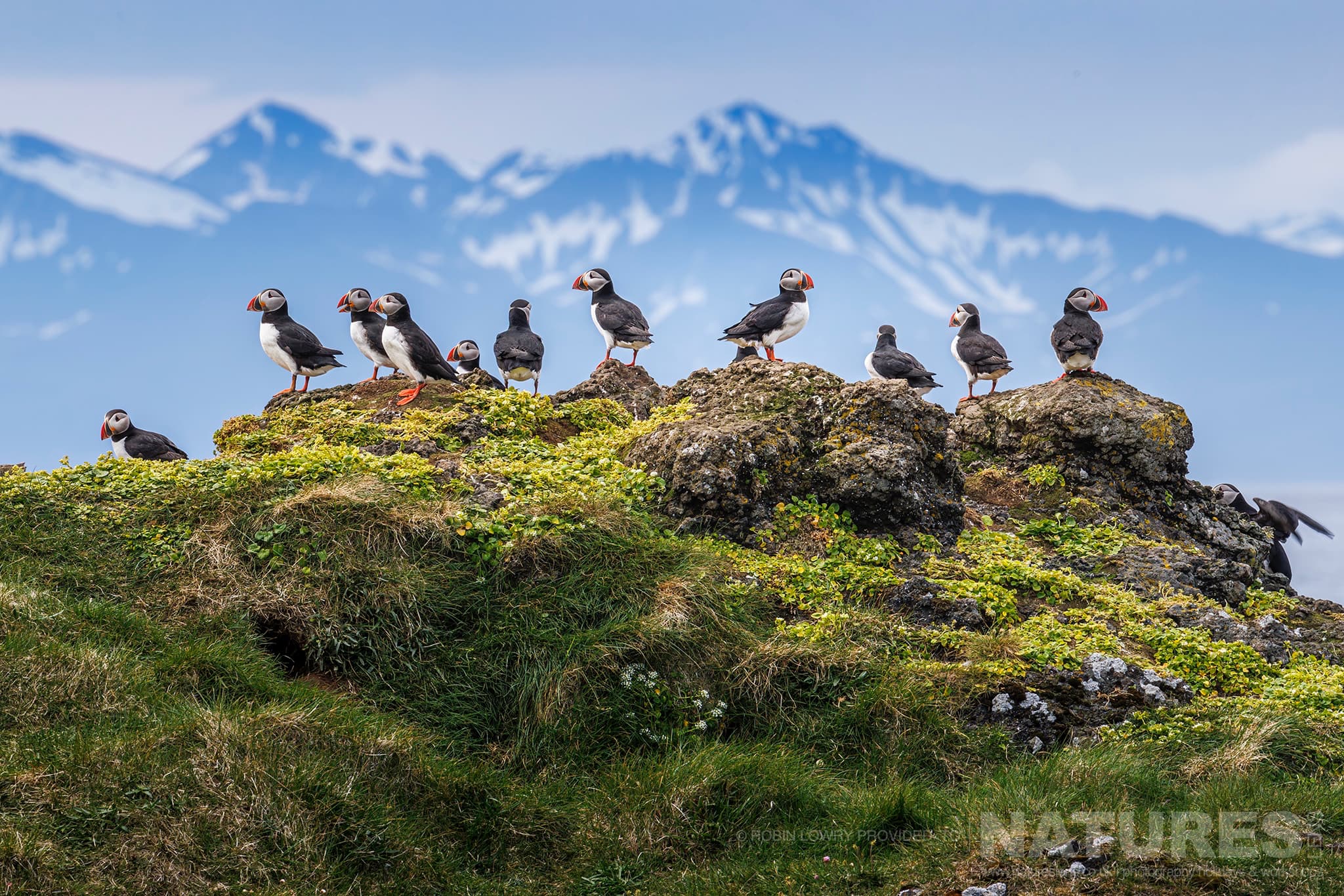
He is also leading our Atlantic Puffins of Fair Isle photography holiday from 12 – 17 June 2027, but that departure is already full, which leaves Grímsey from 28 June – 5 July 2027 as the remaining opportunity in our 2027 programme to spend several days photographing puffins with him. The Grímsey group is deliberately small, with a maximum of seven guests, because I do not want everyone compressed into one spot producing virtually identical photographs. When conditions allow, photographers should have enough room to explore slightly different positions, follow their own ideas & concentrate on whichever aspect of the subject most interests them, whether that is flight, behaviour, portraiture or wider environmental work.
Why do we recommend Grímsey Island for Puffin Photography in 2027?
After more than a decade of running wildlife photography holidays, one of the things I have learned is never to assume that access to a productive location will remain unchanged indefinitely. Skomer made that very clear to us. We had operated workshops there successfully for years, knew the island intimately & fully expected it to remain part of the NaturesLens programme, yet changes introduced from 2026 meant commercial operators could no longer book the overnight stays which had made our residential workshops possible.

Fair Isle remains another magnificent puffin destination, but our 2027 departure with Robin is already full, so the landscape of available puffin photography trips has changed rather more quickly than I would once have expected. That does not make Grímsey a substitute for Skomer or Fair Isle, because it has its own identity & its own photographic strengths, but it does make me value what the island currently allows us to do even more.
Grímsey Island for Puffin Photography gives us several consecutive days within an extraordinary seabird environment, with Atlantic Puffins in large numbers, excellent opportunities for flight, very long Arctic summer days & enough freedom to organise our photography around wildlife, weather & light rather than a restrictive timetable. More than anything, it gives us time: time to understand a flight line, time to wait for the background to improve, time to return to a productive area when the light changes & time to move beyond simply recording that a puffin was present.
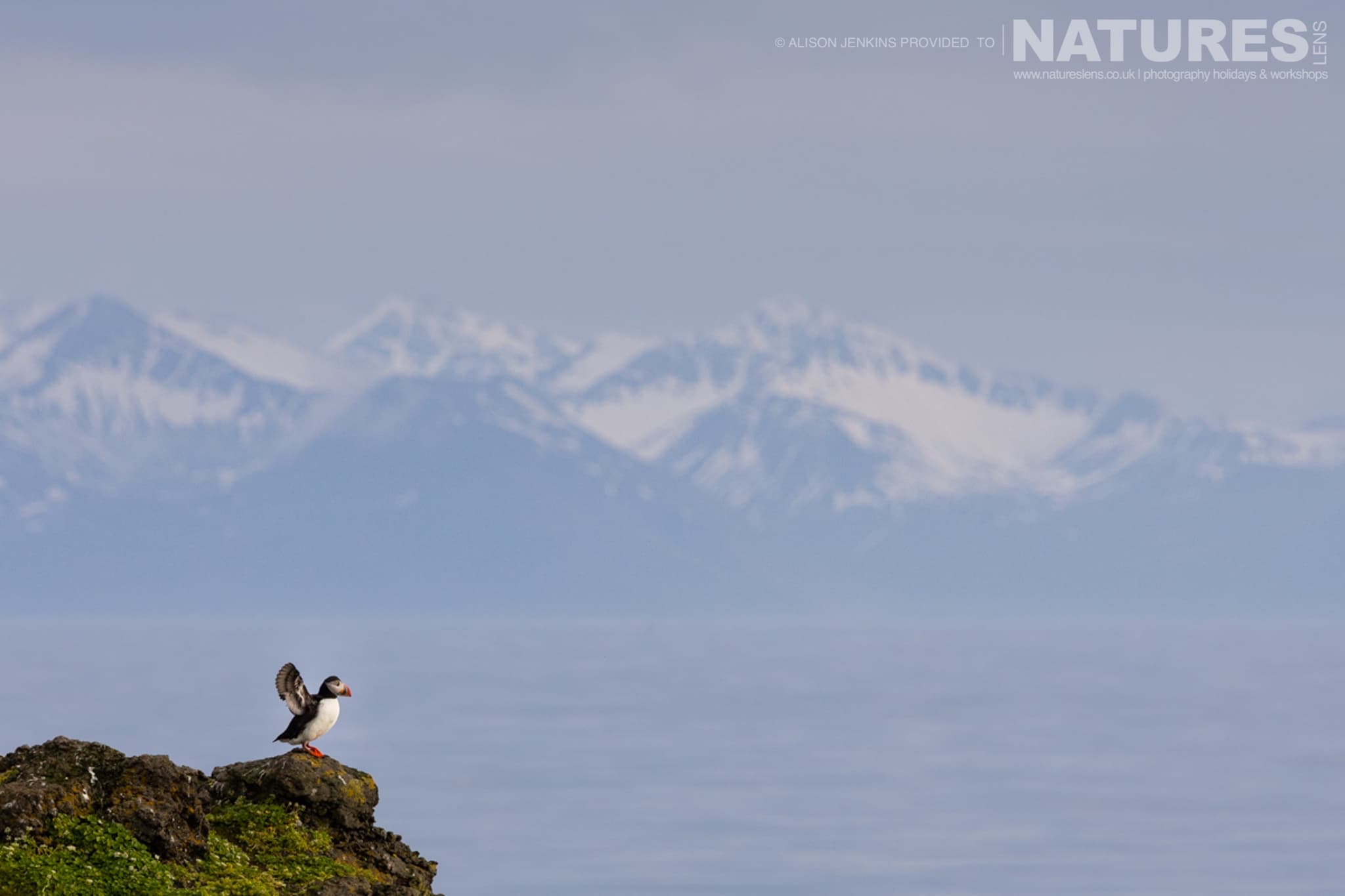
That is ultimately why we recommend Grímsey Island so strongly for 2027. We are not travelling to the Arctic Circle simply to see Atlantic Puffins, because seeing them is the easy part; we are going there because the island gives photographers the space, light, variety & time required to photograph them properly, which is a very different proposition. With our long-running Skomer workshops now behind us & Fair Isle already spoken for in 2027, I think Grímsey represents one of the most compelling opportunities in our programme for anyone who wants to make Puffin Photography a serious part of their portfolio rather than simply another species crossed off the list.
See also: Robin Lowry – Atlantic Puffins of Grímsey Island – 2023 · Robin Lowry – Grímsey Island – July 2024 · Robin Lowry – Atlantic Puffins of Skomer Island – 2023