In the clean wilderness of Kachemak Bay, wildlife photographers & conservationists alike are captivated by the imposing presence of the strong Bald Eagles. These iconic birds of prey, with their piercing gaze & impressive wingspan, soar above the rugged coastline, symbolising freedom & resilience. Read on to discover the beauty & significance of the Bald Eagles in Kachemak Bay, where these fine creatures hold a special place in the heart of the Alaskan wilderness.

Why Homer, located on Kachemak Bay is, a Great Location to Visit for Wildlife Photography?
Homer, located in Alaska, is a premier destination for wildlife photographers due to its unique & diverse ecosystem. The town is surrounded by strong natural landscapes, including mountains, glaciers, & clean waters, making it an ideal habitat for a wide variety of wildlife species. From the Bald Eagles of Kachemak Bay soaring overhead to the grizzly bears roaming the forests during the summer months & orcas swimming in the bay, Homer offers ample opportunities to capture striking moments in the wild.

Additionally, the annual migration of birds along the Pacific Flyway brings an abundance of avian species to the region, attracting photographers from around the world. With its rich biodiversity & unspoiled wilderness, Homer continues to entice wildlife photographers seeking to document the beauty of nature in its purest form.

Where is Kachemak Bay?
Kachemak Bay is located in southern Alaska, near the town of Homer on the Kenai Peninsula. The bay extends for about 40 miles & is known for its strong natural beauty, diverse wildlife, & recreational opportunities. Visitors to Kachemak Bay can enjoy sea kayaking, fishing, hiking, & wildlife photography.

The bay is also home to several small communities, including Halibut Cove & Seldovia, where visitors can experience coastal Alaska’s unique culture & charm. Kachemak Bay is a popular destination for nature photographers with its picturesque landscapes & abundant wildlife.
What Wildlife Is Found in Kachemak Bay During the Winter Months?
Kachemak Bay, located in Alaska, is home to diverse wildlife, even during winter. Despite the cold temperatures & icy conditions, visitors can still photograph a variety of creatures in the bay area. During winter, it’s common to see sea otters, seals, & sea lions bobbing in the icy waters while bald eagles soar overhead in search of prey.

Marine birds like cormorants can also be spotted along the shorelines. Those keen on exploring the underwater world can catch a glimpse of sea stars, anemones, & various fish species that thrive in the bay’s cold waters during winter.

The Bald Eagles of Kachemak Bay During Winter.
The Bald Eagles of Kachemak Bay (Haliaeetus leucocephalus) are a common sight during winter, drawing bird photographers to Homer from locations worldwide.

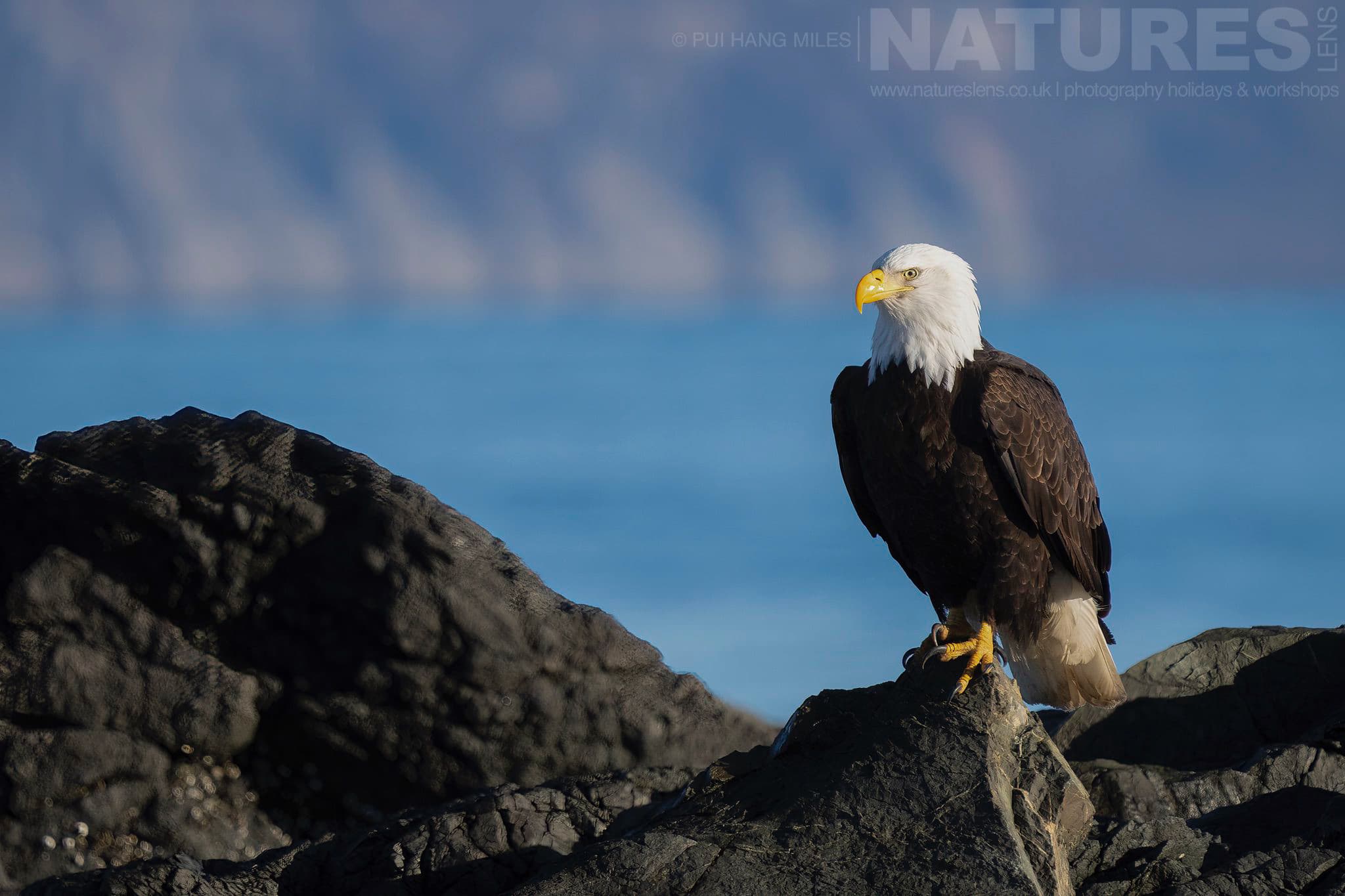
These imposing raptors are known for their striking white heads & tails contrasting with dark brown bodies. The bay provides a crucial winter habitat for bald eagles, offering them abundant food sources like fish & carrion.

Our photography guests have many opportunities to witness the eagles soaring through the skies, perched in trees along the shoreline, or diving dramatically to catch fish from the waters below.

With their impressive wingspans & keen eyesight, bald eagles are a compelling presence in the bay’s wintry landscapes.

What Is The Difference Between a Mature Bald Eagle & a Juvenile?
The difference between a mature Bald Eagle & a juvenile lies primarily in their physical appearance. Mature Bald Eagles display the iconic white head & tail feathers, which they develop around 4-5 years old. In contrast, juvenile Bald Eagles have predominantly brown plumage with some white mottling on the underparts & lack the distinctive white head & tail feathers.

Additionally, mature Bald Eagles have fully developed beaks & talons, whereas juveniles may have less prominent & lighter-coloured features. Behaviorally, mature Bald Eagles are more experienced & skilled hunters compared to juveniles, which often show less finesse in their hunting techniques.
The Sea Otters found in the coves of Kachemak Bay During Winter.
The Sea otters (Enhydra lutris) found in Kachemak Bay during winter play a crucial role in maintaining the ecosystem’s balance.

These marine mammals have a dense fur coat that helps them stay warm in frigid waters. Sea otters feed primarily on sea urchins, clams, mussels, & crabs, which helps regulate the populations of these prey species.

During winter, sea otters can be observed floating on their backs, using rocks to crack open shellfish for their meals. Their playful behaviour & close-knit social structures make them a famous sight for wildlife photographers visiting Kachemak Bay in Alaska.
The Steller Sea Lions of Kachemak Bay During Winter.
Steller sea lions, also known as northern sea lions, are the largest of the eared seals & commonly found in Kachemak Bay during the winter months. These imposing marine mammals are known for their robust bodies, impressive agility in water, & distinct barks.

During winter, Steller sea lions migrate to the bay to feed on various fish species, such as salmon & herring, which are abundant in the cold waters. The bay provides a vital winter habitat for these sea lions, offering protection from predators & harsh weather conditions.

Our guests frequently witness these fine creatures basking on rocky outcrops or hunting for fish in the frigid waters.

The Mountain Goats found on the cliffs surrounding Kachemak Bay During The Winter.
During the winter months in Kachemak Bay, Alaska, the Mountain Goats, often referred to as “arctic goats,” can be spotted roaming the rugged terrain of the surrounding mountains. These resilient animals are well adapted to the harsh winter conditions, equipped with thick fur & specialized hooves that provide traction on icy surfaces.

Mountain Goats are known for their agility & ability to quickly & easily scale steep cliffs, making them a common sight in the rocky cliffs & alpine meadows of Kachemak Bay. One of the best times to observe these fine creatures is during the winter months, when their striking white coats stand out against the snowy landscape, offering a glimpse into the beauty & diversity of wildlife in this remote corner of Alaska.
What Is The Best Way to Get Around Kachemak Bay for Wildlife Photography?
The best way to explore Kachemak Bay for wildlife photography is by chartering one of the boats in the harbour – & this is precisely what NaturesLens does; we work with a fantastic company that has several boats & very experienced captains, ‘Curly John’ is our favourite.

Venturing out onto the bay in this fashion offers unique opportunities to capture strong shots of the diverse wildlife in their natural habitats, including whales, otters, seals, & a variety of seabirds – plus, of course, the famous Bald Eagles of Kachemak Bay, which often number forty or more flying above the boat or on the surrounding cliff-faces.

The experienced skippers on the boats that NaturesLens uses take our guests to the best spots for photography, provide valuable insights & ensure a memorable & successful photography experience. With the flexibility of our boat charters, our skipper leads our photography guests to easily navigate the bay, land on beaches, find frozen waterfalls, reach remote locations, & have the freedom to spend as much time as needed to capture the perfect image.
When Does NaturesLens Visit Homer for Photography of the Bald Eagles of Kachemak Bay?
NaturesLens runs tours that enable wildlife photographers to capture strong winter images of the bald eagles in Kachemak Bay, Homer. Our tours take place during the peak season for eagle photography, from late November to late March. During this time, the eagles gather in large numbers along the shores of Kachemak Bay, offering our guests the perfect opportunity to capture these fine birds – & other wildlife – in their natural habitat.
NaturesLens ensures that participants have the best chance to photograph these iconic birds against the strong backdrop of the Alaskan wilderness, providing experienced guidance & advice to help photographers make the most of this unique & rewarding experience.
Our next winter visit is scheduled for March 8th – 16th, 2026. Full details are on the Sea Otters & Bald Eagles of Alaska photography holiday event page.

- NaturesLens wildlife photography holidays are structured around photographic opportunity — every schedule decision is made around light, behaviour, & access.
- Small groups of 4–8 photographers ensure unhurried positions & individual guidance.
- Single occupancy accommodation is included as standard across the majority of our trips.