
Opens in a new tab

Species photography guide

Black-eared Kite Photography Holidays

Milvus lineatus

Explore our Black-eared Kite photography holidays in Japan, shaped around patient, repeatable field sessions with this species during the best seasonal conditions.Our small-group photography holidays prioritise time in the field, light, behaviour, positioning & repeatable photographic opportunities rather than rushed wildlife viewing.

Species profile

About this species

The Black-eared Kite is a large raptor closely related to the Black Kite, found across much of Asia from Central Asia to Japan. It is distinguished by its forked tail, dark brown plumage, and the pale patch visible on the upperwing in flight. This species is highly adaptable, often found scavenging near human settlements, coastal areas & wetlands.

Habitat

The Black-eared Kite inhabits a wide range of open & semi-open environments including river valleys, coastal regions, wetlands, farmland & the outskirts of urban areas. It is commonly seen soaring over fishing villages, rubbish tips & estuaries where food is readily available.

Where to photograph

Where our trips feature this species

You can photograph Black-eared Kite with us in Japan.

These departures are part of our Asia programme.

In the field, David Miles, Ian Roberts & Pui Hang Miles helps guests make the most of these encounters.

Field notes

Photography notes

Best time

Winter months from November to March are ideal, particularly in Japan where large concentrations gather at fishing ports. Early morning & late afternoon offer the best light for photography, with overcast conditions also working well to reduce harsh shadows on the bird's dark plumage.

Approach

Position yourself near fishing harbours or riverbanks where kites congregate to scavenge, as this allows close-range flight shots with natural backdrops. Use a fast shutter speed of at least 1/2000s to freeze wing movement during flight, paired with continuous autofocus to track the bird. Shooting during the golden hour provides warm, directional light that highlights the kite's rich brown plumage & wing patterns.

Available holidays

Trips featuring Black-eared Kite

The holidays below are pulled from the same species relationship, so the guide stays tied to live departures rather than becoming a static article.
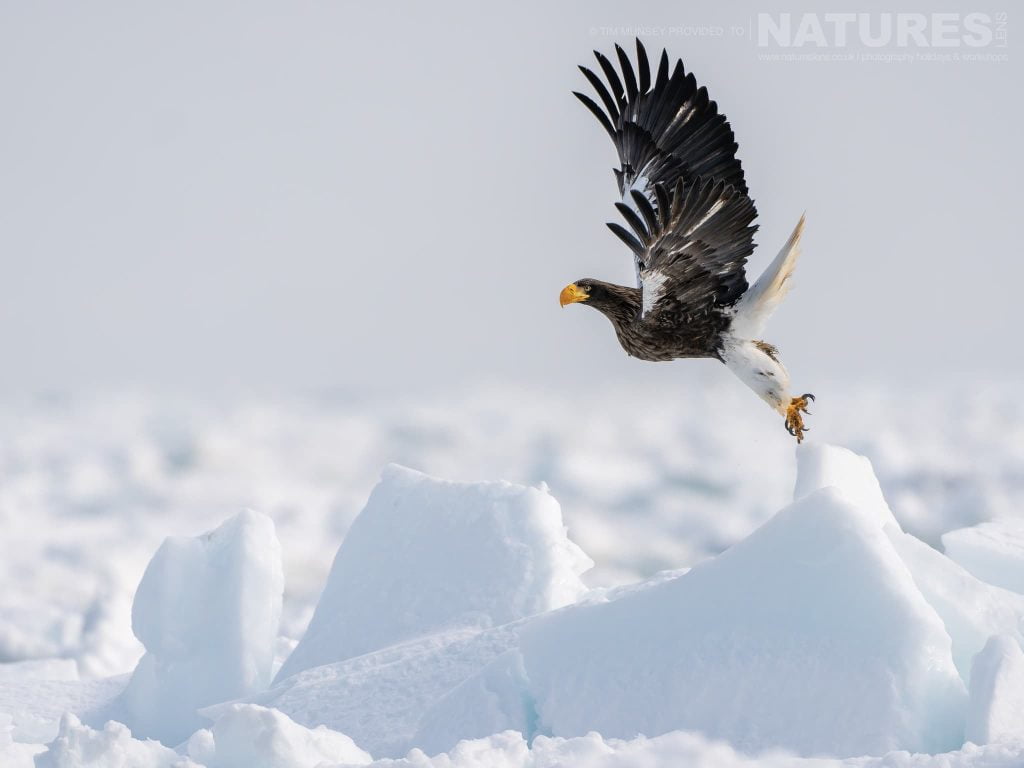
    The photography holidays listed below operate in regions & habitats where the Black-eared Kite is regularly encountered. As with all wildlife photography, sightings can never be guaranteed, but our itineraries are designed around seasonal behaviour, suitable habitat, & photographic opportunity, giving you the best possible chance of meaningful encounters in the field. Our small-group approach allows time in the field to adapt to conditions, behaviour, & photographic opportunities as they unfold. You can photograph the Black-eared Kite in Japan. During our photography holidays, the Black-eared Kite is often photographed alongside Ezo Flying Squirrel, Ezo Red Fox, Ezo Red Squirrel, Ezo Sika Deer, Japanese Macaque, & Long-tailed Tit. Seasonal presence & photographic opportunity vary by location & time of year. Photography themes commonly associated with this species include Japanese wildlife & steller’s sea eagles.

    • Join Us For The Japanese Wildlife in Winter Photography Tour

      Last Place

      6th - 20th Feb 2027 - Japanese Wildlife in Winter

      Location: Japan

      Travel with us for an amazing winter wildlife photography holiday, to photograph the Japanese Wildlife in Winter, focused on Swans, Cranes, snow monkeys & sea eagles.

      14 nights w. Single occupancy for Was: £8499 Now: £6499

      Guided By David Miles & Ian Roberts

      View Japanese Wildlife in Winter
    • Join Us For The Japanese Wildlife in Winter Photography Tour

      Early Bird Pricing

      12th - 26th Feb 2028 - Japanese Wildlife in Winter

      Location: Japan

      Join Pui Hang & Ian for our Japanese Wildlife in Winter photography tour in Japan, to capture images of all of the iconic winter species of this fascinating country, plus some of the species other trips generally do not include, such as the Ural Owl, during February 2028

      14 nights w. Single occupancy for Was: £7999 Now: £7499

      Guided By Ian Roberts & Pui Hang Miles

      View Japanese Wildlife in Winter