
Opens in a new tab

Species photography guide

Grey Wolf Photography Holidays

Canis lupus

Explore our Grey Wolf photography holidays in Poland & Canada, timed so photographers have strong chances to work with this species during winter months offer the best opportunities.Our small-group photography holidays prioritise time in the field, light, behaviour, positioning & repeatable photographic opportunities rather than rushed wildlife viewing.

Species profile

About this species

The grey wolf is the largest wild member of the Canidae family, known for its highly social behaviour and complex pack structure. It has a thick, double-layered coat that varies in colour from white to grey, brown & black depending on the region. Wolves are apex predators found across a wide range of habitats in the Northern Hemisphere.

Habitat

Grey wolves inhabit a diverse range of environments including boreal forests, arctic tundra, grasslands, mountains & temperate woodlands across North America, Europe & Asia.

Where to photograph

Where our trips feature this species

You can photograph Grey Wolf with us in Canada & Poland.

These departures are part of our Europe & North America programme.

In the field, David Miles & Pui Hang Miles helps guests make the most of these encounters.

Field notes

Photography notes

Best time

Early morning & late afternoon during winter months offer the best opportunities, as wolves are most active at dawn & dusk and snow-covered landscapes provide strong contrast against their fur.

Approach

Use a long telephoto lens of at least 400mm to capture wolves without disturbing their natural behaviour, as they are wary of human presence. Position yourself downwind & remain still for extended periods, as patience is essential when waiting for wolves to emerge into open areas. Shoot in burst mode during active moments such as howling, running or interacting within the pack to increase your chances of capturing sharp, dynamic images.

Available holidays

Trips featuring Grey Wolf

The holidays below are pulled from the same species relationship, so the guide stays tied to live departures rather than becoming a static article.

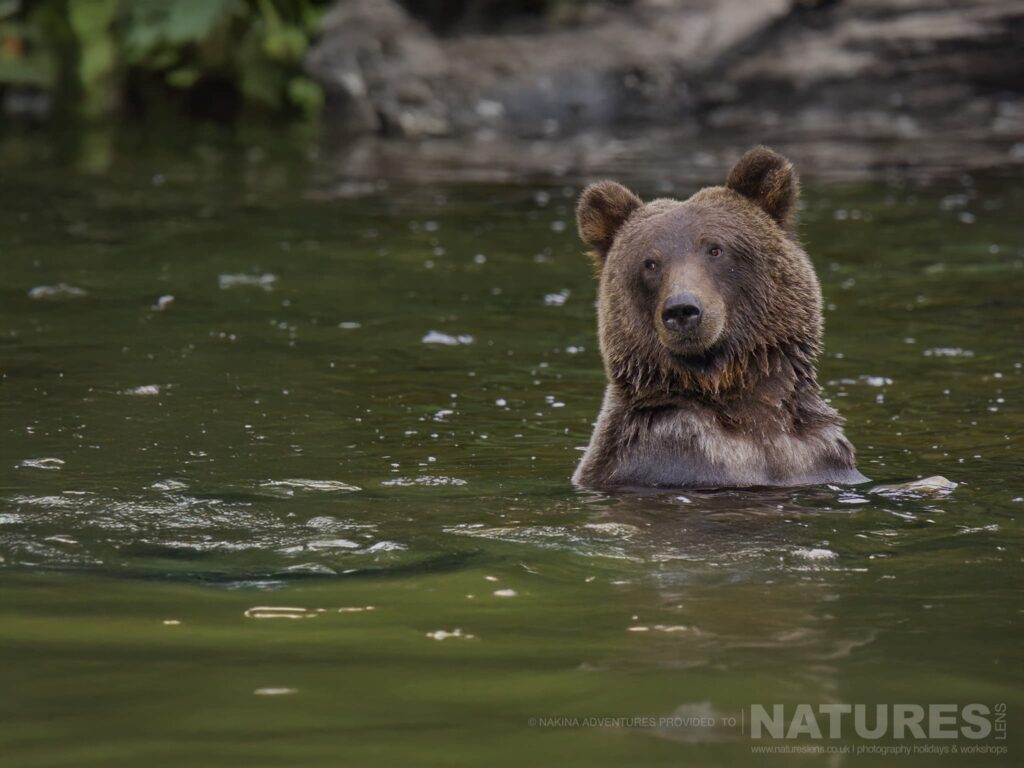
    Photographing Grey Wolves The Grey Wolf carries a mythological weight in European culture that makes encountering one in the field an experience that goes beyond the photographic. These are apex predators operating at the level of ecosystem architecture – their presence changes the behaviour of prey species, which in turn reshapes vegetation & habitat structure across entire landscapes. As a photographic subject, the wolf is elusive, fast, & often encountered at the edges of usable light. What makes wolf photography so compelling is precisely this difficulty: when a pack moves across open ground at first light, or a lone wolf pauses to assess the wind direction in a snow-covered clearing, the image has a quality of genuine wildness that very few wildlife photographs achieve. Where NaturesLens Takes You Poland’s Bialowieza Forest – Europe’s last primary lowland forest & a UNESCO World Heritage Site – provides the NaturesLens wolf photography context. Bialowieza holds one of central Europe’s most robust wolf populations & offers the extraordinary backdrop of ancient forest: old-growth oak, lime, & hornbeam that existed before the concept of managed forestry. NaturesLens Poland itineraries combine wolf photography with the forest’s other key subjects – European Bison, White-backed & Three-toed Woodpeckers, Pygmy Owl – in an itinerary structured around the slow, patient fieldwork that wild wolf encounters require. Winter visits benefit from snow tracking, which transforms wolf detection from a matter of luck into a skilled, readable discipline. Photography Technique & Gear Wild wolf photography in forest environments demands a fast, long telephoto – 600mm at f/4 is ideal, with a 500mm f/4 or 500mm f/5.6 PF as practical alternatives that save significant weight. Wolves move quickly through cover & encounters are often brief; continuous autofocus with subject tracking & fast burst shooting (15fps or more) are essential to extract sharp frames from a short encounter window. Use a monopod for mobility – a tripod’s set-up time can cost you the shot. In forest winter light, expect to work at ISO 3200-6400 regularly, & prioritise shutter speed (1/640s minimum for a moving wolf) over aperture in changing light conditions. You can photograph the Grey Wolf in Canada & Poland. During our photography holidays, the Grey Wolf is often photographed alongside Bald Eagle, Bison, Common Buzzard, European Bison, European Elk, & Great Grey Owl.

    • Join Us For The Wildlife of Białowieża Forest Photography Holiday

      Last Place

      10th - 17th Jan 2027 - Wildlife of Białowieża Forest

      Location: Poland

      Join us in Poland for a wildlife photography holiday, during January 2027, focused on Wolves, Bison & winter mammals in snow-dusted forest.

      7 nights w. Single occupancy for Was: £3249 Now: £2999

      Guided By David Miles

      View Wildlife of Białowieża Forest
    • Join Us For The Grizzly Bears of British Columbia Photography Holiday

      Full

      31st Jul - 6th Aug 2028 - Grizzly Bears of British Columbia

      Location: Canada

      Photograph grizzly bears in northern British Columbia from a remote wilderness camp, reached by helicopter & surrounded by rivers, forest & mountains, with time to observe natural behaviour as it unfolds.

      6 nights w. Single occupancy - Full

      Guided By David & Pui Hang Miles

      View Grizzly Bears of British Columbia