
Opens in a new tab

Species photography guide

Northern Gannet Photography Holidays

Morus bassanus

Explore our Northern Gannet photography holidays in Scotland, planned around the conditions that give this species the best photographic potential during the best seasonal conditions.Our small-group photography holidays prioritise time in the field, light, behaviour, positioning & repeatable photographic opportunities rather than rushed wildlife viewing.

Species profile

About this species

The Northern Gannet is the largest seabird in the North Atlantic, with a wingspan reaching up to 180cm. It is recognised by its brilliant white plumage, striking black wingtips, and golden-yellow head. Gannets are renowned for their dramatic plunge-diving behaviour, dropping from heights of up to 30 metres to catch fish at speed.

Habitat

Northern Gannets are found along the North Atlantic coastline, nesting in large, noisy colonies on rocky sea cliffs & offshore islands. Outside of the breeding season they range widely across open ocean, frequently seen diving in coastal & offshore waters.

Where to photograph

Where our trips feature this species

You can photograph Northern Gannet with us in Scotland.

These departures are part of our Europe programme.

In the field, Robin Lowry helps guests make the most of these encounters.

Field notes

Photography notes

Best time

Late spring to early summer - particularly May to July - when colonies are active with courtship, nesting, & chick-rearing. Early morning light provides warm, directional illumination ideal for photographing birds at clifftop colonies.

Approach

Position yourself at a clifftop colony such as Bass Rock or Bempton Cliffs for close-up shots of nesting & displaying birds. Use a fast shutter speed of at least 1/2000s to freeze the action of plunge-diving birds over the sea. A telephoto lens of 400-600mm will allow you to capture intimate portraits without disturbing the colony.

Available holidays

Trips featuring Northern Gannet

The holidays below are pulled from the same species relationship, so the guide stays tied to live departures rather than becoming a static article.
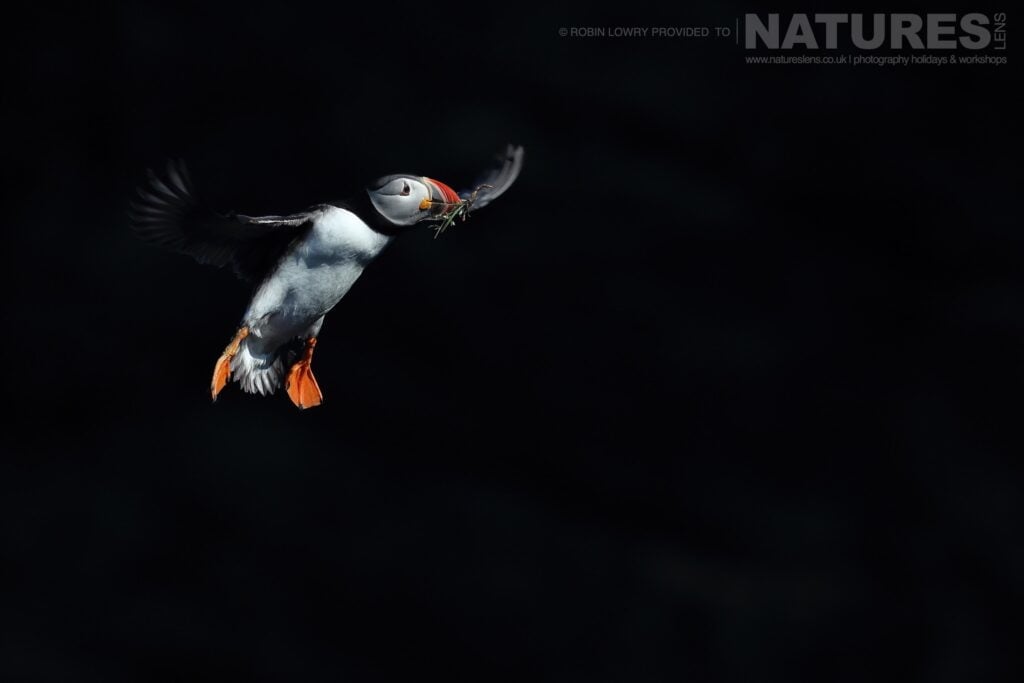
    The photography holidays listed below operate in regions & habitats where the Northern Gannet is regularly encountered. As with all wildlife photography, sightings can never be guaranteed, but our itineraries are designed around seasonal behaviour, suitable habitat, & photographic opportunity, giving you the best possible chance of meaningful encounters in the field. Our small-group approach allows time in the field to adapt to conditions, behaviour, & photographic opportunities as they unfold. You can photograph the Northern Gannet in Scotland. During our photography holidays, the Northern Gannet is often photographed alongside Arctic Skua, Arctic Tern, Atlantic Puffin, Black Guillemot, Common Guillemot, & European Shag. Seasonal presence & photographic opportunity vary by location & time of year. Photography themes commonly associated with this species include fair-isle’s puffins, scottish puffin photography, scottish wildlife photography, the atlantic puffins of fair-isle, & the puffins of fair-isle.

    • Join Us For The Atlantic Puffins of Fair Isle Photography Holiday

      Full

      12th - 17th Jun 2027 - Atlantic Puffins of Fair Isle

      Location: Scotland

      Travel to Scotland with us for a wildlife photography holiday, during June 2027, on Fair Isle, focused on close-range puffin photography during breeding season.

      5 nights w. Single occupancy - Full

      Guided By Robin Lowry

      View Atlantic Puffins of Fair Isle
    • Join Us For The Atlantic Puffins of Fair Isle Photography Holiday

      10th - 15th Jun 2028 - Atlantic Puffins of Fair Isle

      Location: Scotland

      Travel to Scotland with us for a wildlife photography holiday, during June 2028, on Fair Isle, focused on close-range puffin photography during breeding season.

      5 nights w. Single occupancy for £2749

      Guided By Robin Lowry

      View Atlantic Puffins of Fair Isle