Grímsey Island, 40 kilometres north of Iceland on the Arctic Circle, hosts an Atlantic Puffin colony exceptional for its access. Birds nest at eye level on cliff edges & grassy slopes – close enough for 300 – 500mm lenses, with 22 hours of summer daylight available to photographers who stay overnight. The nesting season runs late April to late July; the strongest photography window is mid-May to mid-July.
What makes Grímsey exceptional for puffin photography isn’t simply the numbers – it’s the access. Birds nest close to cliff edges & grassy slopes, often at eye level, allowing photographers to work with short to medium focal lengths rather than reaching for 600mm from a distance. Combined with extended summer daylight that stretches well past midnight, Grímsey offers working conditions that most puffin colonies simply can’t match.
Why Does Grímsey Work So Well for Puffin Photography?
The single biggest advantage of Grímsey is the ability to stay overnight on the island. Most puffin colonies limit photographers to daytime visits on fixed ferry schedules, which means you’re working in harsh midday light & competing with day-trippers for space. On Grímsey, you set your own schedule.
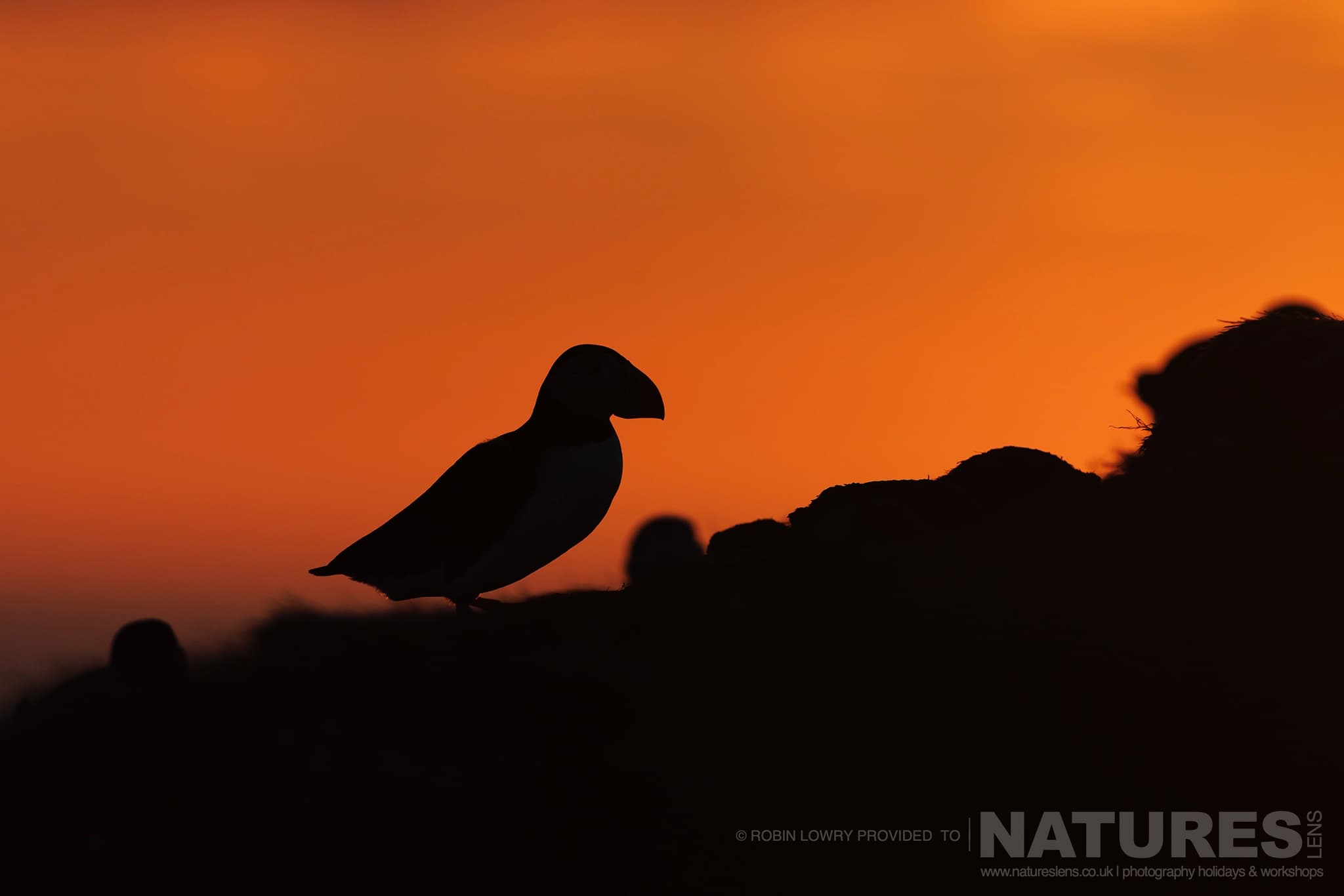
That freedom changes everything. Early morning sessions & late evening light transform what is photographically possible. Warmer tones, softer contrast, directional light that reveals feather detail & bill colour – these are the conditions that separate strong puffin images from average ones, & they’re only available to photographers who can be at the colonies outside the middle of the day.
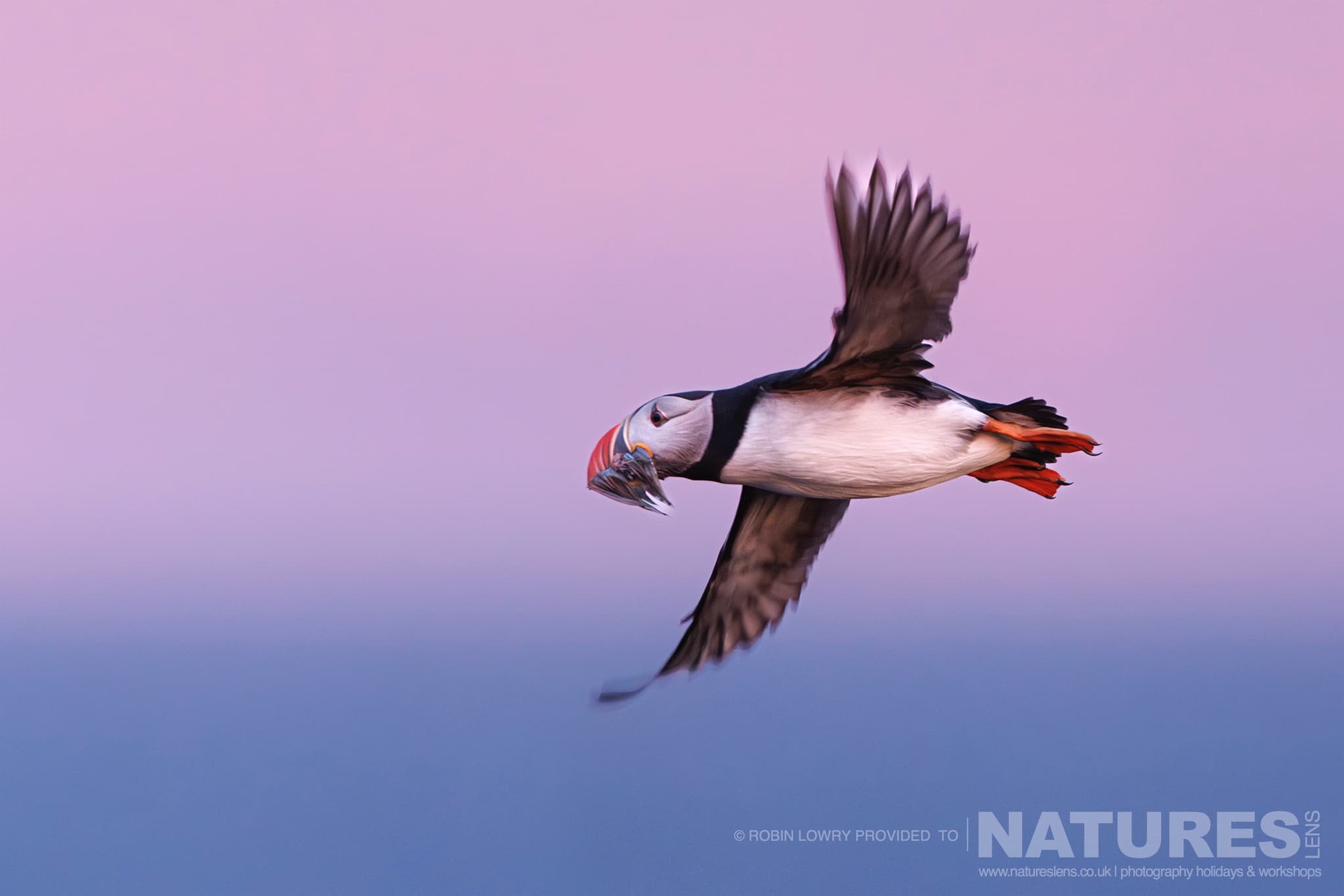
The puffins themselves are notably tolerant. They carry on with their routines – landing with beaks full of sand eels, interacting around burrow entrances, launching into predictable flight paths along the cliff edge – while photographers work quietly nearby. It’s this combination of proximity, behaviour, & light that makes Grímsey so consistently productive.
What Can You Photograph on Grímsey Island?
The photographic opportunities on Grímsey cover a genuine range of styles & approaches.
- Close-range portraits – puffins perch openly at eye level, allowing clean backgrounds with 300 – 500mm lenses.
- Behavioural images – fish-carrying returns, burrow interactions, & nesting activity repeat across multiple sessions.
- Flight work – consistent flight paths & predictable wind patterns create repeatable approach angles in full daylight.
- Landscape & environmental shots – basalt columns, cliff faces, & the North Atlantic provide dramatic context.
- Other seabirds – guillemots, razorbills, kittiwakes, & Arctic terns share the cliffs for variety.
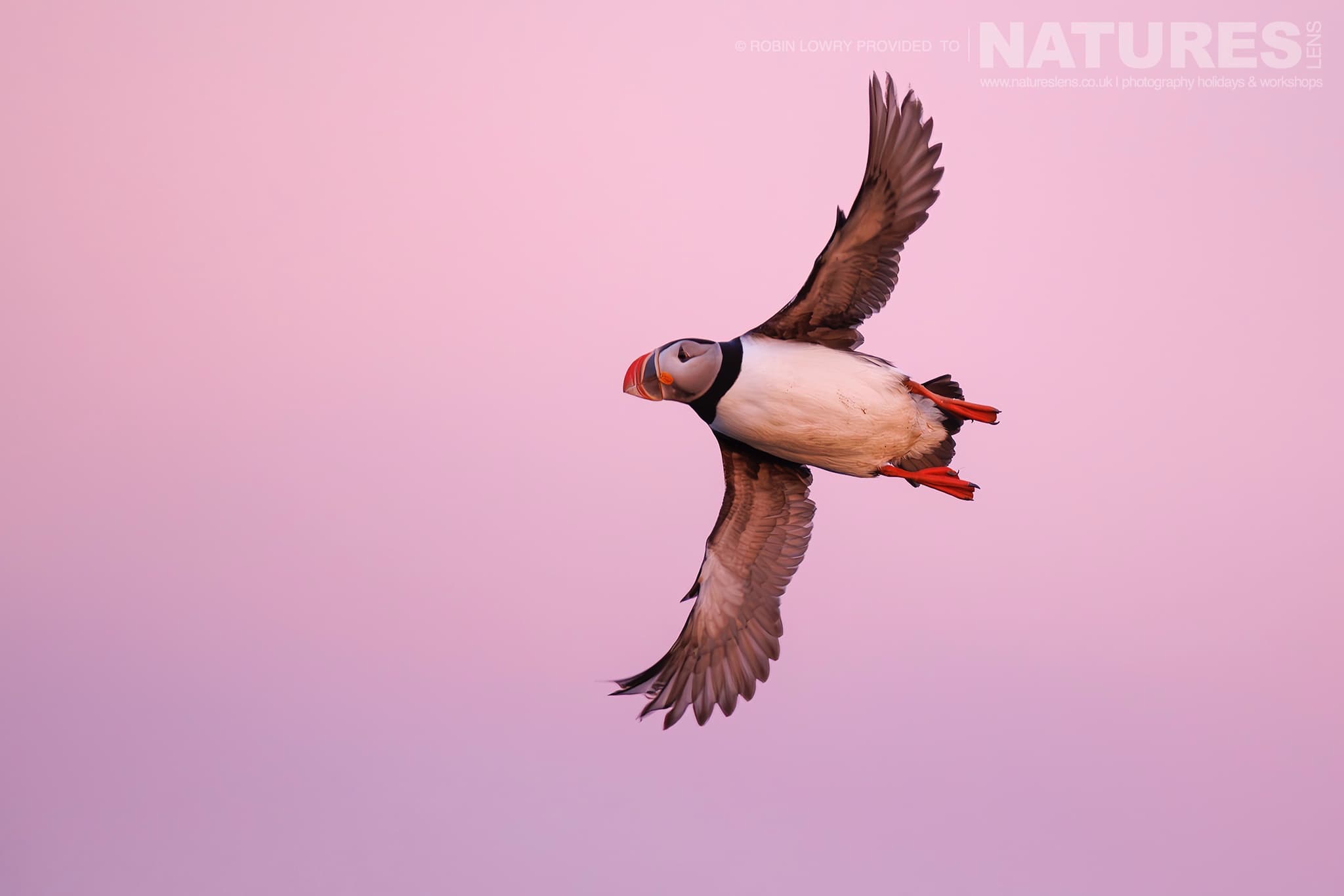
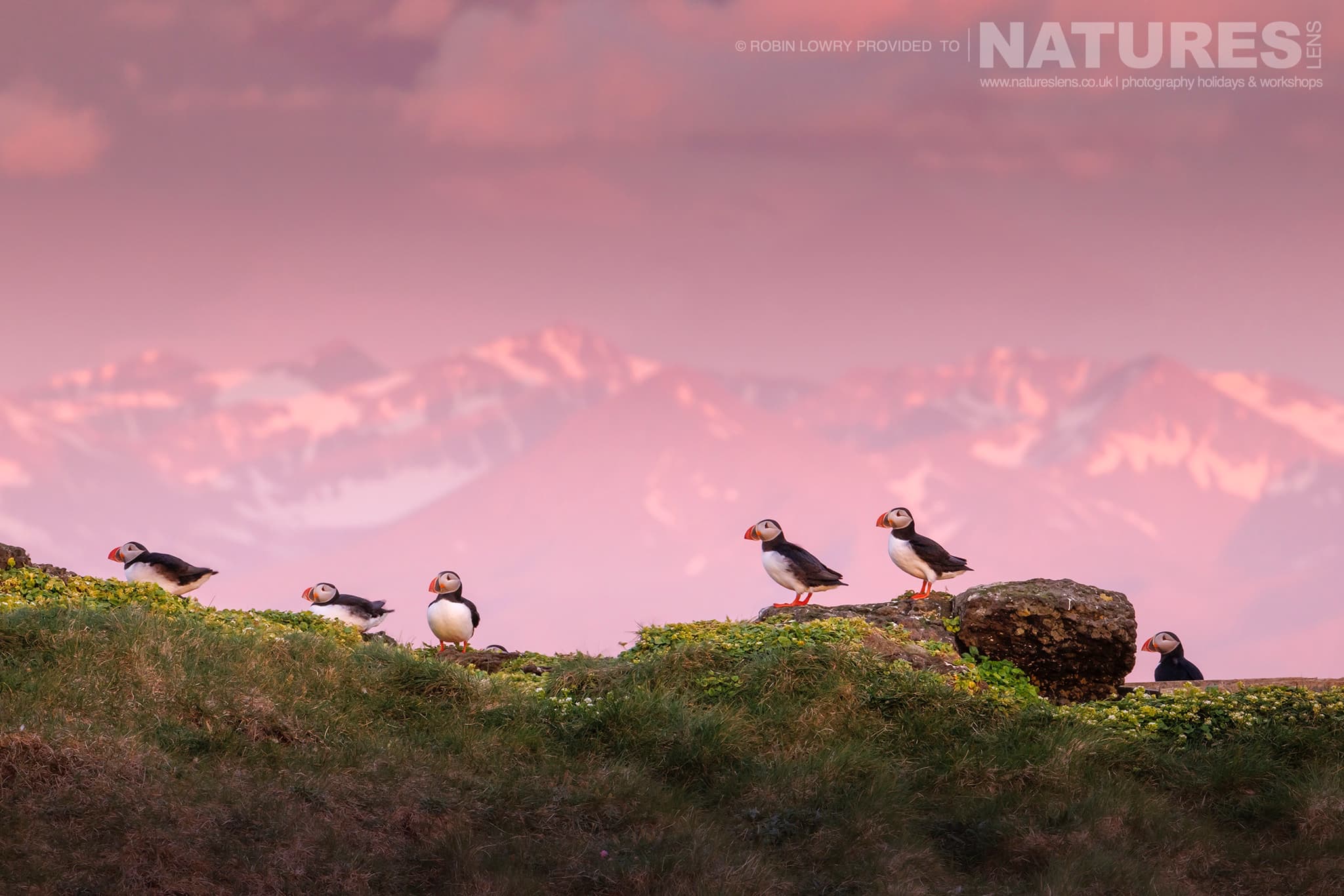
Close-range portraits with clean, natural backgrounds are achievable with a 300 – 500mm lens. Puffins perch openly on grassy slopes & rock edges, & the ocean or distant mountains provide uncluttered backdrops that keep the subject isolated. Behavioural images – puffins carrying nesting material, returning with fish, or squabbling over burrow ownership – are repeatable across multiple sessions, giving you time to refine timing & composition rather than relying on a single chance.
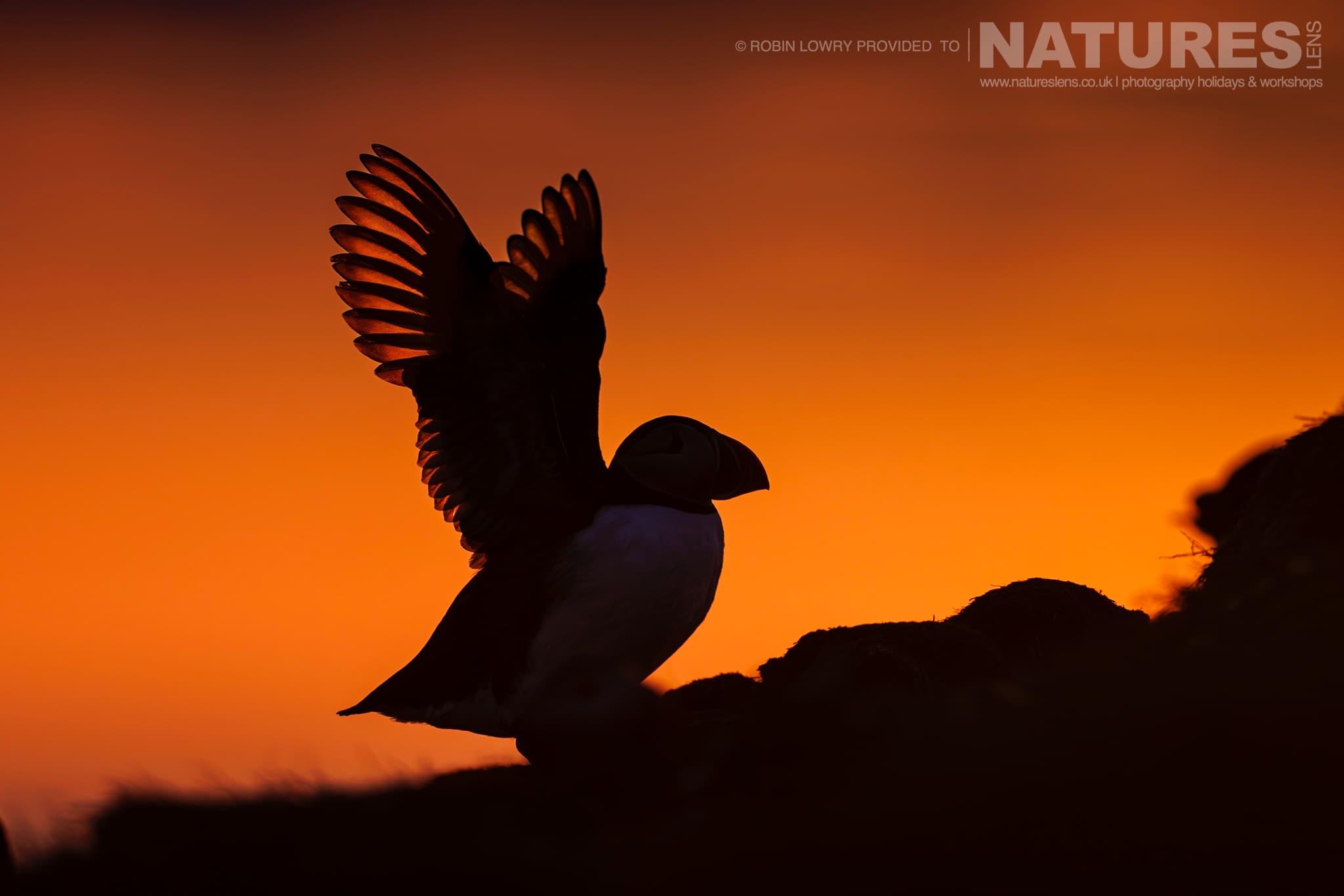
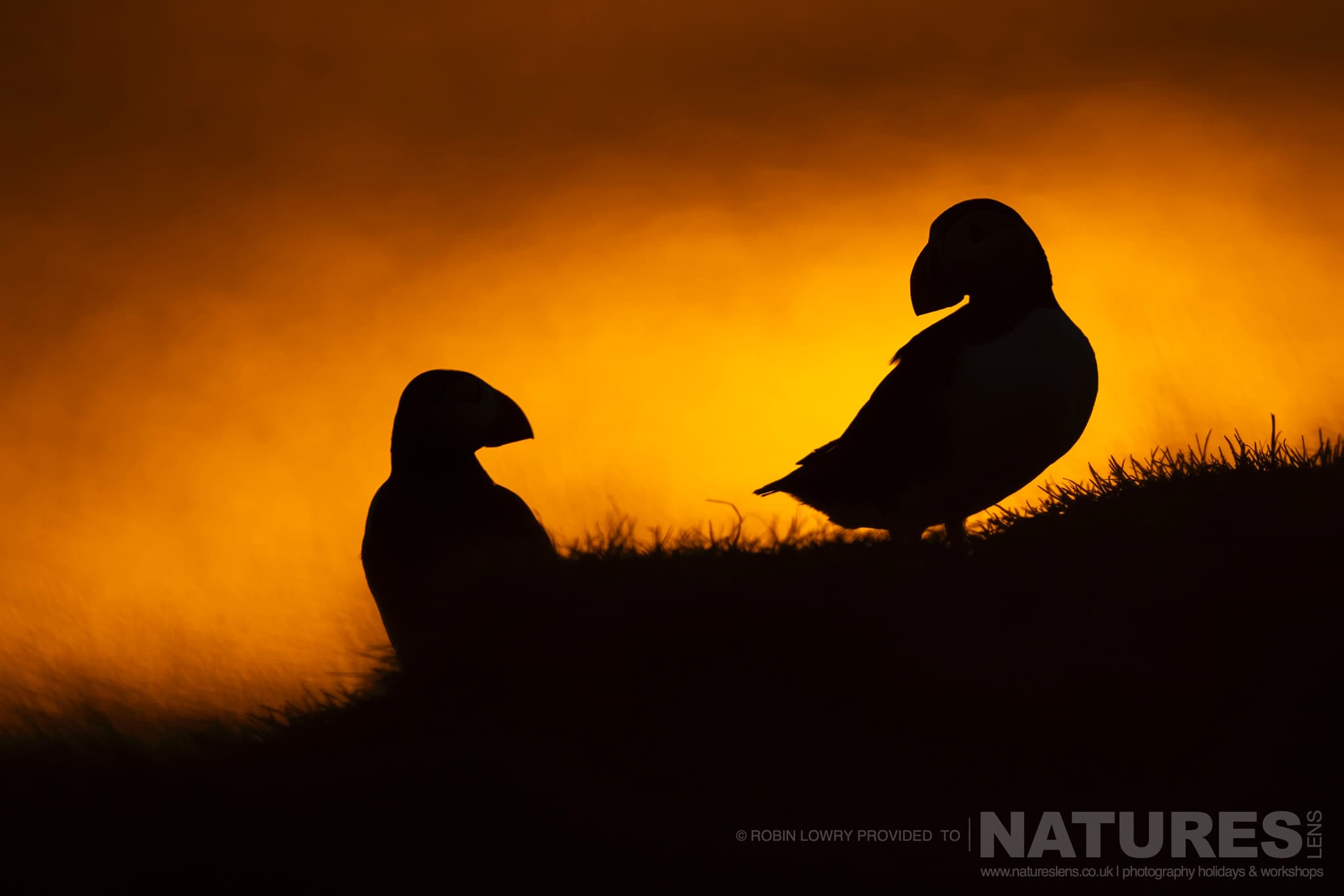
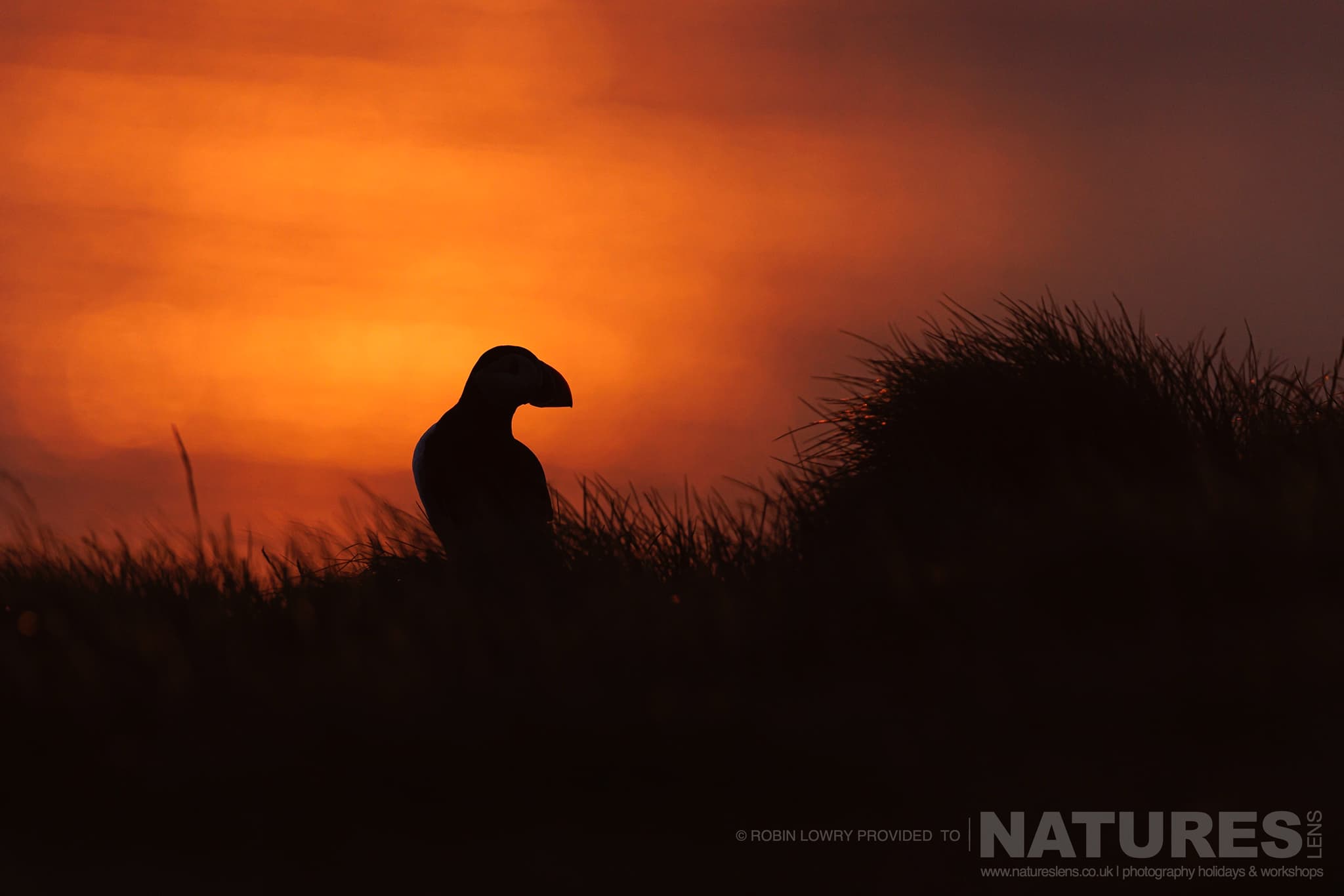
Flight photography is where Grímsey particularly excels. Puffins follow consistent flight paths along the cliffs, & the reliable wind patterns create predictable approach angles. With extended daylight, you can practise flight work across a full range of lighting conditions – front-lit in the morning, backlit in the evening, silhouetted against pink skies late at night.
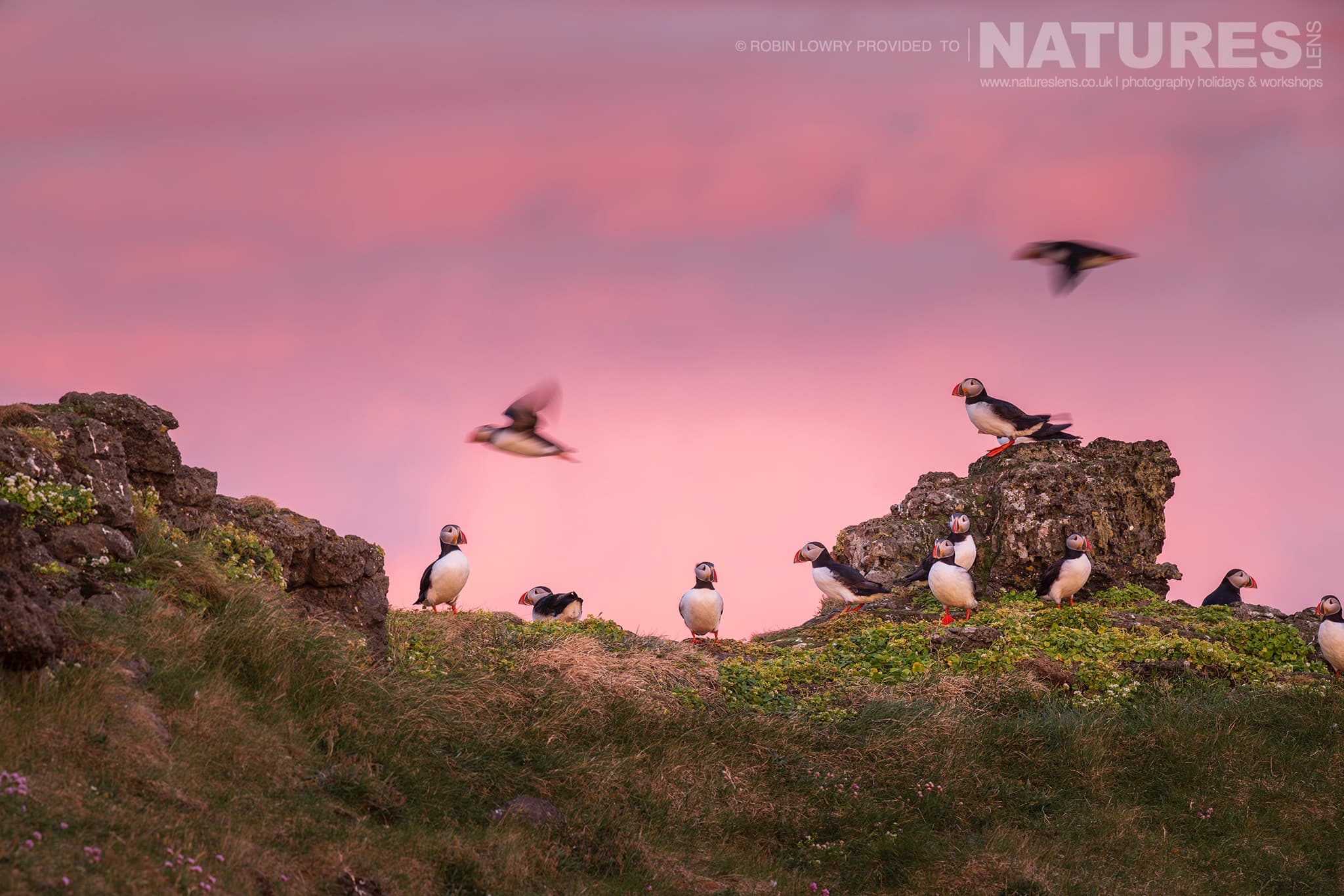
Wider environmental images also work well here. The island’s basalt columns, cliff faces, & the expanse of the North Atlantic provide dramatic context for images that place puffins within their landscape rather than isolating them from it.
Beyond puffins, Grímsey supports colonies of guillemots, razorbills, kittiwakes & Arctic terns. These species share the cliffs & provide useful variety between puffin sessions, particularly for photographers interested in seabird flight work or colony-wide compositions.
When Is the Best Time to Photograph Puffins on Grímsey?
Puffins are present on Grímsey from late April through to late July, with the strongest photographic window falling between mid-May & mid-July. During this period, adults are actively feeding chicks, which means regular flight activity & frequent returns to burrows with fish – exactly the behaviour that produces the most engaging images.
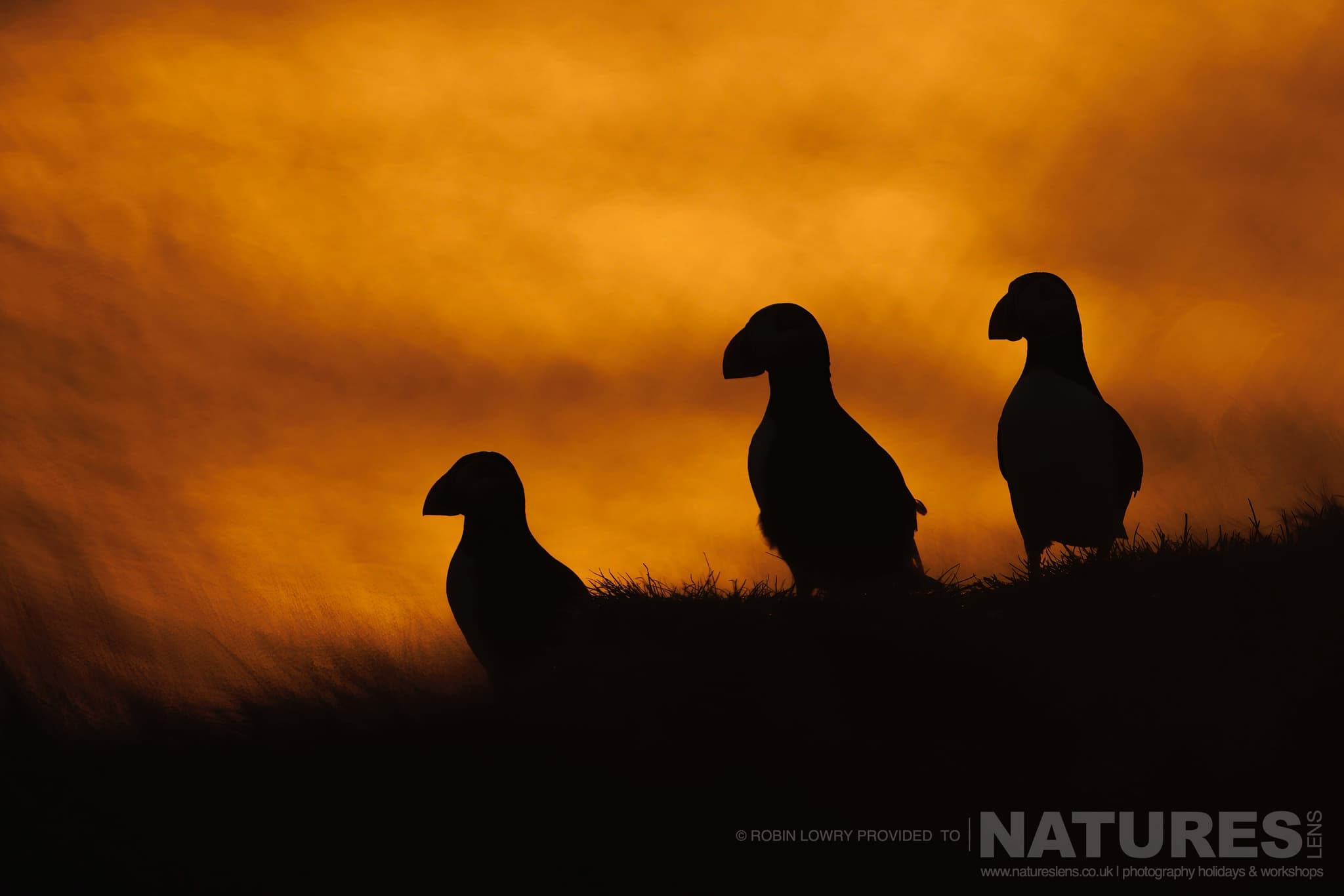
June & early July are particularly rewarding. The midnight sun means you effectively have 22 hours of usable daylight, with the softest, most atmospheric light occurring late in the evening & early in the morning – precisely the windows that overnight access unlocks.
How Does NaturesLens Run Its Puffin Photography Trips to Grímsey?
We were the first UK operator to schedule photography trips to Grímsey Island, & we’ve been running them consistently since 2020. Our photography holidays are structured around staying on the island for five or six nights, giving photographers the freedom & flexibility to work the colonies whenever conditions are right.
We take a guesthouse on the island exclusively for our group & time our wildlife photography tours to coincide with the peak of the puffin nesting cycle. Small group sizes mean unhurried access to the best positions, & experienced guidance helps photographers refine their approach across multiple sessions rather than hoping for one good encounter.
Our Puffins of Iceland trips are scheduled in June & July, when Icelandic wildlife is most active & the light is at its most varied. Alongside the puffins, guests regularly photograph guillemots, kittiwakes, rock ptarmigan, red-necked phalarope & other species that inhabit the island & surrounding waters.
Our approach is straightforward: repeated access to the colonies in the best light, with experienced guidance to help you come home with consistently strong images. Whether you’re building a puffin portfolio from scratch or refining work you’ve started elsewhere, Grímsey rewards the time you put in.
Galleries from our tours for Puffin Photography on Grímsey Island
These galleries showcase imagery closely connected to the locations & experiences featured during our Puffin Photography Holidays on Grímsey Island.
Photography Guide
- NaturesLens Photography Guides - In-Depth Destination & Species Guides
- Photographing Puffins on Grímsey Island - A Photographer's Guide to Iceland's Arctic Circle Colony
- NaturesLens trips are designed around photographic opportunity – schedules, positions, & access are all structured to give you the best light.
- Small groups, normally four to six photographers, ensure unhurried access & individual guidance, with the exact maximum shown on the trip page.
- Single occupancy is included on virtually all NaturesLens trips.