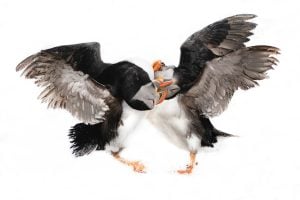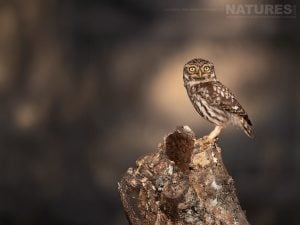
Iceland’s Grímsey Island sits directly on the Arctic Circle, & for one short window each summer it holds one of the most accessible Atlantic Puffin colonies anywhere in the world. Robin Lowry guides our Iceland trip & has built the itinerary around flexible sessions timed to the island’s light & the puffins’ feeding activity, rather than a fixed daily schedule — when conditions are good, you stay out; when they are not, you wait for the next window.
For the current trip list, see our Iceland wildlife photography holidays; you can also explore more nature photography in Europe.
What makes Grímsey worth the trip beyond the puffins is the supporting cast packed onto the same small island. Arctic Tern, Razorbill, Common Guillemot, Black Guillemot & Black-legged Kittiwake all nest within the same short walk, alongside waders like Purple Sandpiper, Dunlin & Red-necked Phalarope working the shoreline. It is a genuinely dense concentration of subjects for a single small island.
Part of what makes the island so productive is its size — small enough to cover entirely on foot, which means every colony, cliff edge & shoreline stretch is within a short walk of wherever you’re staying. There’s no long transfer eating into shooting time each morning, & the near-constant daylight of the Icelandic summer means sessions can run early or late depending on where the light & the birds are working best on a given day.
Our Iceland Photography Holiday
We run one small-group trip to Iceland, guided by Robin Lowry, timed to peak puffin activity on Grímsey Island. Here is the next departure:
28th Jun – 5th Jul 2027 — Puffins of Iceland
7 nights | from £2,499 | Easy — Gentle Adventures, Accessible to Most
Puffins photographed in summer with flexible sessions on Grímsey Island, right on the Arctic Circle — alongside a wide supporting cast of seabirds & waders. The Easy rating & compact island setting make this one of the most accessible trips in the whole series.
That rating reflects the flat, compact walking involved rather than any lack of things to photograph — this is one of the most productive trips in the series relative to its physical demands, & photographers of any experience level are genuinely well served here.
More info on Puffins of Iceland
Want to check availability or ask a question first? Get in touch & we’ll help you plan around it.
What You’ll Photograph in Iceland
Atlantic Puffin
Atlantic Puffin is the headline subject of the trip, worked at close range on Grímsey Island during peak summer activity — birds returning to burrows with sand eels, & flight shots against the island’s cliffs.
Puffins nesting in burrows along the clifftop paths mean close, eye-level access is possible without a hide, provided you keep low & move slowly — the birds habituate quickly to a quiet, predictable presence, which is exactly the pace this trip is built around.

Seabirds & Terns
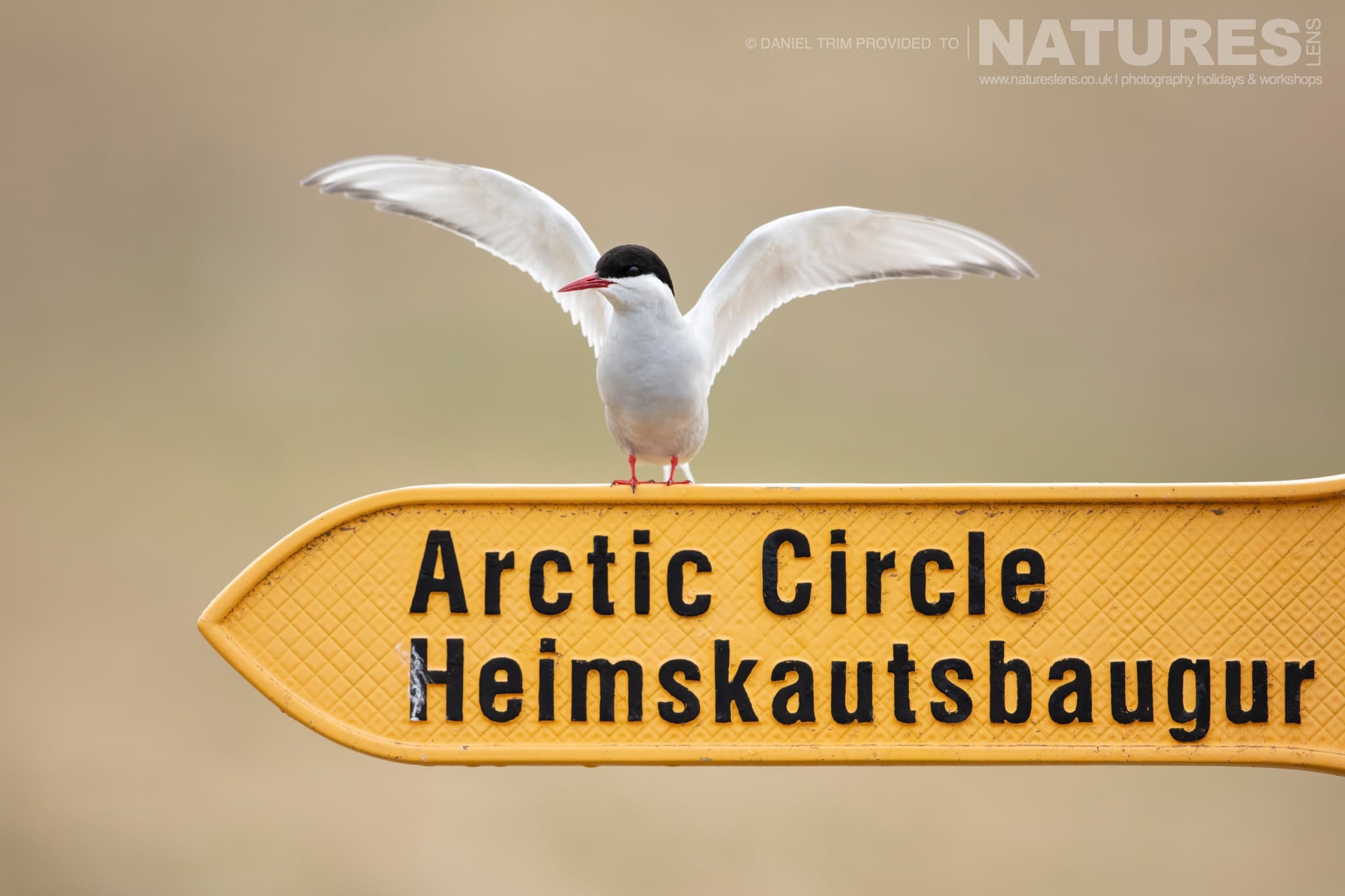
Arctic Tern, Razorbill, Common Guillemot, Black Guillemot, Black-legged Kittiwake, European Shag, Northern Fulmar & Great Skua all nest within reach of the same island, giving you a genuinely wide range of seabird subjects in a single week.
Arctic Terns in particular are worth treating with respect & a longer lens — they nest close to the paths & will readily dive at anyone who strays too near, which makes for dramatic flight photography if you’re patient & keep a sensible distance from the colony itself.
Shoreline Waders & Arctic Specialities
Purple Sandpiper, Dunlin, Ruddy Turnstone, Common Redshank, Red-necked Phalarope, Common Snipe & Rock Ptarmigan all work the island’s shoreline & tundra edge, alongside Snow Bunting & Northern Wheatear on the higher ground.
These species reward a slower, more deliberate pace than the seabird cliffs — working the tideline at low tide, or the tundra edge away from the main colonies, often turns up waders that would otherwise be missed entirely in favour of the more obvious puffin & tern activity.
A Small Island, A Big Portfolio
What surprises most first-time visitors to Grímsey is just how much variety comes out of so small a landmass. Within a single day it is realistic to work puffins returning to burrows at the clifftop, Arctic Terns diving in defence of their nests along the path, waders working the tideline at low tide, & Rock Ptarmigan on the higher, rockier ground away from the coast — four genuinely different photographic disciplines without ever needing a vehicle or a boat. That density, combined with the almost continuous daylight of the Icelandic summer, is what allows a single seven-night trip to produce a body of work that would take considerably longer to assemble on a less concentrated island.
The trip also suits photographers who prefer working alone or in a very small group over a large tour — Robin keeps numbers deliberately low, both out of respect for the nesting colonies & because the best compositions on the cliff paths often come from a single photographer finding their own angle rather than a crowd working the same spot.
Bring a full range of focal lengths if you can — wide for the cliff-edge landscape context, & a longer lens for tight portraits & flight work at the colonies. A rain cover for your camera is worth packing too, since brief squally showers can blow through even on an otherwise clear day this far north.
When to Visit Iceland
Our current departure runs in late June & early July, right at the peak of the Icelandic summer breeding season. This is when puffin activity around the burrows is at its most reliable, seabird colonies are at their fullest, & the near-constant daylight this far north gives the longest possible working day of the year for photography.
Planning Your Trip to Iceland
Grímsey is reached by a short flight or a longer ferry crossing from mainland Iceland, & weather on the crossing can be unpredictable even in summer. A short flight from Akureyri onto the island itself is the most reliable way across, weather permitting — book the earliest possible transfer if you have a tight connection back to Reykjavik.
Once on the island, everything is within walking distance, so the usual safari or hide logistics of long vehicle transfers simply do not apply here.
Because the island sits directly on the Arctic Circle, summer daylight is near-continuous, with only a brief twilight rather than full darkness at night. That changes the whole rhythm of the trip — rather than a fixed early start & an end at dusk, sessions are planned around weather & bird activity, & it is genuinely possible to be out photographing at hours that would be pitch dark at home. Robin adjusts the daily plan constantly around wind direction & cloud cover, since both affect the puffins’ fishing activity & the quality of light across the cliffs.
Weather on an exposed North Atlantic island can change quickly, so waterproof, windproof layers matter more here than sheer warmth — summer temperatures are mild, but wind chill off the sea can make conditions feel considerably colder on the clifftops than the air temperature alone would suggest. A midge net can also be worth packing for the calmer evening sessions.
Join Us in Iceland
Iceland rewards photographers who want a genuinely dense concentration of Arctic seabirds within a single small, easily worked island, without the long transfers or unpredictable weather windows that a bigger Icelandic itinerary can involve.
Robin’s flexible, condition-led approach to each day is what makes the most of Grímsey’s short but intense summer season.
Get in touch if you have questions about the trip, or head straight to the Iceland destination page to see current availability.
Related Reading
Plan your Iceland photography holiday
Explore our Iceland wildlife photography holidays, compare more nature photography in Europe, & meet the NaturesLens photography guides who lead our small-group trips.