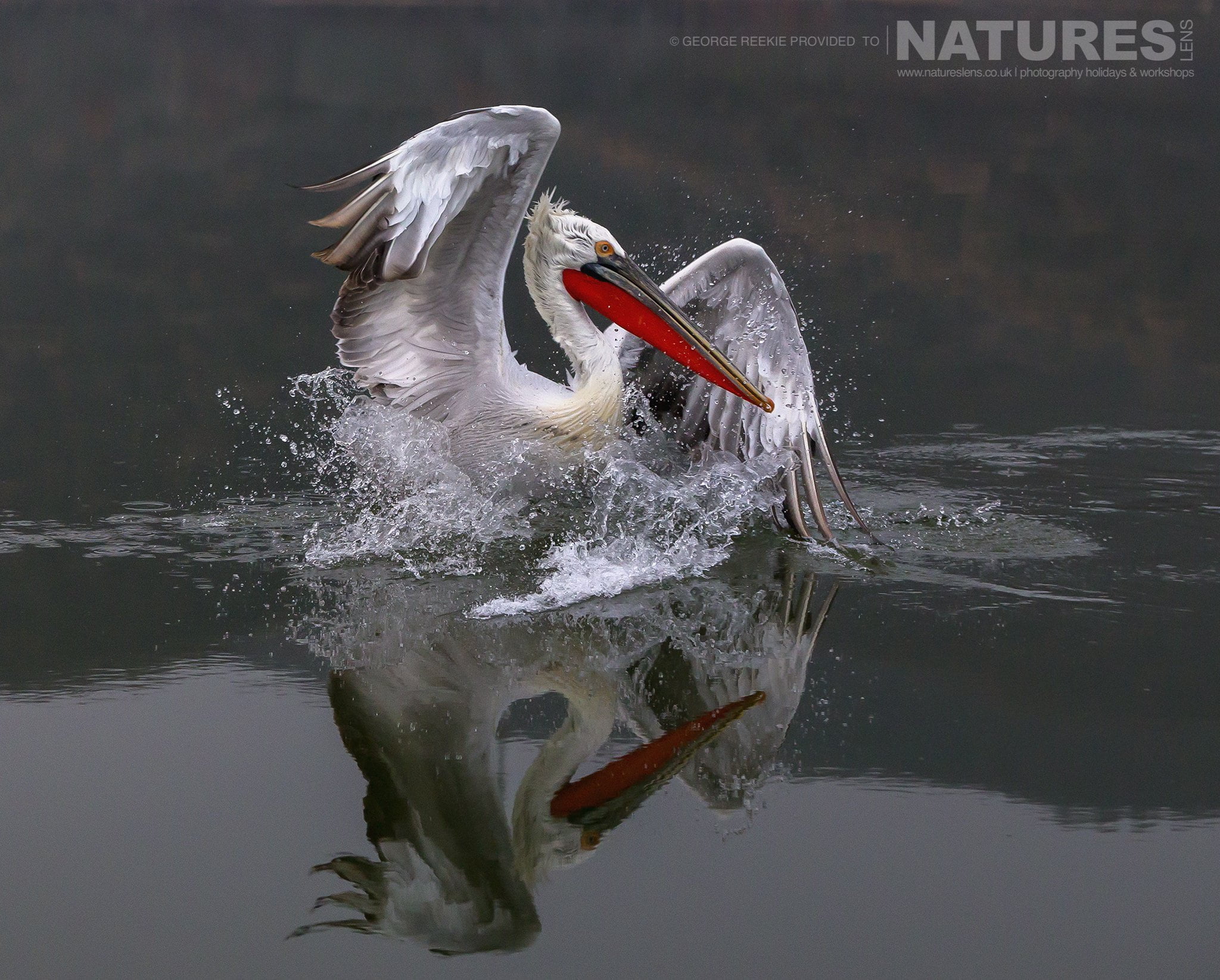

Winter wildlife photography in Hungary is defined by what winter removes. Mobility disappears, choice narrows, & wildlife stops drifting through the landscape & starts returning to the same places, along the same lines, at the same times of day.
Winter does not reward half measures. It rewards commitment, patience, & photographers who want images that look genuinely different from anything they can make at home. That narrowing is the foundation of our hide-based winter photography holiday, which runs in January or February, when frozen conditions compress activity into predictable zones. For photographers, it is a rare chance to work deliberately rather than reactively.
Why does winter reward patience at Pusztaszer?
Inland Hungary in mid-winter is unforgiving: deep frosts, frozen wetlands, long nights, & wildlife behaviour shaped by necessity. For photographers, that is the gift. Subjects concentrate around open water & food, behaviour becomes decisive, & the pictures turn graphic & cinematic, with breath hanging in cold air, ice at the waterline, & spray lit like sparks.

Those conditions cannot be recreated at any other time of year. If you have seen what the same hides offer in late spring, our guide to Bence Máté’s hides in springtime shows how different the farm looks, & our companion piece on Bence Máté’s hides in winter explains why the colder months produce such distinctive images.
Where does the trip take place?
The holiday is based near Pusztaszer, within reach of Budapest, in a landscape designed for photography. The hides are placed for distance control, background control, & dependable camera angles, & in winter we concentrate on the highest-performing ones, which are heated, powered, & reached on short walks. This is not a trip built around travelling between locations. It is built around staying still.
How is the week organised for six photographers?
Group size is capped at six, which is the number that allows spacing, silence, & consistent camera positions inside the hides. We split into two teams of three. One team sleeps in the Theatre Hide for a couple of nights, giving round-the-clock access without stepping out into the cold, while the other is based at the farm & works the remaining hides. After a few days the teams swap, so everyone experiences every key setup, though never at the same time.
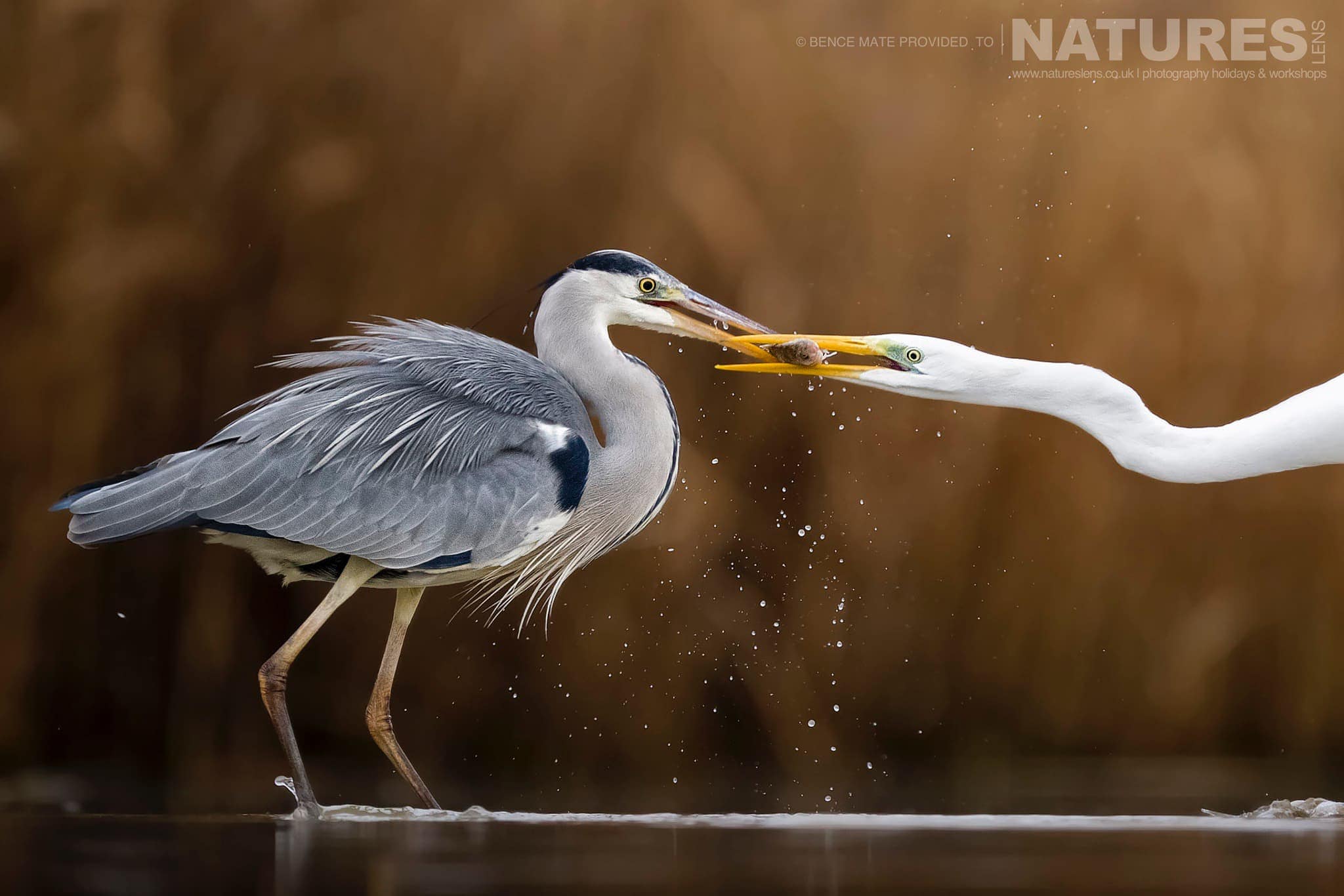
The Theatre & Cinema hides have Wi-Fi, comfortable chairs, & a discreet alarm that can wake you if activity begins, which is a real help on long winter nights. The trip is traditionally led by Pui Hang Miles, with David leading in some years, & both are experienced wildlife photographers whose aim is simple: maximise your time in the best hides, keep movement to a minimum, & help you come home with winter images that look unlike anything else in your portfolio.
What makes the Theatre Hide so rewarding?
The Theatre is central to winter wildlife photography in Hungary. Camera positions sit just above the ice & waterline, giving eye-level encounters that feel immersive without being intrusive. Daily feeding produces behaviour that is fast, close, & repeatable, so rather than waiting for one dramatic pass you can refine your timing, adjust your framing, & build sequences that feel intentional rather than accidental.
Regular subjects include Great Egret, Grey Heron, Great Cormorant, Pygmy Cormorant, White-tailed Eagle & Red Fox, with Common Buzzard & Marsh Harrier also possible. After dark, controlled lighting reshapes the scene: ice becomes texture, spray becomes structure, & breath hangs in the air. The images look theatrical, but nothing is staged.
What can you expect from the Cinema Hide?
The Cinema works on a different principle: closeness without pressure. Eurasian Otters regularly pass within metres of the glass, often lingering long enough for careful composition rather than a hurried reaction. Movement in & out of the hide is coordinated to keep things calm, & when disturbance is removed the behaviour extends naturally.
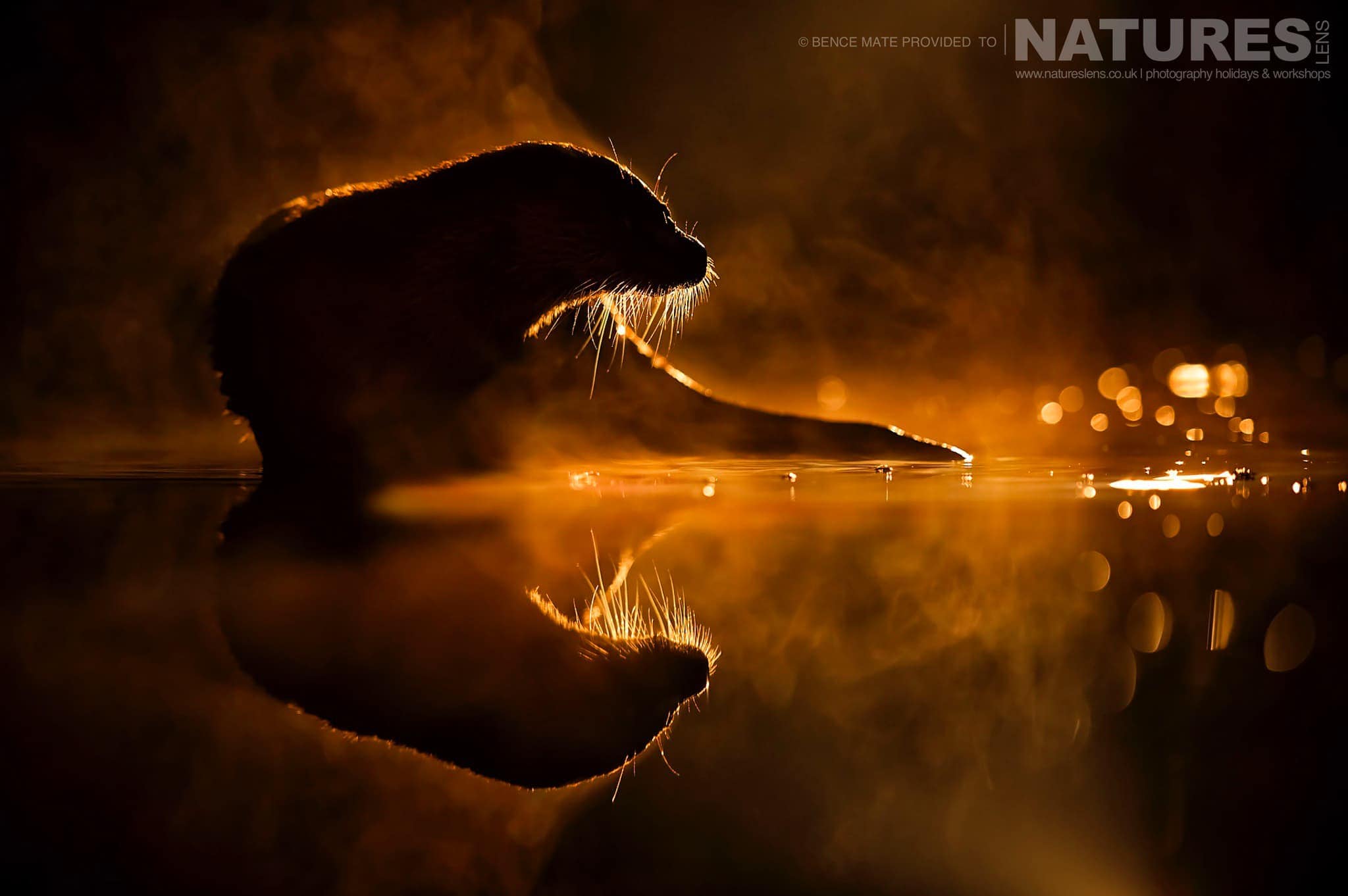
Night sessions also bring Grey Heron & Great Egret, & Great Bittern & Water Rail are possible too.
Why is the Kingfisher Hide built on repetition?
One hide is dedicated to Common Kingfisher dive photography. A specially designed LED lamp system allows very fast shutter speeds, with settings of around 1/5000sec at ISO 4000 & f/4 quoted for the hide, without relying on flash recycling. In a productive spell, repeated dives let you refine timing, splash geometry, & wing position across many attempts, so the aim becomes a coherent sequence rather than a single lucky frame, from the splash & the wing position to the fish handover.
What do the Winter Drinking Station & Hotel Hide add?
The Winter Drinking Station is an environment for backlit photography of deer & birds, & the Hotel Hide overlooks a new wetland in front of the lodge, with a backlit system aimed at fish-eaters such as herons, egrets, & otters. Together they add a quieter, more atmospheric rhythm to the week, & a different kind of light from the ice-level work at the Theatre.

How does winter shape the behaviour you photograph?
Mid-winter removes flexibility from wildlife. Frozen water limits access, food availability dictates movement, & animals commit to repeatable routines rather than exploratory foraging. For photographers, that replaces uncertainty with structure: instead of reacting to fleeting opportunity, you prepare for repetition & refine your results over time.

Visually, winter adds elements that simply do not exist outside this window, including steam, ice, muted colour, & reflected artificial light.
What about comfort in the cold?
Cold is unavoidable, but discomfort is not the objective. The hides are heated, the walks are short, & the holiday is run on a full board basis, so the structure puts sustained photography ahead of unnecessary movement. Single occupancy is included on the majority of NaturesLens trips.

Why are places so limited?
The winter window is short, the hides are in constant demand, & capacity never exceeds six photographers. Our next departure runs from 20th to 27th February 2027, & some years we can offer a second date, though many do not. If winter wildlife photography in Hungary is on your list, do not leave it too late: this is an experience that rewards decisiveness. View the Hungarian Winter Wildlife Photography Holiday or explore our wider Hungary wildlife photography holidays.
- NaturesLens holidays are structured around photographic opportunity, with every schedule decision made around light, behaviour, & access.
- Small groups ensure unhurried positions & individual guidance.
- Single occupancy is included on the majority of NaturesLens trips.