Grímsey Island sits just inside the Arctic Circle, about 40 kilometres off Iceland’s north coast. It’s small — roughly five square kilometres of grass, basalt cliff & open sky — & for most of the year, its human population hovers around 60. But between late May & mid-August, the island’s Atlantic Puffin colony numbers in the tens of thousands, & the combination of accessible birds, clean backgrounds & continuous Arctic light makes it one of the strongest puffin photography locations we’ve worked.
This piece covers what you can actually expect to photograph on Grímsey, how the light works, what other species share the cliffs, & the practical details of our Puffins of Iceland trip.
Why Grímsey Works for Puffin Photography?
The colony here is well-established & the birds are habituated to people. You can work at distances of three to five metres without influencing behaviour, which means tight portraits with a 100–400mm lens are entirely realistic. The terrain helps too: the cliff-top turf where puffins nest sits at a comfortable working height, so you’re photographing at eye level rather than pointing down from a railing.
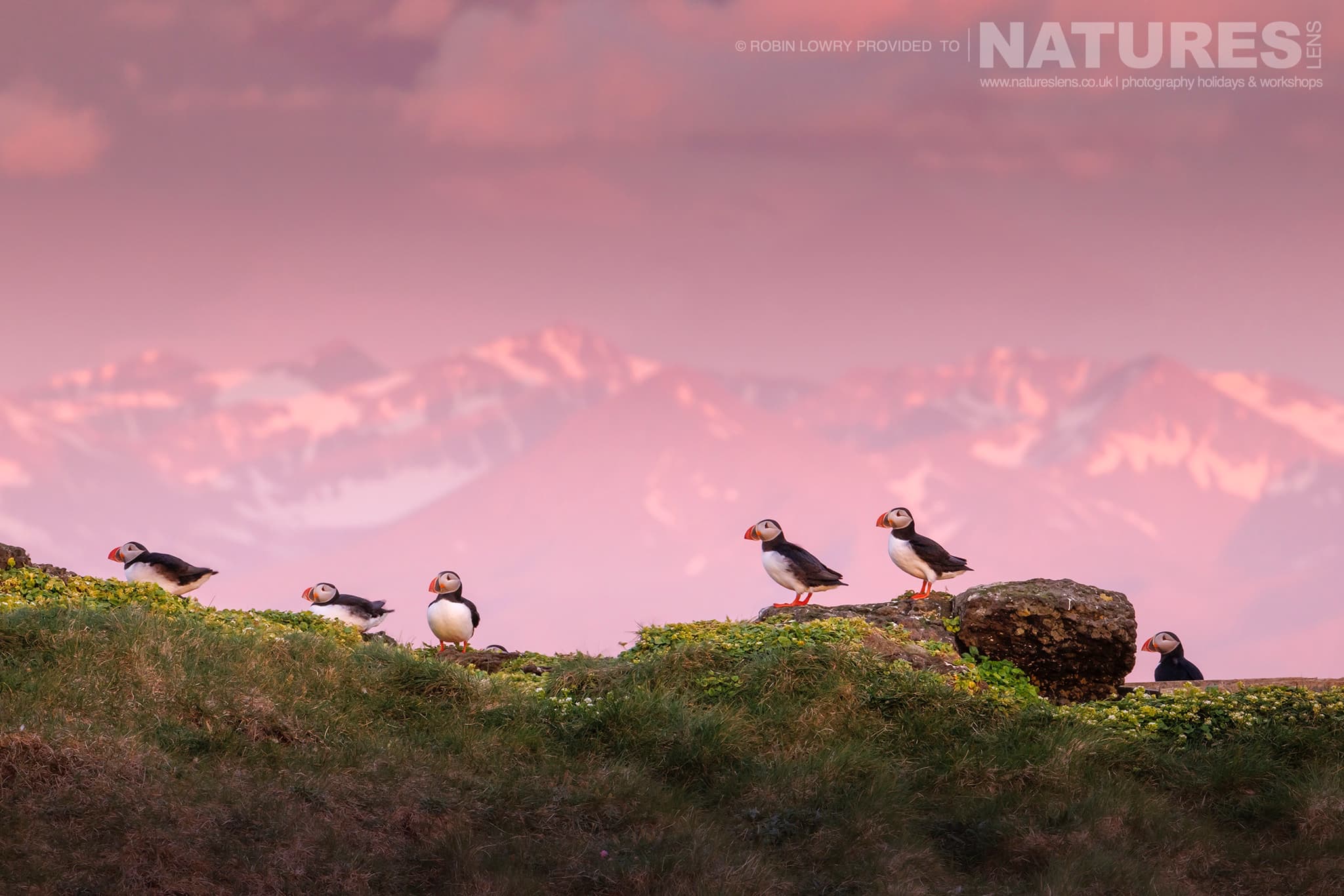
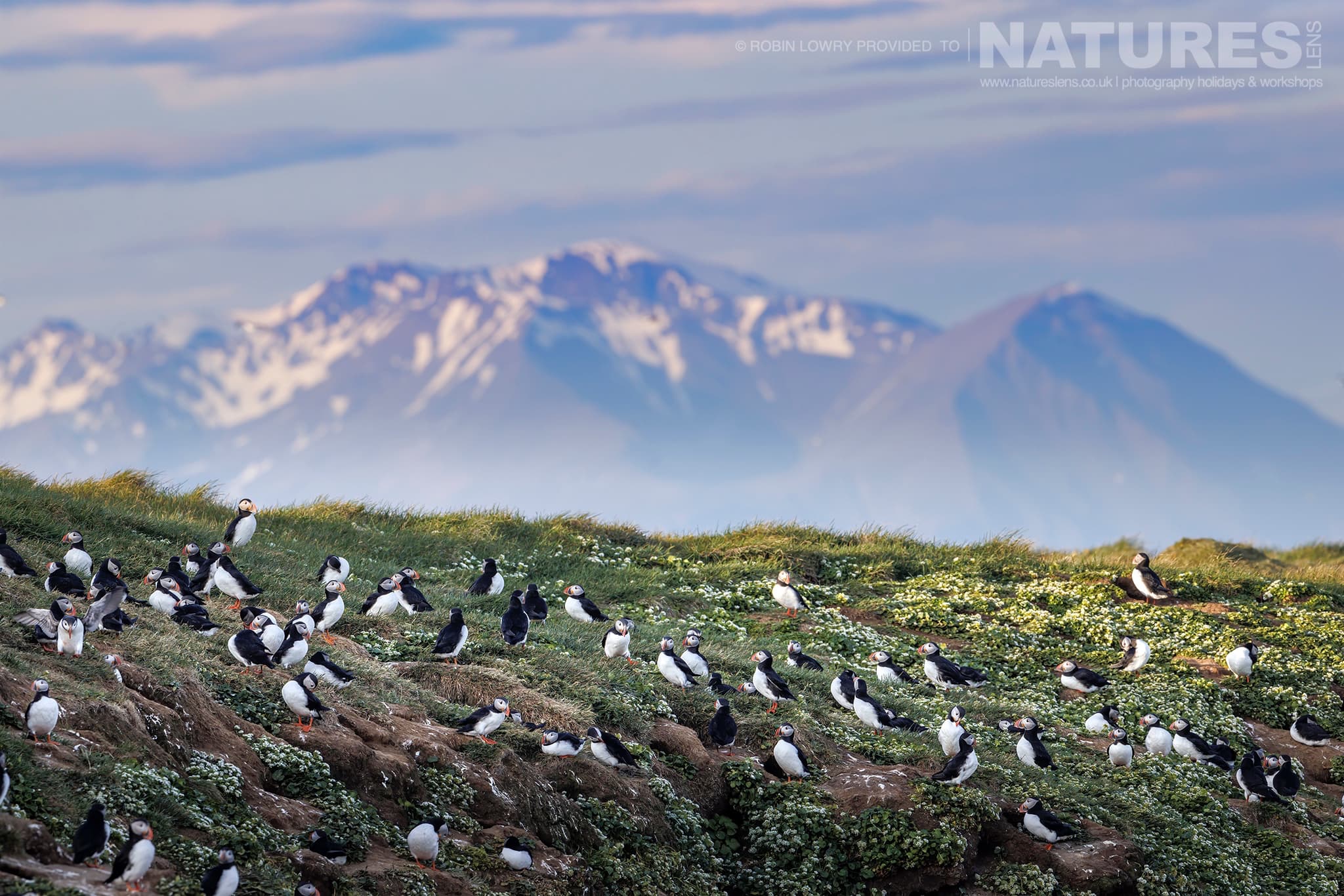
The backgrounds are what set Grímsey apart from colonies further south. Behind the birds you get open ocean, distant mainland mountains & clean sky — none of the man-made clutter that can spoil an otherwise strong frame. On clear evenings, the mainland peaks across the Eyjafjorður channel catch warm light & provide a layered backdrop that’s hard to replicate anywhere else in the puffin’s range.

Because the puffins tolerate close approach, you spend less time managing distance & more time reading behaviour — waiting for a bill-clack, a wing-stretch or a sand-eel delivery. That’s where the strong portfolio images come from.
What Is The Midnight Sun & What It Means for Your Photography?
From late June into early July, the sun doesn’t set on Grímsey. In practical terms, this gives you golden-hour quality light for several hours either side of midnight — low-angle warmth that wraps around the birds & picks out feather detail. The puffins remain active throughout, so you’re not choosing between good light & good behaviour; you get both.
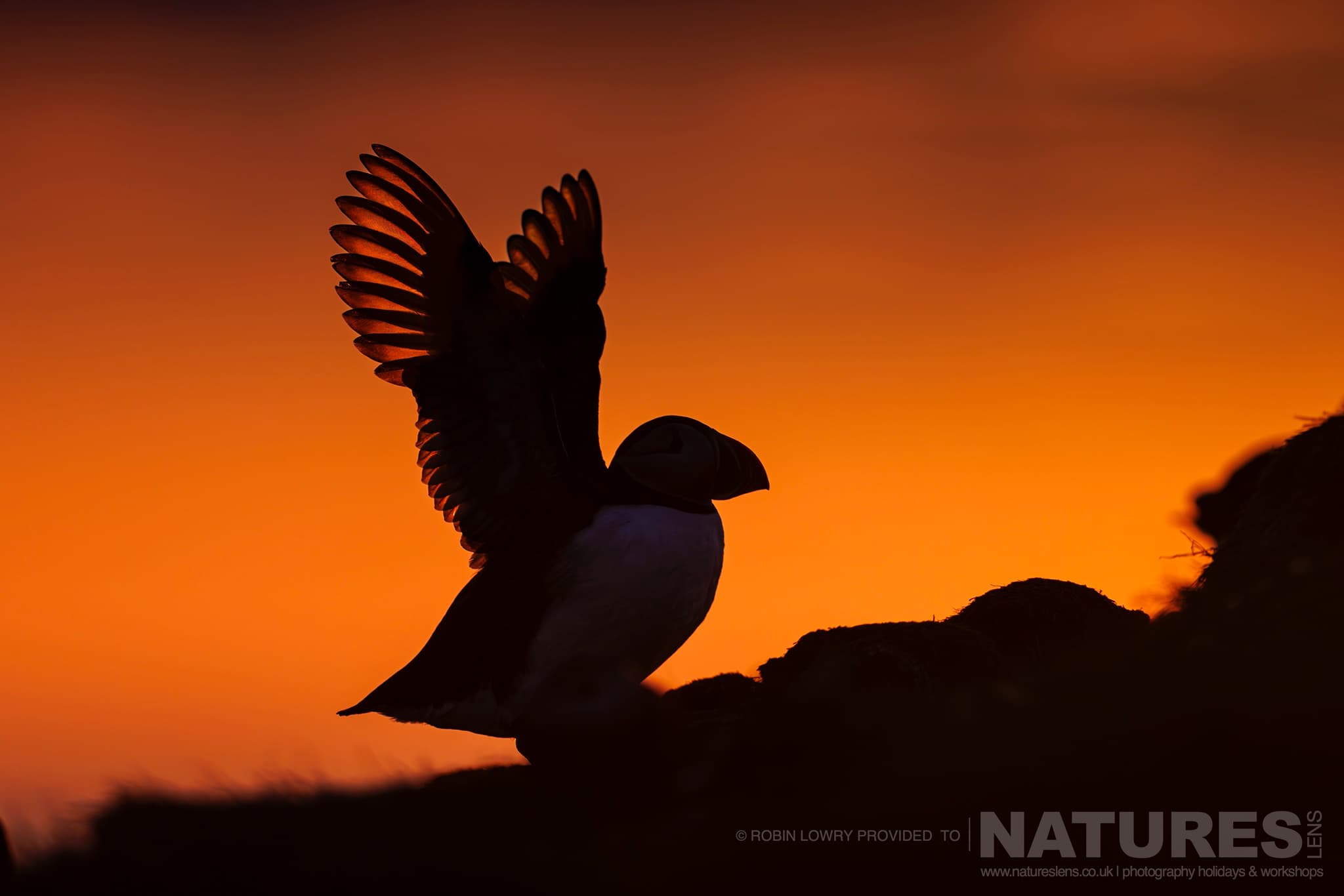
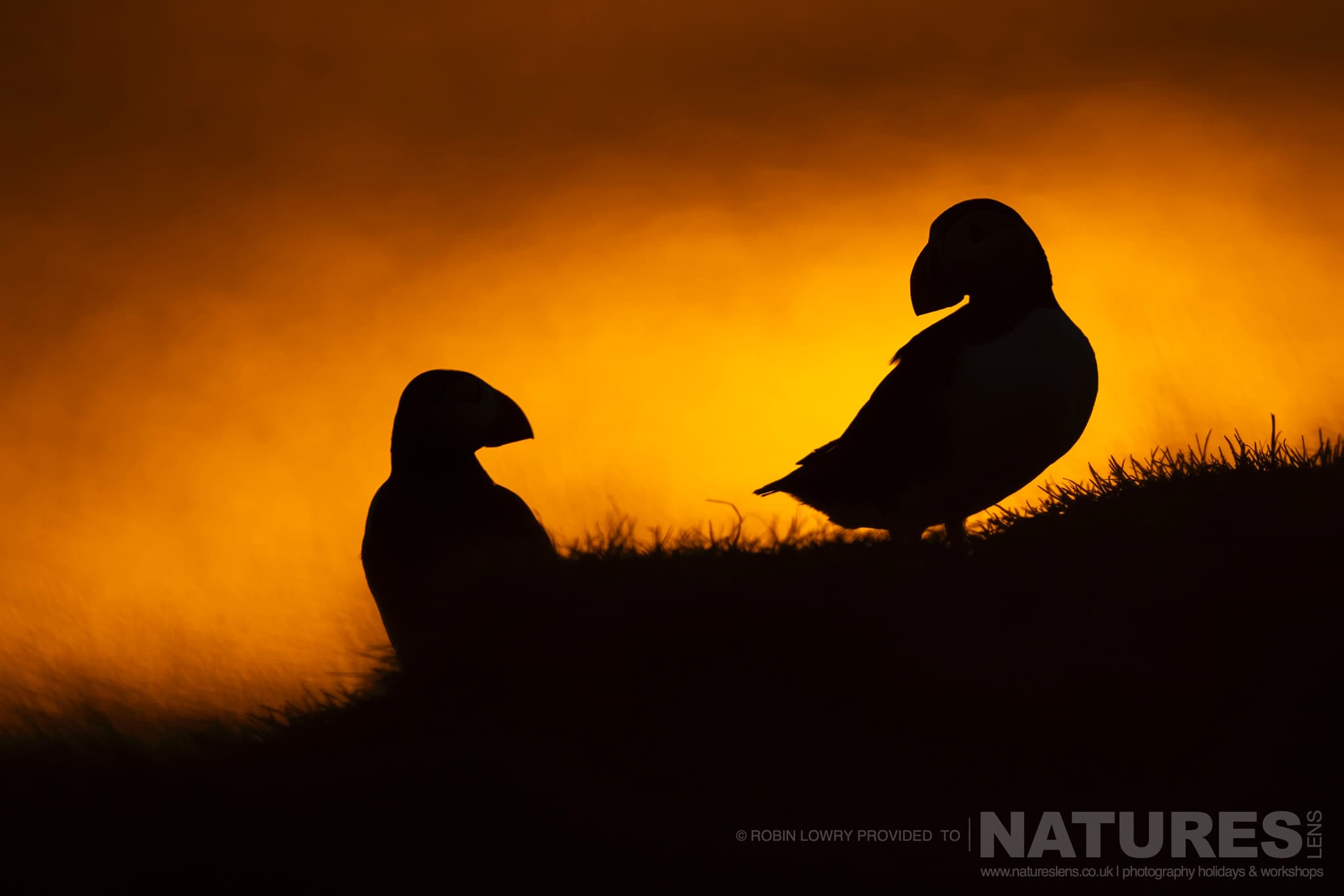
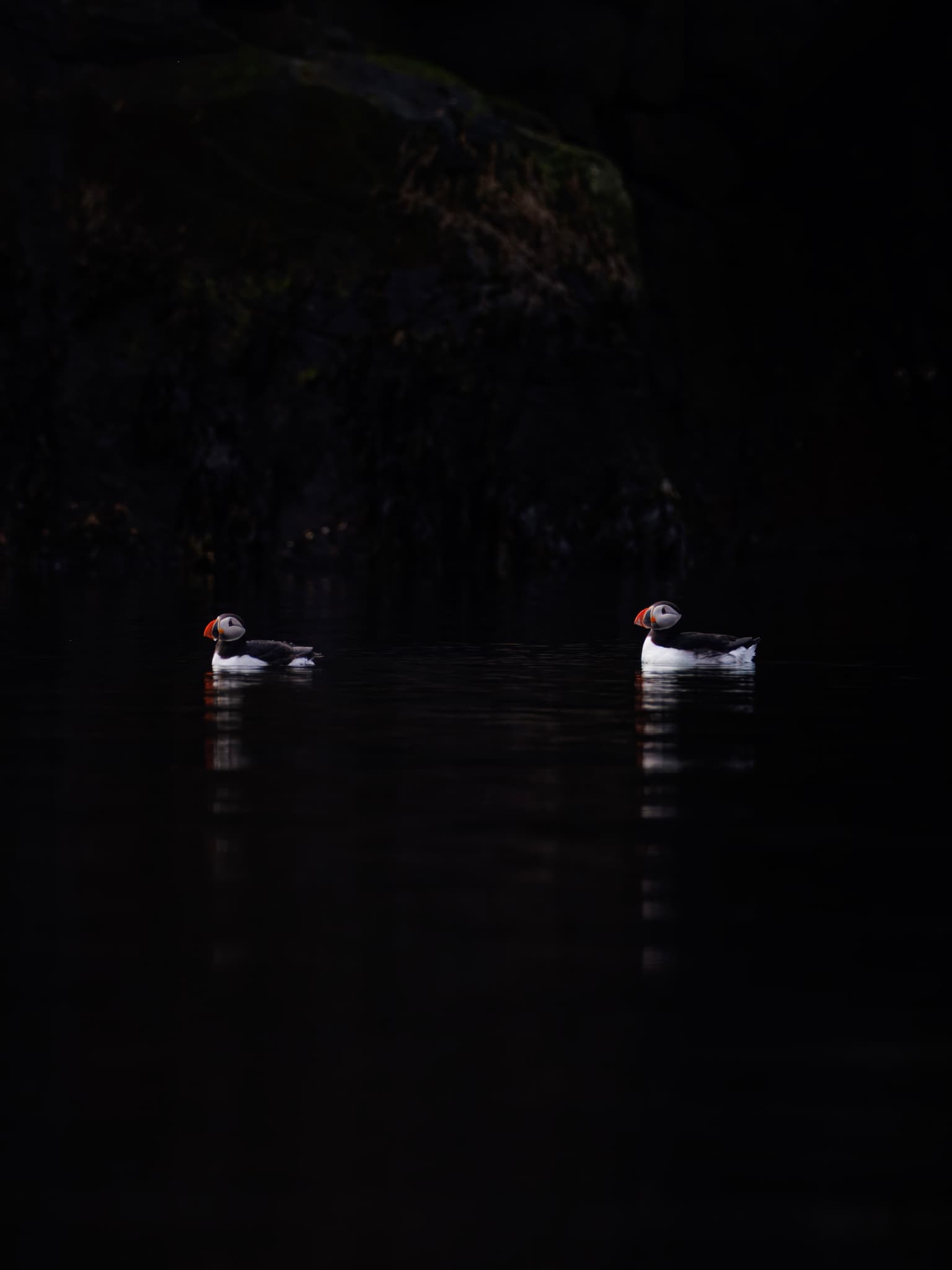
This extended golden period is ideal for silhouette work against the pink & amber sky, for backlit portraits where the bird’s outline glows, & for wider environmental shots that place the colony in the landscape. It also means you can afford to be patient. If a puffin lands in a slightly wrong position, you simply wait — the light isn’t racing away from you.
What You’ll Photograph – Behaviour & Variety?
Puffin photography on Grímsey isn’t just about getting a sharp portrait — though the conditions here make that straightforward. The real value is the range of behaviour you can document over a week.
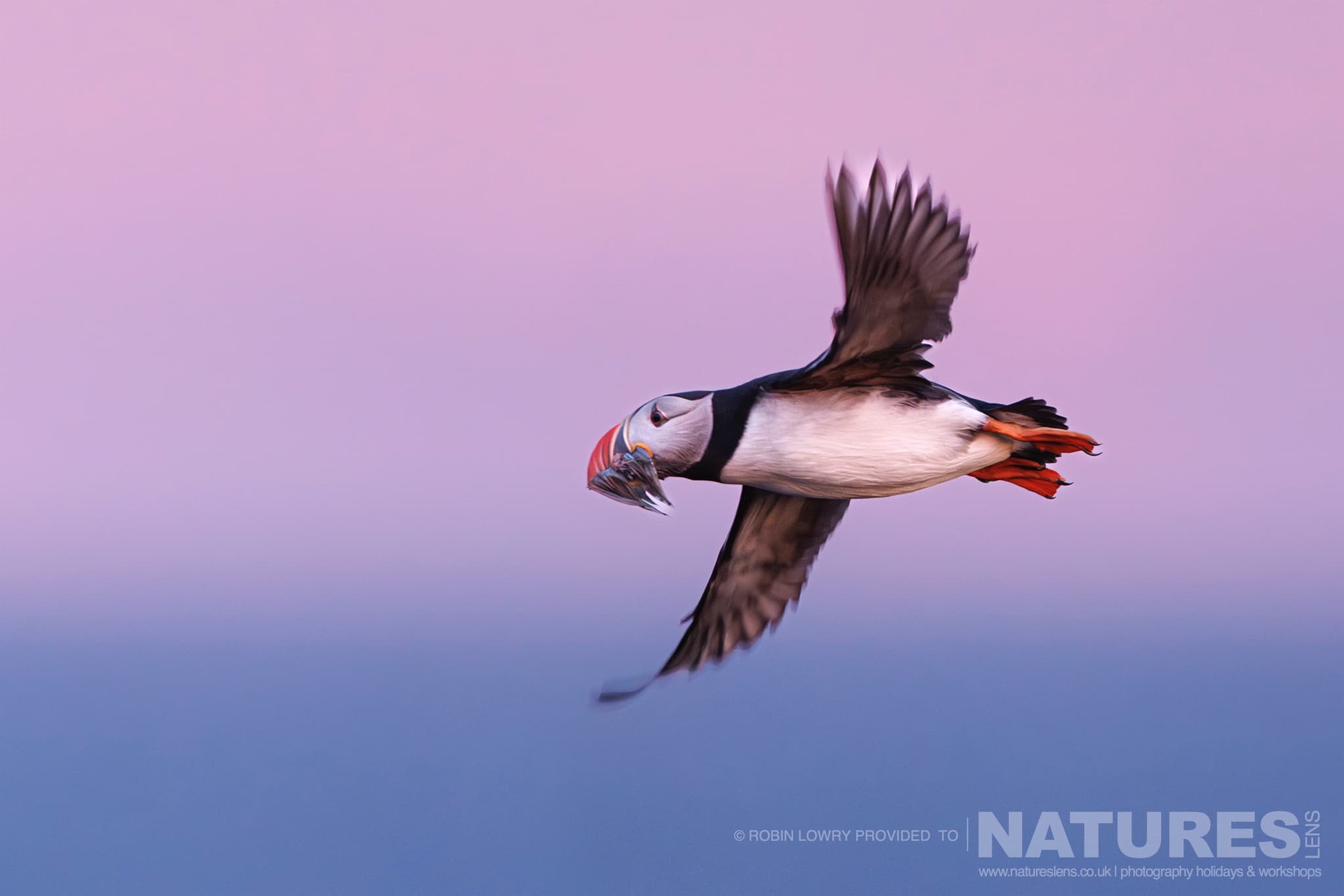
Close-up portraits are the obvious starting point. The birds’ colourful bills & expressive faces reward a tight crop, & the habituated colony means you can fill the frame without a hide. Flight photography is equally rewarding: puffins returning from fishing runs with beaks packed with sand eels make strong action images, & the clean ocean backdrop keeps things simple.
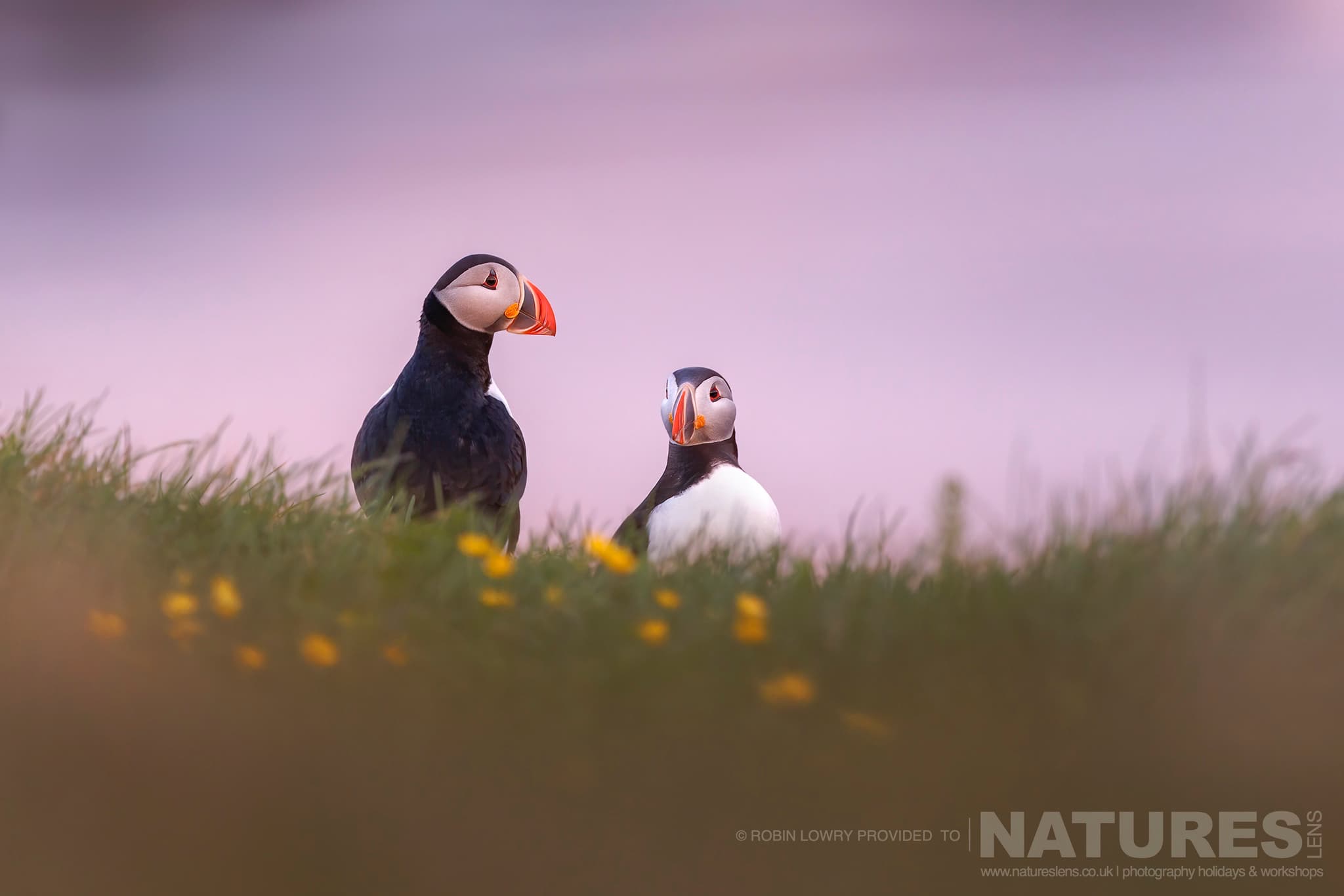
Nesting behaviour adds another layer. Pairs bill-tapping at burrow entrances, adults delivering fish to hidden chicks, squabbles over territory — these interaction shots tell a story & give your portfolio depth beyond the standard perched-puffin image.
Beyond Puffins – Arctic Terns & the Rest of the Colony
Puffins dominate the headlines, but the broader seabird community on Grímsey adds real variety to what you bring home.
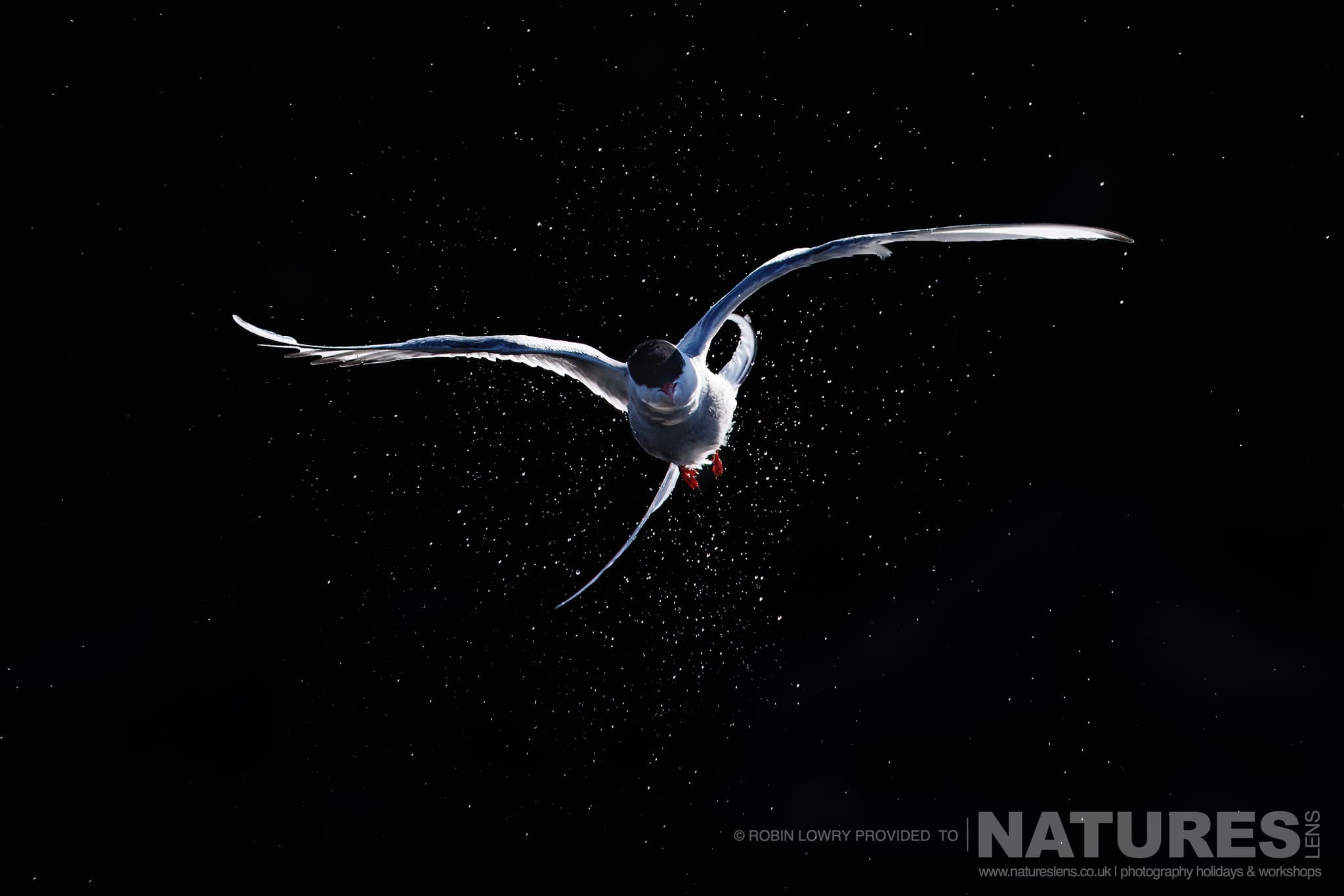
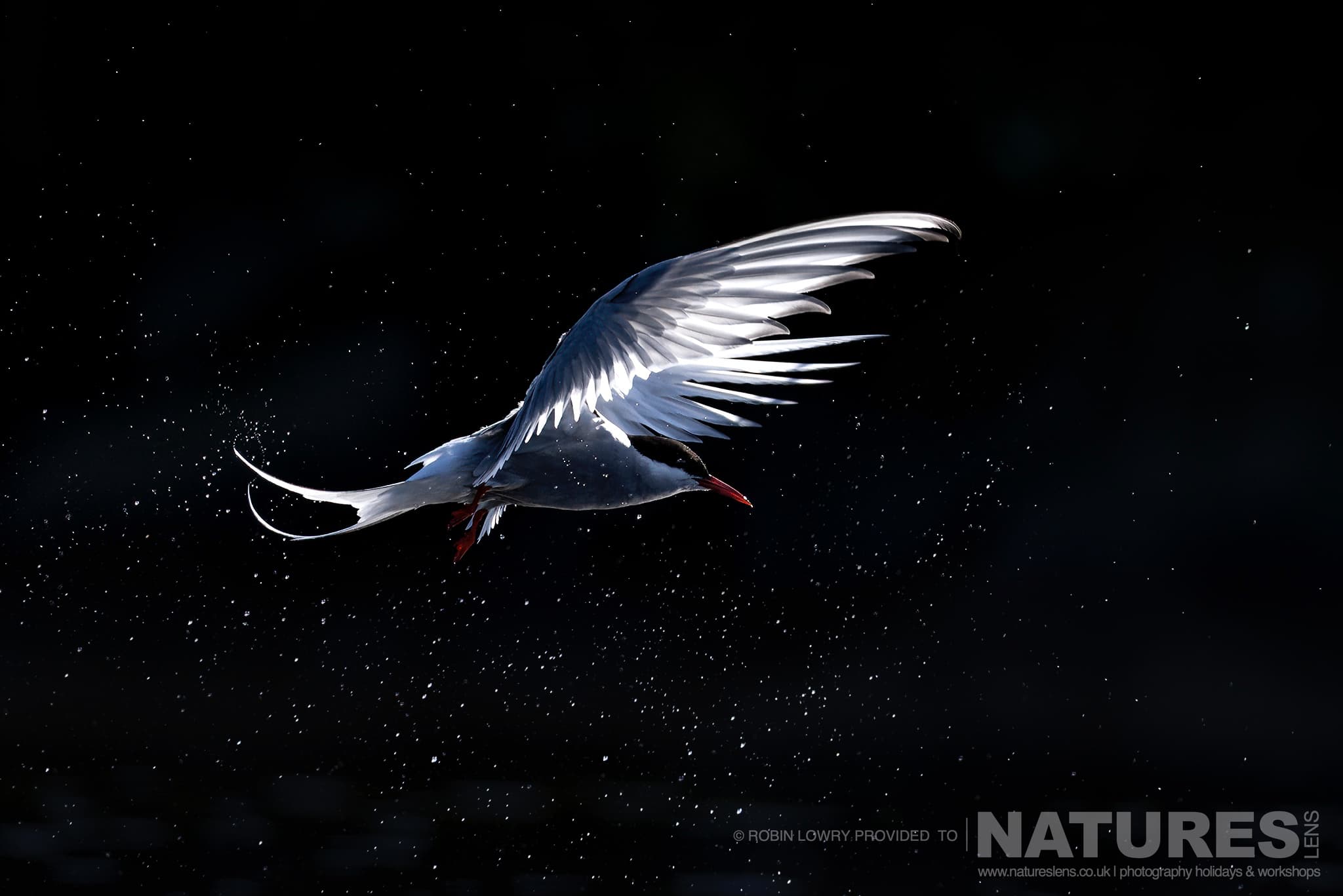
Arctic Terns (Sterna paradisaea) nest across the island’s grassy areas. They’re vocal, fast-moving & highly photogenic — their forked tails & sharp wingbeats make for dynamic flight images. Because they feed close to shore, you can photograph them hovering, diving & returning to nests within a short walk of the puffin colony.
The cliffs also support Northern Fulmars (Fulmarus glacialis), which glide effortlessly along the updrafts & make strong subjects for panning shots. Razorbills (Alca torda) share the ledges with the puffins & their crisp black-&-white plumage suits monochrome conversion well. Common Guillemots (Uria aalge) crowd the lower ledges & offer opportunities to photograph dense colony life & dramatic diving behaviour.
On the water, Common Eiders (Somateria mollissima) are a regular presence around the island’s rocky shoreline, & Kittiwakes (Rissa tridactyla) nest in noisy colonies on the cliff faces, their aerial chases providing fast-paced action opportunities.

Marine Mammals & Arctic Flora
Common Seals (Phoca vitulina) haul out on the rocks around Grímsey regularly, & they’re worth a session in their own right — wet fur catching low Arctic light photographs well. Humpback Whales & Orcas occasionally pass through the surrounding waters, though sightings aren’t guaranteed.
The island’s tundra flora offers a change of pace between seabird sessions. Arctic Poppies, Moss Campion & other hardy wildflowers bloom through June & July, & they work well as foreground elements in wide environmental shots of the colony landscape.
Our Puffins of Iceland Trip – 29th June – 6th July 2026
We run a 7-night Puffins of Iceland photography holiday on Grímsey each summer, timed to coincide with peak breeding activity & the midnight sun. The 2026 trip is led by Robin Lowry & is priced at £2,199 per person in shared accommodation.
The trip is structured around the light. We work the colony during the long golden evenings, break when the sun is high & flat, & return for the midnight sessions when the low-angle warmth is at its best. That rhythm means you’re always working in the most productive conditions rather than forcing images in harsh midday light.
Practical Notes for Grímsey Photography
Lens choice matters here. A 100–400mm zoom covers most puffin work — portraits, flight, & behaviour. A wider lens (24–70mm or similar) is worth carrying for environmental shots that place the birds in the landscape. The midnight sun sessions favour a tripod or monopod, since you’ll be working at slower shutter speeds in the warm low light.
Bring more cards & batteries than you think you’ll need. The extended daylight & the sheer density of opportunities mean you’ll fill cards faster than on a typical trip. Weather on Grímsey shifts quickly — waterproof layers & a rain cover for your kit are essential even in summer.
The colony is sensitive. Stick to established paths, keep low near nesting areas, & let the birds come to you rather than pressing forward. The habituated puffins reward patience; pushing in only moves them away & costs you the close shots that make the trip worthwhile.
What You’ll Come Home With?
A week on Grímsey typically produces a well-rounded seabird portfolio: tight puffin portraits, flight images with clean backgrounds, behavioural sequences, Arctic Tern action, wider colony-in-landscape shots, & a handful of seal or whale images if the marine mammals cooperate. The midnight sun sessions alone tend to yield some of the strongest work, simply because the light quality at that hour is so far above what you get during conventional golden hours further south.
Full details & booking for the 2026 trip are on our Puffins of Iceland page.

- NaturesLens wildlife photography holidays are structured around photographic opportunity — every schedule decision is made around light, behaviour, & access.
- Small groups of 4–8 photographers ensure unhurried positions & individual guidance.
- Single occupancy accommodation is included as standard across the majority of our trips.