Wildlife photography composition is sometimes reduced to a collection of rules: place the eye on a third, leave space for the animal to look into, avoid putting the subject in the middle & make sure nothing distracting is sticking out from behind its head. All of those ideas have their place, but after years of photographing wildlife & designing NaturesLens photography holidays around creating images rather than simply seeing species, I think good composition begins considerably earlier.
It starts with where you position yourself, the light you choose to work in, the background you notice before the animal arrives, how well you understand the behaviour in front of you & whether you are prepared to wait when everybody else thinks they already have the photograph.
A strong wildlife image is rarely just the result of pointing a long lens at an interesting animal. The best compositions normally happen when subject, environment, light, behaviour & viewpoint come together, & much of our job as photographers is putting ourselves in the position where that combination has a chance to happen.
Why Does Wildlife Photography Composition Begin Before You Press the Shutter?
For me, composition starts long before I look through the viewfinder. It begins when I arrive at a location & ask myself what the photograph could potentially look like if the wildlife cooperates.
That may sound obvious, but it is one of the biggest differences I notice between simply recording wildlife & deliberately making photographs. When an exciting animal appears, our instinct is understandably to concentrate completely on it. You find the eye, achieve focus & start photographing. The trouble is that while you are watching the subject, all sorts of things are happening around it. There may be a bright branch behind its head, a patch of sky cutting awkwardly through the frame, another photographer’s tripod in the background or an area of vegetation which will turn into an ugly highlight once rendered out of focus.
One of the most useful habits you can develop is therefore learning to look beyond the wildlife.
When we arrive at a productive location on one of our NaturesLens wildlife photography holidays, I often spend time looking at backgrounds before there is anything to photograph. If we are expecting a bird to use a particular perch, where can we position ourselves so that there is several metres of separation behind it? If an animal is moving along a predictable route, where does the habitat become cleaner? If the morning light is coming from one side, will moving ten metres change the angle enough to illuminate the face rather than the back?
Those small decisions can transform the same subject.
This becomes particularly obvious with tropical bird photography. On our Costa Rican wildlife photography tours, for example, you can have spectacular birds appearing surprisingly close to you, but tropical vegetation is visually complicated. Leaves overlap branches, bright holes through the canopy create distracting circles of light & the difference between a clean photograph & a chaotic one can be little more than moving your camera twenty centimetres to one side.
The animal has not changed. Your relationship with the background has.

The same applies at a feeding station or a carefully prepared perch. I am quite happy to adjust a perch where doing so is appropriate, because the objective is not merely to have a bird land somewhere in front of us. I want the perch to suit the size of the bird, I want it to have character without overwhelming the subject & I want the background to complement rather than fight with the plumage.
With a hummingbird, that might mean finding a slender natural stem which allows us to see the bird clearly while giving enough separation for the background to dissolve into colour. With a larger toucan or woodpecker, we can use something considerably more substantial because the visual weight of the bird can balance it.

Once you begin thinking this way, composition ceases to be something you impose after the animal arrives. You have already done much of the work.
This is one reason a photography-led itinerary behaves differently from a conventional birding itinerary. A birder may quite reasonably see a species, enjoy it & move on in search of the next one. As photographers, once we find something productive we are often better staying exactly where we are.
We might already have the species, but we do not necessarily have the photograph.
That distinction runs through almost everything we do at NaturesLens. I am far less interested in returning from a week with a huge species list & hundreds of mediocre record shots than spending meaningful time with fewer subjects & producing a much more varied portfolio of images.
Composition improves when you give yourself that time, because the first photograph you make is very rarely the only photograph available.
How Much Difference Does Viewpoint Make to a Wildlife Photograph?
Viewpoint can change almost everything about a wildlife photograph because it determines not only how we see the animal, but also what sits behind it.
I generally try to photograph at approximately eye level with the subject whenever circumstances allow it, although I would never describe that as an absolute rule. Sometimes I want to be lower than the animal; occasionally being above it works perfectly well. What matters is understanding what changing your height does to the image.
If you photograph a small mammal from normal standing height, for example, you are usually pointing the camera downwards. The ground immediately behind the animal becomes the background, which means every stone, blade of grass & patch of mud remains relatively close to the same plane of focus.
Get yourself lower & the geometry changes dramatically.
You are now photographing across the ground rather than into it. The background may suddenly be ten, twenty or fifty metres away, which means the same lens at the same aperture can produce a beautifully diffused field of colour.
That is one reason those very low perspectives often look so immersive. It is not simply because being at eye level creates a sense of connection with the animal. You have fundamentally changed the relationship between subject & background.
Bird photography works the same way.
We have spent a great deal of time thinking about this when constructing hide-based photography sessions. If a hide can be positioned so that a bird lands at roughly the photographer’s eye level with distant vegetation behind it, the visual result is completely different from sitting above the same bird looking down onto grass or bare earth.
It is also something we consider on trips such as Varanger. One of the reasons I am interested in working with the backlit Mountain Hare opportunities there is that the photograph is created by much more than simply finding a hare. Position relative to the animal, the direction of the low light, snow conditions & the distance between the hare & its background determine whether you have an ordinary documentary image or something far more atmospheric.
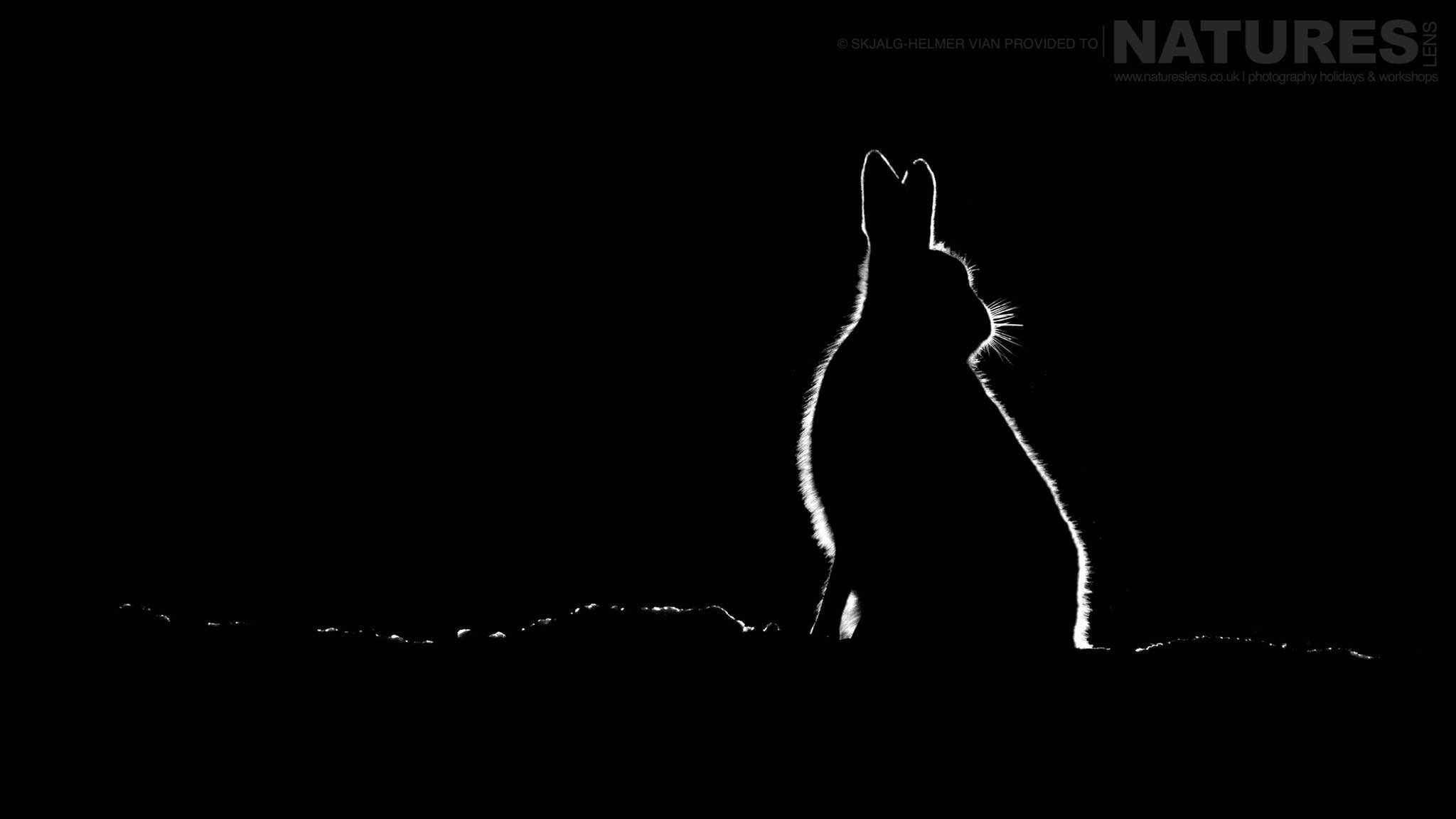
Sometimes the difference is extraordinarily small.
Move sideways & a dark patch might fall directly behind the animal’s head, giving definition to pale fur. Drop slightly lower & a ridge may disappear completely from the background. Raise yourself a few centimetres & the animal’s feet might become visible rather than disappearing into foreground vegetation.
You begin to realise that composition often involves solving several small spatial problems at once.
Modern camera equipment makes some of this considerably easier than it used to be. Articulating screens mean we can put cameras virtually on the ground without necessarily having to lie behind them, something I appreciate rather more after having both knees replaced. Longer lightweight lenses also allow us to move & experiment with position without the physical limitations imposed by some of the enormous super-telephotos we used to carry everywhere.
But the principle has not changed.
You have to move.
There is a temptation when using a 400mm, 500mm or 600mm lens to treat focal length as the solution to composition. If the animal looks too small, zoom in or use a longer lens. Yet focal length only changes framing. Moving your physical position alters the relationship between everything in the photograph.
I would much rather walk a few metres sideways to find a clean background than rely on an expensive lens to blur away a poor one.
This also explains why we sometimes remain in positions which appear initially less productive. If I know a particular angle has the best background & the right light, I am quite prepared to wait for the animal to move into it rather than continually chasing whatever is closest.
The wildlife ultimately decides whether it will cooperate, of course, but our job is to recognise the strongest stage on which that behaviour could happen.
How Should Light Influence the Way You Compose Wildlife Photographs?
Light does far more than determine exposure. It shapes the photograph, directs the viewer’s attention & can completely change which composition works.
Wildlife photographers understandably become slightly obsessed with early mornings & late afternoons, because lower light often gives us warmth, texture & direction. There is good reason for that, but I think the more useful approach is learning to recognise what different light allows you to do rather than simply dividing conditions into good light & bad light.
A bright overcast day can be superb for wildlife photography. Clouds effectively become an enormous diffuser, reducing harsh shadows & allowing us to photograph detail in plumage, fur & skin which might disappear under stronger directional sunlight. In rainforest environments that can be particularly valuable because direct tropical sunshine filtering through gaps in a canopy can create enormous contrasts.
One moment a bird is beautifully exposed in open shade; two seconds later its head moves into a patch of sunlight several stops brighter.
That is why on our Ultimate Costa Rican Wildlife photography tour I am often perfectly happy to see cloud, particularly for forest birds, amphibians, reptiles & subjects where colour & texture matter. The conditions may not look dramatic to someone waiting for a spectacular sunrise, but photographically they can be extremely productive.
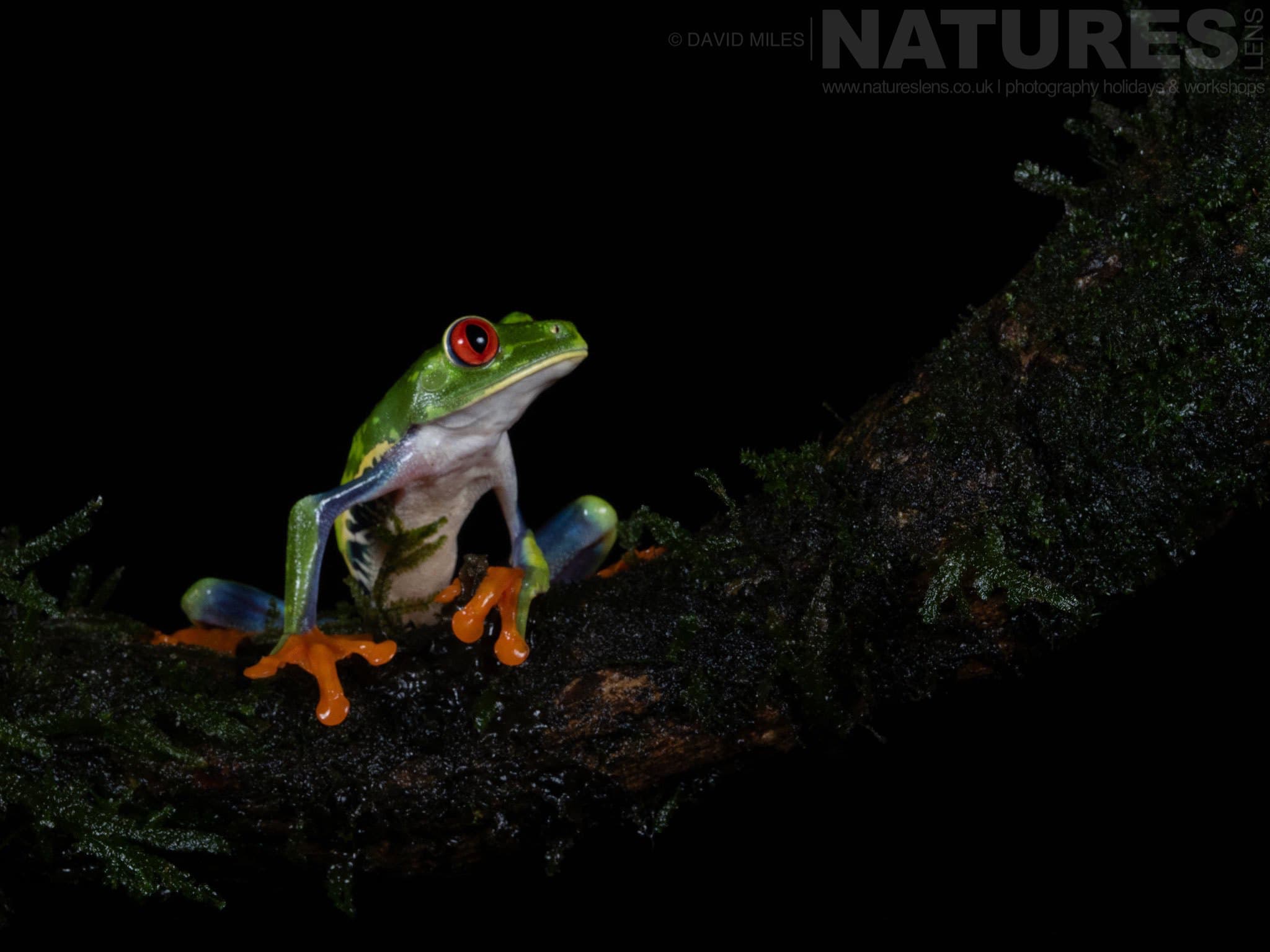
At other times, the entire composition exists because of the direction of the light.
Backlighting is an obvious example. Instead of treating the wildlife as something which needs to be evenly illuminated from the front, you begin composing around illuminated edges, translucent feathers, breath, snow, dust or vegetation.
Pelicans at Lake Kerkini are a wonderful subject through which to explore this because the same bird can produce completely different photographs depending on where it sits relative to the light. Front lighting gives detail & colour. Side lighting introduces form. Backlighting can illuminate water droplets, feather edges & spray.

The subject has not changed. Our interpretation of it has.
I find myself increasingly looking not only at the wildlife but at where the light is falling around it. Sometimes a shaft of illumination cutting through an otherwise dark environment becomes the composition. Rather than exposing everything evenly, I might deliberately allow most of the surroundings to become very dark while waiting for the animal’s face to enter that one area.
The reverse can work too. A bird against a bright sky does not automatically have to become a failed exposure. It can become a high-key image or a silhouette if the shape is sufficiently recognisable.

That is another reason I resist rigid compositional rules. The best place for the animal within the frame changes according to what the light is doing.
If illumination falls across the left side of the frame & disappears gradually into darkness, I might position the animal differently than I would against an evenly lit green background. If reflected light is creating beautiful colour on water, I may deliberately make the animal smaller because the water has become an important part of the photograph.
This is where exposure & composition begin to merge.
The histogram matters, shutter speed matters & aperture matters, but none of those settings has any artistic meaning in isolation. I am making those decisions because of the photograph I want.
Even shutter speed can become part of composition. There is no requirement that every feather on a flying bird has to be frozen. Slowing the shutter can allow wings to blur while keeping enough definition around the head, creating a very different sense of movement. Go slower again, pan with the bird & the background itself becomes a series of lines or colours.

Those images require experimentation, & experimentation requires time.
Once again we return to the same principle: if the photographic opportunity is good, do not rush away from it simply because you already have a technically correct photograph.
Should Wildlife Always Fill the Frame?
Absolutely not, & I think one of the most important stages in developing as a wildlife photographer is realising that bigger is not automatically better.
I understand the attraction. We spend considerable sums of money on long lenses precisely because wildlife often does not permit us to approach closely, & when an animal finally comes near enough to fill the frame, it is difficult not to take advantage of it.
I certainly photograph close portraits. Sometimes extraordinary feather detail, an animal’s eye or the texture of fur is the whole story, & there is nothing wrong with allowing the subject to dominate the photograph.
The mistake is assuming that every encounter should produce that image.
If you look through an entire portfolio & every animal occupies roughly seventy per cent of the frame, the individual photographs may be excellent but the collection quickly becomes repetitive.
This is something I think about constantly when we are operating a trip.
On our Birds of Brazil photography tour, for instance, I do not simply want a sequence of birds on sticks rendered against interchangeable green backgrounds. Brazil gives us forest, garden environments, flowering vegetation, darker interiors, more open areas, flight opportunities & birds of dramatically different sizes, colours & behaviours.
I want the photographs to reflect some of that.
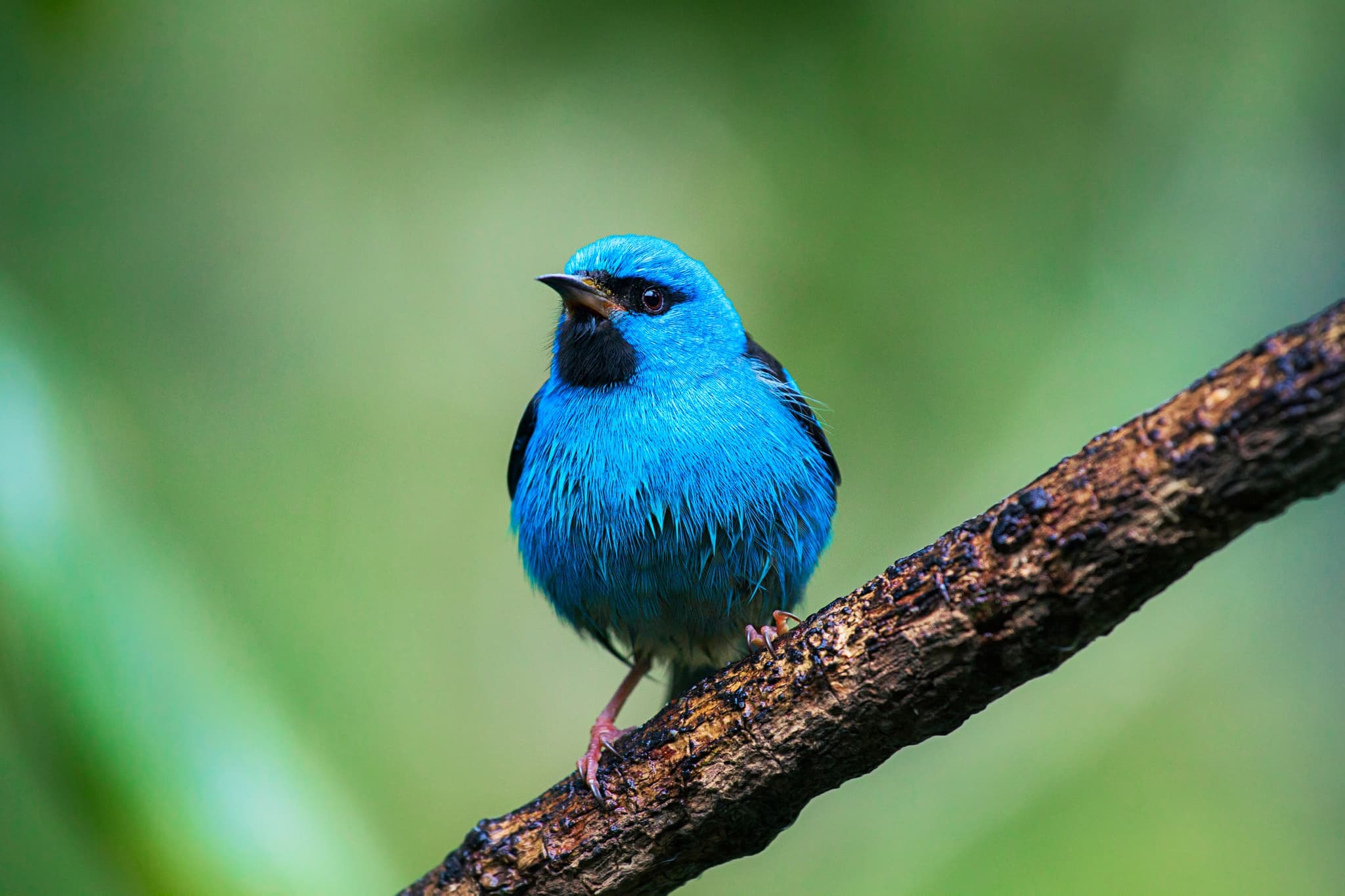
There will be occasions when the right decision is to fill the frame with a tiny hummingbird because its plumage is extraordinary. At another location I may intentionally use a wider composition so that the same type of bird becomes a small element within flowering vegetation.
Neither photograph is inherently stronger. They tell different stories.
Environmental wildlife photography becomes particularly effective when the habitat contributes something useful rather than simply filling unused space. A small animal surrounded by meaningless clutter is rarely improved by becoming smaller still. But an animal positioned within recognisable habitat can create context, scale & atmosphere.
Think of a Japanese Red-crowned Crane in snow.
A close portrait can be beautiful, particularly when you have subtle feather detail & falling snow. But allow considerably more space around the bird & suddenly the emptiness becomes part of the photograph. It communicates winter, isolation & landscape in a way that the portrait cannot.
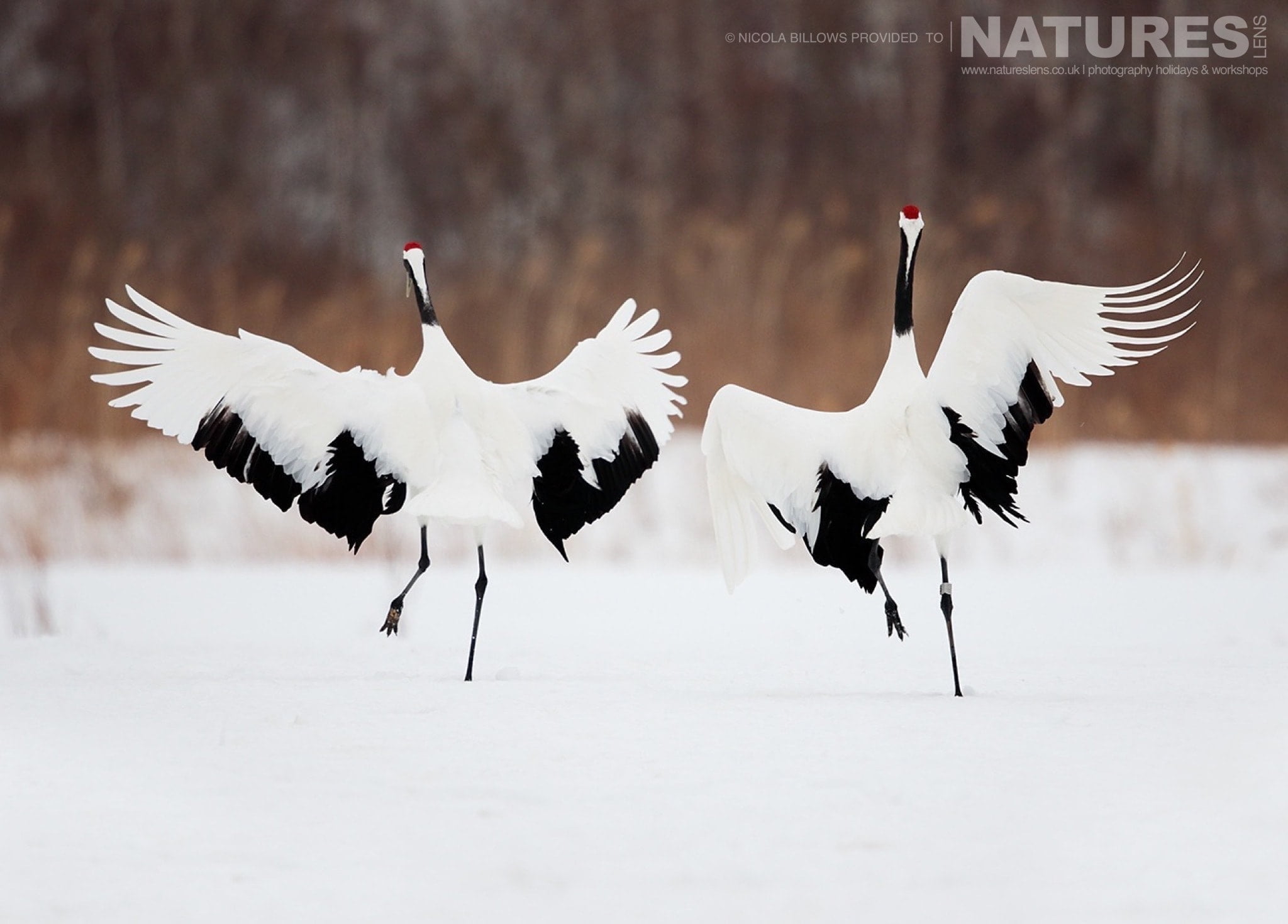
The same applies to mammals. A big cat filling the frame gives intimacy. A smaller animal beneath a dramatic African sky gives a sense of place.
What matters is deciding which photograph you are trying to make.
This is one area where zoom lenses can be enormously useful. When an animal approaches, rather than automatically continuing to photograph tighter & tighter compositions until parts of it no longer fit, zoom out occasionally & see what else becomes possible.
Even with a prime lens, you can think this way.
When I am using a long prime & the animal is relatively small in the viewfinder, my first instinct is not necessarily to wish it closer. I look around the frame. Is there a tree, an area of colour, falling snow, vegetation, mist or another environmental element capable of completing the photograph?
There is also a practical reason for leaving room.
Wildlife moves.
A bird about to take flight needs space. An animal looking towards something outside the frame generally feels more comfortable when there is somewhere for that gaze to travel. Two animals interacting may suddenly separate. A hummingbird hovering in front of a flower can move several body lengths in a fraction of a second.
If your framing is already extremely tight, you remove your ability to respond.
The conventional advice is to leave space in front of moving wildlife, & most of the time that works because it allows the composition to breathe. But I would still rather understand why I am doing it than follow it automatically.
Breaking the rule deliberately can create tension. An animal looking out of the short side of the frame can sometimes feel wonderfully uneasy.
Composition is ultimately a visual language rather than a set of regulations.
Why Are Behaviour & Patience So Important to Composition?
Because the most interesting composition is often not available when the animal first appears.
One thing years of wildlife photography has taught me is that the urge to move on is frequently our enemy.
You find the subject, photograph it sitting still, check the back of the camera, decide you have a sharp frame & start wondering what else might be nearby. Yet if that animal remains comfortable & the conditions are productive, that is often the moment when I become more interested rather than less.
The basic photograph is finished. Now we can see what happens.
Wild animals rarely remain completely static. Birds preen, stretch, call, feed, display, fly, interact with one another & react to things happening around them. Mammals change position, look towards sounds, groom, hunt, play, yawn, fight or move through the landscape.
Those behaviours create shapes, relationships & moments which simply do not exist in the first straightforward portrait.
Knowing something about the subject makes an enormous difference because behaviour becomes more predictable.
A bird repeatedly leaning forward on a perch may be preparing to leave. A hummingbird approaching a flower follows a different line from one approaching a feeder. Two animals watching one another may interact. Birds defending feeding positions often repeat exactly the same manoeuvres.
Once I recognise a pattern, I can compose for what I think is going to happen rather than what is happening now.
That changes the way I use the frame.
If I expect a bird to take off towards the right, I leave room there before it moves. If two animals are gradually approaching one another, I make certain the framing accommodates both rather than concentrating tightly on one. If an animal repeatedly returns to the same location, I can refine my position, exposure & background between visits.
This ability to anticipate is one of the great advantages of spending extended sessions with wildlife.
It is also why our trips are intentionally photography-led.
A conventional wildlife tour may regard an hour with the same species as excessive when there are other animals to find. From my perspective, if the light is improving & the behaviour is developing, leaving simply to add another species to a list makes very little sense.
Some of my favourite photographic sessions have been the ones where nothing spectacular happened immediately.
You settle in. The wildlife gradually becomes accustomed to your presence. You begin recognising patterns. You notice which perch a bird favours, where an animal enters the clearing or which direction gives the cleanest view.
Then something happens for perhaps half a second.
If you have done the work beforehand, half a second can be enough.
This is particularly apparent with action. Capturing a bird in flight is not simply a matter of setting a high frame rate & hoping one exposure works. The background still matters. Wing position matters. Head angle matters. Light matters. Separation between multiple birds matters.
Modern cameras allow us to make astonishing numbers of photographs very quickly, but frame rate cannot create composition on its own.
I use burst shooting when behaviour warrants it, particularly where expressions, wing positions or interactions change rapidly, but I still want to put the subject into the right piece of space before pressing the shutter.
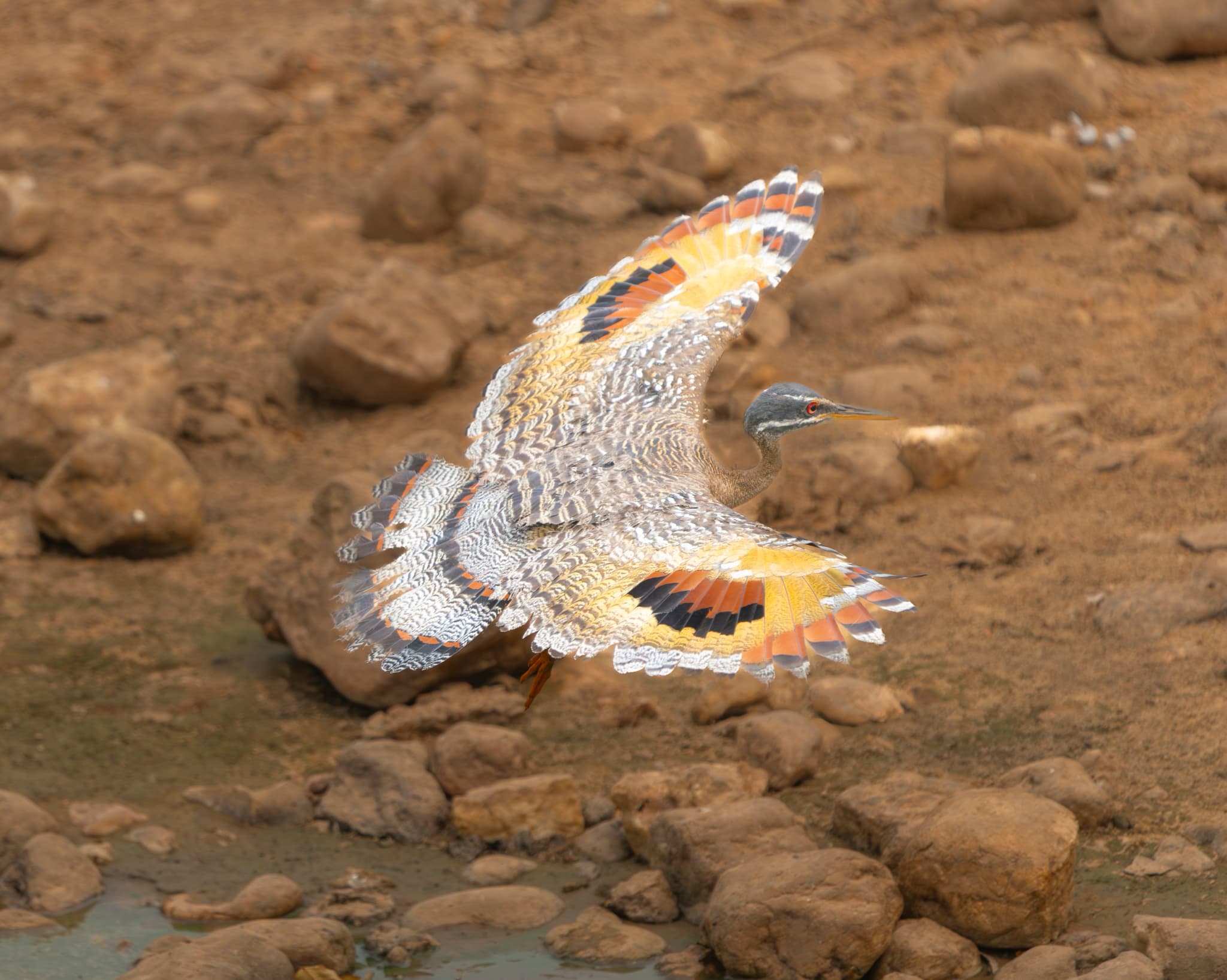
Otherwise I merely return home with several thousand poorly composed photographs instead of one.
There is a related temptation to spend too much time looking at the rear screen. I certainly check exposure & sharpness when necessary, particularly at the start of a session, but once everything is working I want my attention back on the wildlife.
The photograph you are reviewing has already happened.
The next one has not.
How Much Should You Rely on Cropping to Improve Wildlife Composition?
Cropping is a perfectly legitimate part of photography, but I prefer to regard it as refinement rather than rescue.
Modern high-resolution cameras give us extraordinary freedom. With bodies such as the Sony A1 II that I currently use, there is sufficient resolution to adjust framing significantly when the circumstances require it, & that is tremendously valuable for wildlife because subjects do not position themselves to match our preferred aspect ratio.
If a bird suddenly performs unexpected behaviour towards one edge of the frame, I would much rather capture it slightly loose & refine the composition later than miss the moment because I was determined to compose perfectly in camera.
Cropping also allows us to explore different proportions.
The traditional camera frame is only one rectangle. A vertical composition may suit a perched bird far better. A panoramic crop can work beautifully with an animal moving through open habitat. A square can occasionally simplify a symmetrical portrait.
I have no objection to any of that.
The danger comes when cropping becomes an excuse not to think in the field.
You cannot crop your way into a better viewpoint. You cannot remove the fact that you photographed down onto an animal when lowering yourself would have given a cleaner background. You cannot restore beautiful light that was never there, & although modern editing software is becoming increasingly clever, I would still rather avoid distracting elements physically than spend an evening attempting to remove them afterwards.
There is another issue with extreme cropping: it changes the aesthetic quality of the photograph.
If a distant bird occupies only a tiny portion of the original frame, enlarging it until it fills the image may produce enough pixels for social media or even a reasonable print, but it will not necessarily look like a photograph made at close range. Atmospheric interference, focus precision, lens resolution & the angle from which you photographed are all still present.
Sometimes the better photograph is the wider one.
This comes back to learning to recognise when the environment is useful.
Instead of thinking, “the bird is too small”, ask whether there is a composition in which its size makes sense.
I find that question liberating because it removes some of the obsession with reach which surrounds wildlife equipment. Of course focal length matters, & there are circumstances where a 500mm or 600mm lens makes an enormous difference. But better composition does not automatically emerge from owning the longest lens.
During a productive session I will often deliberately make several versions of the same opportunity: a tight portrait, a looser image showing habitat, a horizontal composition & perhaps a vertical one.
This is particularly useful when building a portfolio from one of our trips because I am thinking about the collection rather than each frame in isolation.
If I spend a week photographing birds in Brazil, wildlife in Costa Rica or winter subjects in Japan, I want the final edit to have rhythm. I want establishing images, portraits, behaviour, details, habitat, action & perhaps more experimental photographs using slower shutters or unusual light.
Composition therefore becomes a tool for creating diversity.
This is also why I encourage people not to delete too aggressively in the field. The composition which initially feels less obvious sometimes becomes more interesting when viewed away from the excitement of the encounter.
Make the technically strongest image you can in camera, certainly, but give yourself options.
Digital photography has provided us with that freedom. We might as well use it thoughtfully.
Who Benefits Most From Concentrating on Composition Rather Than Simply Finding More Wildlife?
In truth, every wildlife photographer does, but I think the change is most noticeable when you reach the point where simply obtaining a technically competent photograph no longer feels quite enough.
Modern equipment has made some aspects of wildlife photography astonishingly accessible. Autofocus systems can identify eyes through vegetation, frame rates are extraordinarily high, image stabilisation allows shutter speeds we would once have avoided & current sensors perform remarkably well at high ISO.
Those advances are enormously useful, & I am certainly not going to pretend I want to return to equipment which made the job unnecessarily difficult.
But as cameras become more capable, the things they cannot decide for us become more important.
The camera does not know that moving three metres to the left will put a beautifully shaded forest behind the animal. It does not know that the bird is probably going to display after another arrives. It cannot decide whether the mist is an inconvenience or the most important part of the photograph.
Those are photographic decisions.
This is also where travelling specifically for photography becomes valuable.
On a NaturesLens trip, we are not attempting to squeeze photography into the gaps in a conventional sightseeing itinerary. The photography is the itinerary.
If an opportunity is particularly strong, we can work it. If conditions change, we can alter what we are doing. If we discover that a location performs better in the afternoon than expected, that knowledge influences the way we operate it next time.
That process of learning from each visit is enormously important to me.
Our Birds of Brazil photography tour is a good example. We have changed the timing & structure of the 2027 trip because of what I learned from being there. The point is not to produce a geographically impressive route. It is to put photographers in front of productive subjects for sufficient time to make something of the opportunity.
The same philosophy sits behind our Costa Rican wildlife photography trips, our hide photography & the more specialised experiences we continue to develop.
Good wildlife photography needs opportunity, but once the opportunity exists it needs time.
That is particularly important for photographers who feel they have reached a plateau.
Often the answer is not another camera body or another lens. It is learning to slow down enough to see the entire frame.
Look at the background before the animal arrives. Watch where the light is going. Move your feet. Make the obvious photograph, then ask what else the situation offers. Wait for behaviour. Try a vertical frame. Pull back. Get lower. Leave more habitat. Experiment with shutter speed.
Most importantly, stop assuming that seeing the subject means the photographic opportunity has been completed.
Frequently it has only just begun.
What Ultimately Makes a Wildlife Photograph Feel Well Composed?
For me, a successful wildlife composition is one in which everything within the frame appears to belong there.
That does not necessarily mean everything has to be clean, symmetrical or conventionally beautiful. Wildlife lives in complicated environments, & there are times when tangled vegetation, falling snow, rain, dust or darkness are precisely what gives an image its character.
The important thing is that those elements contribute to the photograph rather than simply happening to be there.
That distinction becomes easier to recognise with experience.
When I started photographing wildlife, like most people, I was understandably excited simply to have the subject in front of me. A rare or spectacular animal could make almost any photograph feel successful because I remembered the experience of seeing it.
Later, you begin separating the encounter from the photograph.
That can be uncomfortable because an extraordinary wildlife experience does not automatically produce an extraordinary image. Equally, a relatively common subject in beautiful light, behaving naturally against a superb background can produce something much stronger.
That is one reason practising locally is so valuable. You do not need a Jaguar, Polar Bear or Resplendent Quetzal in front of you to learn composition. Ducks on a pond, gulls on a beach, deer in a park or birds in a garden allow you to practise positioning, autofocus, exposure & anticipation without the pressure of an encounter you may never repeat.
Then, when you do travel somewhere extraordinary, those decisions become instinctive.
Ultimately I think that is what we are trying to achieve.
I do not want to be consciously reciting compositional rules while an animal performs in front of me. I want to have spent enough time thinking about backgrounds, space, balance, light & behaviour that I recognise possibilities almost automatically.
The technical side of photography needs to become sufficiently familiar that it does not prevent us from seeing.
That is also why photography-led wildlife travel matters to me. The greatest luxury we can give a photographer is not necessarily more species or more locations. Often it is simply enough time with a genuinely productive subject to move beyond the obvious photograph.
Make the portrait.
Then look again.
Move a little lower. Watch what the light is doing. Consider the habitat. Leave some space. Wait for behaviour. Try the photograph you did not originally expect to make.
Wildlife will never cooperate completely, which is precisely why I still find this kind of photography endlessly absorbing. We cannot control the subject, the weather or what will happen next.
What we can control is where we place ourselves, what we notice & how we use the frame when everything finally comes together.
That, far more than any rule of thirds grid, is what wildlife photography composition means to me.
Composition
- Composition & Creative Intent in Wildlife Photography
- How Can You Improve Composition in Wildlife Photography?
- Composition in Wildlife Photography - From Record Shot to Portfolio Image
- Environmental Context in Wildlife Composition
- Intent in Wildlife Photography - From Reactive Shooting to Deliberate Image-Making