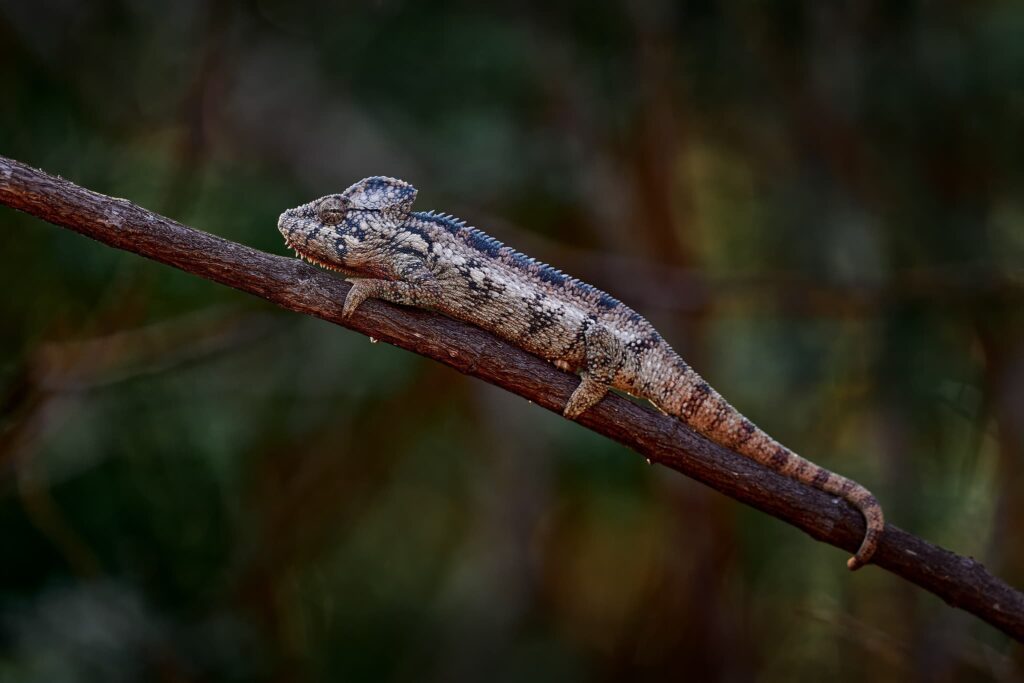
Species profile
About this species
The aye-aye is a nocturnal primate endemic to Madagascar, recognised as the world's largest nocturnal primate. It has large, sensitive ears, continuously growing rodent-like incisors, and a long, thin middle finger used to extract insect larvae from wood. The species is considered an omen of ill fortune in Malagasy culture, which has historically contributed to its threatened status.
Tropical rainforest & dry deciduous forest in Madagascar, particularly in the north-east of the island, where it forages in the forest canopy & along tree trunks for grubs & seeds.
Where to photograph
Where our trips feature this species
You can photograph Aye-aye with us in Madagascar.
These departures are part of our Africa programme.
In the field, David Miles helps guests make the most of these encounters.
Field notes
Photography notes
Night-time hours are essential as the aye-aye is strictly nocturnal. The dry season between April & October in Madagascar offers more stable conditions & increased activity around fruiting trees.
Use a fast lens with a wide aperture such as f/2.8 or wider to capture sufficient light in low-light nocturnal conditions. A high ISO setting combined with image stabilisation will help reduce motion blur when the animal moves through the canopy. Work with a red-tinted torch rather than white light to observe & illuminate the subject without startling it.
Available holidays
Trips featuring Aye-aye
The holidays below are pulled from the same species relationship, so the guide stays tied to live departures rather than becoming a static article.