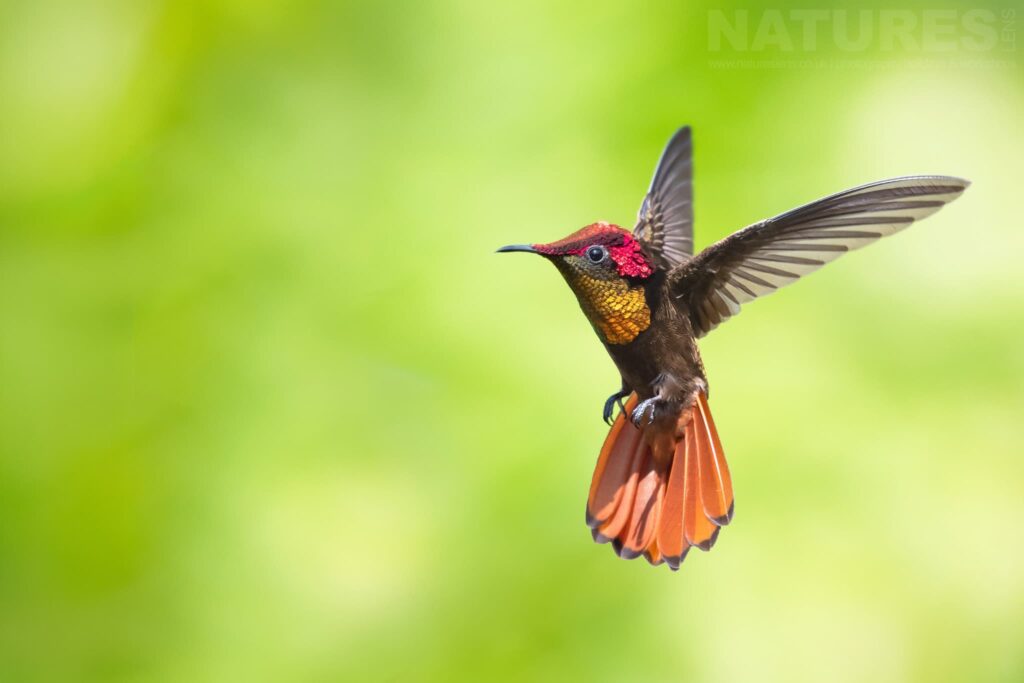
Species profile
About this species
The Bearded Bellbird is a striking cotinga found in Trinidad & northern South America, renowned for the males extraordinary loud, metallic bell-like call that can be heard from great distances. The male is predominantly white with a brown head & a distinctive beard of dangling black wattles hanging from the throat. Females are olive-green with streaked underparts, making them far more cryptic than their conspicuous mates.
The Bearded Bellbird inhabits humid tropical & submontane forests, forest edges, & tall secondary growth, typically in hilly or mountainous terrain. In Trinidad it is most reliably found in the Northern Range forests where it favours the mid-to-upper canopy of well-established forest.
Where to photograph
Where our trips feature this species
You can photograph Bearded Bellbird with us in Trinidad & Tobago.
These departures are part of our South America programme.
In the field, David Miles helps guests make the most of these encounters.
Field notes
Photography notes
Early morning from dawn until approximately 9am is optimal, as males are most actively calling & displaying. The April timing of the Tropical Birds Of Trinidad trip coincides well with the dry season when vegetation is less dense & birds are highly active & vocal.
Locate a reliable singing perch before dawn, as males return repeatedly to the same exposed branches to call, giving excellent opportunities for frame-filling portraits. Use a fast shutter speed of at least 1/1000s to freeze any head movement during calling, & a telephoto lens of 400mm or longer to maintain a respectful distance without disturbing the bird. During the April Trinidad trip the forest light is at its best in the early morning hours, so arrive at known territories at first light & allow time for the bird to settle & begin its calling display.
Available holidays
Trips featuring Bearded Bellbird
The holidays below are pulled from the same species relationship, so the guide stays tied to live departures rather than becoming a static article.