Trinidad sits just off the coast of Venezuela, close enough to the South American mainland that it shares much of the continent’s tropical birdlife within a genuinely compact, easy-to-navigate island. This trip makes the most of that accessibility, built around hummingbirds & the spectacular Scarlet Ibis roost.
For the current trip list, see our Trinidad & Tobago wildlife photography holidays; you can also explore more South America wildlife photography trips.
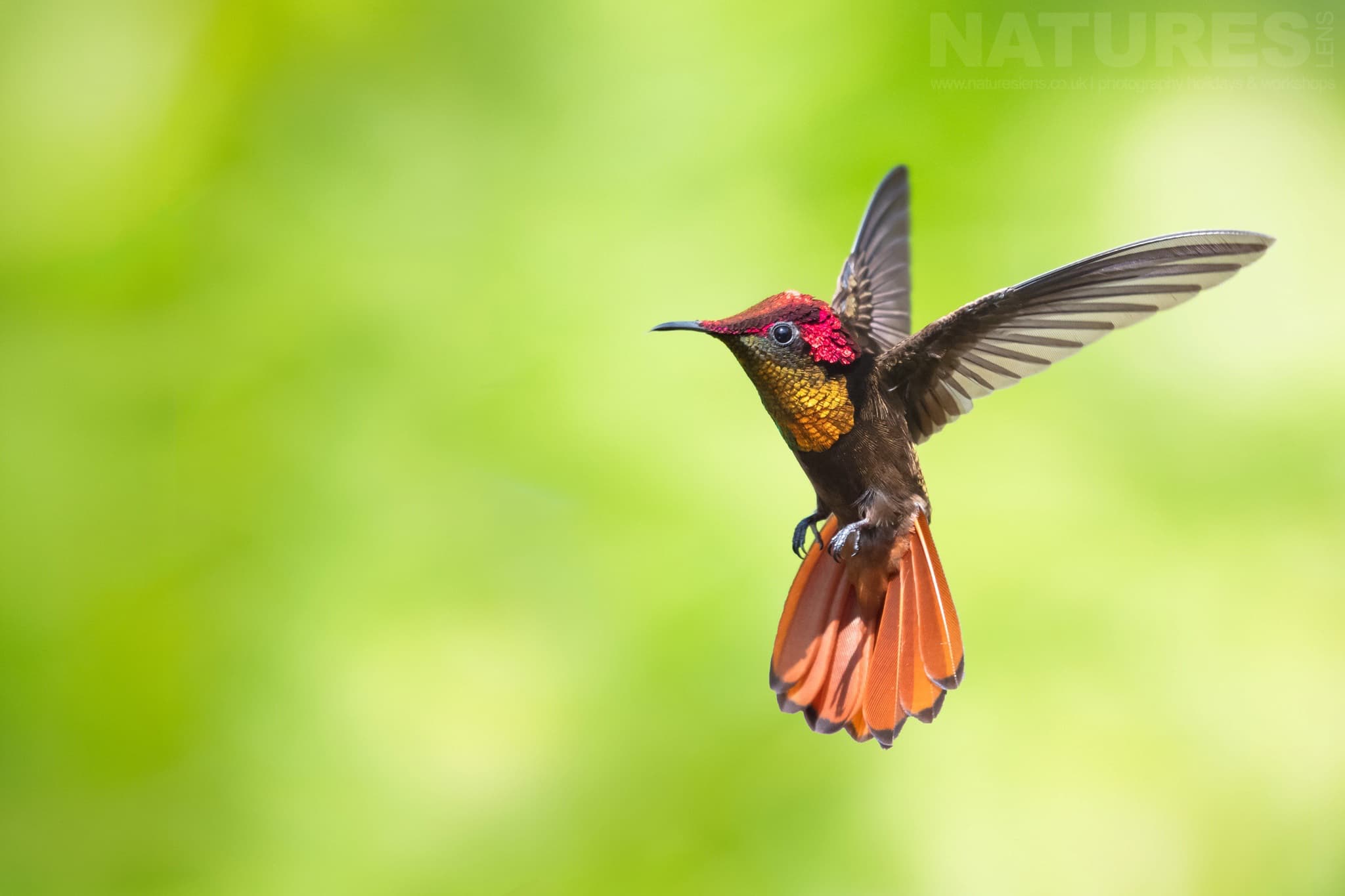
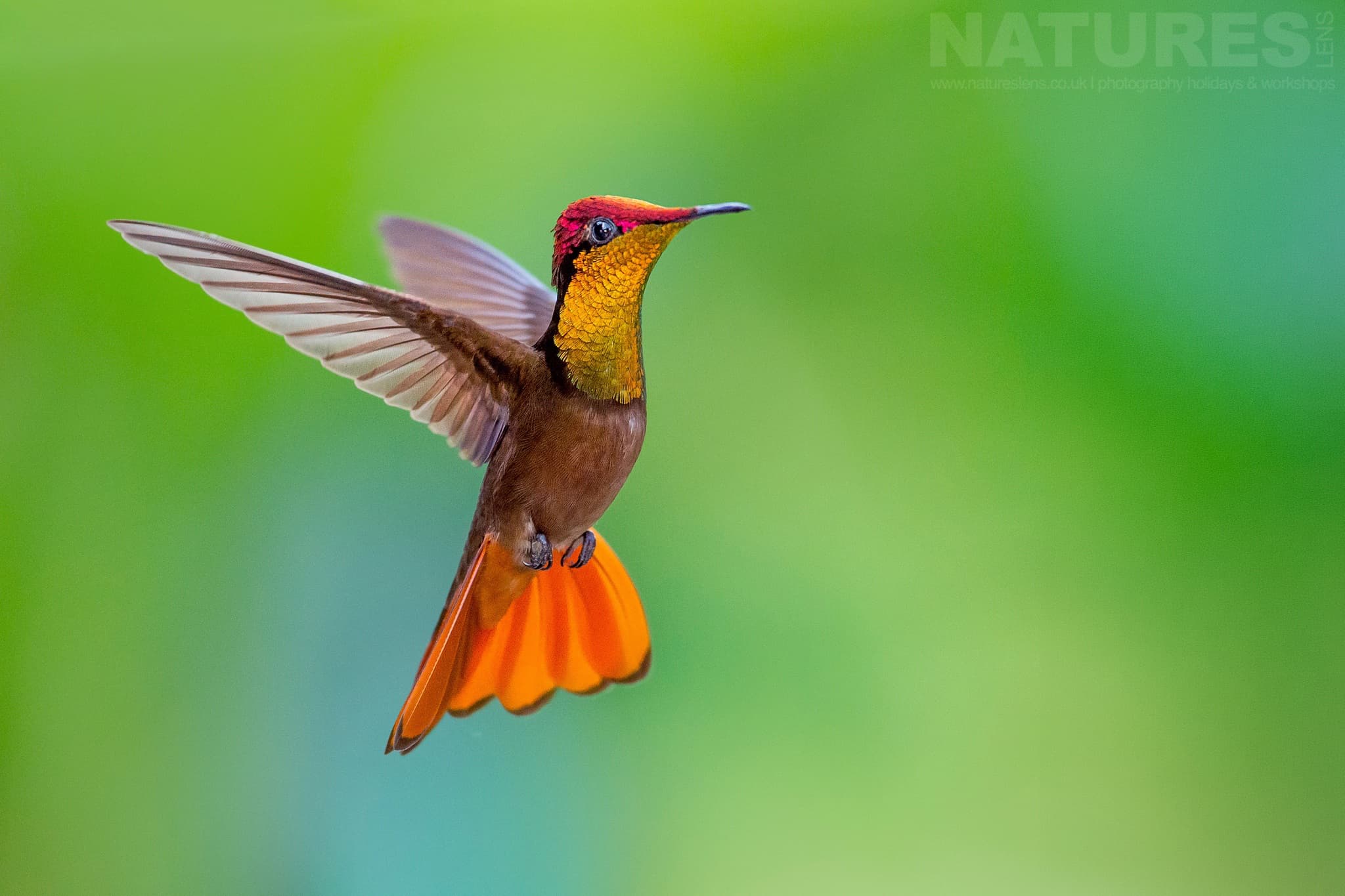
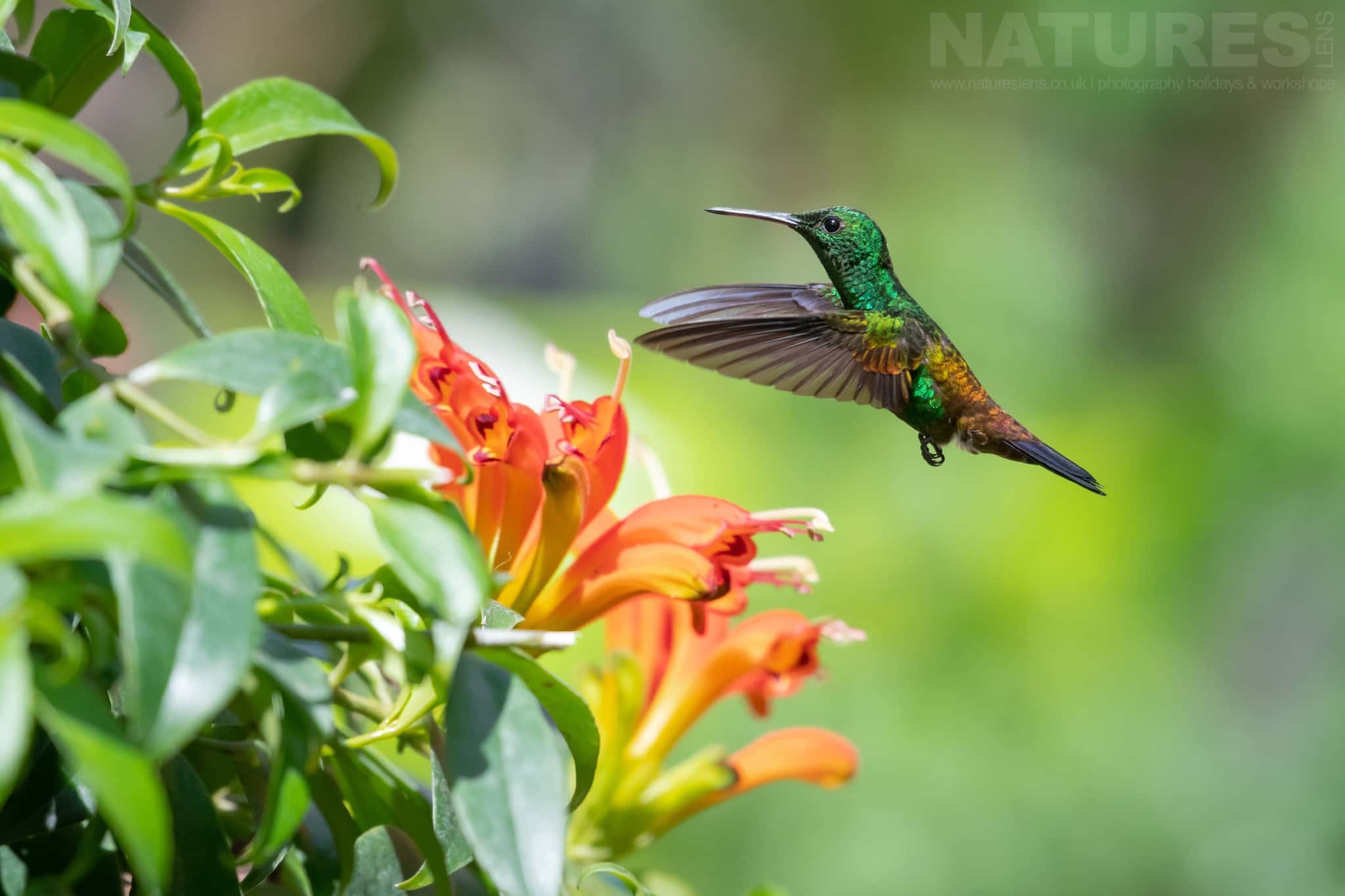
Tufted Coquette, one of the smallest birds in the world, Ruby-topaz & Copper-rumped Hummingbird, & the unforgettable sight of thousands of Scarlet Ibis coming in to roost all feature on this trip. David Miles guides it, drawing on years of working Trinidad’s lodges & wetland reserves.
What makes it work is the island’s compact scale combined with genuinely excellent lodge-based feeder setups — unlike a mainland South American trip requiring long transfers between sites, Trinidad packs an exceptional variety of birdlife into a small, easily covered area.
Our Trinidad & Tobago Photography Holiday
We run one small-group trip to Trinidad, guided by David Miles:
22nd – 29th Apr 2028 — Tropical Birds Of Trinidad
7 nights | from £5,999 | Easy — Gentle Adventures, Accessible to Most
Working lodge-based hummingbird feeders & a boat trip into the Caroni Swamp for the island’s famous Scarlet Ibis roost, with Tufted Coquette, Ruby-topaz Hummingbird, & Copper-rumped Hummingbird all realistic subjects across the week.
More info on Tropical Birds Of Trinidad
Want to know more before booking? Get in touch & we’ll talk you through the lodges, the swamp boat trip, & what a typical week on the island looks like.
What You’ll Photograph in Trinidad
Hummingbirds of the Lodge Feeders
More than a dozen hummingbird species can pass through a single feeder station over the course of a day, & learning to distinguish Tufted Coquette’s tiny silhouette from the more common Copper-rumped Hummingbird becomes second nature within the first session.
Tufted Coquette is a genuine highlight — one of the smallest birds on the planet, the male sporting a spiked orange crest & flared cheek plumes that make it instantly recognisable despite its tiny size. Ruby-topaz Hummingbird & Copper-rumped Hummingbird round out a genuinely reliable feeder setup that brings multiple species into close, repeatable range throughout each day. See more in our Hummingbirds photo archive.
Because the lodges used on this trip have run these feeder stations for years, the hummingbirds are thoroughly habituated, allowing genuinely close working distances without disturbance.


Scarlet Ibis at Caroni Swamp
The birds arrive in stages rather than all at once, building steadily from a scattering of early arrivals to a genuinely overwhelming mass of colour against the darkening mangrove canopy by the time the light finally fades.
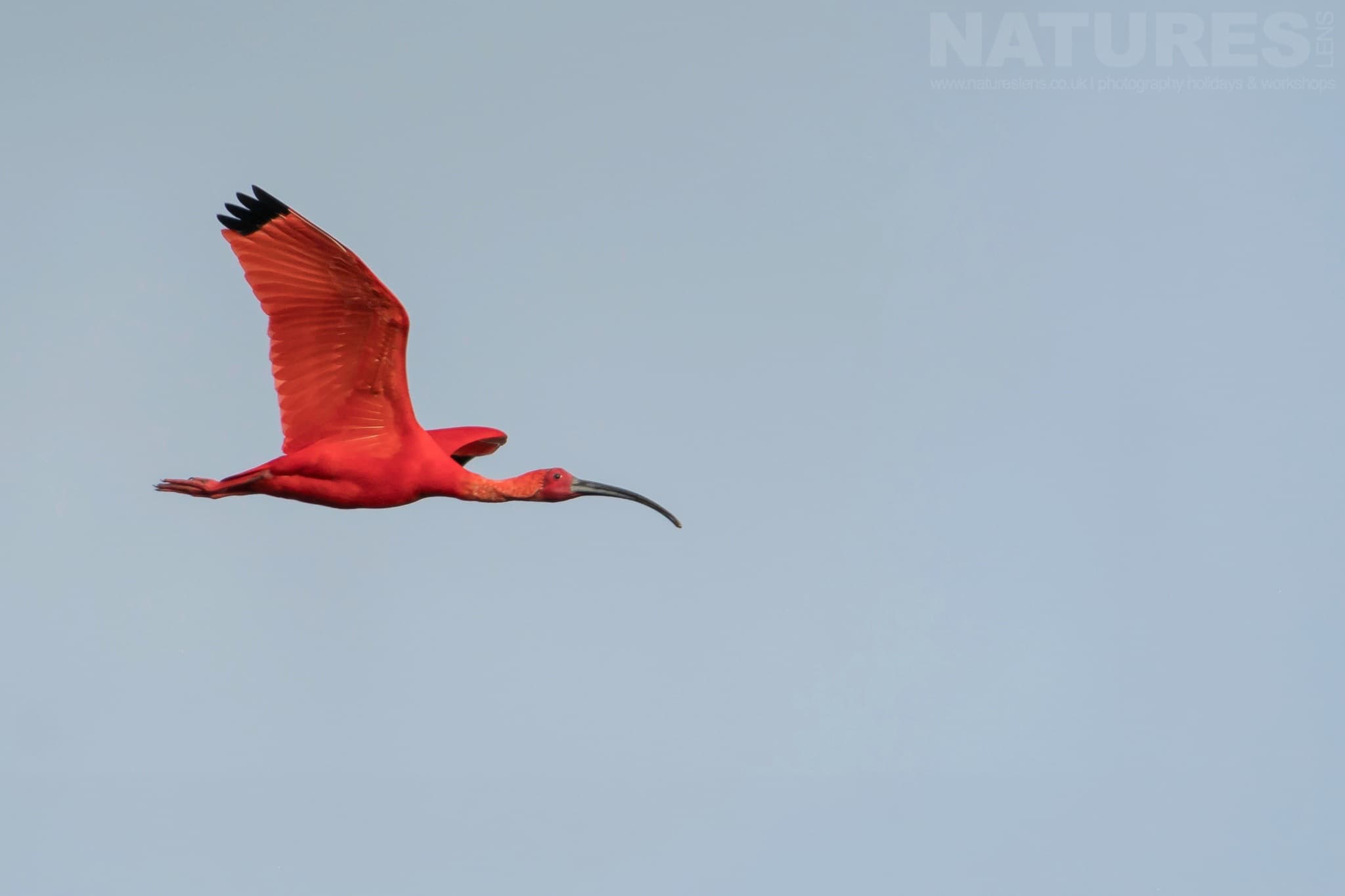
Few wildlife spectacles anywhere match thousands of Scarlet Ibis flying in to roost over the Caroni Swamp at dusk, their vivid red plumage intensifying as the light fades. The trip includes a dedicated boat excursion timed specifically for this display, working through the mangrove channels before positioning for the main roosting event.
Trinidad’s national bird, the Scarlet Ibis roost here is one of the most reliable & accessible large-scale bird spectacles anywhere in the Caribbean or South America.
An Island of Accessible Tropical Birding
Short transfer times between the lodge grounds & the swamp mean genuinely productive early mornings & late afternoons are possible without long, tiring travel days eating into the schedule.
Trinidad’s proximity to South America means it shares much of the continent’s tropical bird diversity, but its small size makes covering multiple habitat types — forest lodge, wetland swamp, & coastal areas — considerably easier than an equivalent mainland itinerary. That accessibility is a large part of why this trip runs at a genuinely relaxed pace compared with some of the series’ more logistically demanding destinations.
Why Trinidad Rather Than Mainland South America
Photographers with limited holiday time in particular benefit from Trinidad’s compressed geography, since every hour saved in transit is an hour spent actually photographing rather than travelling between sites.
Mainland South American birding trips often involve long transfers between distinct regions to build a varied species list. Trinidad compresses much of that variety into a single small island, with excellent lodge infrastructure built up over decades of birding tourism specifically because of this accessibility.
That combination of variety & convenience makes it one of the more relaxed trips in the series logistically, without sacrificing the quality or rarity of the species on offer.
Tobago: The Trip’s Namesake Neighbouring Island
It’s a genuinely worthwhile add-on to seriously consider for anyone who has a little extra time available.
While this itinerary focuses on Trinidad, the sister island of Tobago lies a short flight away & holds its own distinct birdlife, including seabird colonies not found on Trinidad itself. Some past guests extend their stay independently to include a few days on Tobago, & David is happy to advise on logistics for anyone considering it.
When to Visit Trinidad
Our current departure runs in late April, during the drier season when trails & the swamp boat excursion are most reliably accessible & feeder activity at the lodges remains consistently strong.
Planning Your Trip to Trinidad
A telephoto lens in the 300mm to 500mm range with good close-focus capability suits the lodge feeder photography well, while a slightly longer lens is useful for the Scarlet Ibis roost given the greater distances typical on the swamp boat trip.
Trinidad’s tropical climate is warm & humid year-round, so lightweight, quick-drying clothing & good insect repellent are worth packing, particularly for the swamp excursion. A dry bag or cover for camera kit is sensible given the boat-based portion of the trip.
Piarco International is the usual arrival airport, with short road transfers to the lodges used across the itinerary.
A Trip That Suits Every Experience Level
Because the lodge feeders do much of the work of bringing birds into range & the pace of the trip is genuinely relaxed, this is one of the more accessible trips in the whole series for photographers newer to tropical bird photography, while still offering excellent images for anyone with a long species list already behind them.
Life at the Lodges
Evenings on the veranda, drink in hand & the last hummingbirds still working the feeders in fading light, are as much a highlight of this trip for many past guests as any single photograph taken during the day.
Several of Trinidad’s birding lodges are internationally known specifically for their feeder setups, with verandas overlooking multiple feeding stations that let guests photograph in comfort between forays further afield. Meals & rest breaks are timed around the birds’ natural activity patterns rather than a fixed schedule.
Beyond the Headline Species
Even a short walk around the lodge grounds between scheduled sessions regularly turns up something worth photographing.
Toucans, motmots, & a wide range of tanagers are common sightings around the lodge grounds & nearby forest trails, adding real depth to a trip already built around two very different headline attractions.
Join Us in Trinidad
A genuinely relaxed pace, reliable hummingbird feeders, & one of the Caribbean’s great wildlife spectacles — few trips in the series pair such easy logistics with imagery this rewarding.
Few destinations combine reliable hummingbird feeder photography with a spectacle as genuinely memorable as the Caroni Swamp’s Scarlet Ibis roost.
David’s years of working these specific lodges & the swamp itself is what turns a relaxed week in Trinidad into a genuinely productive trip.
Get in touch if you’d like to know more, or head straight to the Trinidad & Tobago destination page to see current availability.
Related Reading
Plan your Trinidad & Tobago photography holiday
Explore our Trinidad & Tobago wildlife photography holidays, compare more South America wildlife photography trips, & meet the NaturesLens photography guides who lead our small-group trips.