Photographing Shompole & photographing the Maasai Mara are so different that comparing them can feel like comparing a studio session with a day on location, yet both are in Kenya, both put lions, leopards & elephants in front of the lens, & photographers regularly ask us which one to choose. The honest answer is that the Mara, particularly its conservancies, rewards mobility, daylight & the ability to read a landscape, while Shompole rewards stillness, controlled light & the patience to wait beside a waterhole through the night, so the right choice depends far more on how you like to work than on which place has the better wildlife.
Pui Hang’s scouting of the Lemek Conservancy, together with our weeks at Shompole Wilderness, within Shompole Conservancy, each October, gives us a good basis for explaining where the differences matter photographically & where they turn out to be smaller than people expect.

How does working from a hide differ from working from a vehicle?
In the Mara you are always in motion, searching for a sighting, deciding how to approach it & then positioning the vehicle so that the light & the background work together, & that last step is where the conservancies differ most from the National Reserve. Conservancies such as Lemek allow off-road driving in a way the reserve generally does not, which means you can move ten or fifteen metres off the track to put the sun behind a subject rather than beside it, or to set a herd of topi against open sky rather than a distant tree line. From a fixed reserve track that choice is simply not available, & being able to build a frame deliberately rather than reacting to whatever angle the road happens to offer is often the difference between a record shot & an image worth printing.

At Shompole the decisions are made before the animals arrive. You are already in position in a sunken hide at water level, so the work becomes one of anticipation, deciding where the reflection will fall, which part of the pool gives the cleanest background & whether a wider lens might produce something more interesting than another portrait. Neither approach is easier, but they exercise different muscles, since the Mara asks you to find the picture while Shompole asks you to wait for it & be ready when it comes.
What changes when the light is natural rather than controlled?
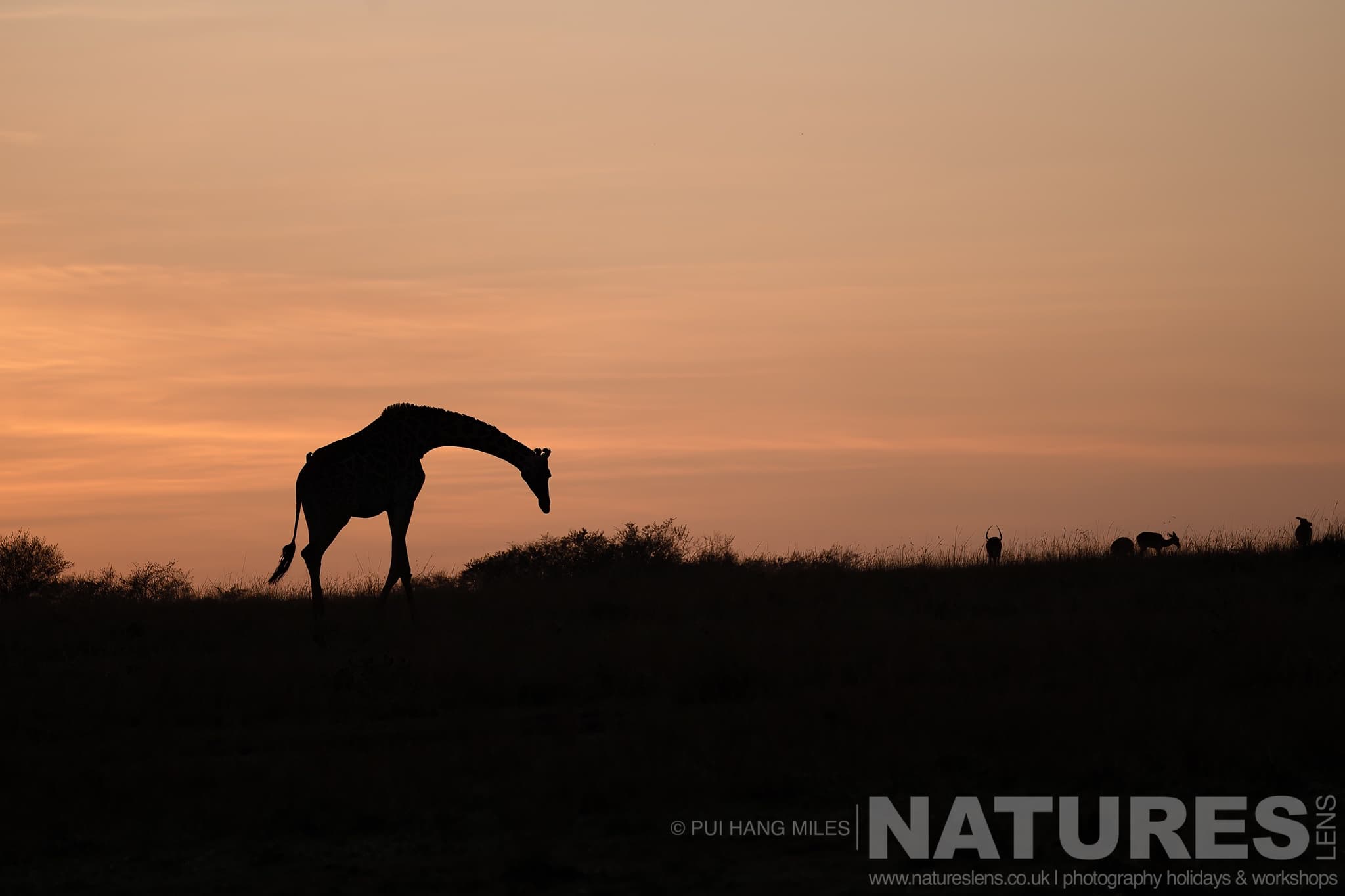
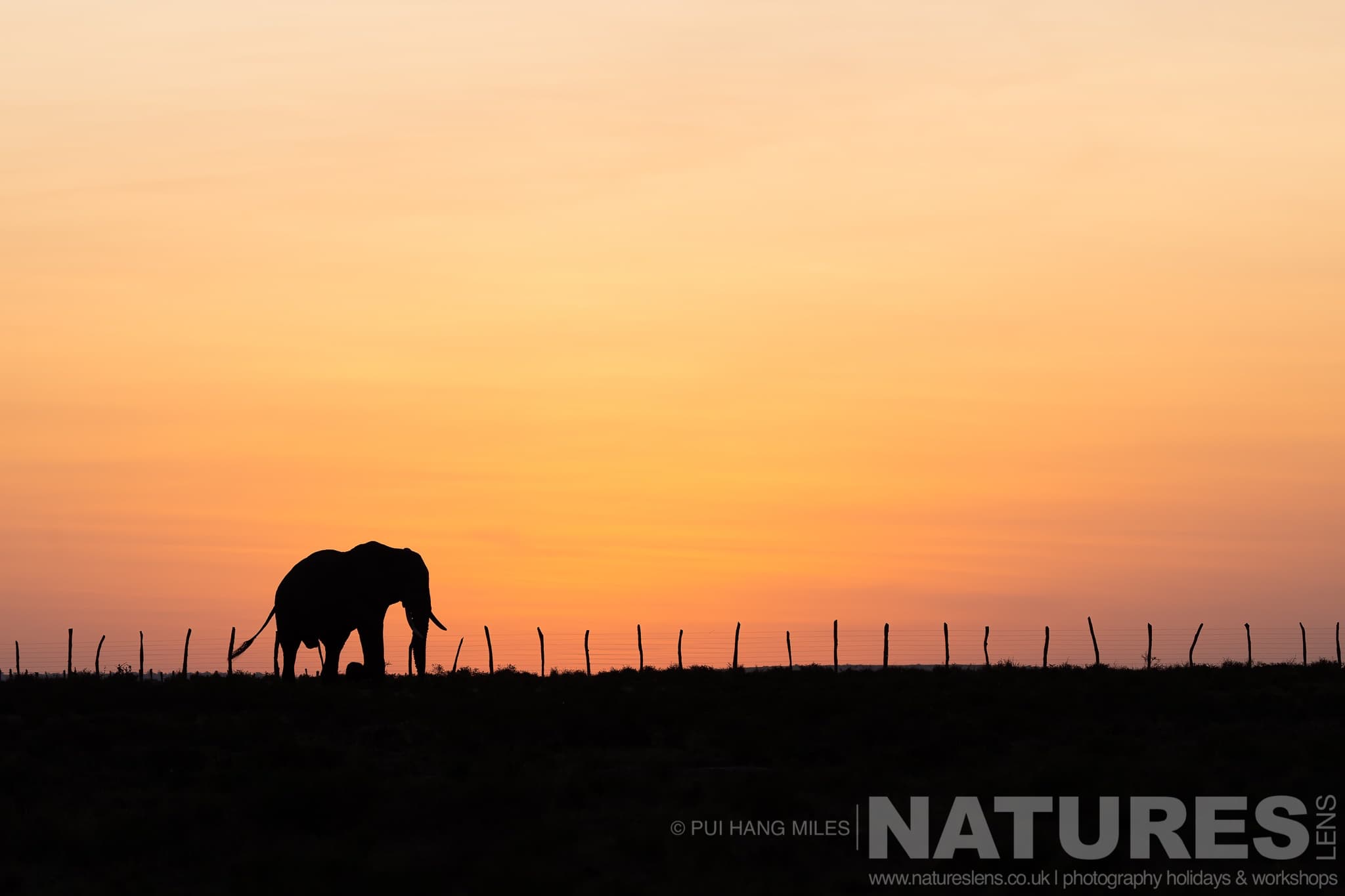
In the Mara the light is whatever the sky provides, which is why the best sessions are built around the first & last hours of the day & why flexibility matters so much. A small camp & a small group allow a productive sitting with a hunting pride to run past a scheduled return time, or an earlier start when dawn mist promises strong backlit conditions over the plains, & a rising sun behind a line of topi can produce silhouettes that justify the early alarm. The photographer’s job is to find the light & move the vehicle into it.
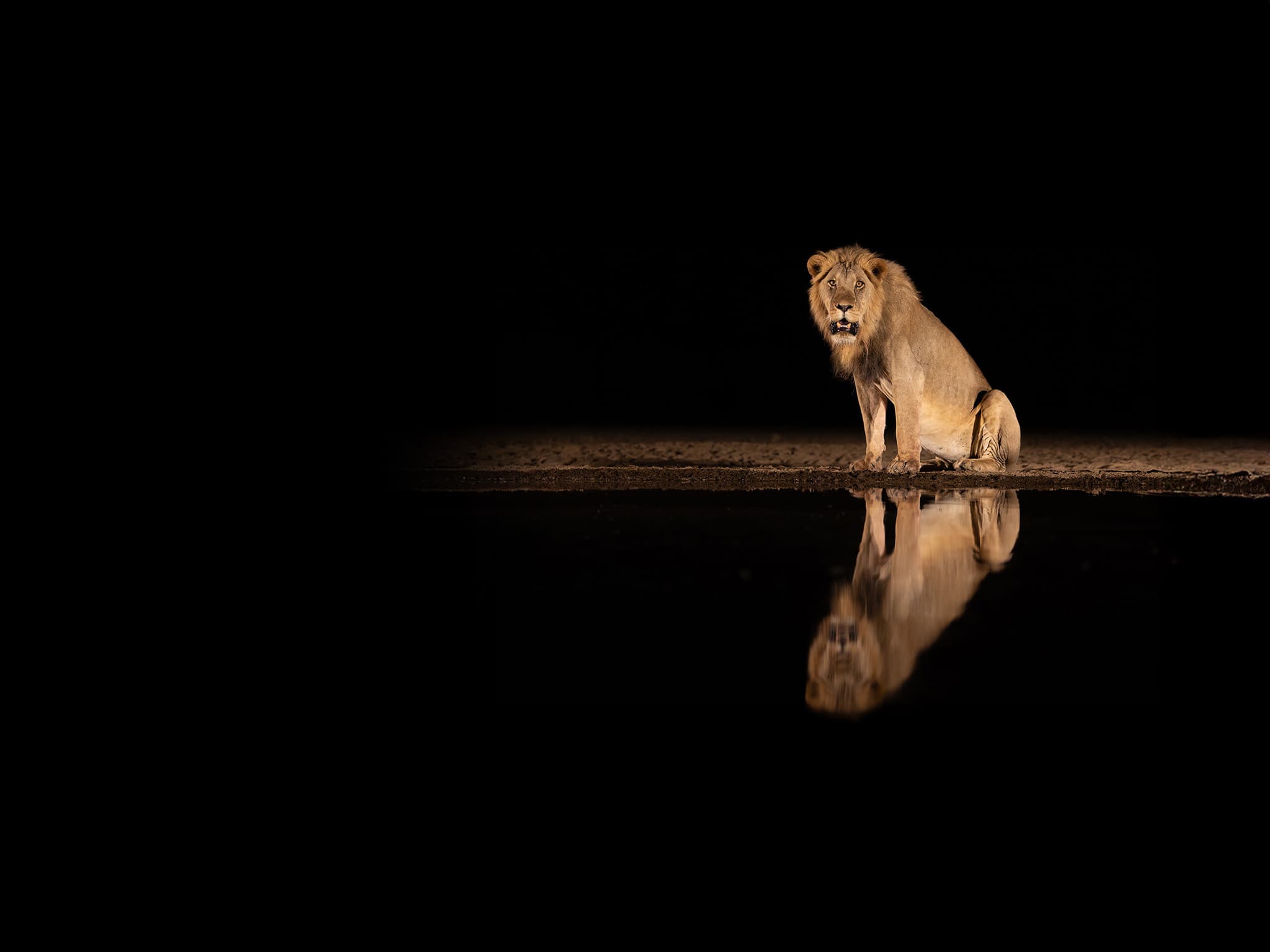
At Shompole the light is part of the installation. The Plains Hide has dimmable front, side & back lighting, so the same lion or elephant can be shown as a detailed portrait, a sculpted study in side light or a rim-lit outline with dust glowing behind it, & the background is simply darkness, which removes the cluttered backdrops that so often undermine a daytime frame. Because the lens sits so close to the water, reflections add another layer that a vehicle cannot offer, & the result is that the Mara teaches you to read light you cannot control while Shompole asks you to make decisions about light you can, & many photographers find that doing both improves each.

Which location gives you more photographic variety?
On variety, the Mara wins on breadth & Shompole on depth. The Lemek Conservancy shares the same open savannah, predator populations & herds of plains game as the National Reserve, with lion prides, cheetah & leopard all using the same territory, alongside topi, warthog families, hippo working the waterholes & a mosaic of open grassland & riverine woodland, so a working day never rests entirely on predator sightings & there is room in the portfolio for habitat & landscape.


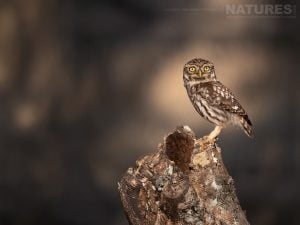
Shompole’s cast is narrower but more unusual. Alongside lions, leopards, elephants & both spotted & striped hyena, the hides produce civets, genets, African wildcats, porcupines, bat-eared foxes & owls, subjects most visitors to Africa would rarely see properly, let alone photograph at close range, & the large animals look entirely different when photographed from ground level against black. I tend to think about it in terms of portfolio diversity rather than species counts, because the Mara gives wide, daylit frames with context while Shompole gives intimate, low-key images that could not be made anywhere else, & neither is an attempt to build the longest possible list.

How much do crowds & vehicle numbers affect the photography?
Vehicle numbers can change a sighting completely. A lion sighting inside the National Reserve during peak season can draw a dozen or more vehicles jostling for angle, whereas the same sighting in Lemek, which operates under a strict vehicle cap agreed between the conservancy & the handful of camps permitted to work there, might involve two, ours included, with room to move for the light rather than fighting for a gap in the circle. Sessions are not rushed by the pressure of other vehicles waiting their turn, & that is the main reason we built our newest Kenya trip in a conservancy rather than in the reserve itself, as I explain in why photographers keep returning to the Maasai Mara conservancies.

Shompole takes that principle to its conclusion, since there is no vehicle at all once you are in the hide & the only other photographers are the other members of a group of seven. Night photography is another practical difference, because it is not permitted inside the National Reserve, whereas light-controlled night drives in the conservancies open up civets, genets & hunting hyenas, which gives a taste of the nocturnal layer that Shompole explores in far greater depth.
How do the pace & practicalities of the two trips compare?
The rhythms are almost opposites. At Shompole the week is turned upside down, with sessions starting in the late afternoon & running until about nine the next morning, days given over to rest, editing & the camp’s bird hide, & a compact kit built around a 70-200mm lens, with gimbals & beanbags supplied. In the Lemek Conservancy the day follows the light in a more familiar way, from Spirit of Tembo, a small camp with only a handful of tented suites, with the group capped at six so that vehicle positioning stays flexible, & open-savannah daytime work generally calls for rather more reach than anything you would pack for the hides.
The dates differ too. Our Shompole weeks run in October, with departures in October 2027 & October 2028, while the Lemek trip, The Mara, Without the Crowds, has its first departure in August 2027 & African Wildlife of the Maasai Mara follows in October 2028. Because the Lemek departure has not yet run, I would rather be straightforward that our experience there comes through Pui Hang’s scouting than pretend we have years of returning-guest history there, although our Maasai Mara trips themselves have been running for several years, whereas Shompole is already the trip guests ask to repeat.

Should you choose one or combine them?
If I had to offer a simple rule, I would say that the Mara conservancies suit photographers who enjoy daylight & mobility, who like building a sequence from a hunt or a family group over an unhurried morning, & particularly those with some safari experience who want calmer conditions in which to work predator behaviour. Shompole suits those who are comfortable with stillness, who want a portfolio that looks different from everyone else’s African images, & who would rather spend six nights beside a productive waterhole than cover ground.

The two are not rivals, though, & the most satisfying Kenyan itinerary may well include both, which is why our Shompole week can be combined with a Maasai Mara trip: you photograph some of the same animals in two completely different ways, & the resulting portfolio has a range that neither could deliver alone. You can read more about the wider case for the country in why photographers are drawn to Kenya & about the hide week itself in our account of one week at Shompole Wilderness, & if you would like help deciding, get in touch.
African Safari
- What Are the Best Wildlife Photography Trips at Shompole in Kenya?
- How Does Photographing Shompole Compare With the Maasai Mara?