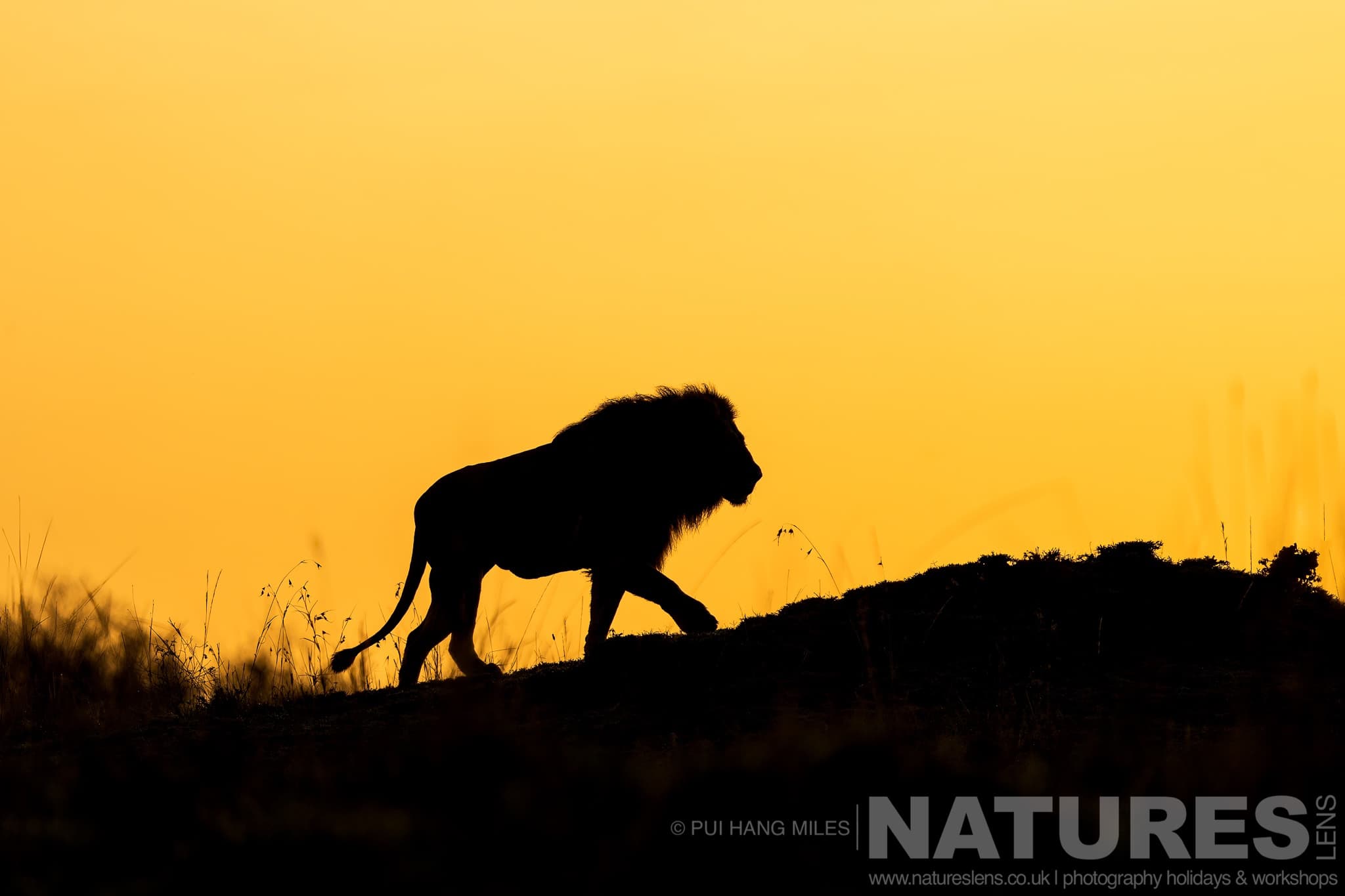
Kenya is the trip most photographers picture when they imagine an African safari, & it earns that reputation. The Maasai Mara delivers density & predictability that few reserves can match — lion prides visible most mornings, cheetah working open ground in good light, & enough plains game moving through camera range that you are rarely waiting long for a scene.
For the current trip list, see our Kenya wildlife photography holidays; you can also explore more Africa wildlife photography trips.
Pui Hang Miles, who guides our Kenya trips, builds each itinerary around vehicle positioning & the specific behaviour of resident prides rather than general game-driving, which is what turns a good sighting into a usable image.
What sets Kenya apart from many safari destinations is the range of ways you can work the same landscape. Shompole Wilderness takes the opposite approach to the open plains of the Mara — nocturnal hide sessions built around a waterhole, working leopards, hyenas & smaller nocturnal species after dark rather than daylight game drives. & the Lemek Conservancy, our newest addition, trades the Mara’s vehicle density for a private conservancy where off-road access & quieter conditions mean more time with fewer interruptions on each subject.
Three trips, three completely different vehicle disciplines: fixed roads & shared sightings on the Mara itself, a static hide after dark at Shompole, & off-road freedom at Lemek. That range is deliberate — it means a repeat visitor to Kenya with us is never simply doing the same safari again, but working the ecosystem from a genuinely different angle each time.
Our Kenya Photography Holidays
We run three small-group trips to Kenya, each guided by Pui Hang Miles, covering a different way of working the region’s wildlife. Here are the next departures for each:
26th Sep – 3rd Oct 2026 — African Wildlife of the Maasai Mara
6 nights | from £6,499 | Easy — Gentle Adventures, Accessible to Most
Big cats photographed in open savannah conditions. This is the classic Mara experience — resident lion prides, cheetah on open ground, & enough plains game moving through the reserve to keep every day productive. Days are built around dawn & dusk game drives, when both light & predator activity are at their best.
More info on African Wildlife of the Maasai Mara
15th – 22nd Oct 2026 — Wildlife of Shompole Wilderness
6 nights | from £6,999 | Easy — Gentle Adventures, Accessible to Most
Nocturnal hide sessions in a wilder setting. Rather than daylight game drives, this trip works a waterhole after dark for leopards, hyenas, & a run of smaller nocturnal species most safaris never put you in front of. The fixed hide means a stable platform & controlled lighting, closer to studio conditions than a conventional safari.
More info on Wildlife of Shompole Wilderness
17th – 24th Aug 2027 — The Mara, Without the Crowds – African Wildlife of the Lemek Conservancy
7 nights | from £6,499 | Easy — Gentle Adventures, Accessible to Most
Set within a private conservancy on the quieter side of the Mara ecosystem, with off-road access & far fewer vehicles. Lions, cheetahs & leopards are all present alongside large herds of plains game, with the freedom to position properly for light & behaviour rather than working around a fixed road network. It’s the trip to choose if the crowds of vehicles around a good sighting are the part of safari photography you’d rather avoid.
More info on African Wildlife of the Lemek Conservancy
Still deciding which trip fits? Get in touch & we’ll help you match the itinerary to what you want to come home with.
What You’ll Photograph in Kenya
Big Cats
Lion, leopard & cheetah are the reason most photographers book a Kenya trip in the first place, & all three are realistic targets across our itineraries — resident lion prides & cheetah on the Mara’s open plains, leopards worked after dark at Shompole, & all three species again across the quieter ground at Lemek. See more examples in our Big Cats photo archive.
Cheetah hunt in daylight far more than lion or leopard, which makes the open plains of the Mara the best of our three settings for working genuine hunting behaviour rather than resting animals. Leopards, by contrast, are most active around dawn, dusk & after dark — exactly why Shompole’s nocturnal hide approach produces such reliable leopard encounters.

Elephants & Plains Game
Beyond the predators, the Mara ecosystem is built on volume — elephant, buffalo, hippo, giraffe, zebra & wildebeest all move through camera range in numbers, giving you the herd shots & behavioural moments that frame the predator encounters. This is a strong focus on African Wildlife of the Maasai Mara & African Wildlife of the Lemek Conservancy.
Working herds well is as much about patience as positioning — waiting for a line of zebra or wildebeest to cross a ridge against clean sky, rather than shooting whatever is directly in front of the vehicle, is what separates a portfolio shot from a snapshot.

Nocturnal Wildlife
Wildlife of Shompole Wilderness is built entirely around what comes out after dark — bat-eared fox, civet, genet, porcupine, spring hare, striped & spotted hyena, & a run of owl species including Marsh Owl, Spotted Eagle-Owl & Verreaux’s Eagle-Owl, all worked from a hide at a waterhole rather than from a moving vehicle.
Shooting from a fixed hide rather than a vehicle changes the whole approach — controlled artificial lighting replaces natural light, & because the animals come to you rather than the other way round, you can plan compositions in advance rather than reacting to a passing sighting.

Birds of the Savannah
Lilac-breasted Roller, Secretary Bird & Martial Eagle are the standout perched & open-ground subjects across the Mara ecosystem, giving you strong colour & silhouette opportunities between predator sightings. See more in our Birds photo archive.
These species reward exactly the same patience as the big cats — a Lilac-breasted Roller on a favoured perch will often return to it repeatedly, giving you time to work the light & background properly rather than settling for the first frame.

Rarer Icons
Black Rhinoceros & Nile Crocodile both feature on African Wildlife of the Maasai Mara, giving the trip a couple of genuinely harder-to-find subjects alongside the more reliable big cat & plains game encounters. Browse more of our African wildlife work in the African Wildlife photo archive.

When to Visit Kenya
Our current departures span late September through August, giving a spread across both drier & greener periods on the Mara. Drier months tend to concentrate wildlife more tightly around remaining water & shorter grass, which generally means easier visibility & cleaner backgrounds, while greener periods bring softer light & a more dramatic sky for wider landscape-inclusive frames. Shompole’s nocturnal sessions are far less season-dependent, since the hide & waterhole draw consistent activity after dark throughout the year.
Planning Your Trip to Kenya
Vehicle discipline is the single biggest variable between our three Kenya trips, & it is worth understanding before you choose. The Maasai Mara reserve itself operates on a shared road network with other operators, so even excellent sightings are worked alongside other vehicles at busy times of year. Lemek Conservancy trades that for exclusivity — a private concession with a cap on vehicle numbers & genuine off-road access, which means positioning for light & background is entirely down to your own vehicle rather than a queue of others. Shompole is different again, since the nocturnal hide sessions remove vehicles from the equation almost entirely.
Because game drives run at dawn & dusk to catch the best light & the most predator activity, days have a natural rhythm of early starts, a rest through the heat of the afternoon, & a second session before dark. Pui Hang builds every itinerary around that rhythm rather than cramming in extra drives that would only produce flat, high-sun images.
Join Us in Kenya
Kenya rewards photographers who want reliable, repeatable access to big cats & plains game without sacrificing the chance to work quieter, more considered subjects after dark or off the beaten track.
Whichever of the three settings you choose, Pui Hang’s local knowledge of pride movements, hide activity & conservancy access is what turns a week of game drives into a genuinely considered body of work.
Get in touch if you’d like help choosing between the Maasai Mara, Shompole Wilderness, & Lemek Conservancy, or head straight to the Kenya destination page to see current availability across all departures.
Related Reading
Plan your Kenya photography holiday
Explore our Kenya wildlife photography holidays, compare more Africa wildlife photography holidays, & meet the NaturesLens photography guides who lead our small-group trips.