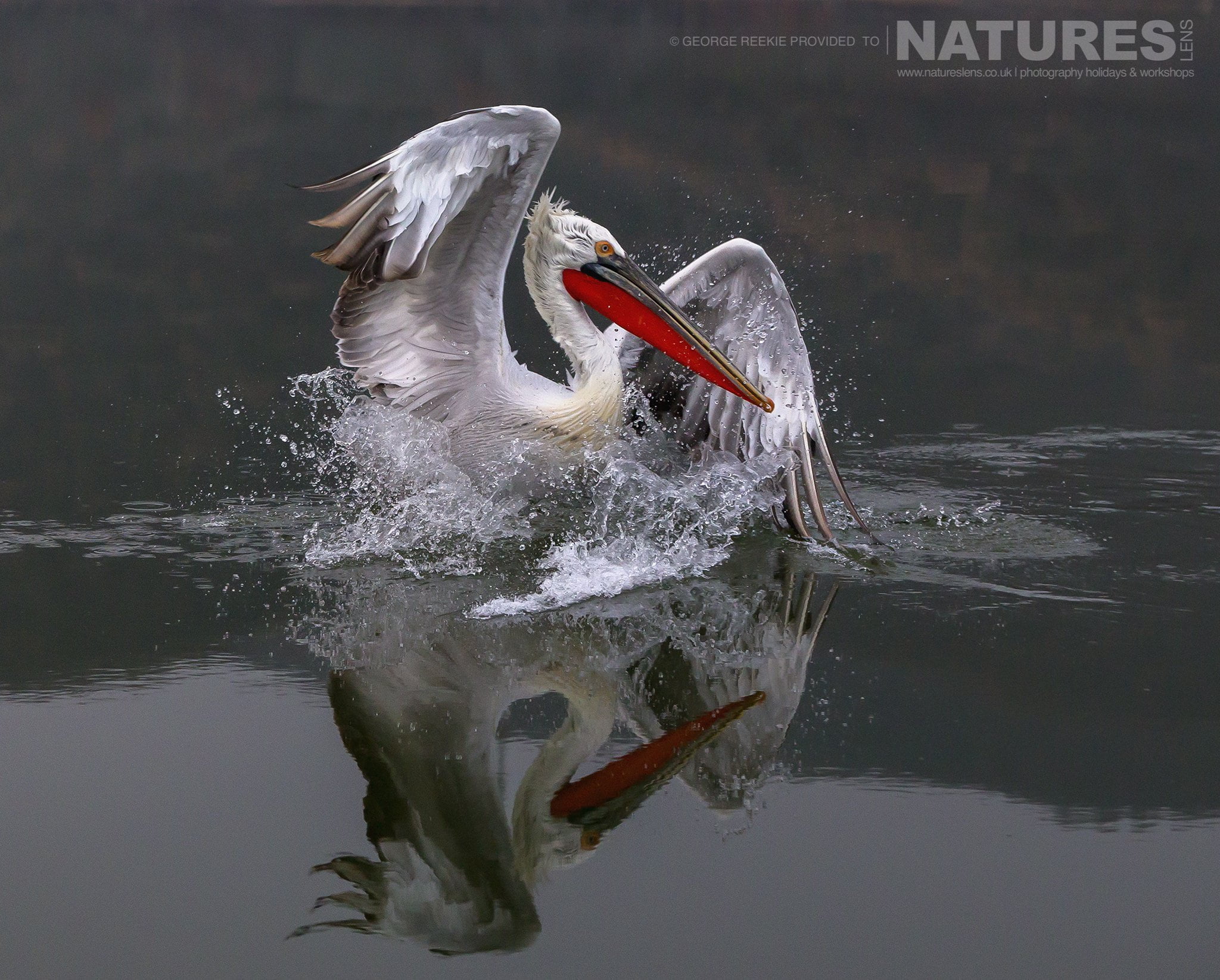
South of the Atlas Mountains, Morocco breaks into gravel plains, dry riverbeds & dune systems where visibility stretches for kilometres & the light changes fast — cool, still mornings building quickly to colour, then fading just as fast as the heat leaves the ground at dusk.
For the current trip list, see our Morocco wildlife photography holidays; you can also explore more Africa wildlife photography trips.
It’s a landscape built for patience rather than volume: wildlife here follows temperature & time of day with real precision, & photography depends on reading those rhythms rather than covering ground.
What draws photographers back is the combination of genuinely rare subjects — Fennec Fox & Addax chief among them — with a wider desert cast of sandgrouse, owls, lizards & vipers that only surface in narrow windows of light & temperature. It rewards fieldcraft as much as portfolios.
David Miles guides the trip personally, having built relationships with local trackers who know the specific dune systems & rocky outcrops where each species is most likely to be active on a given evening — local knowledge that matters enormously in a landscape this vast & this subtle.
Our Morocco Photography Holiday
We run one small-group trip to Morocco, guided by David Miles:
9th – 16th May 2027 — Fennec Foxes & Other Moroccan Wildlife
6 nights | from £3,999 | Medium — Balanced Days with Moderate Activity
Travel is by private 4×4 across southern Morocco’s gravel plains & dune systems, with time on foot to work angles & backgrounds. Days are planned around light & temperature rather than a fixed timetable, built around Fennec Fox as the headline subject alongside Addax, sandgrouse, owls, lizards & vipers.
More info on Fennec Foxes & Other Moroccan Wildlife
Want to know more before booking? Get in touch & we’ll talk you through what to expect from the desert conditions & itinerary.
What You’ll Photograph in Morocco
Fennec Fox & Addax
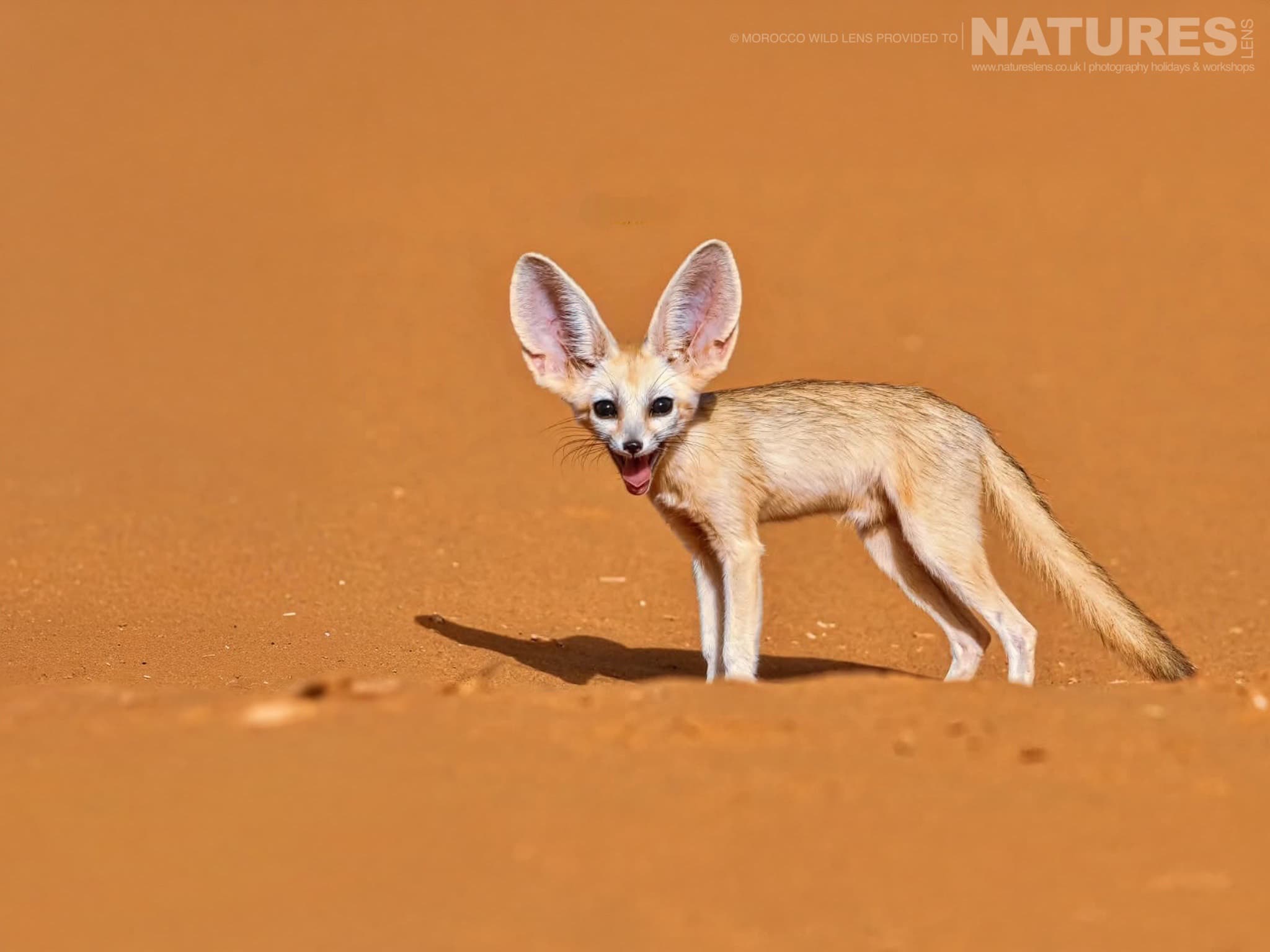
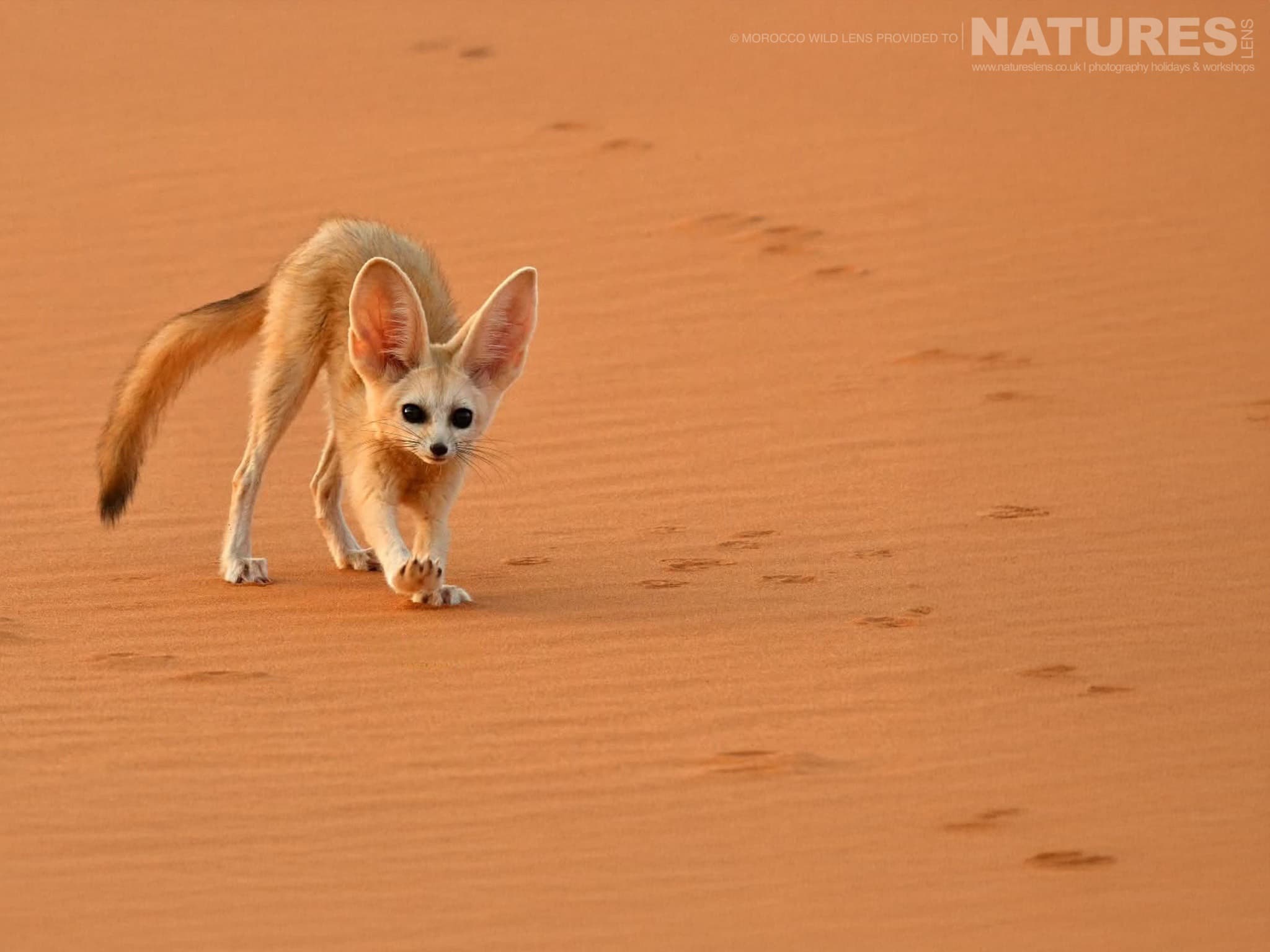
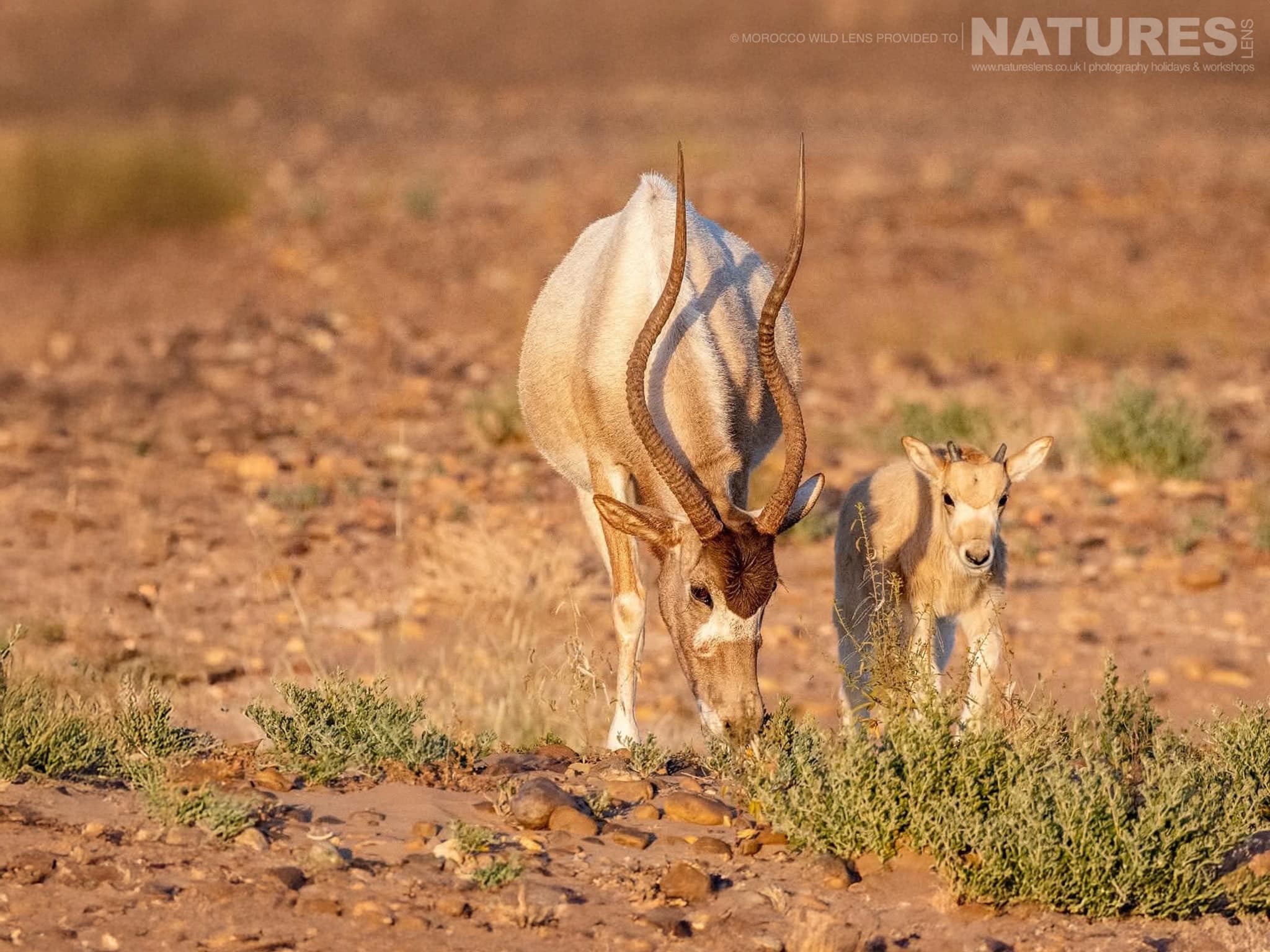
The Fennec Fox is the trip’s signature subject — the world’s smallest fox, working the dunes at dusk with its enormous ears silhouetted against fading light. The Addax, also known as the White or Screwhorn Antelope, is one of the rarest large mammals in the Sahara & a genuine highlight when encountered. See more in our African Wildlife archive.
Fennec Foxes are almost entirely nocturnal, which means most encounters come right at dusk or after dark using low, controlled lighting — a genuinely different discipline from daylight mammal photography elsewhere in the series, & one that rewards a fast lens & a willingness to work quickly as light fades.
Desert Birds
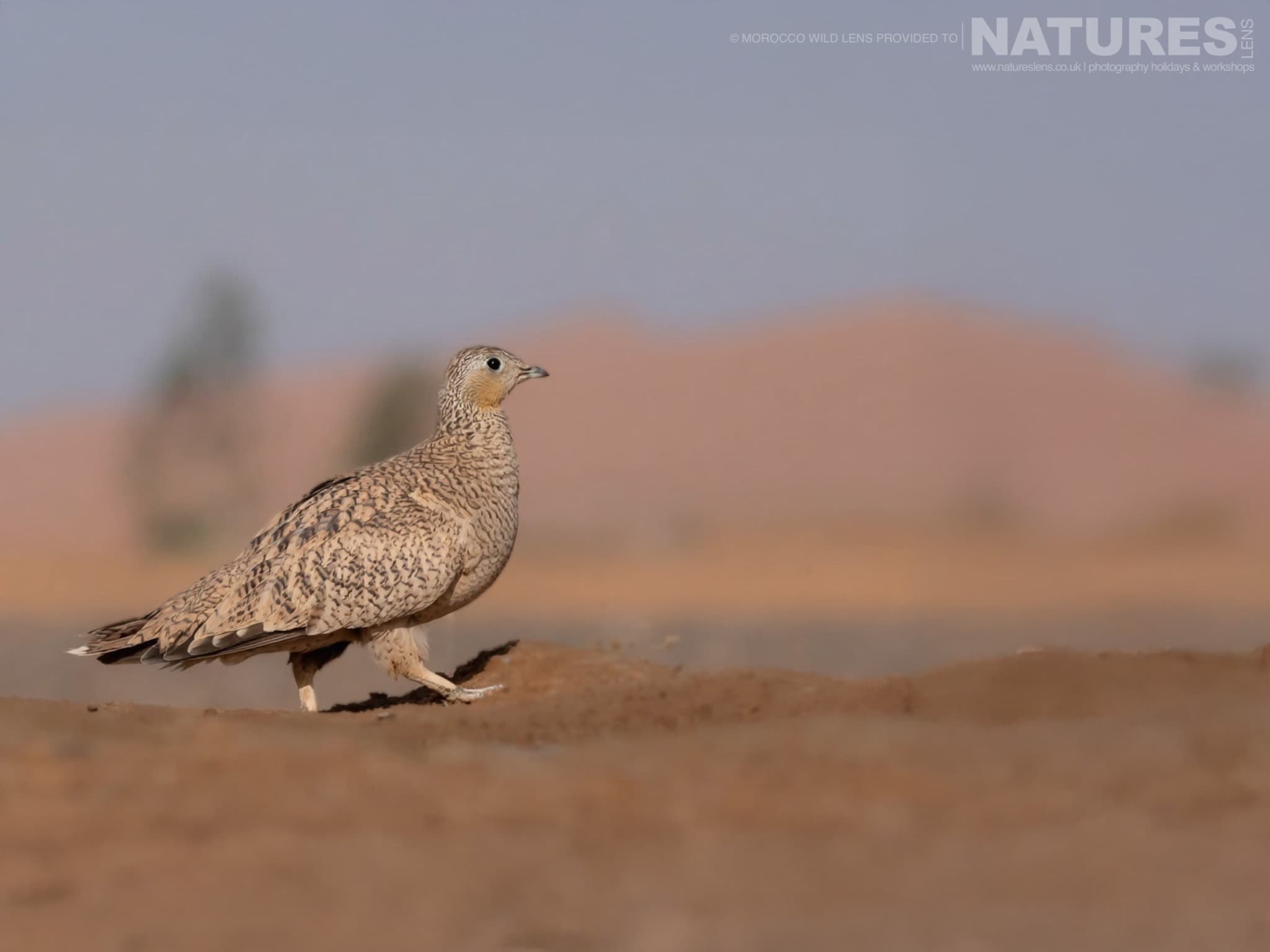
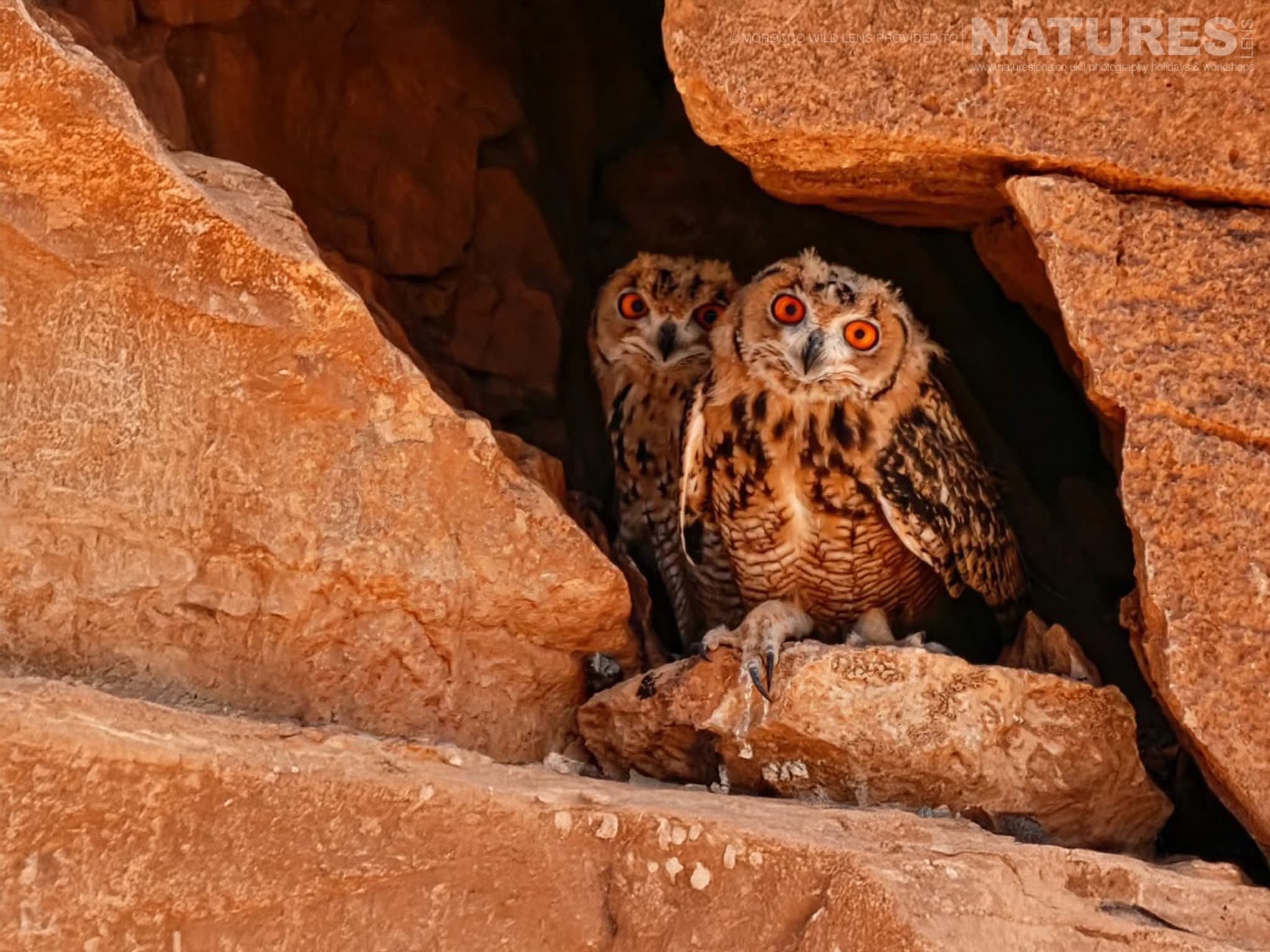
Birds move early here, often flying low across open ground before the heat builds. Crowned Sandgrouse run across the dunes at speed, while Pharaoh Eagle Owls — also known as Desert Owls — sit tucked into rocky crevices, needing a careful eye to spot before they can be worked at all.
Sandgrouse in particular reward a long lens & a low, ground-level shooting position — they favour open, flat ground where a vehicle or upright photographer would spook them long before a useful frame is possible.
Reptiles of the Sahara
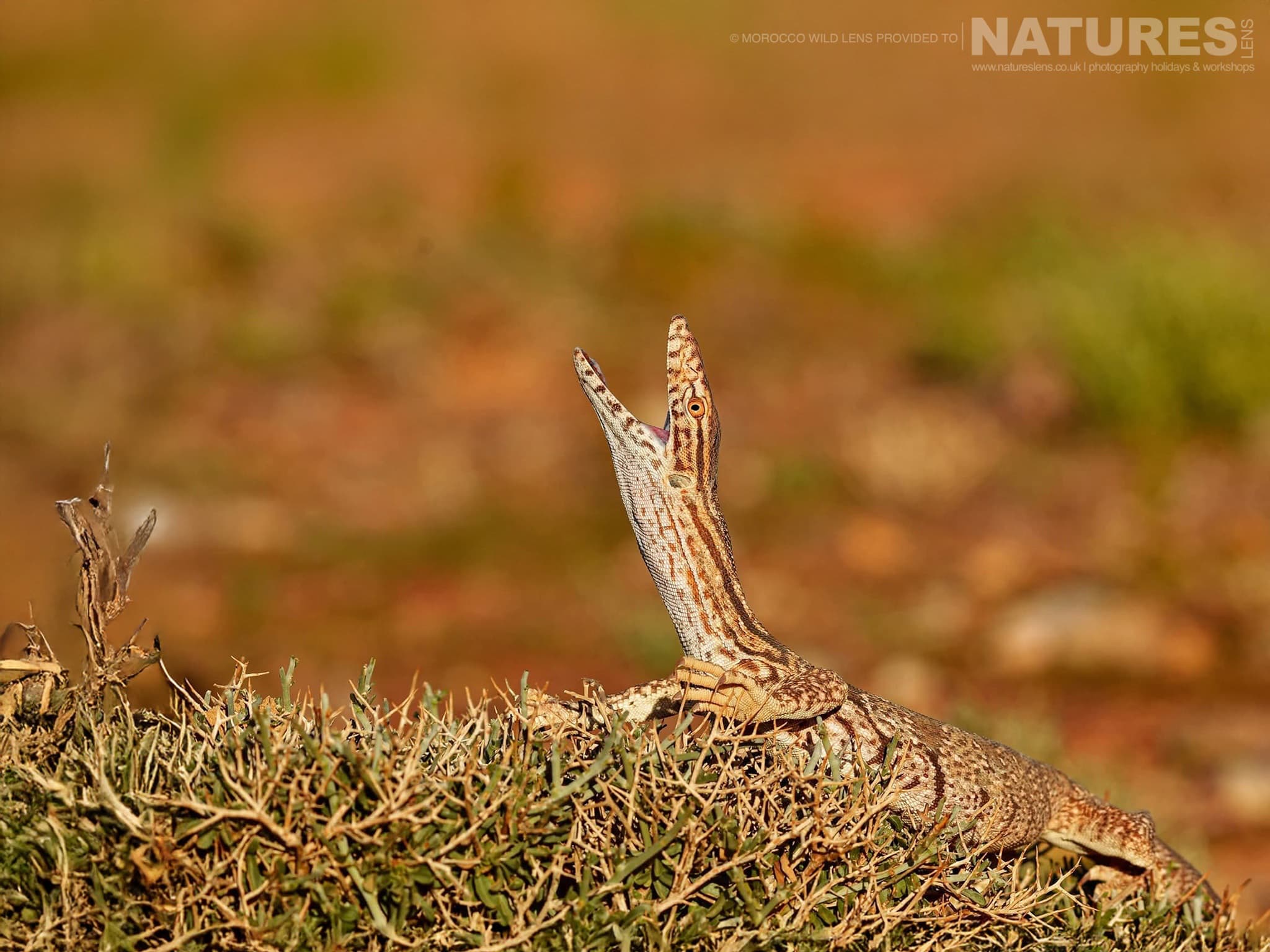
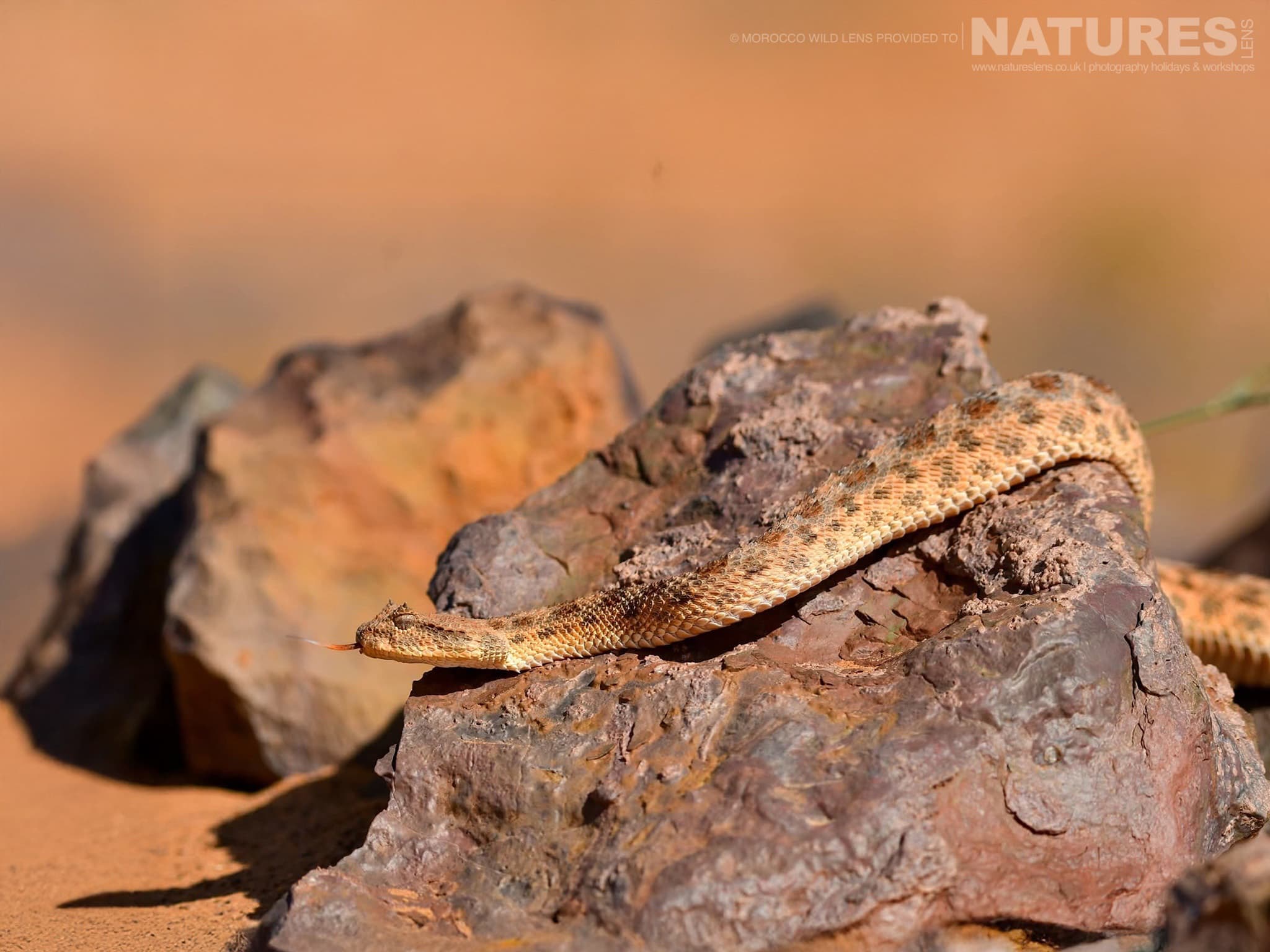
Reptiles surface only in narrow temperature windows, when conditions allow movement without prolonged exposure to the heat. The trip turns up Desert Monitor Lizard, Fringe-fingered Lizard, Sahara Sand Viper & Saharan Horned Viper — four very different reptile photography problems within the same dune systems. See more in our Reptiles & Amphibians archive.
The two vipers in particular rely on camouflage against the sand, often lying almost completely buried with only eyes & nostrils exposed — spotting them at all is half the challenge, & a guide who knows exactly where to look is essential.
A Landscape of Scale & Silence
What is easy to underestimate about this part of Morocco until you are actually there is the sheer scale of the emptiness — gravel plains & dune systems that run to the horizon with almost no vegetation to break up the view. That openness is part of what makes the wildlife so rewarding to photograph once you find it: clean, uncluttered backgrounds are almost guaranteed, in a way that forest or wetland trips elsewhere in the series simply cannot offer.
It also means silence & stillness dominate much of the day, broken only by wind moving sand across the dunes. Many guests find this as much a part of the experience as the wildlife itself — a genuinely different pace & atmosphere to a busy safari vehicle or a crowded hide.
When to Visit Morocco
Our current departure runs in May, timed to balance manageable daytime temperatures with peak activity around dawn & dusk before the full heat of the Saharan summer sets in. Earlier or later in the year would either mean colder nights with less reptile activity, or daytime heat too extreme for comfortable working conditions.
Working with a Tracker
Much of what makes this trip productive happens before the camera comes out at all — reading fresh tracks in the sand to work out where a Fennec Fox denned the previous night, or spotting the faint disturbance that gives away a buried viper. David works alongside experienced local trackers who have spent years reading this landscape, & watching that process unfold is genuinely part of the experience, not just a means to an end.
This tracking-led approach also means the itinerary stays flexible day to day — if fresh sign points to a particular stretch of dunes, the day’s plan shifts to follow it, rather than sticking rigidly to a predetermined route regardless of what the desert is telling you.
Planning Your Trip to Morocco
This is a genuinely different kind of trip logistically from most of the rest of the series — travel is by private 4×4 across open desert rather than on sealed roads, & days are built around dawn & dusk activity with a rest through the hottest hours of the afternoon.
Dust is a constant presence, so a well-sealed camera bag & a rocket blower for regular sensor & lens cleaning are worth having to hand. Temperatures swing considerably between day & night, so layering for a cold desert evening is just as important as sun protection during the day. Sun protection matters just as much as warm layers, given how quickly conditions swing between the two extremes. A wide-brimmed hat & high-factor sunscreen are essential rather than optional here. A spare battery is worth carrying too, since cold desert nights can drain charge faster than expected.
Because several of the headline subjects are nocturnal or active only at dusk, some sessions run later into the evening than a typical safari day — worth factoring in if you’re travelling straight from a long flight, since the first day or two can be tiring until you adjust to the rhythm. Marrakesh is the usual arrival point, with a long but scenic road transfer south over the Atlas Mountains to reach the desert region itself. That crossing itself offers some of the most dramatic scenery of the whole trip, well before the desert sessions even begin. Vaccinations & any relevant travel health advice are worth checking with your GP ahead of a Morocco trip, as with any desert destination.
Join Us in Morocco
Morocco rewards photographers willing to work to the desert’s rhythm rather than force a shot — clean backgrounds, controlled light & behaviour-led encounters, built around genuine patience.
David’s relationships with local trackers & his knowledge of specific dune systems is what makes a genuinely rare subject like the Fennec Fox or Addax a realistic target rather than a hopeful long shot.
Get in touch if you’d like to know more, or head straight to the Morocco destination page to see current availability.
Plan your Morocco photography holiday
Explore our Morocco wildlife photography holidays, compare more Africa wildlife photography holidays, & meet the NaturesLens photography guides who lead our small-group trips.