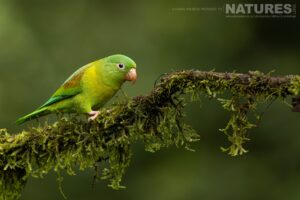
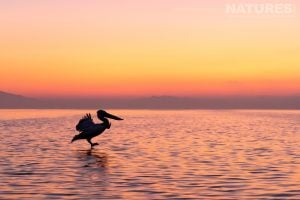
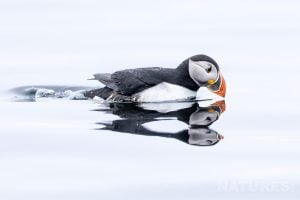
Lake Kerkini is one of those places that photographers who have been do not stop talking about, & photographers who have not been struggle to picture. Northern Greece is not where most people expect a pelican colony, but the lake holds one of Europe’s most accessible populations of Dalmatian Pelican — birds worked from a boat at close, respectful range, in winter light that sits low over the water for most of the day.
For the current trip list, see our Greece wildlife photography holidays; you can also explore more nature photography in Europe.
Alison Jenkins guides both of our winter pelican trips & has built the itinerary around specific boat positions & known feeding behaviour rather than general birdwatching.
Kerkini changes completely by season. Where the winter trips are built around pelicans, White-tailed Eagle, Common Crane & Whooper Swan, the spring departure shifts to breeding activity — herons, egrets, storks & Glossy Ibis all nesting & displaying in far greater colour & density than the winter birds. Dan Trim guides the spring trip, timed specifically around that seasonal shift.
What makes the lake so valuable as a location is scale combined with access — a body of water large enough to hold genuinely wild numbers of birds, yet calm & shallow enough that a boat can approach slowly without disturbing them. That combination is rare in Europe, & it’s the reason a short trip here can produce a body of work that would normally take a much longer, more logistically complex itinerary elsewhere.
Our Greece Photography Holidays
We run three small-group trips to Greece, all centred on Lake Kerkini across two very different seasons. Here are the next departures for each:
8th – 12th Jan 2027 — Pelicans of Lake Kerkini
3 nights | from £1,599 | Easy — Gentle Adventures, Accessible to Most
Winter pelicans with close, respectful access — a short, focused trip built entirely around boat-based pelican photography in low winter light. Our shortest & most affordable Greece departure.
More info on Pelicans of Lake Kerkini
12th – 16th Jan 2027 — Dalmatian Pelicans of Lake Kerkini
3 nights | from £1,599 | Easy — Gentle Adventures, Accessible to Most
Dalmatian Pelican portraits at eye level — the same winter window as our other pelican trip, with a slightly different itinerary emphasis on tight portrait work rather than wider behavioural scenes.
More info on Dalmatian Pelicans of Lake Kerkini
24th – 29th May 2027 — Spring Birds of Lake Kerkini
4 nights | from £1,999 | Easy — Gentle Adventures, Accessible to Most
Breeding birdlife with spring activity & colour — herons, egrets, storks, Glossy Ibis & Greater Flamingo all in breeding condition, a very different trip to the winter departures & our longest Greece itinerary.
More info on Spring Birds of Lake Kerkini
Still deciding which trip fits? Get in touch & we’ll help you match the itinerary to what you want to come home with.
What You’ll Photograph in Greece
Pelicans
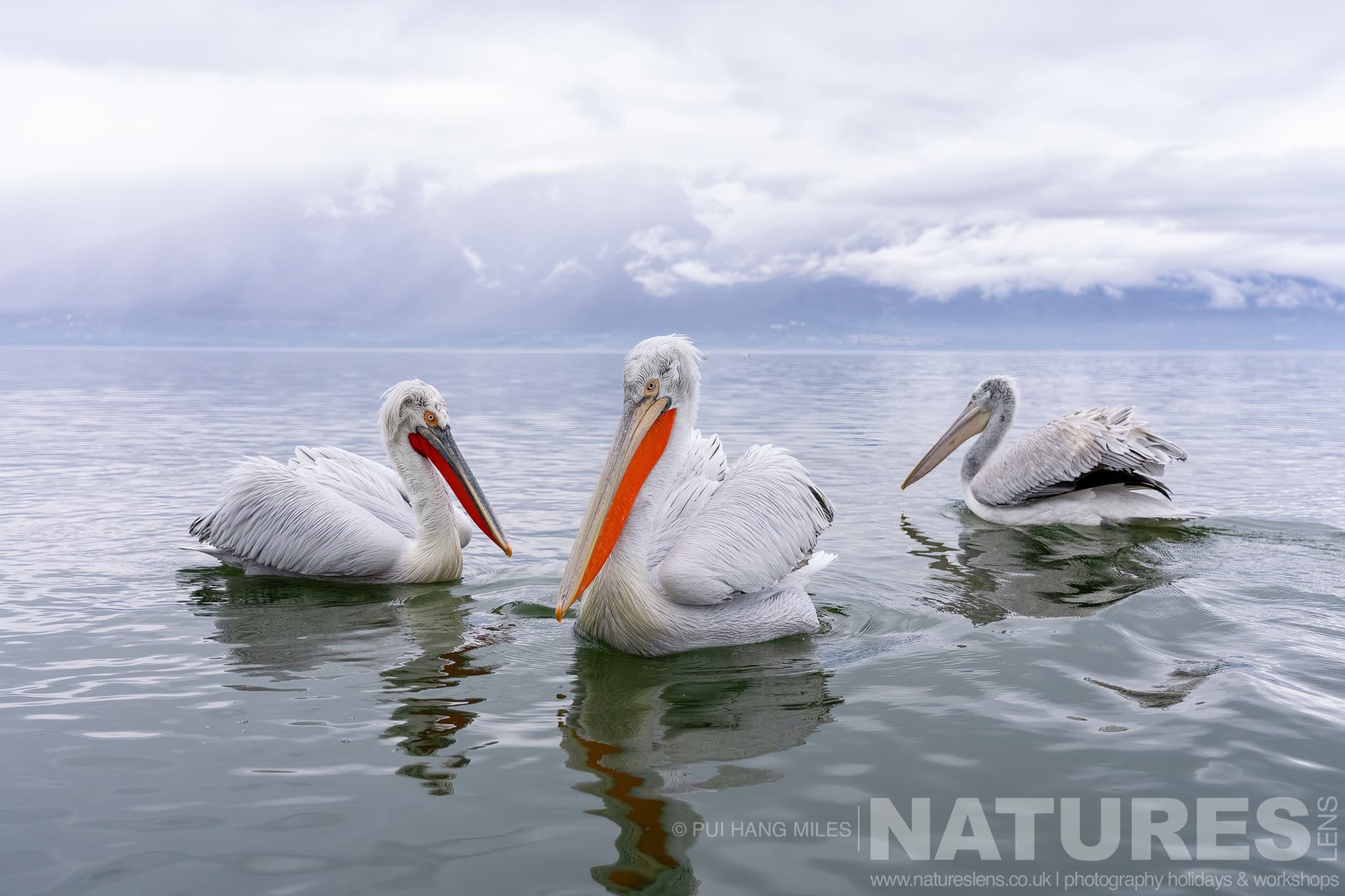
Dalmatian Pelican, Great White Pelican, Pink-backed Pelican & White Pelican all feature on our winter trips, worked from a boat at close range across the lake’s calm winter waters. This is the headline subject on both Pelicans of Lake Kerkini & Dalmatian Pelicans of Lake Kerkini.
Working from a slow-moving boat at water level gives an eye-level perspective that’s very different from photographing pelicans from a bank or hide — you’re genuinely on their level, which flattens the background into open water & puts real emphasis on getting the moment of a wing-stretch or a fish catch rather than just a static portrait.
Winter Supporting Cast
Alongside the pelicans, our winter trips regularly encounter White-tailed Eagle, Common Crane, Whooper Swan & Pygmy Cormorant working the same stretch of lake, giving you variety within a very short, focused itinerary.
Because the boat sessions are the backbone of the trip, these supporting species often turn up as a bonus within the same outing as the pelicans — useful to keep a second body or lens ready for a passing eagle without missing the main event.

Breeding Herons, Egrets & Storks
Spring Birds of Lake Kerkini works an entirely different set of subjects in breeding condition — Squacco Heron, Purple Heron, Night Heron, Little Egret, Great Egret, Grey Heron, Black Stork, White Stork, Glossy Ibis, Greater Flamingo, Great Crested Grebe, Eurasian Spoonbill, Black Tern, European Bee-eater & Hoopoe.
Breeding plumage & courtship display both peak in spring, meaning the same species that look relatively plain in winter are transformed — Squacco Heron in particular goes from a fairly nondescript brown bird to a striking, richly patterned subject once breeding colours come in.

A Trip That Fits Around a Longer Break
At three to four nights, our Kerkini trips are the shortest in the whole series — deliberately so, since the lake rewards focused, repeated boat sessions rather than a long itinerary covering wide ground. That makes Greece one of the easiest destinations to combine with a longer break elsewhere, or to book as a first, lower-commitment introduction to structured wildlife photography before considering a longer trip further afield. Several past guests have used one of the winter departures as exactly that: a short, high-return trip that builds confidence & technique ahead of a bigger safari or hide-based holiday later in the year.
When to Visit Greece
Both winter pelican trips run in January, when Kerkini’s resident pelican population is at its largest & the light stays low & warm-toned for most of the working day. The spring trip runs in late May, timed to catch the height of the breeding season across the lake’s herons, egrets & storks before the summer heat sets in & activity quietens.
Planning Your Trip to Greece
Every session on these trips runs from a boat, which makes them among the most physically relaxed in the whole series — there is no hiking, no early scramble to a hide, & no long game-drive days. That said, winter mornings on open water can be genuinely cold with a wind chill well below the air temperature on land, so warm, wind-resistant layers matter more than on almost any other European trip in the series. The spring trip trades that cold for warmth & considerably more insect activity around the reedbeds, so a different kind of preparation applies.
Because the boats work slowly & predictably along known feeding & nesting areas, these trips also suit photographers who are newer to wildlife photography particularly well — there is time to think through a composition before a bird moves, rather than the split-second decisions that safari or hide photography elsewhere in the series can demand.
Alison & Dan both keep group sizes small enough that everyone gets a genuinely clear line to the water rather than shooting over someone else’s shoulder, which matters enormously on a boat where repositioning mid-session is far more limited than on land. Group sizes stay small enough on every departure that everyone gets genuine, unhurried time with the boat positioned exactly where they need it, rather than working around a crowded itinerary.
Join Us in Greece
Greece rewards photographers who want a short, tightly focused trip built around one exceptional subject, with the option to see the same lake transformed completely by season.
Alison & Dan both know the lake’s boat routes & seasonal patterns closely, which is what makes even a three-night trip here feel complete rather than rushed. The lake itself sits within easy reach of Thessaloniki, making logistics straightforward for a short trip.
Get in touch if you’d like help choosing between our winter pelican trips & the spring breeding-season departure, or head straight to the Greece destination page to see current availability across all departures.
Plan your Greece photography holiday
Explore our Greece wildlife photography holidays, compare more nature photography in Europe, & meet the NaturesLens photography guides who lead our small-group trips.