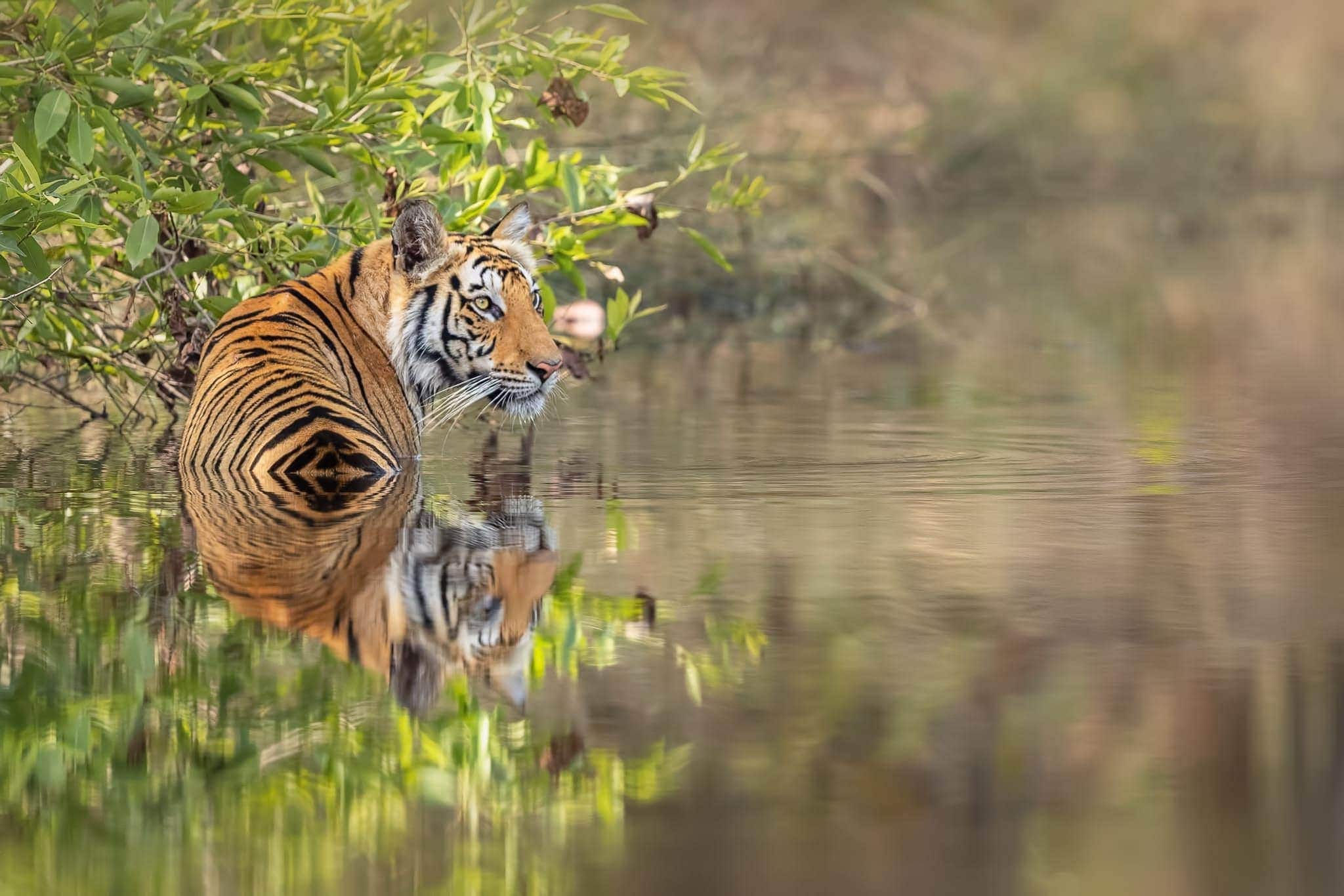
Bengal Tiger is the reason most photographers first book a trip to India, & Bandhavgarh National Park remains one of the most reliable places on earth to work with wild tigers. Both of our Bandhavgarh trips run through the dry season, when thinning vegetation & concentrated water sources make repeated sightings realistic rather than hopeful. Pui Hang Miles guides all three of our India trips, & the itinerary is built around repeated safari sessions in the same productive zones rather than a single pass through the park.
For the current trip list, see our India wildlife photography holidays; you can also explore more Asia wildlife photography trips.
What extends the case for India beyond tigers is Kaziranga. Assam’s grasslands hold one of the world’s great concentrations of Indian One-horned Rhinoceros, alongside wild elephant, Wild Water Buffalo & a supporting cast of waterbirds & deer species that Bandhavgarh simply does not offer. Between Bandhavgarh’s predator focus & Kaziranga’s grassland megafauna, the two parks give you a genuinely different photographic problem to solve in the same country.
Both parks depend on the dry season for their reputation. As surface water shrinks back to a handful of known waterholes & rivers, wildlife concentrates predictably around them, & the thinning undergrowth that follows the dry months opens up sightlines that would be impossible in the lush green season. That’s why every one of our India departures is timed for exactly this window rather than spread across the calendar.
Our India Photography Holidays
We run three small-group trips to India, all guided by Pui Hang Miles, split between Bandhavgarh’s tiger-focused safaris & Kaziranga’s grassland wildlife. Here are the next departures for each:
17th – 24th Mar 2027 — Majestic Bengal Tigers of India
6 nights | from £6,999 | Medium — Balanced Days with Moderate Activity
Dry-season tiger photography with repeated safari time in Bandhavgarh National Park — Bengal Tiger, Indian Leopard, Sloth Bear & Indian Wild Dog all feature alongside a strong supporting cast of deer & primates. Our most complete India itinerary.
More info on Majestic Bengal Tigers of India
13th – 20th Mar 2028 — Wildlife of Kaziranga National Park
6 nights | from £5,599 | Medium — Balanced Days with Moderate Activity
Rhinos, tigers & birdlife on safari in Kaziranga — Indian One-horned Rhinoceros, Asian Elephant & Wild Water Buffalo across Assam’s grasslands, a very different setting to Bandhavgarh & our most affordable India departure.
More info on Wildlife of Kaziranga National Park
29th Mar – 5th Apr 2028 — Tigers of Bandhavgarh
6 nights | from £5,499 | Medium — Balanced Days with Moderate Activity
Tiger photography with repeated safari sessions — our second Bandhavgarh departure, run later in the dry season for peak sighting conditions as water sources shrink further.
More info on Tigers of Bandhavgarh
Still deciding which trip fits? Get in touch & we’ll help you match the itinerary to what you want to come home with.
What You’ll Photograph in India
Bengal Tiger
Bengal Tiger is the headline subject on both Majestic Bengal Tigers of India & Tigers of Bandhavgarh, both run in Bandhavgarh National Park during the dry season when repeated sightings are most realistic.
Repeated safari sessions across the same zones matter enormously here — resident tigers hold territories that experienced trackers & guides come to know well, & returning to the same productive ground morning & afternoon across several days is what turns a single distant sighting into a genuine sequence of usable images.
Bandhavgarh’s Other Predators
Indian Leopard, Sloth Bear & Indian Wild Dog all feature alongside the tigers, giving both Bandhavgarh trips genuine predator variety beyond the headline species.
Sloth Bear in particular rewards a different kind of patience — more nocturnal & unpredictable in its movements than the tigers, sightings tend to come at the margins of the day, so being ready at first & last light through the safari window matters as much as knowing where the resident animals favour.

Deer & Primates
Spotted Deer, Sambar Deer, Barking Deer, Grey Langur, Rhesus Macaque, Indian Gaur, Wild Boar & Indian Peafowl are all reliable subjects across the Bandhavgarh trips, giving you plenty to work with between tiger sightings.
These species also do double duty as an early warning system — alarm calls from langurs & deer are often the first sign a tiger or leopard is moving nearby, & an experienced guide reading that behaviour is frequently what puts you in the right place before the predator itself appears.

Kaziranga’s Grassland Megafauna
Wildlife of Kaziranga National Park is built around an entirely different set of subjects — Indian One-horned Rhinoceros, Asian Elephant, Wild Water Buffalo, Swamp Deer, Hog Deer, Ganges River Dolphin, Smooth-coated Otter, Greater Adjutant Stork, Bar-headed Goose & Indian Rock Python across Assam’s floodplain grasslands.
The open grassland setting is the key difference from Bandhavgarh’s forest — sightlines run for hundreds of metres across the floodplain rather than being broken up by tree cover, which changes both the composition options & the lenses you’ll reach for most through the trip.

When to Visit India
All three of our India departures run between March & early April, right at the peak of the dry season in both Bandhavgarh & Kaziranga. This is when water sources are at their most concentrated & vegetation at its thinnest, giving the most reliable sighting conditions of the year for both tigers & the Kaziranga megafauna before the pre-monsoon heat builds through late spring.
Planning Your Trip to India
Safari vehicles in both Bandhavgarh & Kaziranga run on a permit & zone system, meaning access to specific areas of each park is limited & allocated in advance — part of why booking well ahead matters more here than in many other destinations in the series. Pui Hang’s experience with both parks means the itinerary is built around securing the zones with the best recent activity, rather than simply taking whatever permit happens to be available.
Dry season conditions mean dust & heat both build through the day, so mornings & late afternoons remain the productive windows for photography, with a rest through the hottest hours — a rhythm familiar to safari photographers elsewhere in the series, though the heat itself, especially by late March & into April, is more intense than most of our other trips. Bring a lens cloth & be prepared for genuinely dusty vehicle conditions on the more remote tracks.
Kaziranga’s open floodplain also means longer lenses come into their own more than in the denser forest of Bandhavgarh, where subjects can appear at much closer range through gaps in the vegetation. Packing for both parks in the same trip, or choosing the itinerary that matches the lens kit you already have, is worth thinking through before you book.
Malaria precautions & appropriate vaccinations are worth discussing with your GP well in advance of travel, as with any trip to this part of Asia. Both trips run at Medium difficulty, reflecting long vehicle days rather than any physically demanding terrain.
Internal flights connect Delhi with both regions, keeping overall travel time manageable despite the distance between Bandhavgarh & Kaziranga.
Join Us in India
India rewards photographers who want repeated, structured access to genuinely rare megafauna — whether that is a Bengal Tiger in Bandhavgarh or an Indian One-horned Rhinoceros on the Kaziranga floodplain.
Pui Hang’s knowledge of both parks’ resident animals & productive zones is what turns a week of safaris into a genuinely reliable body of work rather than a matter of luck. Whichever park you choose, expect long days on the vehicle balanced by genuinely unhurried time once a sighting develops.
Get in touch if you’d like help choosing between our tiger & Kaziranga trips, or head straight to the India destination page to see current availability across all departures.
Plan your India photography holiday
Explore our India wildlife photography holidays, compare more Asia wildlife photography holidays, & meet the NaturesLens photography guides who lead our small-group trips.