Yellowstone in winter is the trip that tests a photographer’s patience more than almost anywhere else we guide, & it is precisely that difficulty that brings people back. Wolves, bison & elk do not perform on command here; you earn a sighting through cold, early starts & a guide who knows the Lamar Valley’s rhythms across a season, & David has been running our Winter Wildlife of Yellowstone photography holiday every February since 2018 precisely because that difficulty never gets old. This piece is about why wolves, bison & the wider drama of a park under snow keep drawing serious photographers back for another attempt.
Why does winter concentrate wolves & bison into the Lamar Valley?
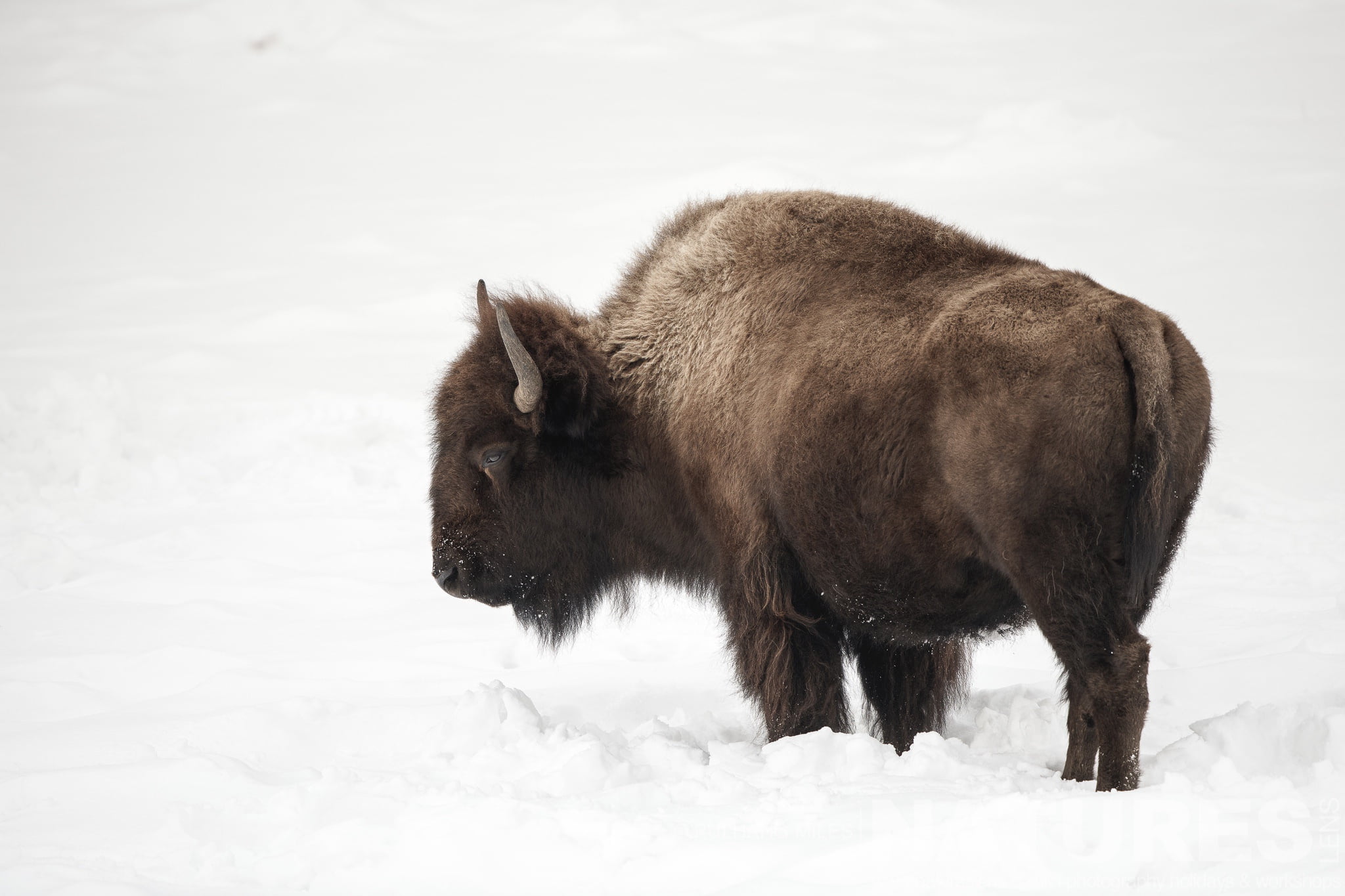
Deep snow across the higher ground pushes elk, bison & the wolves that follow them down into the wide, wind-scoured valleys, particularly Lamar & the surrounding sagebrush flats, where grazing remains possible & visibility across the open ground is genuinely exceptional. Bison plough through snow with their heads, clearing patches to reach grass beneath, & that concentrated activity along the valley floor is what makes winter, for all its discomfort, the single best season for reliably locating wolves here, since the reintroduced packs follow the same elk herds the cold has already pushed into view. Bald Eagle & the occasional Bighorn Sheep add further variety along the valley’s steeper margins, but it is the interplay between bison, elk & wolf across that open winter ground that defines the trip.
Why photograph predator-prey dynamics rather than just portraits?
A wolf pack testing an elk herd, or bison forming a defensive ring against a perceived threat, is a fundamentally different photographic challenge to a static portrait, & it is the behaviour we structure the whole nine days around. Long glassing sessions with a spotting scope, often from a considerable distance given how wary Yellowstone’s wolves remain even after decades of research presence, precede any actual photography, & reading body language across the pack, ears, tail position, the shift from resting to hunting focus, is what lets us reposition in time rather than missing the moment entirely. Coyote sightings are considerably more frequent & often provide a useful proxy for practising that same behavioural reading before a wolf opportunity presents itself.
What about bears – & why does timing matter so much at Yellowstone?
Grizzly & black bear are two of the park’s most famous residents, but they are denning through February, which is precisely why our winter departure is built around wolves, bison & elk rather than bears, & why timing a Yellowstone trip correctly matters as much as choosing the park itself. Come spring, the same Lamar Valley slopes that hold wolves & bison in February will hold grizzlies emerging hungry from their dens, & that seasonal shift is worth understanding even if it falls outside this particular trip, since it shapes how we think about Yellowstone as a destination across the whole year rather than a single visit. For guests keen to add bears to a Yellowstone portfolio, that is a conversation worth having directly, since it changes both the season & considerably the itinerary.
Why does the cold itself become part of the image?
Temperatures regularly sit well below freezing, & rather than fighting that, the trip is built to use it: geothermal steam rising against a frozen valley, bison rimed with frost, the low-angle winter sun that never climbs particularly high even at midday, giving soft, extended golden light across most of a working day rather than the harsh overhead sun of summer. Otter & pine marten turn up along the park’s ice-fringed rivers & forest edges, both genuinely elusive & rewarding for a photographer prepared to sit quietly rather than move continuously, while stoat & red fox add a smaller, quicker-moving layer against the snow that demands a completely different shooting approach to the slow patience a wolf sighting requires.
Moose add a further, quieter presence around the park’s wetland margins & willow-lined streams, & photographing one wading through snow-crusted willow, breath visible in the cold, is a genuinely different problem to the open-ground work that dominates the rest of the trip; it demands slower, more deliberate stalking through denser cover. Guests who have done the trip before tend to spend more of their free attention on moose & the smaller mammals on a second visit, having already secured wolf & bison images on their first, which is a pattern we see repeated across nearly every destination in this series: the obvious subject comes first, & the quieter, more demanding ones follow once that pressure is off.
Who tends to get the most from this particular trip?
This is graded as one of our more physically demanding trips, long hours outdoors in severe cold, considerable early starts, & genuine uncertainty around wolf sightings that even decades of park research cannot fully resolve. It suits photographers who are comfortable with that uncertainty & who want the specific challenge of winter predator-prey photography rather than a guaranteed close encounter. The group is kept to between four & six photographers, small enough that everyone gets proper access to the spotting scope & the guide’s read of pack behaviour, & it particularly suits anyone who has photographed African predators before & wants to see how differently that same discipline of reading behaviour applies to a wolf on snow.
So what keeps photographers returning to Yellowstone?
It is the honesty of the challenge. Nothing here is arranged for the camera, & every sighting, wolf, bison herd, a fox working a mouse beneath the snow, is the product of genuine patience rather than a predictable routine. That is exactly the kind of destination NaturesLens is built around, & it sits alongside the wider case we make for wildlife photography across the United States in why photographers are drawn to the United States. You can read more about the park’s habitat & species in our field guide to Yellowstone, & if you would like to talk through a February departure, get in touch & David will explain honestly what winter in the valley demands.