Shompole is the destination in our Kenya collection that surprises photographers who think they already know what an African safari looks like. Tucked into the Rift Valley close to the Tanzanian border, beneath the steep, forested wall of the Nguruman Escarpment, it is a community-conserved wilderness with none of the vehicle congestion that can crowd out a sighting in Kenya’s more famous reserves, & it is built around something most safaris barely touch: proper night photography from fixed hides. Our Wildlife of Shompole Wilderness photography holiday is a comparatively recent addition to what we run in Kenya, but it has already become the trip guests ask to repeat, sometimes before they have even left. This is about why.
Why does Shompole’s remoteness change what you can photograph after dark?
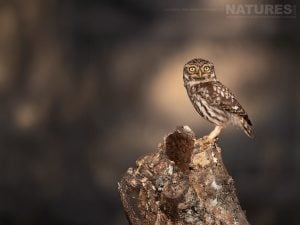
Acacia woodland, open savannah & seasonal wetlands fed by natural springs create a mosaic that supports a genuinely nocturnal cast most safaris never properly engage with: African Civet, Common Genet, Porcupine, Spring Hare & Bat-eared Fox all move through the darkness here in numbers that a lit, controlled hide can actually make use of, alongside owls including Marsh Owl, Spotted Eagle-Owl & the imposing Verreaux’s Eagle-Owl. That richness exists precisely because Shompole sits away from the heavier tourist routes; low light pollution, minimal vehicle disturbance & a community conservation model that keeps visitor numbers deliberately restrained all combine to keep nocturnal behaviour close to natural rather than disrupted by decades of headlight exposure, which is the single biggest reason the night sessions here work as well as they do.
Why do hides matter so much for both day & night sessions here?
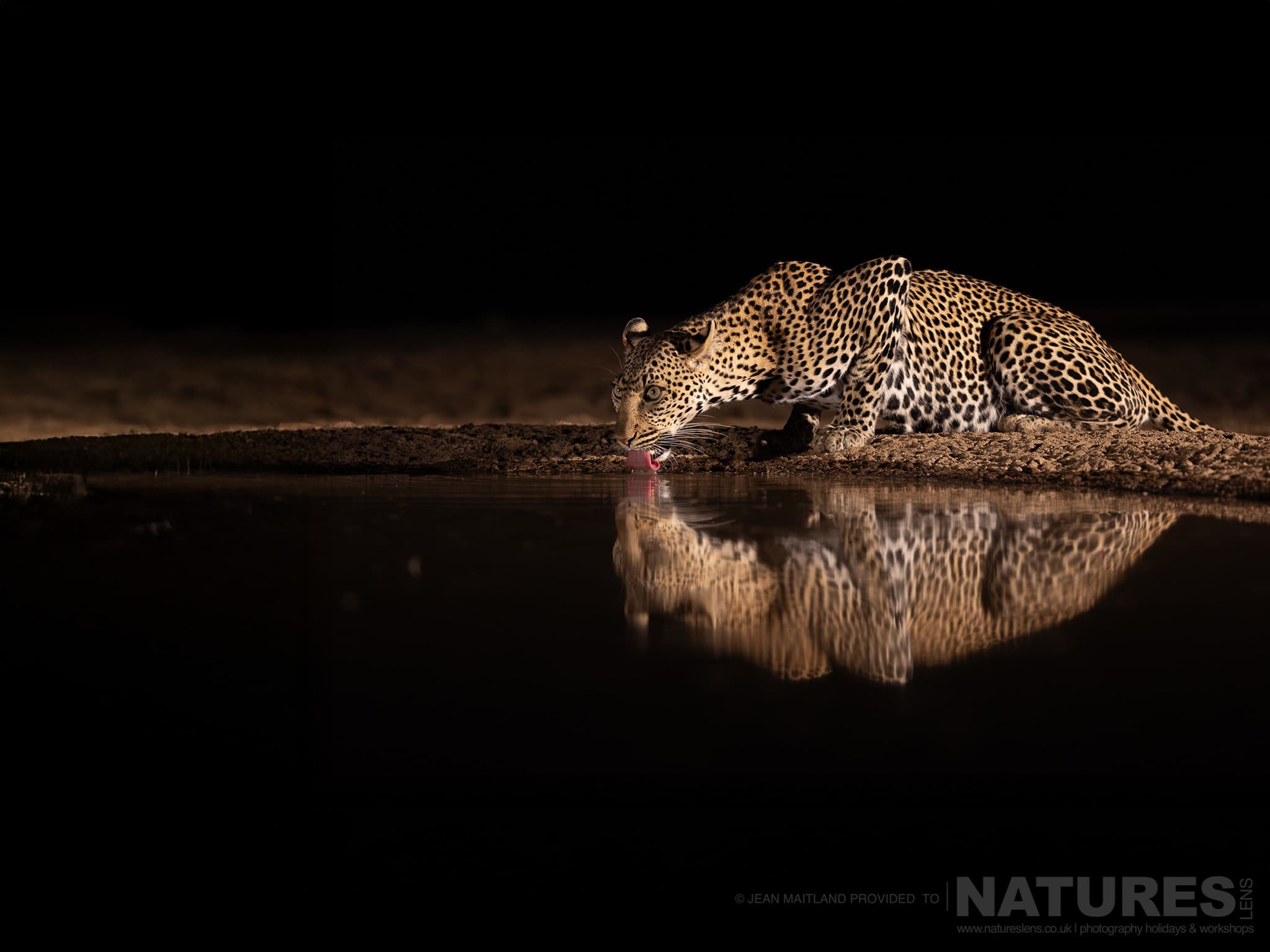
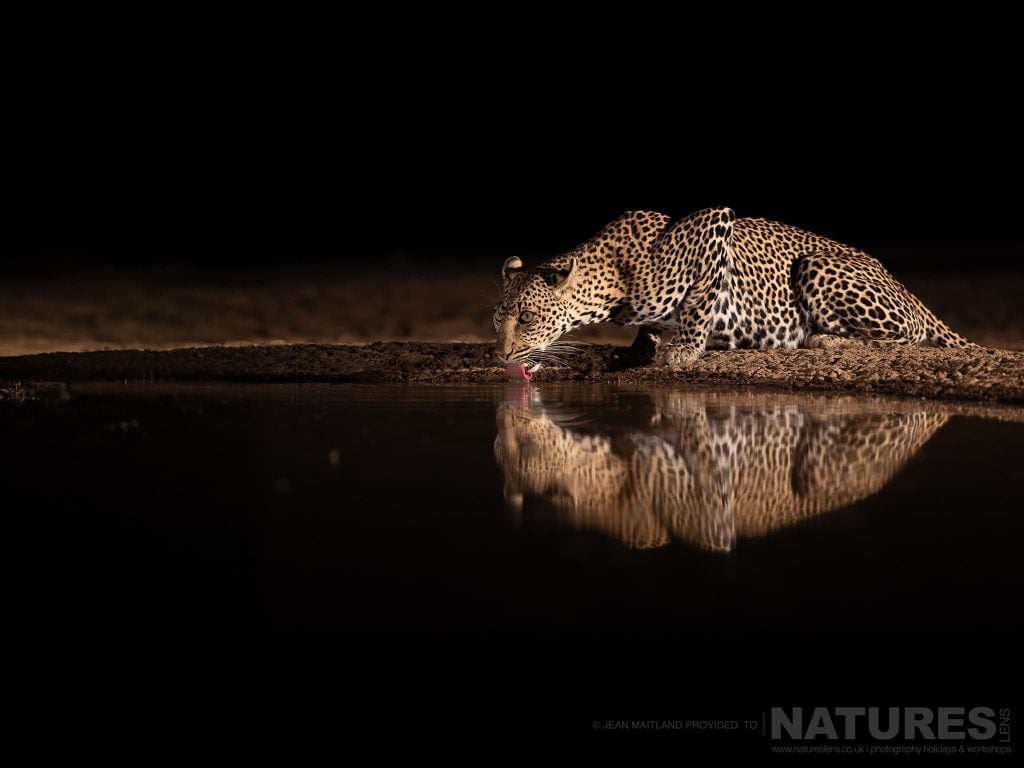
Every session at Shompole, day or night, is built around fixed hides positioned at water sources, which sounds restrictive until you experience how much it changes the photography. Rather than driving toward a sighting & hoping the angle works, you are already positioned, low, still & with the light or the controlled lighting rig set up correctly, waiting for elephant, giraffe, plains zebra, impala & Grant’s gazelle to come to the water on their own terms. African Lion & African Leopard both use the same water sources, & a leopard drinking at night, its reflection thrown back across the pool by carefully managed lighting, is the kind of image that simply is not available from a moving vehicle. Both Spotted Hyena & the far less commonly photographed Striped Hyena turn up at these same hides, offering a rare chance to compare two competing carnivore species within a single session.
What makes the light at Shompole different to the rest of Kenya?
Daytime sessions run in genuinely hot conditions, & the quality of light across an October day here has a clarity that comes from the dry Rift Valley air & the escarpment’s shadow shifting across the plains as the sun moves. Early morning & late afternoon give the warm, low light most safari photographers are chasing, but it is the transition into blue hour & full darkness that sets Shompole apart, since that is when the hide sessions properly begin & the carefully managed lighting takes over from natural light without spooking the animals using the water. Getting that transition right, so the change from daylight to controlled artificial light is imperceptible to a drinking elephant or a passing lion, has taken years of refinement at these specific hides, & it is exactly the kind of technical groundwork that is invisible in the final image but entirely responsible for it looking natural.
Why does low visitor pressure change the animals’ behaviour?
Fewer vehicles & fewer camps sharing the same water sources means the wildlife at Shompole behaves with a degree of ease that is increasingly hard to find elsewhere in Kenya. A herd of elephant approaching a hide here tends to relax at the water rather than drink hurriedly & move off, & that relaxation is what allows a session to run long enough to capture proper behaviour: interaction between individuals, mud-bathing, a calf testing its trunk, rather than a single hurried frame before the group moves on. It is a genuinely different proposition to the reserves further north, where decades of vehicle pressure have taught animals to treat any human presence as background noise to be tolerated rather than an opportunity to simply exist undisturbed, & that difference comes through clearly in the resulting images.
Heat is a constant across the day, & the pace of the itinerary respects that: the hottest hours in the middle of the day are given over to rest & to reviewing the previous session’s images, while the productive windows sit either side of it & then, distinctly, after dark. That rhythm, three genuinely different working periods rather than one long grinding day, is part of why guests find Shompole less physically draining than its remoteness might suggest, & it leaves proper energy for the concentration a night hide session demands. Patience matters more here than almost anywhere else we run trips in Africa, because a hide session can run for two or three hours with very little happening before, without warning, a genet slips into the frame or a lion appears silently at the water’s edge.
Who tends to get the most from this particular trip?
It suits photographers who want to work night photography properly, with controlled light & fixed positions, rather than relying on a spotlight from a moving vehicle, & who are comfortable with the discipline that hide-based shooting demands: extended stillness, quiet & genuine patience through slow patches. The group is kept to between five & seven photographers, & because Shompole is still a relatively recent addition to what we run, it particularly suits photographers keen to work a wilder, less pressured landscape before it inevitably becomes better known. It is not a trip built for ticking off the widest possible species list in the shortest time; it rewards those willing to sit still for hours at a single water source in exchange for images that a rushed itinerary could never produce.
So what keeps photographers coming back to Shompole?
It is the combination of genuine remoteness, disciplined hide-based technique & a nocturnal cast that most African trips never properly address. Every guest who has photographed a leopard drinking under carefully managed light at one of these hides understands immediately why a second visit, in a different season or with a different set of species in mind, is worth planning. That instinct runs through the wider case we make for wildlife photography in Kenya in why photographers are drawn to Kenya, & you can read more about the habitat & species at the location in our field guide to Shompole. If you would like to talk through an October departure, get in touch & Pui Hang or David will explain how the hide sessions are structured.