There is an important distinction between a wildlife holiday on which you are welcome to take photographs & a wildlife photography holiday that has genuinely been designed around making photographs. They can visit exactly the same country, stay in similar lodges & encounter many of the same species, yet the experience for the photographer can be completely different.
For me, the simplest way of defining that difference is that a genuine wildlife photography holiday is designed backwards from the photograph. We start by considering where we need to be, when we need to be there, what the light is likely to be doing, how many photographers can realistically work from the location & how much time we might need if an opportunity develops. The itinerary then grows around those requirements.
That is rather different from taking an existing wildlife tour, adding a photographer as leader & describing the result as a photography holiday. There is nothing inherently wrong with the first type of trip, but photographers should understand which of the two they are booking.
What Actually Makes A Wildlife Holiday A Photography Holiday?
The difference begins with the purpose of the itinerary. On a conventional wildlife tour, success might reasonably be measured by how many interesting species the group encounters, how much of a destination they experience & how varied the programme is. When we design a NaturesLens holiday, the question I am asking is different – what photographic opportunities are we trying to create?

That change in emphasis affects almost every decision that follows.
If I know that a species is most active during the first hour after sunrise, I do not want breakfast scheduled for the same time simply because that is convenient for the hotel. If the best light reaches a hide at 7.30 in the morning, we need to be inside that hide before 7.30. If an animal routinely appears at dusk, there is little point planning an elaborate dinner arrangement that requires everybody to leave precisely when the photography is becoming interesting.
This sounds obvious, but it is surprising how often photography is expected to fit around the normal rhythm of a tour rather than the other way around.
We have learned over years of operating trips that a productive photographic session cannot always be squeezed neatly into a predetermined timetable. Sometimes the opportunity lasts twenty minutes. Sometimes you wait several hours for very little to happen & then, just as you are beginning to wonder whether today is going to be one of those days, everything changes.
That is wildlife photography. You cannot timetable the animal, but you can build an itinerary that gives you the best possible chance of being in position when something happens.
It is why our schedules sometimes look slightly unusual when viewed as conventional holidays. They are not designed around filling every hour with activity. They are designed around using the hours that matter photographically.
Why Is Seeing Wildlife Different From Being Able To Photograph It?
Seeing an animal & being in a position to make a strong photograph of that animal are two very different things. Anyone who has spent much time photographing wildlife will recognise that immediately.
A lion lying behind a bush at midday might be an excellent sighting. As a photographic opportunity, it may offer virtually nothing. The same lion moving through open grass in the first light of the morning, with enough space to choose a clean background & position the vehicle sensibly, is an entirely different proposition.
This is one of the reasons I am wary of judging photography holidays by the number of species listed in an itinerary. I would much rather give a group prolonged access to a productive subject in good conditions than rush away because we have another three species that somebody thinks we ought to tick off before lunch.
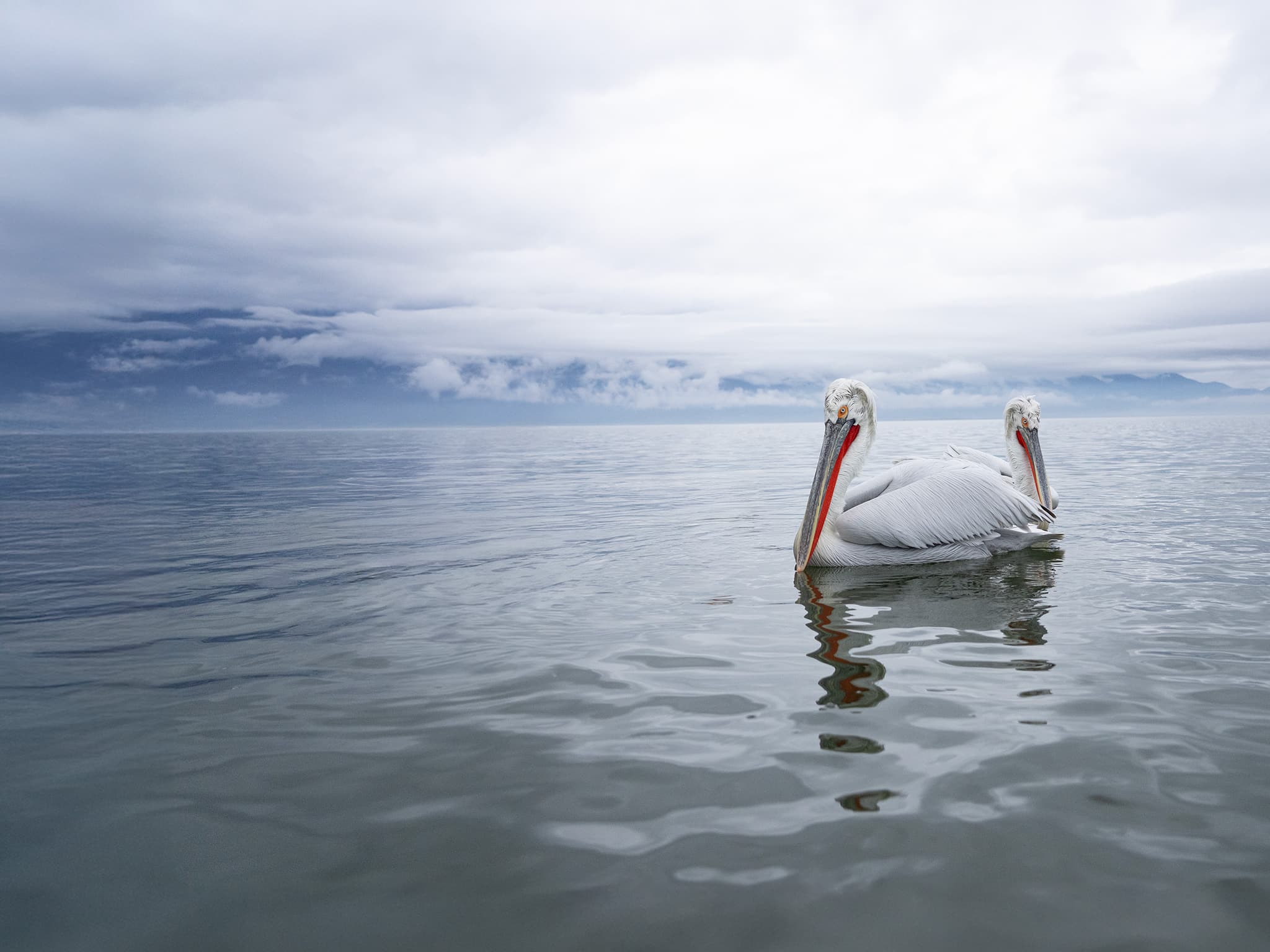
The same principle applies outside Africa. With the Dalmatian Pelicans at Lake Kerkini in northern Greece, for example, simply finding pelicans is not difficult. The photography comes from understanding the birds, the winter conditions, the boats, the backgrounds & the changing quality of light across the lake. A bird being present is only the beginning of the opportunity.

Likewise, when working from specialist hides, the location of the hide may determine everything from shooting angle to background separation. A drinking bird photographed from standing height can look completely different from the same bird photographed from a position close to water level. The wildlife has not changed, but the photograph has.
This is why I think photographers should be cautious when they see itineraries promising enormous wildlife lists. There are trips where that is entirely appropriate, particularly birding holidays, but NaturesLens has never been about accumulating the largest possible number of species. We are interested in what you can actually do photographically with the subjects that we encounter.
Given the choice between seeing ten species badly & spending several hours with one species under improving light, I know where I would rather be.
Why Do Group Size & Positioning Matter So Much To Wildlife Photographers?
One of the most important lessons in wildlife photography travel is that the physical capacity of a location is not necessarily its photographic capacity.
A safari vehicle might legally carry eight people, but that does not automatically mean eight photographers can comfortably work from it with long lenses. A hide might allow six people to sit inside it, but perhaps only four positions offer a genuinely useful shooting angle. A boat may carry a dozen passengers perfectly safely while only a handful have the freedom to photograph from the side they need.
That distinction influences the way we build our groups.
NaturesLens holidays are deliberately small because positioning becomes increasingly difficult as numbers rise. It is not simply about comfort. When somebody is photographing with a 400mm, 500mm or 600mm lens, the space required is quite different from that required by somebody carrying binoculars. Photographers need room to move the lens, change their angle, track a bird in flight & respond quickly when the subject changes position.
It also affects fairness. On our hide-based trips, including our photography in Hungary, some specialist hides naturally have limited capacity. That means the itinerary has to be designed around rotation so that everybody gets meaningful access to the strongest locations rather than discovering after arrival that half the group has consistently better positions than the other half.


Vehicle positioning is equally important. A good wildlife guide might instinctively think about getting everyone a clear view. A photography-aware driver or guide also has to consider the direction of the sun, the background behind the animal, whether another vehicle is likely to block the line, how the subject may move & which side of the vehicle gives the group the best chance.
These details sound small until you are sitting in the wrong place watching extraordinary behaviour unfold through somebody else’s window.
That is when the difference between wildlife viewing capacity & photographic capacity becomes very obvious indeed.
Why Should Wildlife Dictate The Timetable Rather Than The Itinerary?
If photography really is the priority, the daily routine has to follow wildlife behaviour & light rather than conventional holiday hours. That occasionally means doing things at times that would make very little sense on an ordinary tour.
Our photography at Shompole Wilderness in Kenya is probably one of the clearest examples. The core experience there is nocturnal photography from specialist hides positioned beside waterholes. Animals visit naturally, without being baited or encouraged to appear, which means the photography has to be organised around the rhythms of those animals rather than our preferred bedtime.
Species such as African Leopard, African Civet, African Elephant, African Lion & Bat-eared Fox may appear during the hours of darkness, so the middle of the day becomes a period for rest. We may undertake activity early in the morning after dawn or again during the late afternoon, but we are not trying to fill the daytime with conventional sightseeing simply because guests happen to be awake.
That structure exists because the photographs dictate it.


Similar decisions occur everywhere we work. On some trips an early start is necessary because the first light is critical. On others the evening session is sufficiently important that we deliberately leave part of the afternoon free, allowing people to eat, organise equipment, charge batteries or rest before heading back into the field.
There is another benefit to this approach that is sometimes overlooked. Wildlife photography requires concentration. Sitting quietly in a hide for several hours, tracking fast-moving birds or working from a vehicle for an extended period can be tiring, particularly when you are continually evaluating exposure, backgrounds, composition & behaviour.
Packing every gap in the itinerary with another attraction does not necessarily create a better photography holiday. Sometimes the most useful thing we can build into a programme is space.
A photography-led itinerary therefore tends to have a different rhythm. It is not necessarily slower, but the energy is concentrated around the periods when the photographic return is most likely to be worthwhile.
What Does A Photography-First Itinerary Look Like In Practice?
For me, the best way of recognising a photography-first itinerary is to look beyond the destination & examine the decisions hidden underneath it. Why has the operator chosen that particular lodge? Why is the group leaving at that particular time? Why are there four guests in one vehicle instead of six? Why are two mornings allocated to the same subject?
If there is a photographic reason behind those choices, you are probably looking at something genuinely designed for photographers.
Sometimes we choose accommodation because it sits close to the area we need at dawn rather than because it is the most luxurious option available. Sometimes we deliberately return to the same location because the first session produced excellent behaviour & there is every reason to believe another visit could produce something different. Wildlife photography is not diminished by repetition; often repetition is what allows you to progress from simply recording a species to creating a varied portfolio of it.
That might mean concentrating on portraits during one encounter, behaviour during another, wider environmental compositions when the conditions allow, then silhouettes, backlighting or flight photography as the light changes.
The practical side matters as well. Single occupancy is standard across NaturesLens holidays because photographers travel with a substantial amount of equipment & need space to manage it. After a long day or late-night session, people need somewhere to download images, charge batteries, clean equipment & sleep without negotiating somebody else’s routine. It sounds like an accommodation detail, but it is another example of designing around the reality of travelling as a photographer.
The same thinking explains why we work so hard on local partnerships. A guide who understands where an animal might be found is valuable. A guide who also understands why moving three metres forwards could remove an ugly branch from the background is considerably more useful to a photographer.
Over time we adjust our itineraries as we learn. We discover which sessions are consistently productive, where groups need more time, which locations photograph better at particular times of day & occasionally which activities sounded promising on paper but do not justify the time they consume.
That evolution is part of operating genuine photography trips rather than simply repeating a conventional tour programme year after year.
How Can You Tell Whether Photography Has Simply Been Bolted Onto A Wildlife Tour?
One useful way to assess any wildlife photography holiday before booking is to read its itinerary & consider what each part of the programme is actually there to achieve.
There is nothing wrong with cultural visits, sightseeing stops, relaxed lunches or general nature walks. Many people enjoy exactly that mixture, & a wildlife holiday incorporating photography can be a wonderful way to travel. The problem only arises when someone specifically wants a photography-led experience but books something where photography is merely one activity among many.
Look particularly closely at group size, vehicle occupancy & access to specialist locations. If twelve photographers are being taken somewhere with four genuinely useful shooting positions, somebody has a problem regardless of how attractive the brochure looks. If the itinerary repeatedly moves on after brief sightings because another attraction is scheduled, that tells you something about the priorities of the trip.
I would also look at who designed the itinerary & whether the description explains photographic opportunities in practical terms. Does it talk about light, positioning, hides, backgrounds, behaviour & working distance, or does it simply list species? Is there evidence that the operator has actually photographed there & understands what happens when conditions are less predictable than expected?
Perhaps most importantly, ask yourself whether the programme allows time.
Wildlife rarely performs to order. The image you remember may happen after two quiet hours, when a bird finally lands on the clean perch you have been watching all morning, when an animal turns towards the light rather than away from it, or when behaviour develops unexpectedly & you are given the opportunity to stay rather than being hurried onwards.
Time with productive subjects is one of the most valuable things any wildlife photography holiday can offer.
Why Does The Difference Between A Wildlife Trip & A Photography Trip Ultimately Matter?
It matters because wildlife photographers usually travel with a very different objective from the conventional tourist. Of course we want to enjoy the destination, see remarkable animals & spend time in extraordinary landscapes, but ultimately we have travelled with cameras because we want the opportunity to make photographs.
That does not mean every session will produce something spectacular. Wildlife remains wildlife, weather changes, animals behave unpredictably & there will always be days when the opportunity you hoped for simply does not happen. No responsible photography operator can guarantee the photograph.
What we can do is make sure the structure of the holiday is giving photography every reasonable advantage.
That means sensible group sizes, suitable vehicles, specialist hides where appropriate, time in the field, local people who understand photographers, accommodation that works for travelling with equipment & an itinerary that can respond when the wildlife presents an opportunity.
Above all, it means knowing when not to move on.
There have been plenty of occasions over the years when the best decision we could make was simply to stay where we were because the light was improving, the subject was relaxed or something interesting appeared to be developing. Those moments rarely appear as a line on an itinerary, yet they are often where the strongest photographs come from.
That, ultimately, is what I mean when I describe NaturesLens holidays as photography first. It is not a slogan added after the itinerary has been built. It is the principle that determines how the itinerary is built in the first place.
A wildlife holiday with photography included can be an excellent holiday.
A genuine wildlife photography holiday should be something different – a journey designed around giving photographers the time, position, light & opportunity to come home with images they are genuinely pleased to have made.
Choosing a Wildlife Photography Holiday Company
- Choosing a Wildlife Photography Holiday Company
- How to Choose the Right Tour Operator
- What Makes a Great Wildlife Photography Tour?
- What Makes a Great Bird Photography Tour?
- Local Wildlife Specialists & Photographer-Led Guiding
- Why It Matters Who Leads Your Photography Tour
- Plan Your Own Trip, or Travel With a Guide?
- The Alternative to Large-Group Safari Operators
- Why Serious Photographers Choose Small-Group Holidays
- Small-Group Bird Photography Tours
- Why Our Guests Keep Choosing NaturesLens
- What Our Guests Remember Most About Travelling With Us
- How Wildlife Holidays Improve Your Photography
- Trips That Make You a Better Photographer
- Best Wildlife Photography Holidays in Africa
- NaturesLens vs Wildlife Worldwide - Which Suits You Better?
- NaturesLens vs Naturetrek - Which Suits You Better?
- NaturesLens vs Wild Photography Holidays - Which Suits You Better?
- NaturesLens vs Natures Images - Which Suits You Better?
- NaturesLens vs Images of Wildlife - Which Suits You Better?
- NaturesLens vs UK Photo Tours - Which Suits You Better?
- NaturesLens vs Paul Alistair Collins Photography - Which Suits You Better?
- Is It Really A Wildlife Photography Holiday - Or Just Wildlife Photography Bolted On?