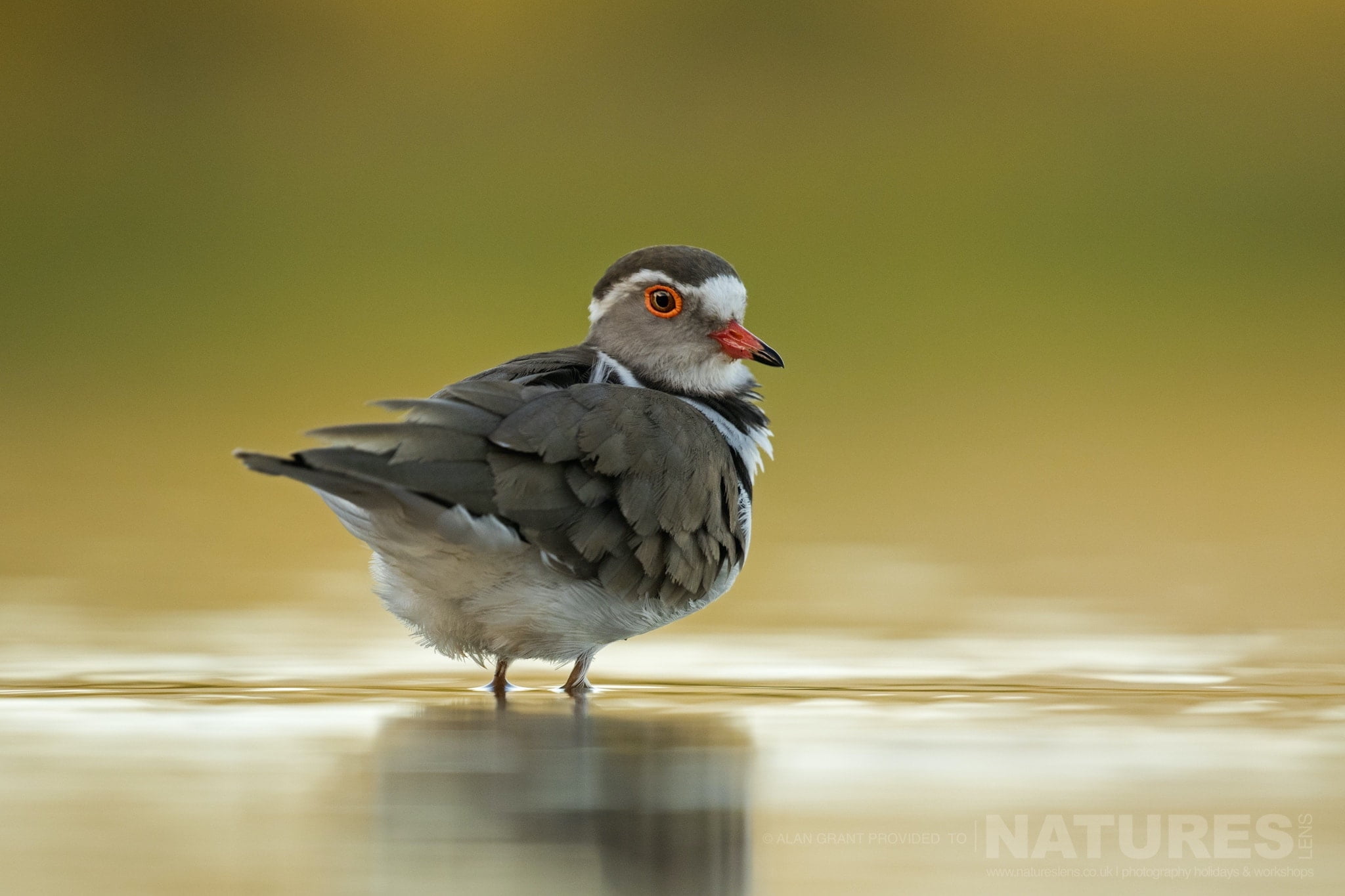
We use the word signature quite sparingly at NaturesLens, & it doesn’t mean what people often assume. It doesn’t mean most expensive. It doesn’t mean most frequently run. It doesn’t even mean hardest to access, although a couple of these genuinely are hard to access. What it actually means, in our own internal shorthand, is that a photographer leaves with something they couldn’t have made anywhere else, a style of image that belongs to one species, in one set of conditions, approached in one particular way that we’ve spent years refining.
I’ve found that the easiest way to explain this to a photographer who hasn’t travelled with us before is to ask them a single question before they book anything: what are you actually going to come back with? Not which species will you see, because seeing & photographing are two very different things, as anyone who has come home from a rushed trip with a memory card full of record shots will know. Seven trips make up this signature collection, & each one answers that question in a completely different way. Japan gives you graphic, minimal winter compositions. Shompole gives you nocturnal behaviour most photographers have never had the chance to attempt. Costa Rica gives you volume & colour. Spain gives you patience rewarded by one of Europe’s rarest predators. Greece gives you scale & motion. India gives you the weight of an apex predator walking toward your lens. Iceland gives you a seabird photographed properly, in proper light, rather than snatched from a clifftop in a rush.
Why Japan in winter produces images unlike anything else in a wildlife portfolio
Photographers come to Japan in winter for one reason, & it’s a reason that took me longer to properly understand than I’d like to admit. It isn’t really about the species, although the red-crowned crane & the Steller’s sea eagle are both extraordinary subjects in their own right. It’s about the chance to make an image that’s graphically pure in a way that almost nothing else in wildlife photography allows.

A red-crowned crane standing in falling snow isn’t just a wildlife subject, it’s line, gesture & balance arranged by the landscape itself, & I’ve always thought this is why the resulting images look so different from anything most wildlife photographers already have in their portfolio. Snow behaves as negative space rather than background. Behaviour becomes graphic rather than incidental. The same is true of the Steller’s sea eagle, perched on drifting pack ice with nothing around it but white & pale grey, & of the swans that gather on the same lakes.
What surprised me the first time I watched this trip run properly was how disciplined the whole exercise becomes. You come home with fewer images than from almost any other trip we run, because the entire approach is about refinement rather than volume, repeated access to a handful of genuinely productive locations rather than covering as much ground as possible. Early starts matter enormously here, because the crane displays & the eagle activity both peak in a narrow window before the light flattens out. I suspect this restraint is exactly why photographers who’ve done this trip once talk about it differently to their other trips. A crane with its wings spread against pure white looks almost too composed to be real, & the moment you actually make that image rather than simply photograph in its general direction is the moment the whole appeal of winter Japan clicks into place.
Ready to build a wildlife portfolio unlike anyone else’s?
If simplicity, elegance & graphic composition are what you’re after, our Japanese Wildlife in Winter holiday is where many photographers tell us they’ve produced the strongest work of their careers, returning with cranes, sea eagles, swans & macaques that immediately stand apart from the rest of their portfolio.
Explore our Japanese Wildlife in Winter photography holiday
Is Japan in winter suitable for photographers used to warmer, busier destinations?
Yes, though it rewards a different mindset. Winter Japan is about restraint & patience rather than covering ground, with fewer subjects photographed more carefully rather than a long species list ticked off quickly. Photographers who enjoy slowing down tend to get the most from it.
Why Shompole changes what photographers think is possible after dark
Most wildlife photographers have never photographed large African mammals in properly controlled after-dark conditions, simply because the opportunity doesn’t usually exist. Shompole Wilderness is where that changes, & it’s unlike anything else we run anywhere in the world.
In most Kenya wildlife photography holidays, the day effectively ends at sunset. At Shompole, that’s when things start. This isn’t safari photography in the conventional sense, there’s no golden hour landscape, no wide savannah light. What Shompole offers instead is something most photographers don’t know exists at all: purpose-built hides positioned over water, carefully managed lighting, & subjects, African elephants, genets, bat-eared foxes, & occasionally lion or leopard, emerging from complete darkness into compositions the photographer has effectively helped design through patient positioning.
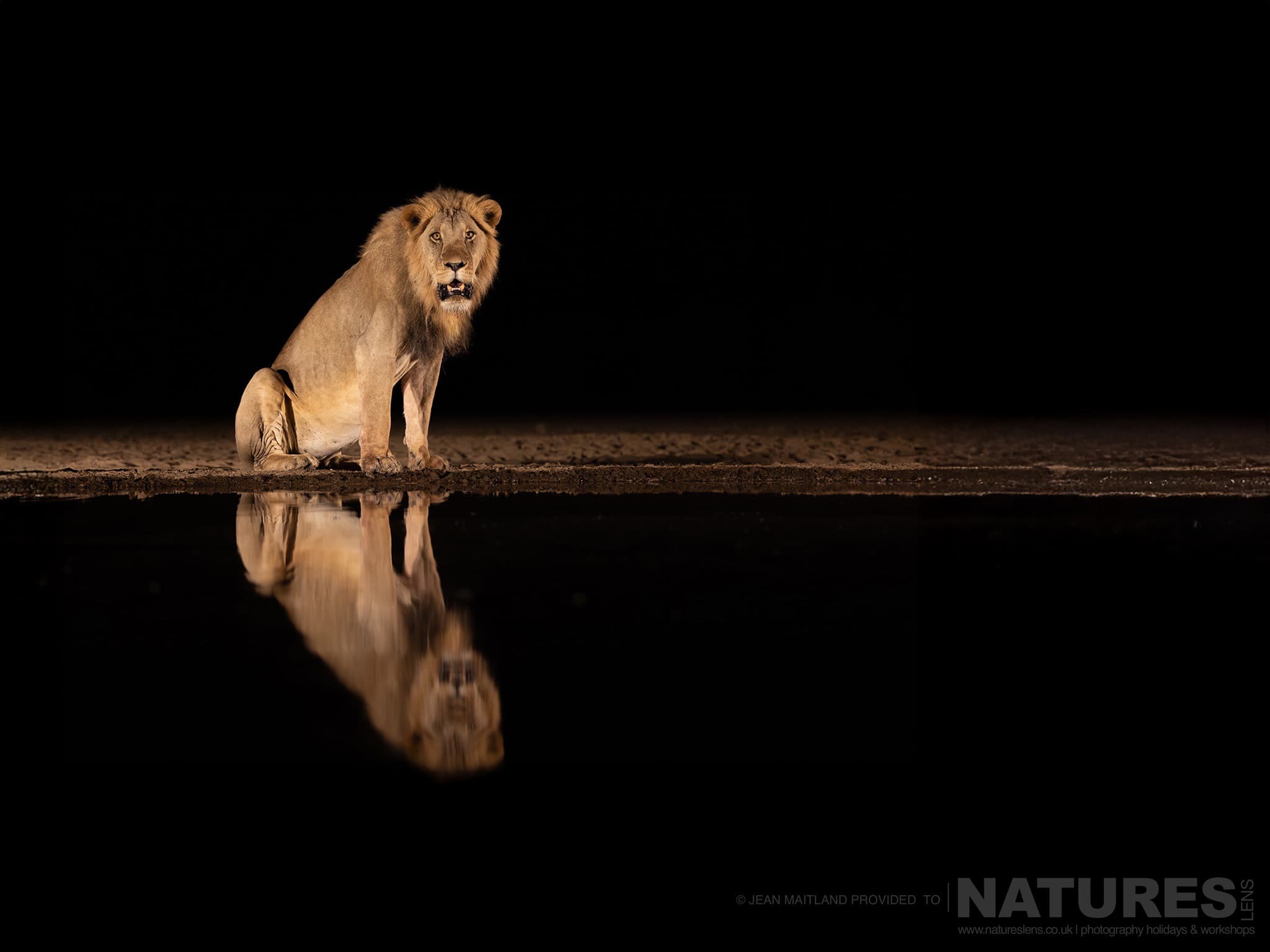
I’ve heard the same reaction described independently by enough photographers now that I no longer think it’s a coincidence: black backgrounds, mirror reflections in still water, eye contact with an elephant at two in the morning, & then checking the back of the camera afterwards genuinely wondering whether you made that image yourself. You did, & in my experience that feeling doesn’t fade by the end of the week, it tends to compound as the sessions go on & the compositions get more deliberate. What I’ve learnt watching guests return from Shompole is that the images rarely look like anything else in their existing portfolio, & that’s precisely why so many of them come back for a second visit within a year or two.
Create night wildlife images that almost nobody else has
Our Wildlife of Shompole Wilderness holiday gives you the rare opportunity to photograph African wildlife after dark from purpose-built hides with carefully managed lighting, & you’ll return with images unlike anything else in your portfolio.
Discover Shompole Wilderness
Why are small groups better for signature trips like these?
Small groups matter more, not less, on trips built around a single specialised experience. A hide over a Shompole waterhole, a lynx approach in Andalucia, or a crane session in falling Japanese snow can only accommodate a handful of photographers before positioning & quiet discipline start to break down. Fewer photographers means better light, better angles, & considerably less disturbance to genuinely sensitive subjects.
Why Costa Rica sits at the opposite end of the spectrum from Japan
Our Costa Rica wildlife photography holidays are, in almost every respect, the opposite aesthetic experience to Japan. Where Japan rewards restraint, Costa Rica rewards exuberance, & for photographers who want to fill a portfolio with tropical colour there really isn’t anywhere more productive that we’ve found.
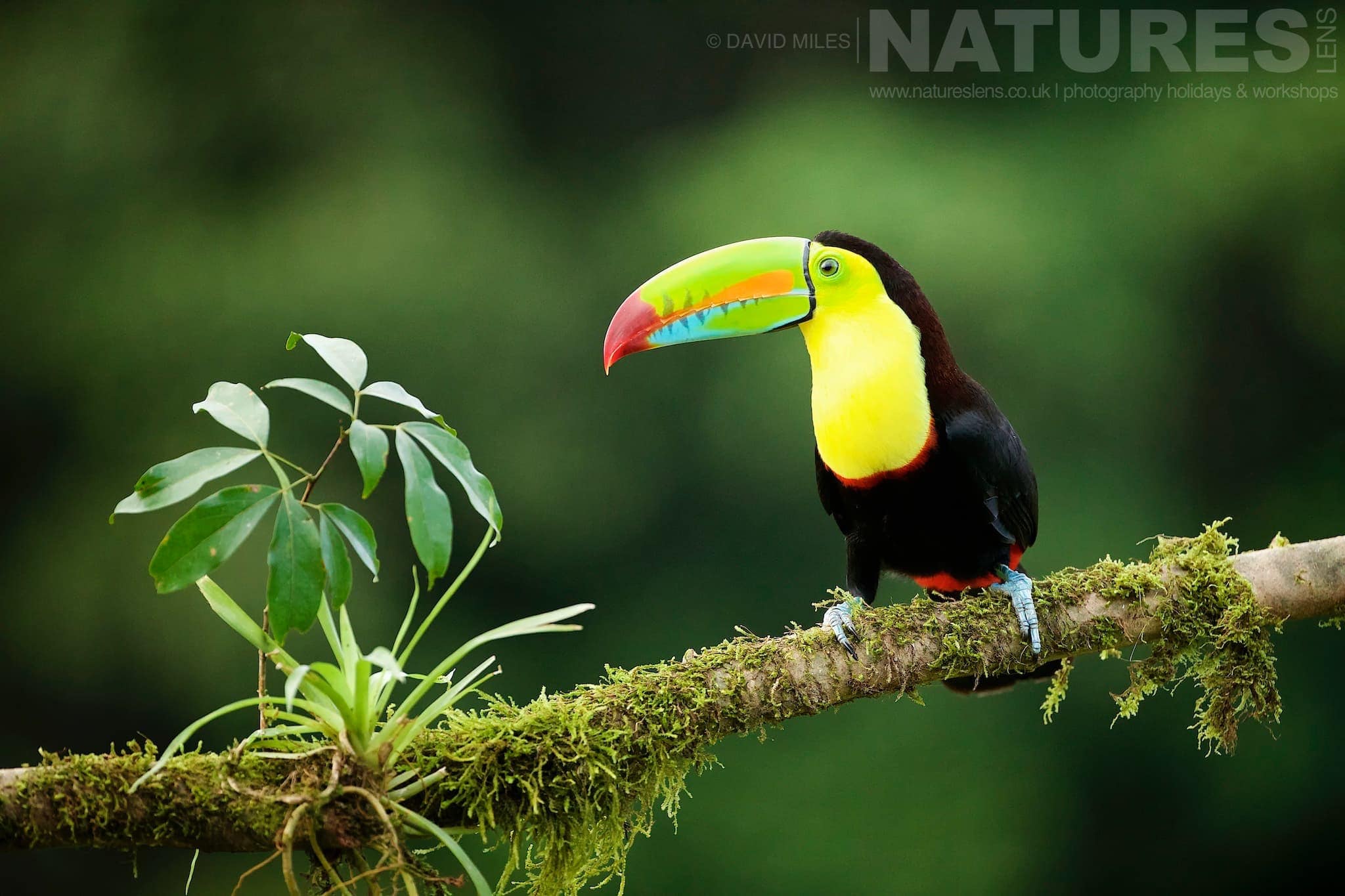
I’ve led enough of our own Costa Rica trips now to say with some confidence that the resplendent quetzal is the one bird that reliably stops photographers in their tracks the first time they see it properly, & then makes them want to photograph it again immediately, better, before the light changes. The iridescent green, the trailing tail feathers, the cloud forest light filtering through in patches rather than sheets, all of it is genuinely photogenic in a way that no amount of description quite prepares you for. The keel-billed toucan flashing that improbable bill & the red-eyed tree frog posed against an emerald leaf both do something similar, they’re subjects that are genuinely repeatable rather than rare encounters you either get lucky with or don’t.
What I’ve come to appreciate over several visits is how much of the value here comes from carefully selected lodges, productive feeders, & perches that guides have got to know over years rather than weeks. That familiarity means you’re not spending your days searching, you’re spending them refining, & that distinction matters more than it sounds. Most photographers who visit Costa Rica independently come home with sightings. Ours tend to come home with a genuinely complete body of tropical work, quetzal, toucan, tree frog, & several hummingbird species, all photographed in conditions that reward patience rather than punish it.
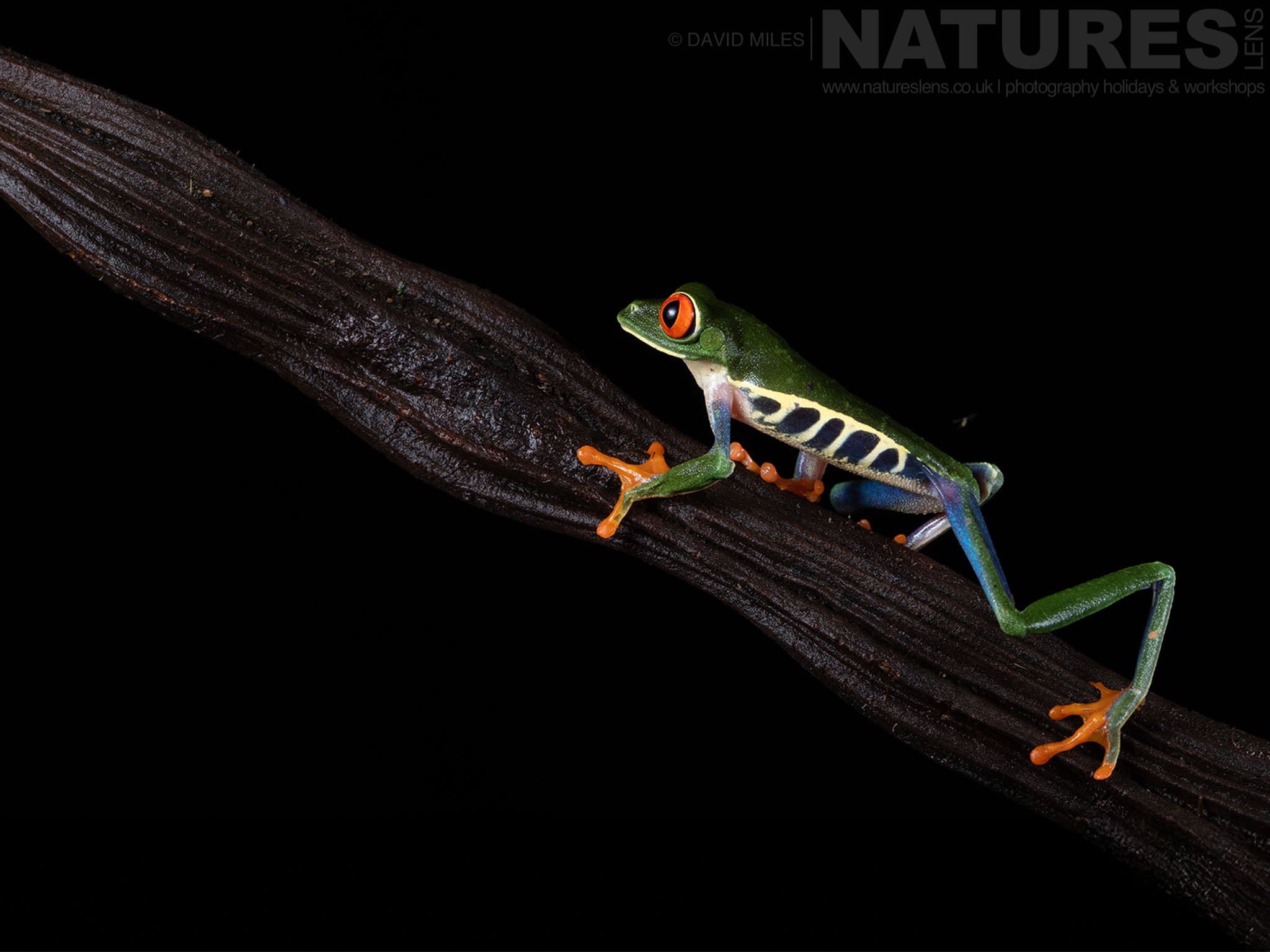
Fill your portfolio with colour, diversity & tropical wildlife
Whether that’s our Essential Costa Rican Wildlife, Ultimate Costa Rican Wildlife, or Wildlife Icons of Costa Rica itinerary, each is designed to help you build a complete body of tropical wildlife photography rather than a handful of lucky sightings.
View our Costa Rica wildlife photography holidays
What wildlife can you realistically photograph across our signature trips?
Across the seven signature trips, subjects range from red-crowned cranes & Steller’s sea eagles in Japanese snow, to elephants & big cats at Shompole’s night hides, hummingbirds & toucans & tree frogs in Costa Rica, Iberian lynx in Spanish scrub, Dalmatian pelicans at Lake Kerkini, Bengal tigers in Indian forest reserves, & Atlantic puffins on Icelandic clifftops.
Why the Iberian lynx rewards more patience than almost any other subject
For a lot of European wildlife photographers, the Iberian lynx has been on the list for years before they ever get near one. It’s Europe’s rarest cat, a conservation story that still feels fragile enough to be a genuine privilege to witness, & a subject that demands patience & delivers real intensity in return.
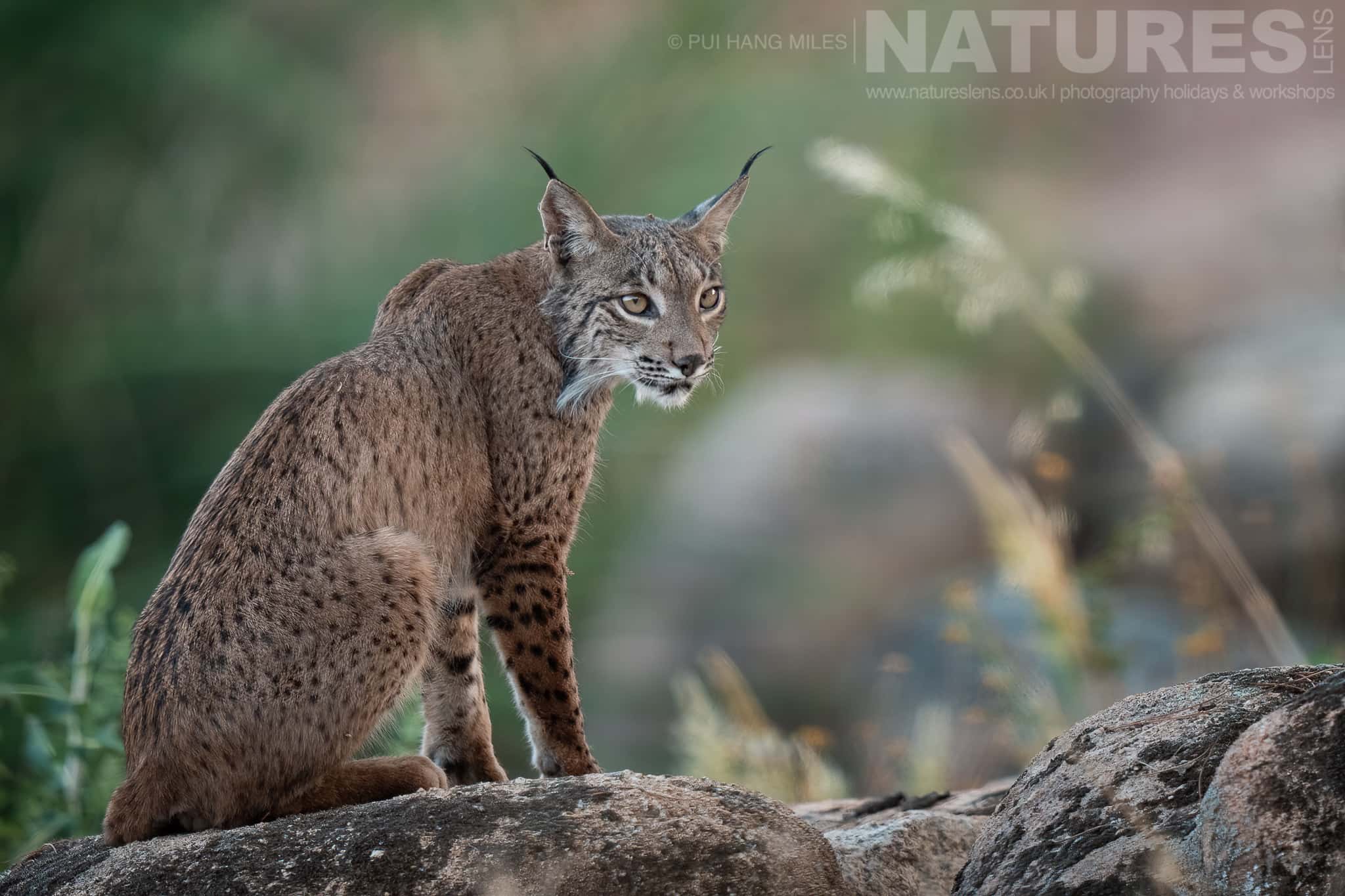
Our Spain wildlife photography holidays centre on a hide system that Pui Hang & our guides have refined specifically for photographic conditions rather than simple sightings, low angles, warm Iberian light, & backgrounds restrained enough that the cat is never fighting the frame for attention. The lynx isn’t driven toward you, it’s waited for, & that distinction shapes the entire experience. A shape emerging from scrub. Eye contact held for a second or two. A moment that’s been earned through stillness rather than pursuit, which I think is part of why photographers describe it so consistently the same way afterwards, several have told me they simply forgot to breathe when it happened.
What you leave with is imagery of a subject that most European wildlife photographers spend years trying to access & often don’t photograph particularly well even when they do get there. Running this trip in summer isn’t an arbitrary choice either, the days are longest & the light is warmest exactly when it matters most, because the lynx sets its own schedule & the photographic window is defined by its behaviour rather than by our itinerary.
Photograph Europe’s most elusive wild cat with confidence
Specialist hides, carefully chosen locations & small groups give you every opportunity to produce Iberian lynx photographs that very few photographers ever achieve.
Explore our Iberian Lynx photography holiday
Why are Dalmatian pelicans one of the most demanding subjects we photograph
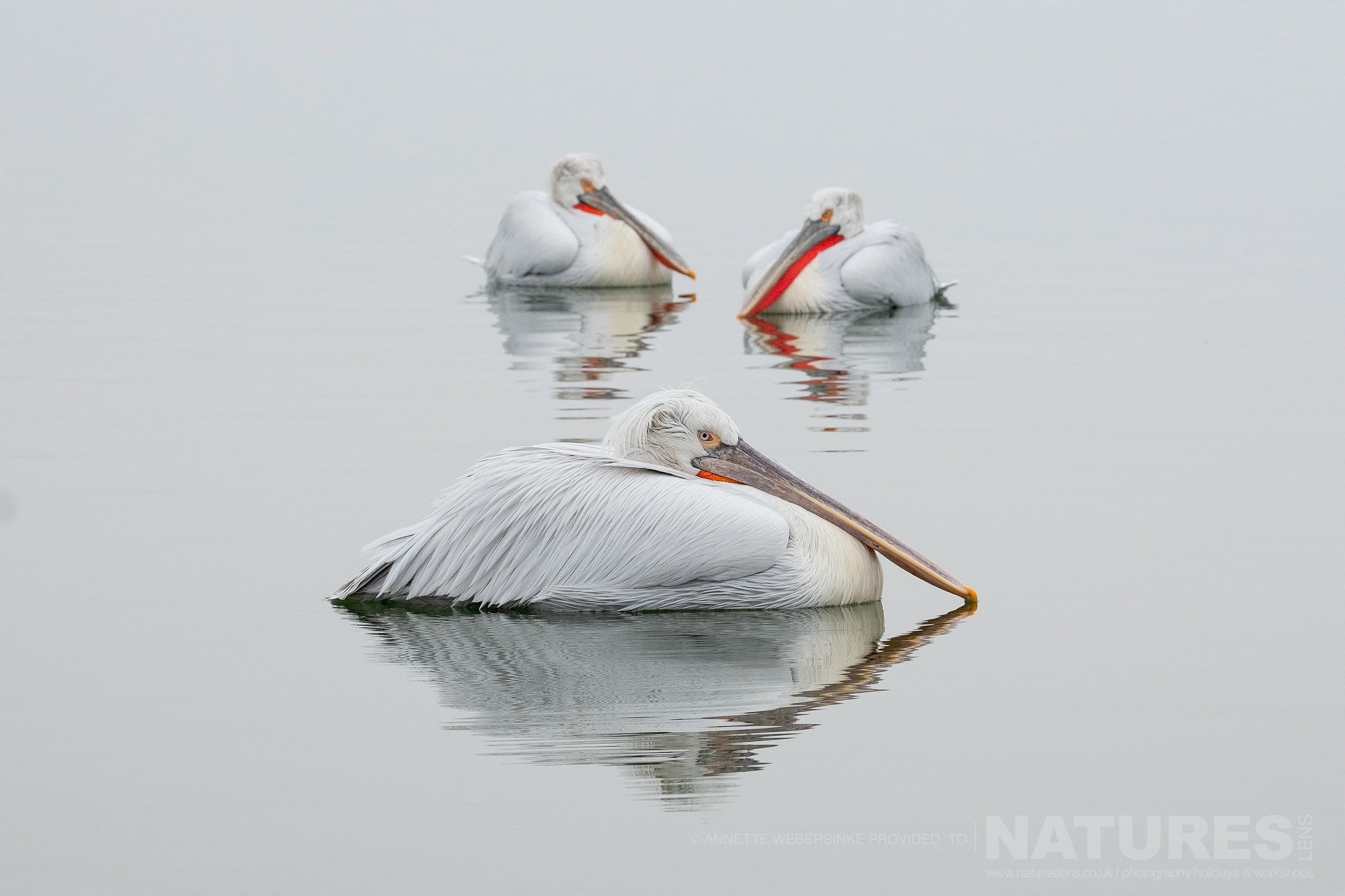
The Dalmatian pelican is the world’s largest flying bird, & at Lake Kerkini in winter it lifts off mist-covered water in freezing dawn air, condensed breath visible, wings beating hard through fog that hasn’t burned off yet. I’m not aware of anywhere else on earth where you can photograph this species at this scale, in these conditions, with this kind of access.
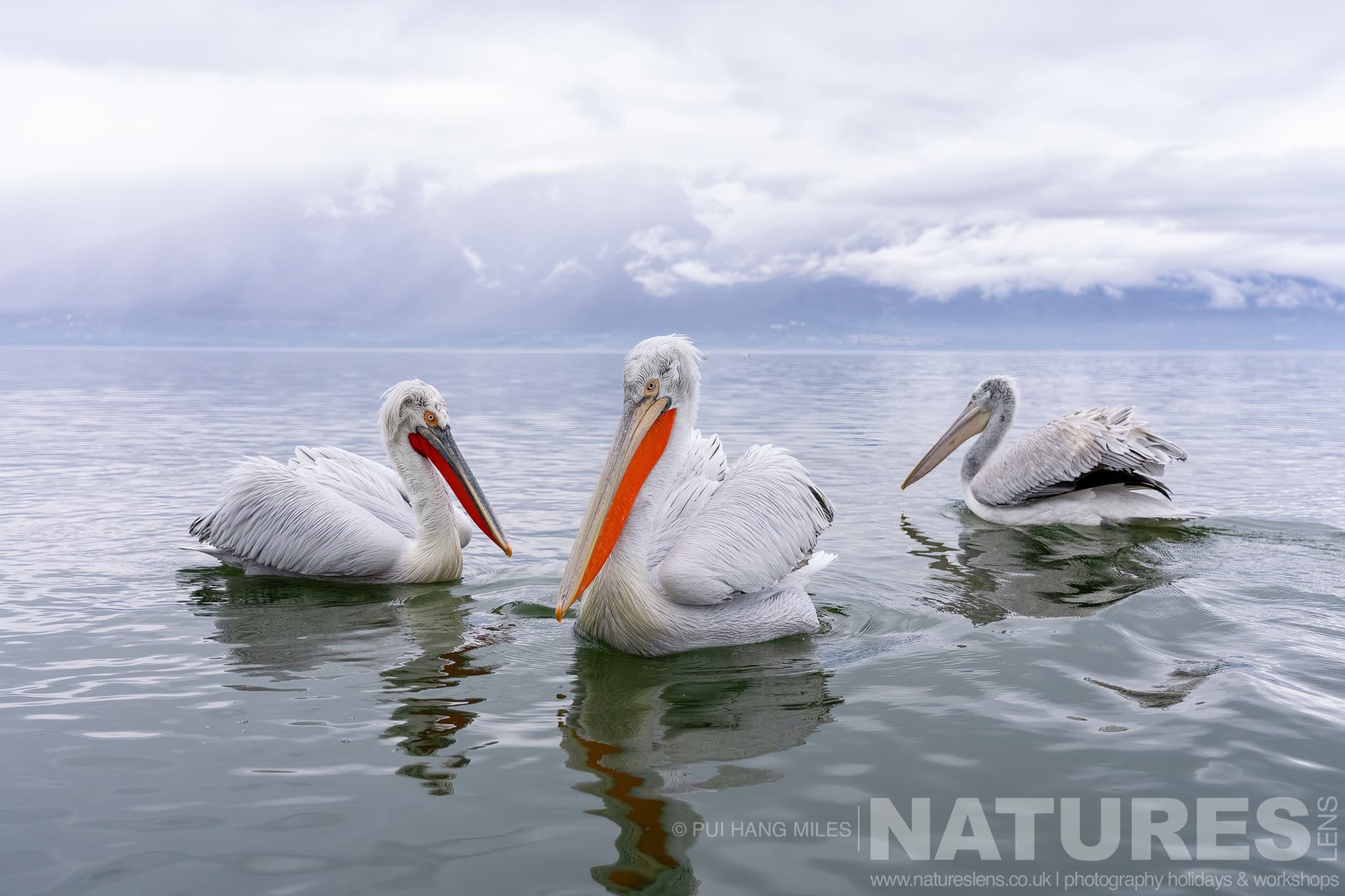
Boat positioning gets you to low angles with repeated fly-pasts rather than a single fleeting chance, & early starts secure the light before the mist lifts & the drama goes with it. When a bird with a three-metre wingspan lifts off the water three metres in front of your lens, wings catching the very first light, mist trailing off behind it, you feel it before you’ve even finished framing the shot. I’ve found the images that come out of these sessions are genuinely cinematic, bold & graphic in a way that demands a combination of technical preparation & physical commitment most photographers find properly stretching, tracking a fast, large, low subject in low light is not a forgiving skill to learn on the day.
What you leave with is action photography that’s both visually spectacular & technically demanding to produce well. Our winter departure is built entirely around these conditions, & for photographers who want to come back in a different season, the Spring Birds of Lake Kerkini departure offers a different palette of species & behaviour on the same lake, which I think says something about how much this single location has to offer across the year.
Master dynamic bird photography at Lake Kerkini
Improve your flight photography while creating dramatic images of the world’s largest flying bird in mist, frost & beautiful winter light.
View our Dalmatian Pelicans photography holiday
When is the best time to join one of these signature trips?
It depends entirely on the subject rather than a single calendar rule. Japan & Greece are built around winter conditions specifically, Spain runs in summer to match lynx behaviour & long light, & Costa Rica & Iceland are designed around the seasons that suit their particular wildlife best. Each itinerary is timed around the behaviour it’s chasing rather than general travel convenience.
Why tiger photography in India rewards structure over luck
The tiger is probably the most universally aspirational subject in wildlife photography, & yet most photographers who visit India come home having seen tigers rather than having photographed them well. There’s a real difference between a sighting & a photograph, & in my experience that difference is almost entirely structural rather than a matter of luck.

Our India wildlife photography holidays are built around vehicles positioned for photography rather than simple viewing, sightings that aren’t rushed toward the next thing on a checklist, & enough time for a composition to actually develop before the moment passes. Bengal tiger photography in reserves such as Bandhavgarh combines genuine tension with real artistry, dust suspended in golden light, forest shafts cutting through the foliage, & slow deliberate movement coming directly toward the camera rather than away from it.
A tiger walking toward you in golden forest light, unhurried & entirely certain of its own space, isn’t quite like any other moment in wildlife photography, & it’s not really the excitement of it that stays with you afterwards, it’s the weight of it. What I’ve learnt from watching this play out trip after trip is that the resulting images reflect craft rather than luck when the structure around the sighting is right. Our Majestic Bengal Tigers of India holiday is built around exactly this measured approach, & for photographers wanting to go deeper into a single reserve rather than cover several, the Tigers of Bandhavgarh itinerary focuses exclusively on one of India’s most consistently productive parks.
Return home with Bengal tiger images you’ll be proud to show anywhere
Built around patience, positioning & repeated opportunity, this itinerary helps you produce tiger photographs that reflect skill rather than luck.
Discover our Tigers of Bandhavgarh photography holiday
Why are photographers underestimate the difficulty of puffin photography
The Atlantic puffin is one of the most photographed birds in the world, & I’d guess most of those photographs were taken from a distance, in a rush, on a day trip, in flat midday light. That isn’t what our Puffins of Iceland photography holiday is built to deliver, & the difference comes down almost entirely to access & time rather than equipment.

Overnight access to Grímsey Island changes what’s actually possible here. There’s no rushing, there are proper early mornings & late evenings, which under the midnight sun means the kind of light that separates a considered portrait from a snapshot grabbed on the way past. Predictable flight paths let you pre-focus & pre-compose rather than react to chaos as birds come in, & the colony itself is large enough to offer constant movement while still being intimate enough for genuine proximity. Standing on a clifftop at midnight with Arctic light still sitting in the sky, & a puffin lands close enough to fill the frame without a long lens, that’s the entire point of overnight access, & it’s the image most people come for without quite realising it in advance.
What you leave with is a puffin portfolio actually made in proper light from properly considered positions, tight portraits with shallow depth of field, environmental frames looking out over the North Atlantic, & flight sequences that were timed rather than grabbed on instinct. Our Atlantic Puffins of Fair Isle departure offers the same quality of access in a more remote & immersive setting, a smaller island, fewer people, a different kind of quiet altogether. The images that come from either location are joyful yet properly graphic, & that particular combination, done well, is rarer than it sounds.
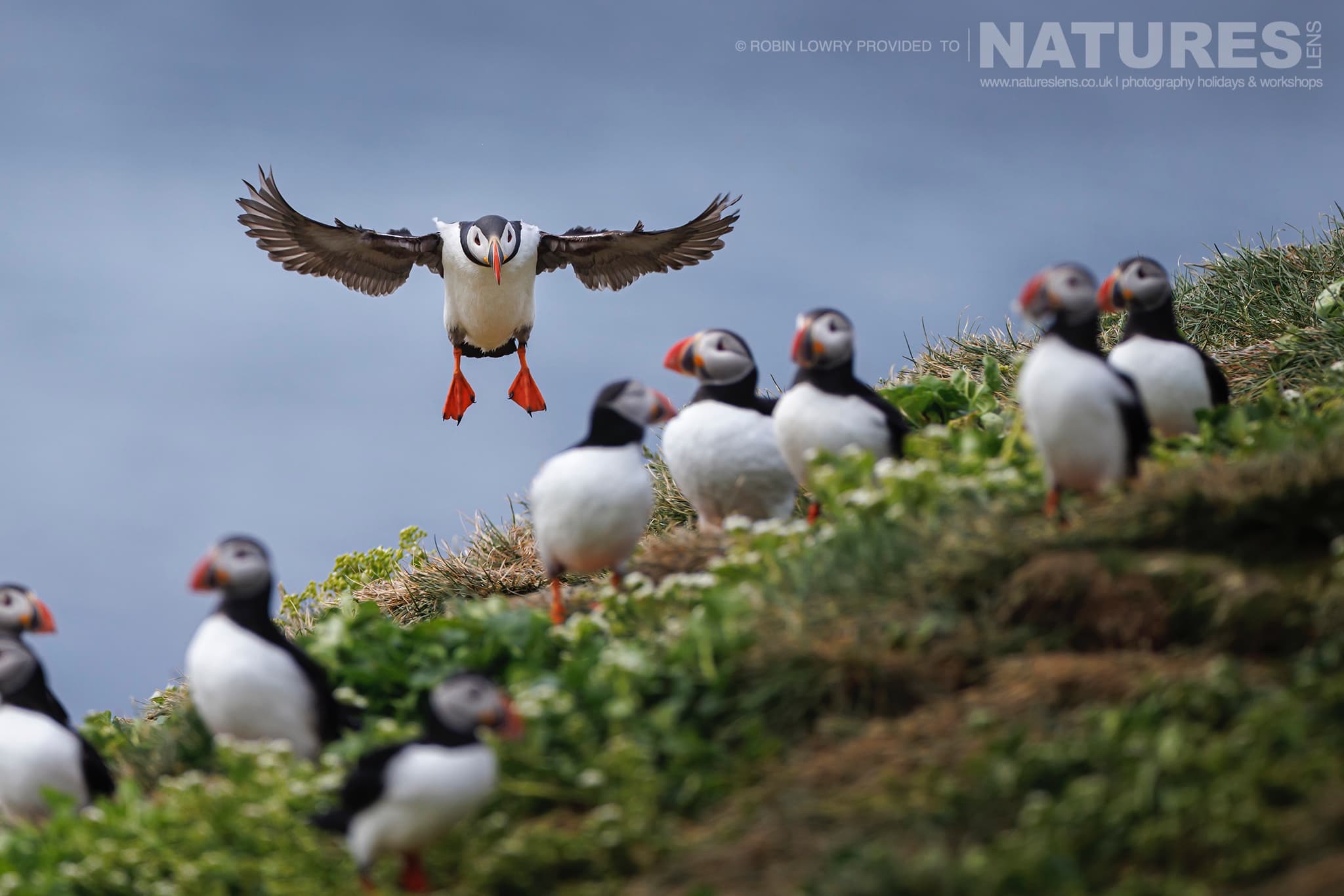
Experience puffin photography at its very best
Extended access, Arctic light & small groups let you build a complete puffin portfolio filled with portraits, flight shots & environmental images.
Explore our Atlantic Puffins photography holiday
Which of these signature trips should you choose?
Choose Japan for graphic, minimal winter compositions built on restraint. Choose Shompole for nocturnal African behaviour photographed nowhere else at this level of control. Choose Costa Rica for volume, colour & tropical variety. Choose Spain for patient, hide-based access to Europe’s rarest cat. Choose Greece for scale & dramatic flight action. Choose India for structured, considered tiger photography. Choose Iceland for a seabird portfolio made properly, in proper light, rather than snatched in passing.
These seven trips exist because certain species, & certain moments with those species, are genuinely irreplaceable, not as destinations but as photographic experiences in their own right. Snow minimalism in Japan. Nocturnal portraiture in Kenya that looks like nothing else in your existing portfolio. Tropical colour in Costa Rica, earned through access & patience rather than luck. A rare European predator in Spain, photographed in beautiful light through a hide system built specifically for photography. Atmospheric action in Greece, at the only location we know of where it’s possible at this scale. An apex icon in India, photographed with craft rather than left to circumstance. A charismatic seabird in Iceland, photographed by someone who took the time to get it right.
Each trip produces a genuinely different visual signature & demands a different photographic discipline, yet all seven share the same foundation, small groups, flexible timing, repeated access, & a single-minded focus on what you actually leave with. When you look back at a crane in falling snow, an elephant reflected in still water, a quetzal caught in emerald cloud forest light, a lynx emerging from golden scrub, a pelican lifting through mist, a tiger walking out of shadow, or a puffin landing on a clifftop at midnight, you’re not simply looking at wildlife. You’re looking at what happens when a photographer is given the right conditions, the right access, & enough time to get it right.