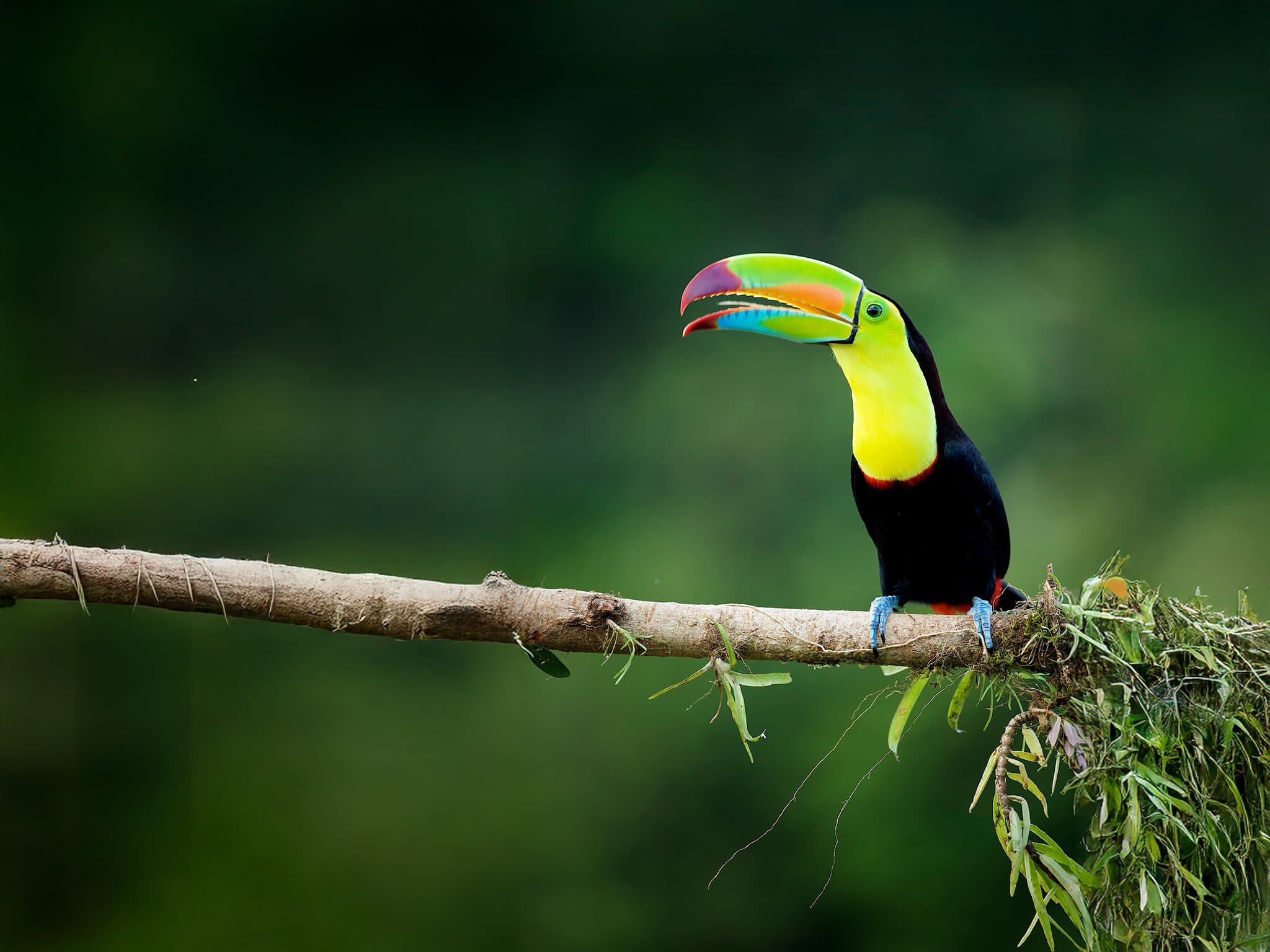
Join David for an unforgettable wildlife photography tour in Costa Rica, April 2026, where you’ll witness the vibrant drama of nesting season in some of the country’s most biodiverse hotspots. With a maximum of just five guests & single occupancy throughout, this exclusive tour ensures personalised attention, prime photography opportunities, & the chance to stay in charming eco-lodges nestled deep in the rainforest.
From the dazzling Resplendent Quetzal in the misty highlands to the raucous Macaws raising their young in the lowland jungles, the Birds of Costa Rica is a dream trip for bird & wildlife photographers. We’ll also encounter toucans, trogons, hummingbirds, king vultures, & an array of reptiles & amphibians, including our ever-popular frog & snake photography sessions.
With expert local guides & a carefully crafted itinerary, you’ll be in the right place at the right time to capture behavioural shots, nesting activity, & stunning portraits of Costa Rica‘s most iconic species.
Highlights of the Icons of Costa Rica Photography Tour
From the misty cloud forests of San Gerardo de Dota to the lush lowland jungles of Boca Tapada, this carefully crafted itinerary takes you deep into prime habitats for intimate encounters with nesting birds & dramatic behavioral shots.
San Gerardo de Dota – Land of the Resplendent Quetzal
Hidden in the cloud forests of the Talamanca Mountains, this tranquil valley is the best place in Costa Rica to photograph the legendary Resplendent Quetzal. April is nesting season, meaning males display their spectacular plumage to attract mates while females tend to nest holes in ancient avocado trees. We’ll also attempt to capture images of the dazzling Fiery-throated Hummingbird, Long-tailed Silky-flycatcher, & other highland specialties.
San Gerardo de Rivas – Emerald Toucanets & Fiery-billed Aracaris
A lesser-known gem, this area offers intimate encounters with the striking Emerald Toucanet & the vividly coloured Fiery-billed Aracari. The lush forests & fruit-laden trees provide perfect perches for these charismatic birds, allowing for stunning frame-filling shots.
Sarapiqui – Reptiles, Hummingbirds & Rainforest Drama
A hotspot for biodiversity, Sarapiqui is where we’ll photograph basilisks (Jesus Christ lizards), vibrant toucans & aracaris feeding, & an array of hummingbirds at dedicated feeders. After dark, we’ll explore the world of frogs, snakes, & bats in specialised photography sessions designed for incredible macro & behavioural shots.
Boca Tapada – Royal Flycatchers, Nesting Macaws & King Vultures
One of Costa Rica‘s best-kept secrets, Boca Tapada is a paradise for nesting birds. We’ll focus on Macaws tending to their chicks in tree cavities, the spectacular Royal Flycatcher with its elaborate nest, & the imposing King Vulture at a feeding site. The dense rainforest here is alive with activity, offering endless opportunities for dramatic wildlife photography.
Arenal – Night Walks & Motmot Magic
By day, we’ll seek out Motmots, Trogons, & other rainforest jewels in the shadow of Arenal Volcano. After sunset, we’ll venture into the jungle to photograph red-eyed tree frogs, glass frogs, & other nocturnal wonders under expert guidance.

Monteverde – Bellbirds & Cloud Forest Wonders
Famed for its mystical cloud forests, Monteverde is home to the Three-wattled Bellbird, whose bizarre calls echo through the trees. We’ll also target Emerald Toucanets, motmots, & Trogons, all against a backdrop of lush epiphyte-covered trees.
What Are the Must-Photograph Species During a March or April Wildlife Photography Tour in Costa Rica?
March & April mark the height of the dry season in Costa Rica, making it one of the best times for wildlife photography. With clear skies, abundant wildlife activity, & many species in breeding plumage or nesting, photographers have unparalleled opportunities to capture stunning images. Below are the must-photograph species during these months, along with tips for getting the perfect shot.
Keel-Billed Toucan
March & April are excellent for photographing Keel-Billed Toucans as they become more vocal & visible during mating season. Look for them in the Caribbean lowlands & mid-elevation forests, where they feed on fruits & occasionally small lizards. Their vivid beaks stand out against the green canopy, making for striking images. Early morning light enhances their colours, & a telephoto lens (300mm+) helps capture fine details.

Yellow-Throated Toucan
These large toucans are often seen in pairs during breeding season, making for intimate behavioural shots. Their deep calls echo through the forests of the Osa Peninsula & southern Pacific slopes. Photograph them near fruiting trees or nesting cavities, where they display courtship behaviours like bill-fencing.
Collared Aracari
Highly social, Collared Aracaris are frequently spotted in small flocks, particularly in the Caribbean lowlands. March–April is a great time to photograph them feeding on figs & other fruits. Their playful interactions & bright plumage make for lively compositions.
Various Hummingbirds
With many flowers in bloom, hummingbird activity peaks in March & April. The long-tailed hermits, magenta-throated woodstars, & white-crested coquettes are particularly photogenic. Visit gardens like Monteverde’s Curi-Cancha Reserve for close encounters. A fast shutter speed (1/2000s) or high-speed flash freezes their rapid wingbeats.
Various Tanagers
Tanagers, such as the bay-headed, golden-hooded, & speckled tanagers, are abundant & highly active. They frequent fruit feeders & mid-canopy branches, offering excellent opportunities for colourful portraits. A 200–400mm lens works well for isolating them against soft backgrounds.
Red-Eyed Tree Frog
These iconic frogs are easier to find in March–April as they emerge during the early wet season showers. Night walks in Tortuguero or La Fortuna provide chances to photograph them clinging to leaves. A diffused flash prevents overexposure of their bright green bodies.

Basilisk (Jesus Christ Lizard)
Basilisks are often seen near rivers & streams in the Pacific lowlands. March–April’s dry conditions mean they bask more frequently, allowing for dynamic shots of them sprinting across water. A fast shutter speed (1/2000s) is essential.
Iguana
Green iguanas are particularly active during the dry season, sunning themselves on branches. Their vivid colours & textured scales make for excellent close-ups. A polarising filter helps reduce glare.
Pit Vipers
Eyelash vipers & fer-de-lance are more visible as they thermoregulate in open areas. Their striking patterns & colours are perfect for macro photography—use a 100mm macro lens & exercise caution.
Tiger Herons
Bare-throated & fasciated tiger herons are often seen hunting in rivers & mangroves. Their patient stalking behaviour allows for detailed shots. Early morning light accentuates their intricate plumage.
Egrets
Great egrets & cattle egrets are common in wetlands like Palo Verde. Their elegant poses against reflective waters create serene compositions. A slow shutter speed can add motion blur for artistic effect.
Blue Jeans Frogs (Strawberry Poison Dart Frogs)
These tiny red-and-blue frogs are active in leaf litter after rains. Their bold colours pop against dark backgrounds—use a ring flash for even lighting.

Glass Frog
Found near streams, these translucent frogs are best photographed at night. Their unique see-through skin requires careful lighting to avoid glare. A macro lens & tripod are essential.

King Vulture
Though rare, king vultures can sometimes be seen soaring over Carara or Corcovado. Their striking white & black plumage stands out against blue skies—a long telephoto lens (500mm+) is ideal.
Specialities for March & April
- Nesting Resplendent Quetzals – Cloud forests like San Gerardo de Dota offer chances to photograph quetzals feeding chicks.
- Three-Wattled Bellbird – Their loud calls echo through Monteverde’s forests; males display prominently.
- Nesting Emerald Toucanets – Small & colourful, these toucanets can be seen nesting in tree cavities.
- Nesting Macaws – The Pacific coast (particularly Carara) is ideal for capturing these vibrant parrots.
- Nesting Royal Flycatcher – Their elaborate nests & dramatic crest displays make for unique behavioural shots.
March & April in Costa Rica provide some of the best wildlife photography opportunities of the year, with nesting birds, active reptiles, & stunning landscapes at their peak.